


Artist Repurposes Shoreline Detritus
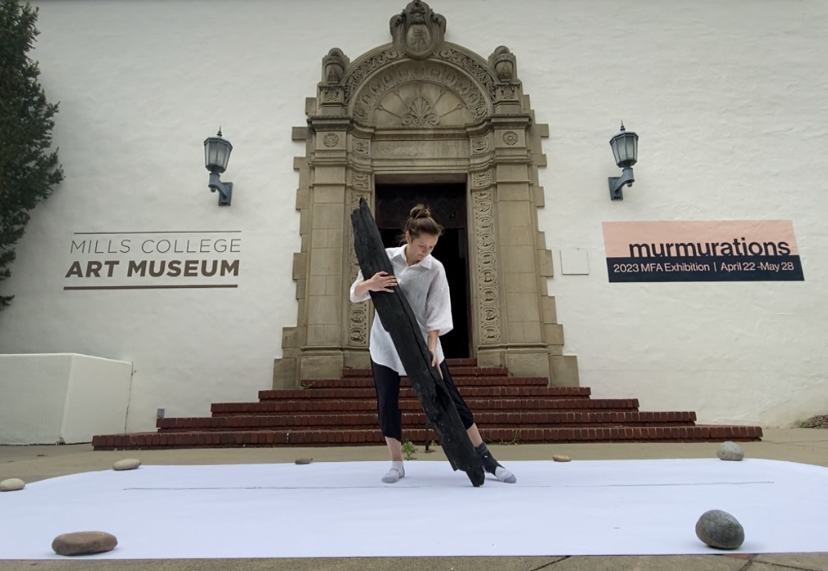
Griffith performing “The Weight of Absence” outside Mills College Art Museum. Photo courtesy Courtney Griffith
Walking along a beach in the Bay Area, Courtney Griffith will take a moment to admire the ocean in front of her before scouring the sand for trash. She’ll pick up handfuls of discarded plastics or synthetics. Where others see litter, however, Griffith sees materials that she can incorporate into her next artwork.
The Oakland-based multimedia artist doesn’t just do this with plastic. Griffith believes anything found in nature that looks destroyed or discarded — charcoal, tangled ropes, burnt wood — can be turned into something meaningful. Her art mediums vary from photographs, canvas paintings, and sculptures to performances.
Griffith says she likes to challenge people’s perspectives of what counts as natural versus human made. Her work is influenced by her love of nature and desire to inspire people to think critically about their impact on local ecosystems.
“I think people like to make it black and white, separate what is human space and what is natural space,” the 31-year-old says. “I like to find items that confuse and challenge that separation.”
Sourcing materials from coastal ecosystems that have sustained pre-existing damage, like washed-up plastics and broken pieces of driftwood, is Griffith’s unique way of engaging in climate resilience. She says she practices self-awareness when it comes to her art. In the past, she realized how toxic materials like oil paint and many other forms of art-making can be for the environment. By choosing to center her work around natural items that would have otherwise been left to decompose for years, Griffith says she’s able to give them new life.
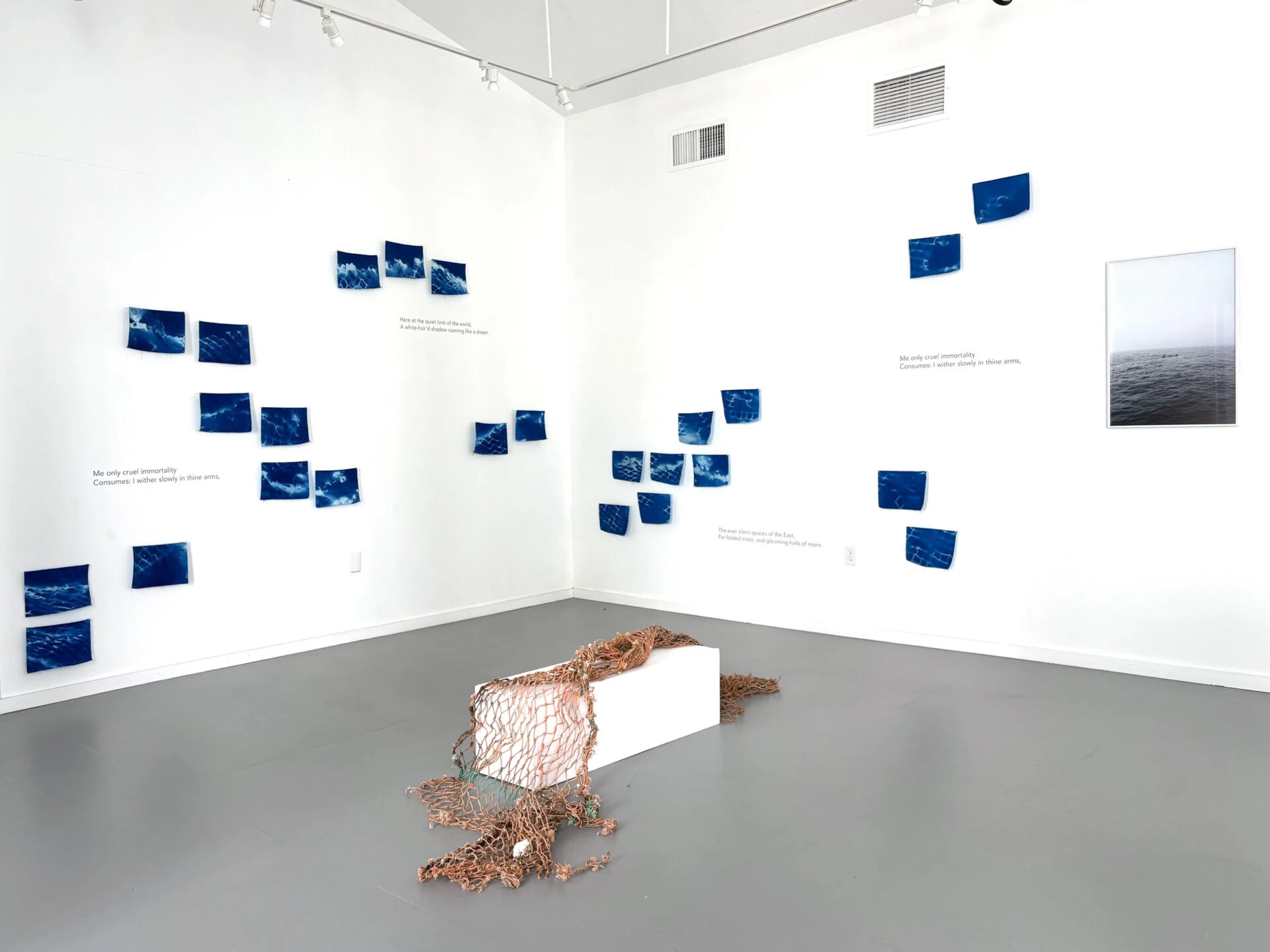
Courtney Griffith's “Cruel Immortality" ghost net exhibition. Photo courtesy Courtney Griffith
Griffith’s interest in blending nature and art started when she was a child living in San Diego. A young Griffith would spend hours walking along the coast, collecting shells and other trinkets. Even then, she felt compelled to make drawings and paintings from the items she found. She says she regularly participated in beach clean-up events, which sparked her curiosity about human connection with nature.
“When you throw trash away, it’s the illusion of throwing things away,” Griffith says. “We (humans and nature) all share the same space.”
With plastics and synthetics, Griffith has created the photography exhibit “Plastic Ghosts,” where photos of the wispy white shreds are meant to mimic paranormal activity.
“Unable to biodegrade, plastics exist like ghosts trapped between realms, outliving their human users and manufacturers,” Griffith says about the exhibit. From a body-sized charcoal log, Griffith produced “The Weight of Absence,” a performance where she moves the log back and forth across paper to create a design. The work is meant to show how memories of loss can take on a physical weight and be generative; similar to how charcoal, which is a remnant of destruction, can function as a drawing tool.
Griffith’s work is not just a creative outlet, but also a platform for climate advocacy. Last year, she partnered with the environmental nonprofit Ghost Diving USA to raise awareness about ocean pollution and “ghost nets” — fishing nets that have been abandoned or discarded at sea. The nets can end up entrapping fish and other marine mammals and disrupt coral growth.
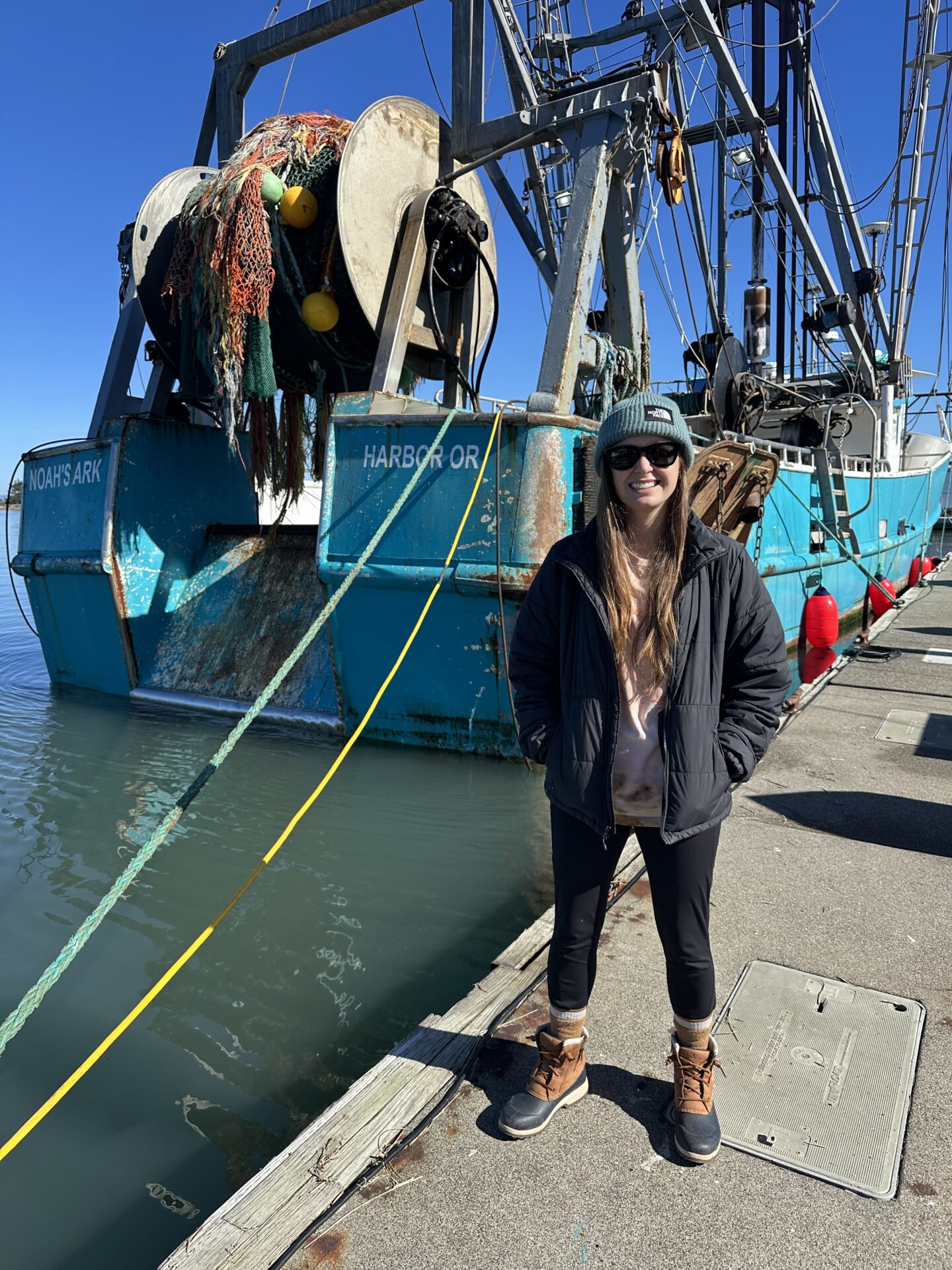
Courtney Griffith with Ghost Diving USA. Photo courtesy Courtney Griffith
She observed a diving team removing nets from a deep sea shipwreck off the coast of Long Beach. She took photos of the ghost nets, the divers who collected them and the recovery process.
She designed the installation “Cruel Immorality,” which featured abstract photos of the ghost nets, alongside real segments of them. The installation was featured in Oakland’s SlideSpace Gallery last March. Griffith separately sold prints of her ghost net photos and donated proceeds to the nonprofit.
Griffith says she enjoys opportunities that allow her to interact directly with people and witness their relationship with nature.
“The more I get out there, talk to people and volunteer and do hands-on work,” Griffith says, “the more I’m amazed at the resilience and strength of nature.”
Other Recent Posts
Regional Housing Agency Invests in Affordability
The Bay Area Housing Finance Authority is launching a loan program to support the construction of mixed-income rental properties.
The End is Coming for California’s Untouchable Grass
The law, which applies to grass that isn’t used for recreational purposes, could cut urban water use across California by more than 20% says Oakland thinktank.
Sonoma Vineyard Workers Burn toward a Better Future
A group of immigrant farmworkers are forming a worker-owned cooperative to bring back Indigenous burning practices that used to revitalize the soil.
Los trabajadores de los viñedos de Sonoma queman por un futuro mejor
Un grupo de trabajadores agrícolas inmigrantes está formando una cooperativa de propiedad de los trabajadores para recuperar las prácticas indígenas de quema que solían revitalizar el suelo año tras año.
New Voices Shape Design of Berkeley’s North Basin Strip
Twenty acres of parkland between the highway and the Berkeley shore are slated for a coast-resilient makeover, with input from locals and stakeholders.
It’s Always Sunny In North Fair Oaks
Residents of the unincorporated community launched their second campaign in two years to get the county to care for dying street trees.
Siempre está soleado en North Fair Oaks
Los residentes de la comunidad no incorporada lanzaron su segunda campaña en dos años para lograr que el condado se ocupe de los árboles de la calle que se están muriendo.