


Who Will Inherit the Estuary? Training for a Rough Future
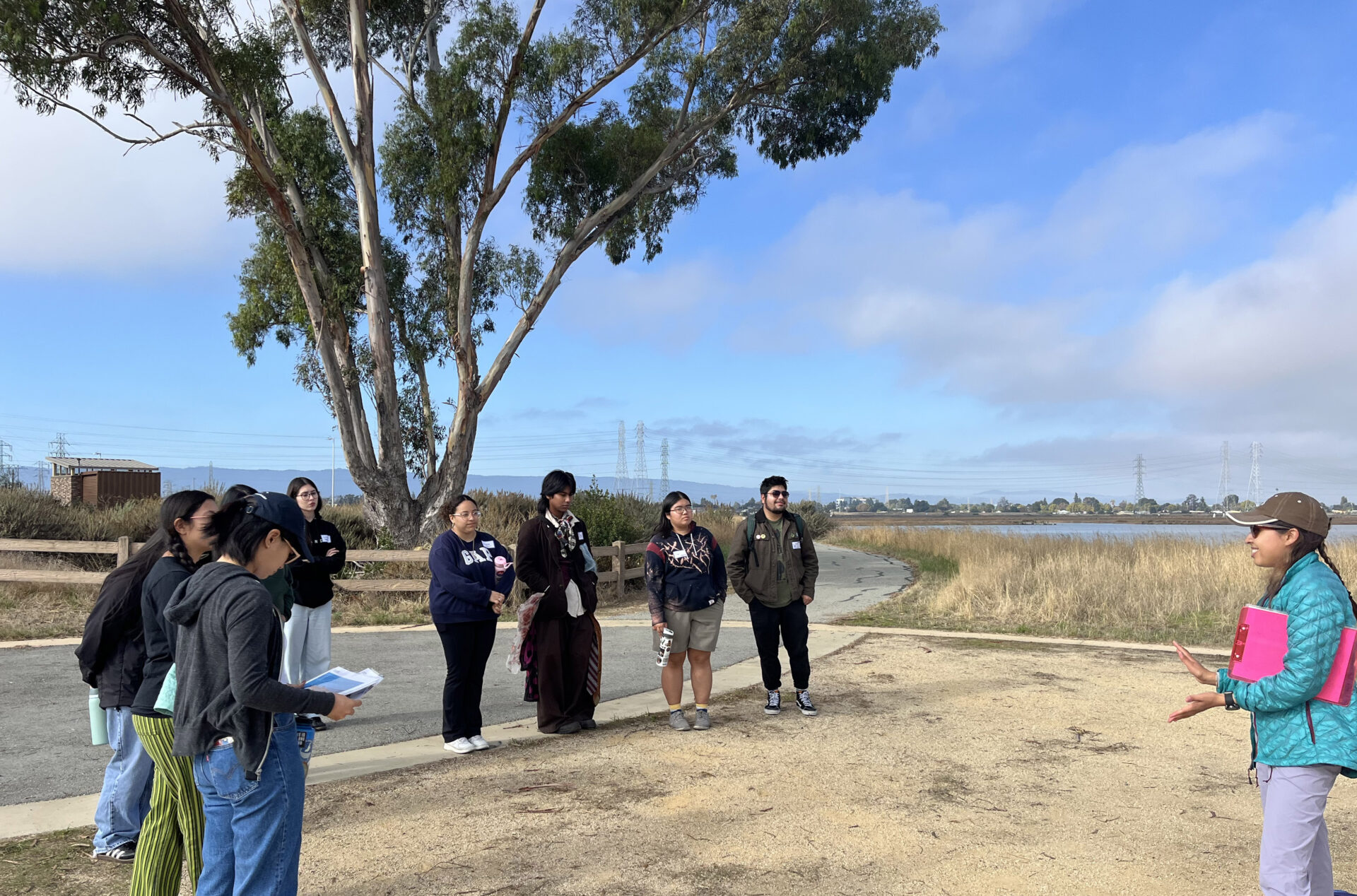
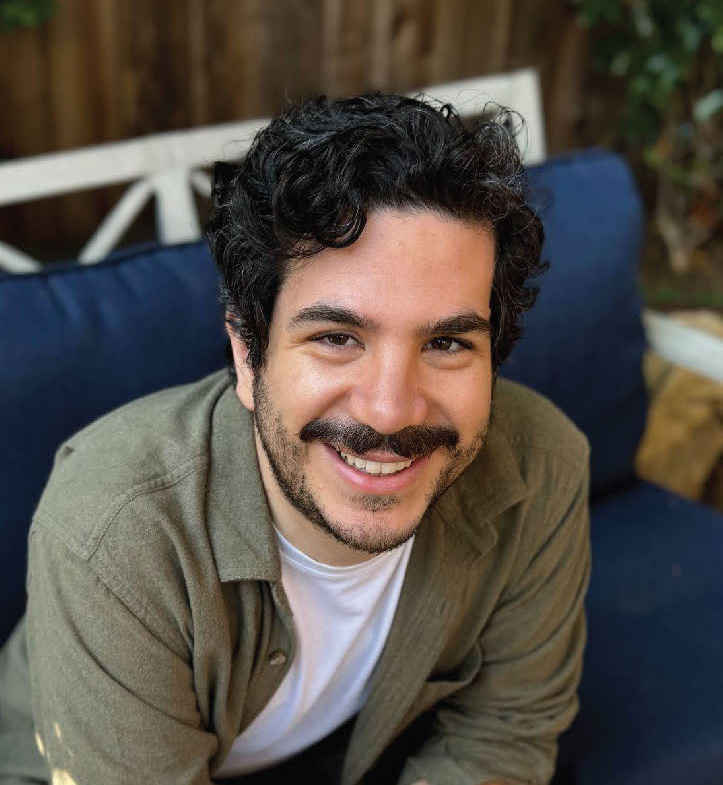
Bueno leads tour. Photo: Juan Pablo Pérez Burgos
On a bright fall morning, Paola Bueno leads a dozen students through the marshes along East Palo Alto’s shores.
These wetlands, now part of the Ravenswood Open Space Preserve, have lived many lives. For more than 2,000 years, the Puichon Ohlone hunted here and harvested salt from the tides. When Western settlers arrived in the mid-1800s, they built a wharf to trade with San Francisco, and years later, Menlo Park Mayor Lester Cooley turned the marshes into grazing fields. By the 1930s, nearly every trace of wetland had vanished, and the area was transformed into a landfill where Bay Area residents dumped and burned their trash.
Bueno stops beside a waist-high shrub with silvery leaves, snips a few, and passes them around. One by one, the students smell the scent of the California sagebrush, also known as the cowboys’ cologne. It’s one of the many native plants that the nonprofit Grassroots Ecology, where Bueno works, has planted in the last few years to bring the marsh back to life. She points out others — pickleweeds, juncus, and wildflowers — and shows photos of two critters that deeply depend on them to live: a spike-beaked shorebird called the Ridgway’s rail and the salt marsh harvest mouse, small enough to slip unseen through the pickleweed.
Catrina Maldonado-Arias, a business major on the tour, can’t shake that image.
“There could be a bunch of them and we don’t even know — these tiny little mice all around us,’” she says. “I was trying to look for some, but I couldn’t see any.”
Other Recent Posts
Regional Housing Agency Invests in Affordability
The Bay Area Housing Finance Authority is launching a loan program to support the construction of mixed-income rental properties.
The End is Coming for California’s Untouchable Grass
The law, which applies to grass that isn’t used for recreational purposes, could cut urban water use across California by more than 20% says Oakland thinktank.
Sonoma Vineyard Workers Burn toward a Better Future
A group of immigrant farmworkers are forming a worker-owned cooperative to bring back Indigenous burning practices that used to revitalize the soil.
Los trabajadores de los viñedos de Sonoma queman por un futuro mejor
Un grupo de trabajadores agrícolas inmigrantes está formando una cooperativa de propiedad de los trabajadores para recuperar las prácticas indígenas de quema que solían revitalizar el suelo año tras año.
New Voices Shape Design of Berkeley’s North Basin Strip
Twenty acres of parkland between the highway and the Berkeley shore are slated for a coast-resilient makeover, with input from locals and stakeholders.
It’s Always Sunny In North Fair Oaks
Residents of the unincorporated community launched their second campaign in two years to get the county to care for dying street trees.
Siempre está soleado en North Fair Oaks
Los residentes de la comunidad no incorporada lanzaron su segunda campaña en dos años para lograr que el condado se ocupe de los árboles de la calle que se están muriendo.
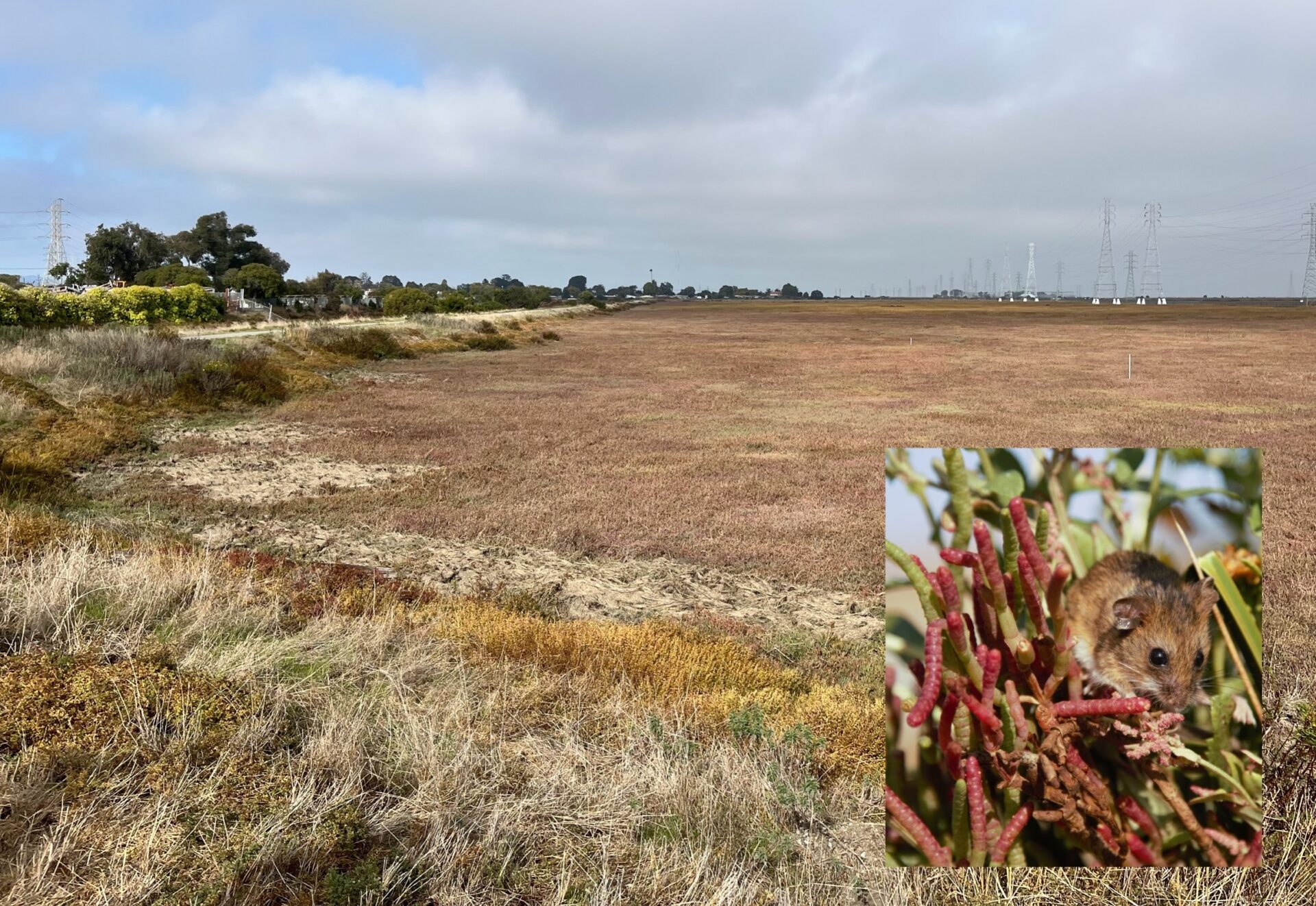
Marshes at Cooley Landing and tagged harvest mouse. Photos: Juan Pablo Pérez Burgos & Katie Smith
Maldonado-Arias is part of the Estuary Youth Council, a six-month program that brings together young people from marginalized communities around the San Francisco Estuary, from Stockton to East Palo Alto. Now in its second cohort, the program selects eight to 10 participants, ages 17 to 24, who are passionate about the environment and eager to learn about the estuary, the challenges it faces, and how it shapes surrounding communities. The goal, says program manager Diana Fu of the SF Estuary Partnership, is to develop the next generation of environmental leaders in planning, management, and conservation. Along with professional development training, participants spend time in the field, seeing firsthand how different shoreline habitats work and what threatens them.
“A lot of decisions about our environment are being made without the input of young people,” Fu says. “And because young people will be inheriting the estuary — our cities, our towns, and our ecosystems — it only makes sense that they should have a say.”
To Bueno, tours through the marshes — like the one with the Estuary Youth Council, or those she leads for middle and high school students — are a way to show young people not only the history of their land, but also the role they can play in its future. Wetlands are a natural defense against sea level rise, as they act like sponges that soak up floodwater and soften the impact of storms. That’s why, Bueno says, it’s important to teach future generations, especially those living nearby, how these ecosystems serve as “buffer zones to protect their communities.”
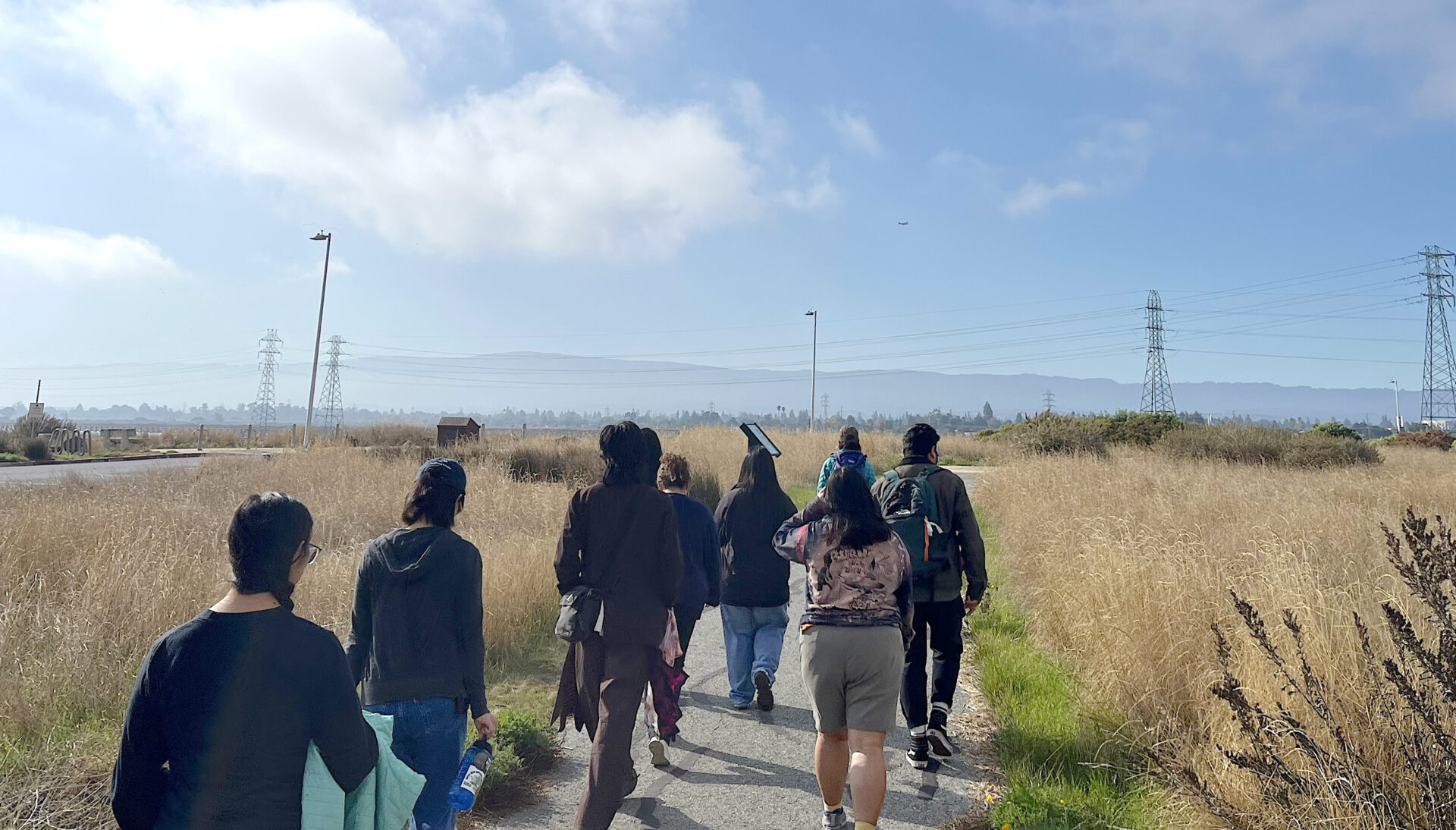
Photo: Juan Pablo Pérez Burgos
Two centuries of burning fuels have warmed the planet, melting polar ice and expanding the oceans. Since 1900, sea levels along California’s coast have risen eight inches, and Bay Area cities, such as East Palo Alto, now stand on the front line.
A 2018 San Mateo County study found that about 60% of East Palo Alto’s residents could face flooding by mid-century if seas keep rising at the current pace; though researchers have warned that the rise is likely to accelerate after 2050. The threat extends inland, too, to Delta cities such as Stockton, where by that year more than 42,000 residents and 148,000 acres of farmland could be exposed to flooding.
Discovering how these two cities, apparently distant, are tied by the same threat has struck Zeanne Martinez, a Stockton resident and a civil engineering major, the most during her five months with the Estuary Youth Council.
“Just because I’m not really near the ocean doesn’t mean sea level rise is not going to affect me. It actually can,” Martinez says. “In the upcoming years, if we’re progressing the same way we are, it’s still going to reach all the way to the Central Valley.”
For her capstone project, which every Estuary Youth Council member must complete by the end of the program, Martinez is working with two other trainees, Sonia Escobedo and Diana Gómez, on a video about the history of East Palo Alto and its flooding risks.
“Our goal is to educate community members in the low-lying neighborhoods [about] what flooding is, how to prevent it, and how to prepare for it,” says Escobedo.
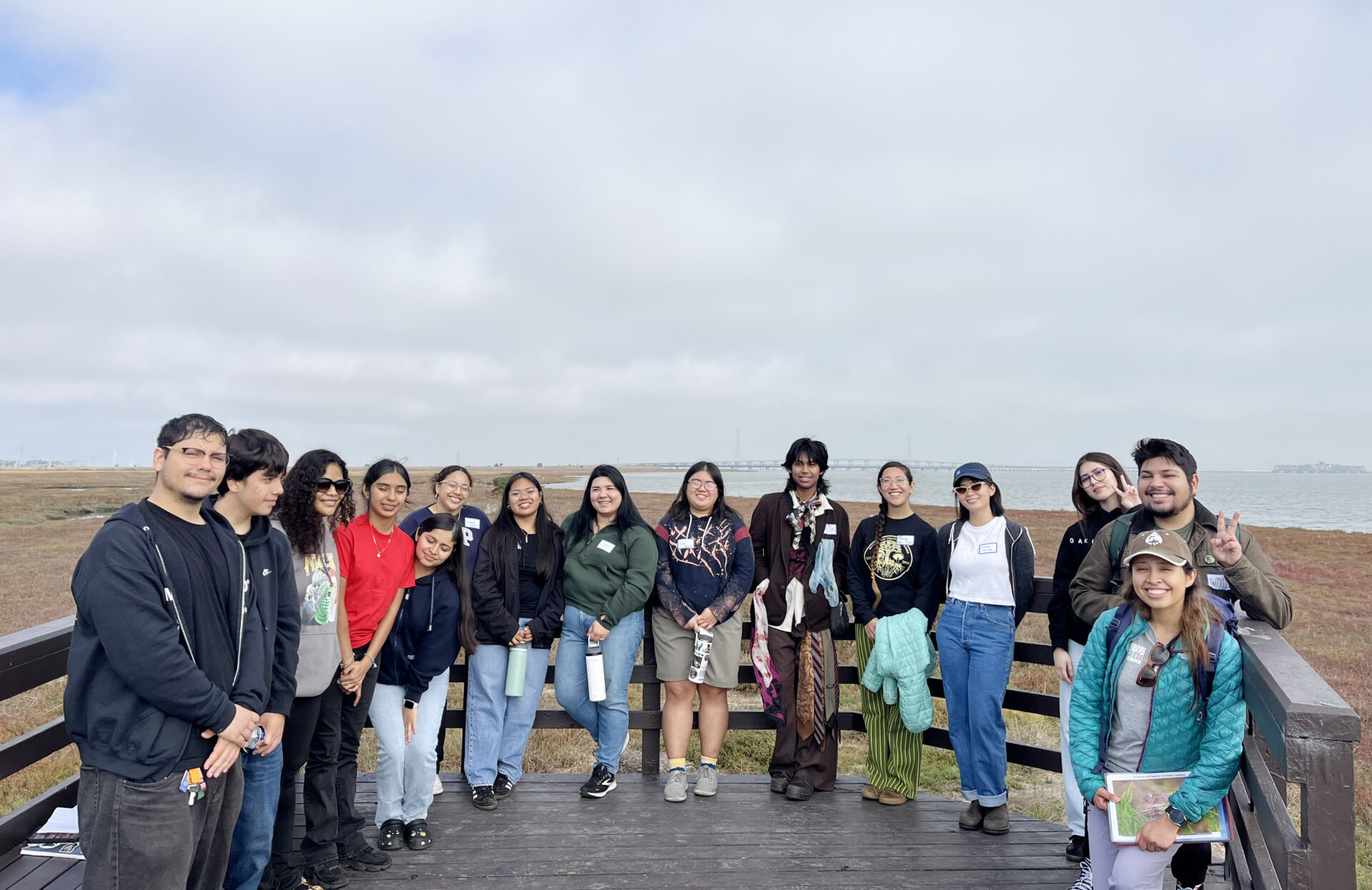
Everyone gathers for a closing shot. Photo: Juan Pablo Pérez Burgos
The other capstone group, made up of Maldonado-Arias, Em Pham, Dillon Huynh and other members, is working on a zine about the estuary and how it’s being affected by climate change. But their goal goes beyond education. They want to inspire young folks like them to act and, as Huynh puts it, “make them feel like they are part of something bigger.”
“When you look from afar, it looks like there’s nothing you can do,” he says. “But then, when you see all these different groups tackling the issue from different perspectives, it makes it feel like there’s a foreseeable goal you can work towards, and it’s not an unbeatable problem.”
MORE
- KneeDeep Stories about Nature
-
San Francisco Youth Explore Flood Risk, KneeDeep May 2025
-
What 7 Newly Minted Climate Leaders Did for Solano County, KneeDeep August 2025
-
Lighting a Fire Under K-12 Climate Literacy, KneeDeep November 2024