

RCDs Pay Extra Attention to North Bay High Schoolers

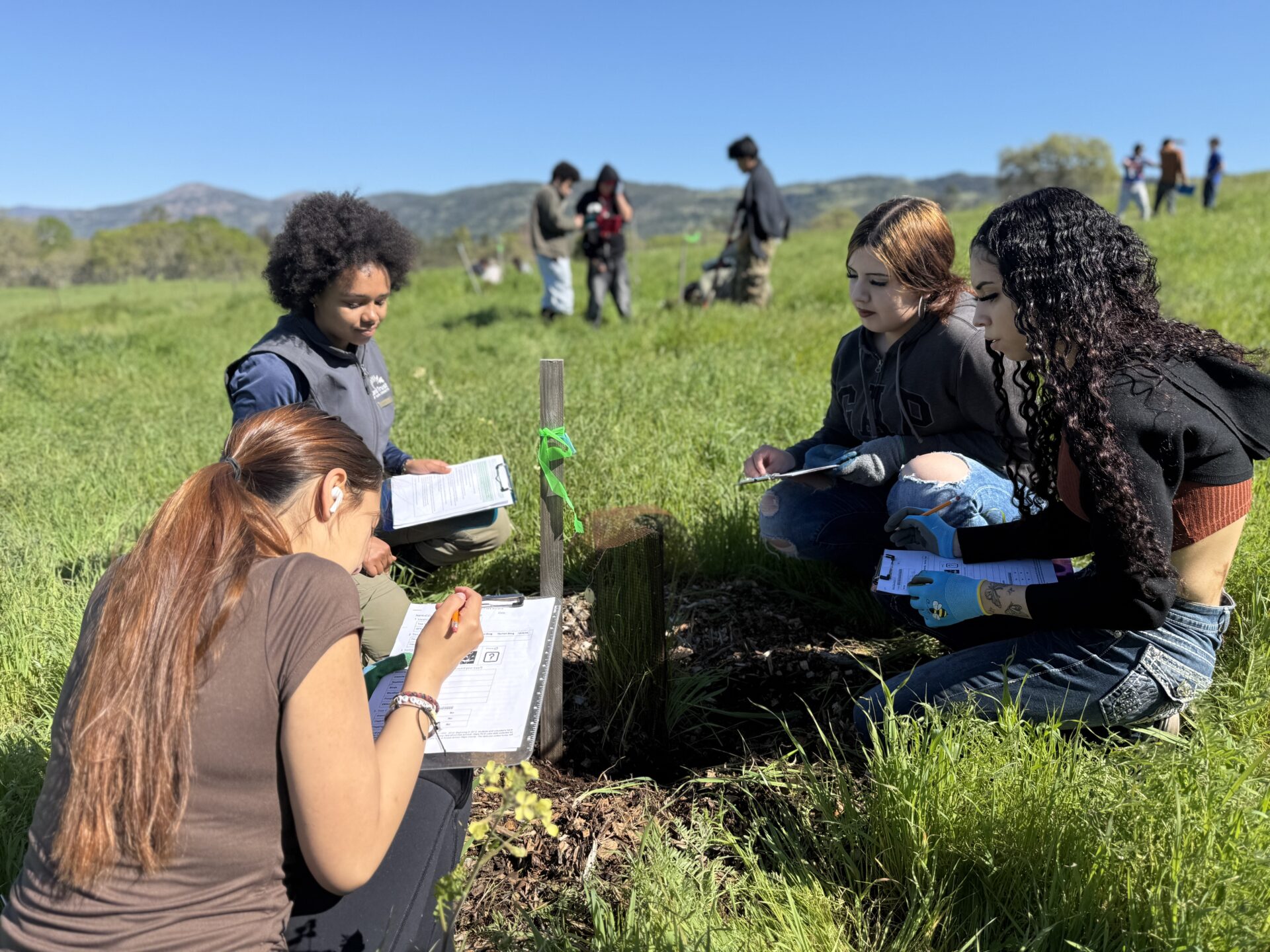
Photo: Napa RCD
A recent $15,000 grant will help three North Bay environmental conservation agencies collaborate on high school programming to increase the number of empowered, conservation-minded adolescents entering the workforce.
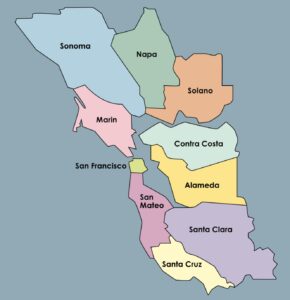
The grant, issued by the North Bay Watershed Association, a coalition of 22 public agencies focused on watershed health, brings together education practitioners from the Napa, Sonoma, and Solano County Resource Conservation Districts to establish a North Bay Youth Watershed Education Collaborative.
“We’re trying to create a regional model of three RCDs working together to see what common themes we share,” says Eric McKee, senior education project manager at the Napa RCD, the agency awarded the grant, and director of Green Futures, the Napa RCD’s high school program, which will receive a portion of the money. (Napa’s RCD is one of 95 local, non-regulatory special districts across the state that assist landowners and communities with soil and water conservation projects.)
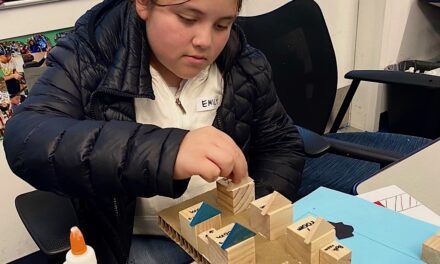
All three North Bay districts already run programming for high schoolers. With Napa’s Green Futures, public school students reforest valley oaks and measure the growth of trees, even learning to use geographic information system software to map the forest. In Sonoma County, students visit dairy farms and vineyards to understand their agricultural landscape. In Solano, they monitor local waterways and consider pollution prevention.
These programs differ based on the ecological and social contexts of the counties they operate in, but the primary goals are the same: getting students outside and providing a range of practical experiences that can guide them toward careers in conservation.
Other Recent Posts
Fire Weather in the Wind
As the hot Nevada air cools every fall, it gets pushed west to lower pressure areas over the Central Valley, where the wind heats up and dries out.
My Morning Cleaning Up the Oakland Estuary
On Oakland’s Creek to Bay Day, I joined 100 volunteers for I Heart Oakland-Alameda Estuary to remove shoreline trash.
Creeks Make Good & Bad Homes
San Jose State researcher Costanza Rampini explores why the houseless favor creek banks, and how they weather the flood risk.
Bay Area Braces for Record-Breaking El Niño
Record high water temperatures in the Pacific are expected to bring dangerous sea level rise, waves, and rain to the region this winter.
Regional Housing Agency Invests in Affordability
The Bay Area Housing Finance Authority is launching a loan program to support the construction of mixed-income rental properties.
The End is Coming for California’s Untouchable Grass
The law, which applies to grass that isn’t used for recreational purposes, could cut urban water use across California by more than 20% says Oakland thinktank.
Sonoma Vineyard Workers Burn toward a Better Future
A group of immigrant farmworkers are forming a worker-owned cooperative to bring back Indigenous burning practices that used to revitalize the soil.
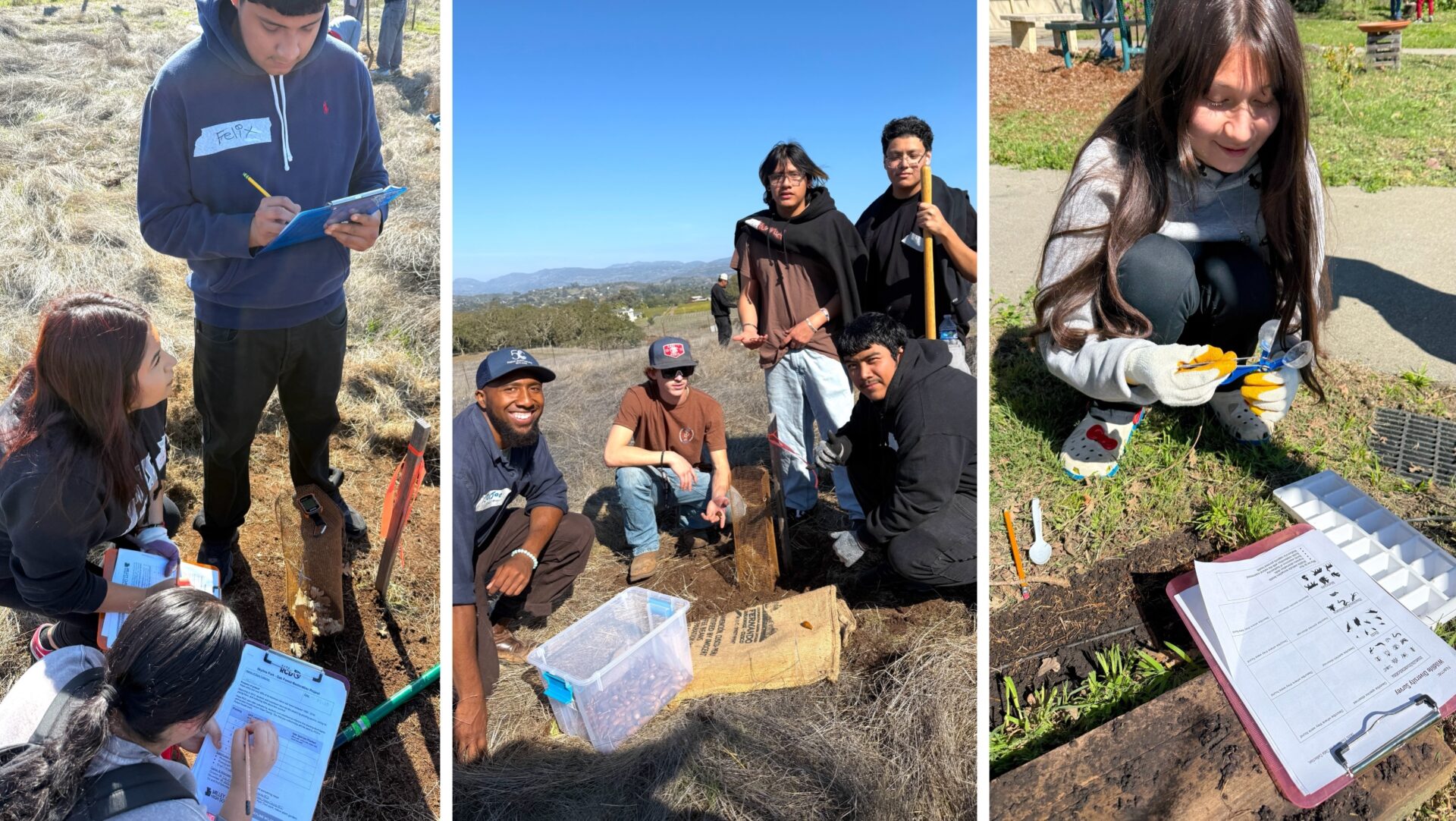
Students participating in the Green Futures program. Photo: Napa RCD
“I think we have a systemic challenge. Our education system doesn’t really expose students to diverse pathways [like conservation careers],” McKee says, citing “urban planning” as one career that students are surprised to find deeply impacts all aspects of local ecology. A wide range of student interests — from computer science to chemistry — can be assets in the environmental job market.
The grant money will allow the districts to survey student experiences and see what yields positive engagement. At this point, the three RCDs have separately developed their own curriculum. Now, they’ll come together to evaluate whether their approaches are helping students meet their desired outcomes.
“We’re taking a similar scientific evidence-based approach when we work with our students as we do when we work with our watersheds,” says McKee. The curriculum evaluation protocol will require gathering self-reflections from students themselves and observations from adults involved in the programs. For example, field-trip chaperones might identify student behaviors that suggest an interest in stewardship or demonstrate a specific application of certain skills. Students might be asked to recall certain skills used during their time in the field, and rate their overall experience as positive or negative.
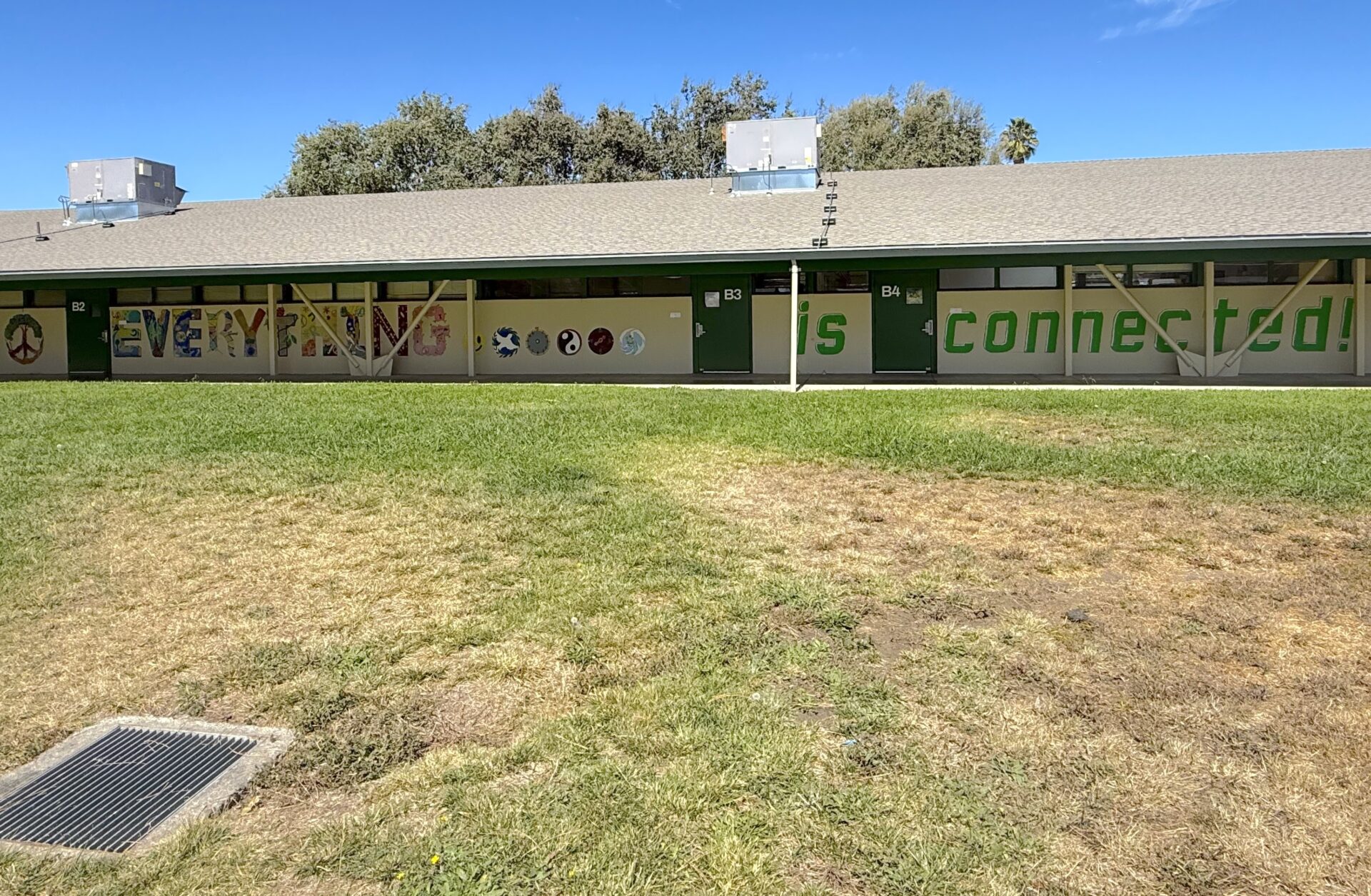
Valley Oak High School in Napa. Photo: Julie Lovie
Julie Lovie, a math and science teacher at Valley Oak High School, has observed her students’ budding interest in conservation careers through her 20-year partnership with Napa RCD. Valley Oak is a continuation high school for 16-18-year-olds where graduating “eco-literate” students is a priority. Lovie runs a garden at Valley Oak called the “Living Laboratory” and regularly bolsters her science curriculum by taking students on field trips with Green Futures.
“When we work in the garden, it’s one thing, but when we’re able to take them out into [the field], and they see the other adults working with Eric, it really makes them say, ‘Oh wow. I really could do this as a job,’” Lovie says.
Lovie is excited the grant money will fund more “eye-opening” opportunities for her students that further the connection between her class, their environmental impact in the real world, and their future beyond Valley Oak. The funding will also support paid internship experiences through Green Futures.
RCDs hold a unique position as small-scale community engagement hubs across California with stakes in both local resource management and larger scale climate issues. McKee is hopeful that establishing the North Bay Watershed Youth Education Collaborative will model what a statewide RCD education network could look like.