


The End is Coming for California’s Untouchable Grass
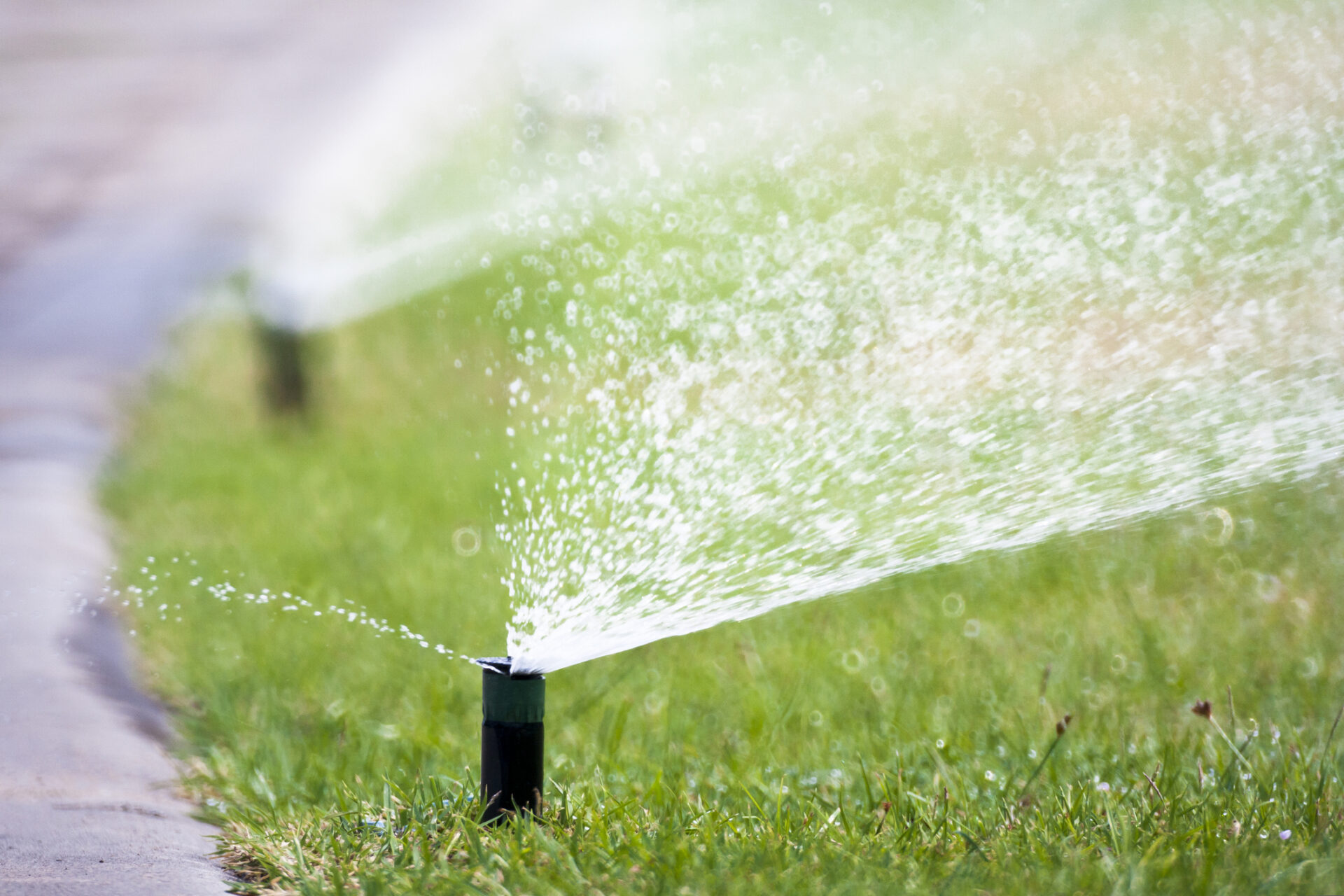
Just a few months remain before swaths of California grass irrigated with potable water must be eliminated, browned, or converted to less water-intensive landscaping. The impending shift stems from a new rule, passed in 2023, that prohibits using drinkable water to irrigate nonfunctional turf.
The law — AB 1572 — takes effect on the first day of January 2027 and applies to local government properties. Other property types will come under the law’s scope in the following years — commercial, industrial, and institutional properties in 2028 and common areas of homeowner association properties in 2029. Fines for noncompliance can reach up to $1,000 per day that the violation continues.
The new law, according to estimates from the Oakland-based water conservation thinktank Pacific Institute, could cut urban water use by more than a fifth. A report from the State Water Resources Control Board states that grass is “the largest component of vegetation water demand” year-round and statewide.
Yet, at least in theory, the new law should have minimal direct impact on individuals. That’s because it targets grass deemed physically or legally inaccessible to people for basic recreation. According to the rule, nonfunctional turf “includes grass located within street rights-of-way and parking lots.” It defines functional turf as “a ground cover surface of turf located in a recreational use area or community space.” Sports fields, most park space, and picnic areas will not be affected.
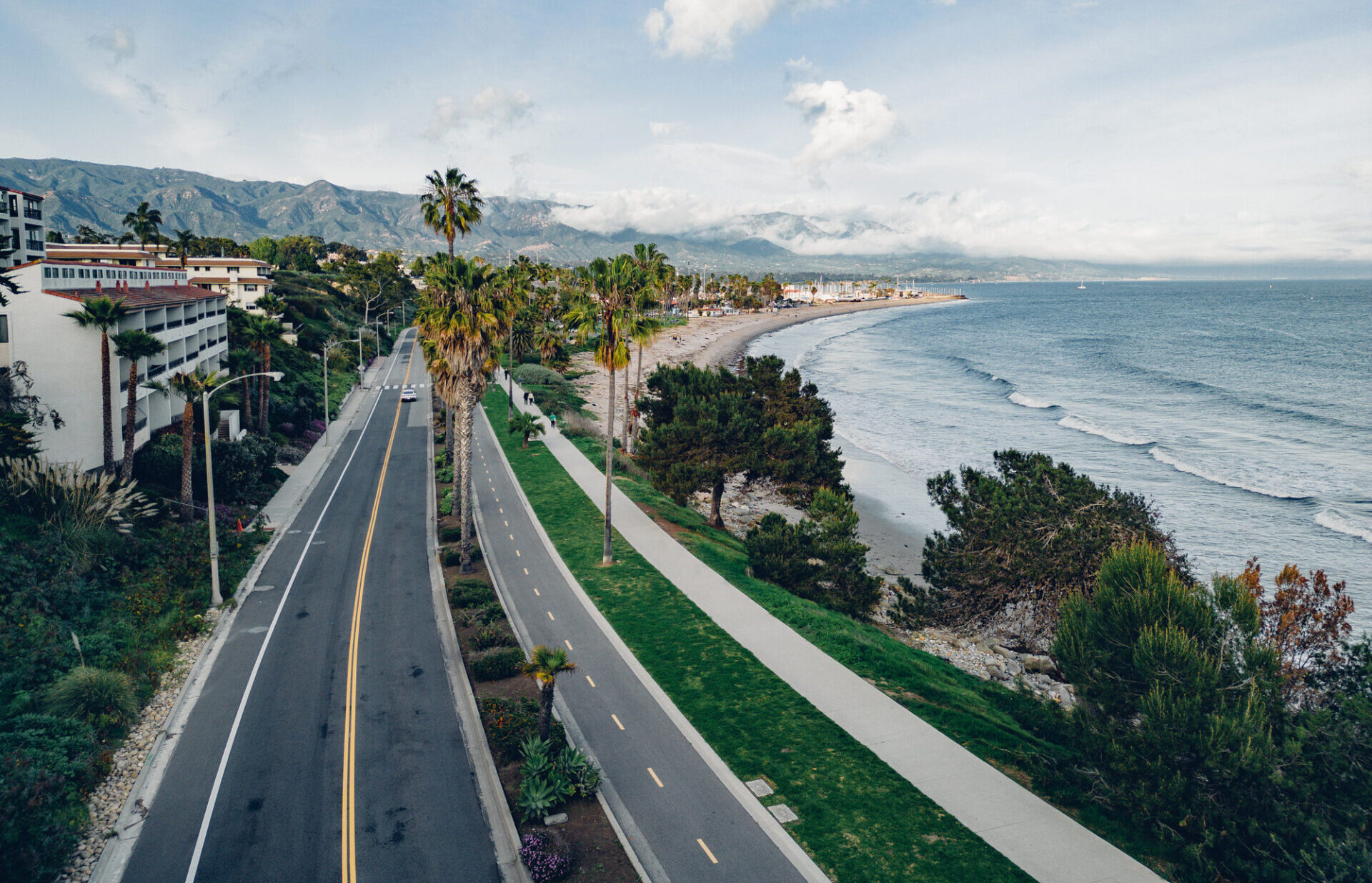
Contrasting strips of vegetation on a Santa Barbara coastal road in 2025, showing trees and plants in the median and turf along a more recreation-oriented sidewalk. Photo: LeoPatrizi
The incoming law does not target single-family homes in any phase. However, local programs that incentivize lawn removals by compensating property owners on a square-foot basis have helped address this sector of water use and waste.
The new rules also exempt cemeteries, allow property owners unable to afford conversion on the first round of implementation a few extra years to comply, and stop short of controlling what landscape features can replace turf.
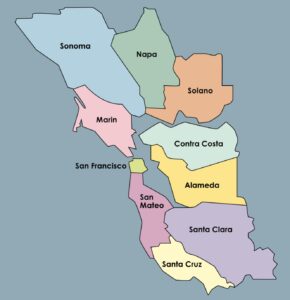
In the East Bay, officials are anticipating widespread land use changes resulting from the first phase of the law. Nelsy Rodriguez, a public information representative for the East Bay Municipal Utility District, says landscapes are already changing.
“It’s happening now,” she says. “The deadline is around the corner.”
To comply with the incoming rules, the City of Alameda, for example, has already removed a spread of lawn at City Hall and replaced it with a drought-friendly landscape of native plants. CalMatters reported that the city spent hundreds of thousands of dollars on the job.
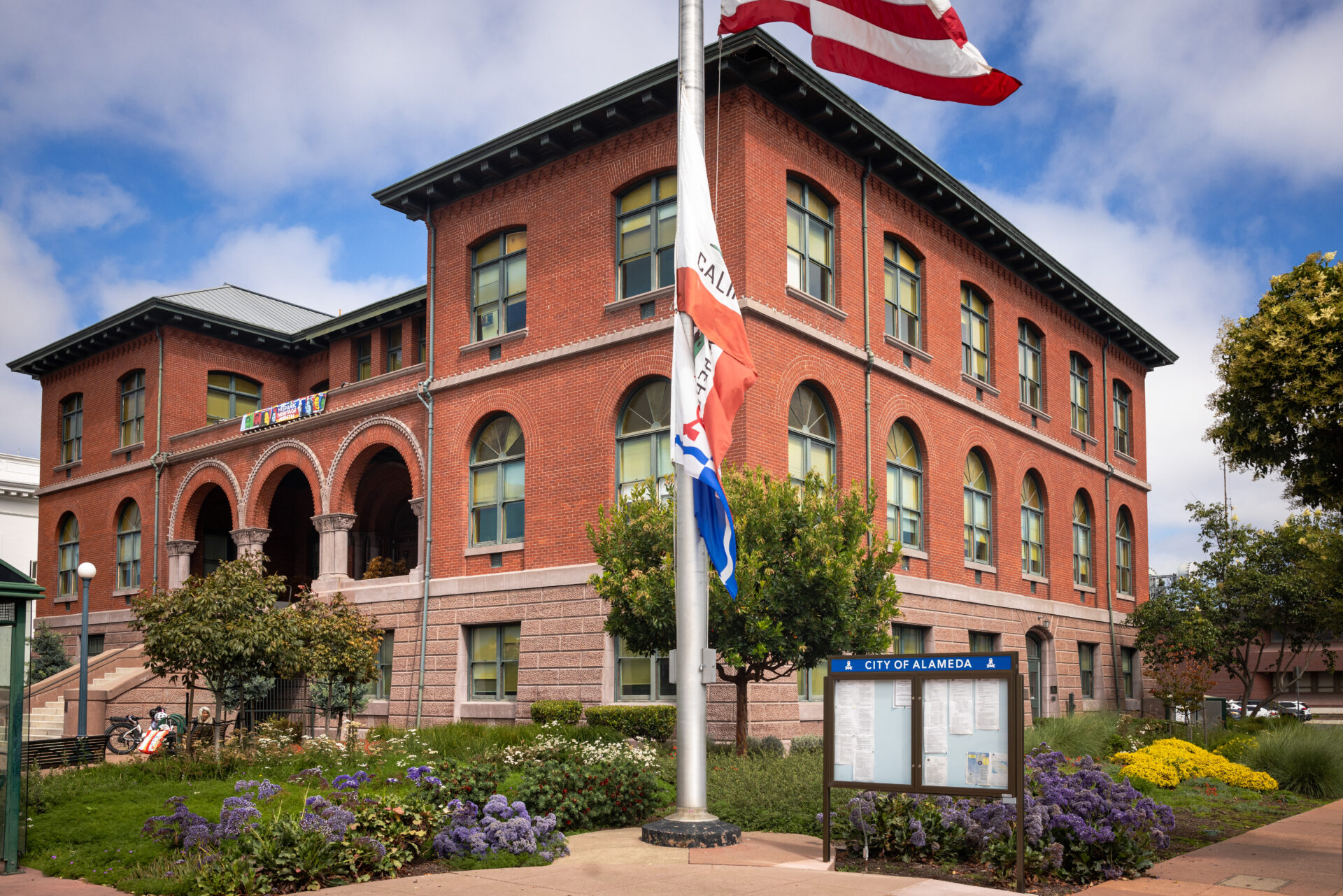
Replanting around Alameda City Hall. Photo: Richard H. Grant
“They put in this gorgeous landscape that’s water-wise, it’s drought-tolerant, it’s good for stabilizing the soil, and of course it’s using less water — it’s really cool,” Rodriguez says. She adds that many properties in the East Bay feature landscaping that will become illegal over the next few years, meaning more dramatic conversions are coming.
In some areas, such transitions will be scarcer. In San Francisco, for example, there seems to be little room to improve. Nancy Hayden Crowley, press secretary for the San Francisco Public Utilities Commission, tells KneeDeep there is no turf in the city that will disappear with the first phase of implementation targeting government properties.
“We have performed an assessment of the City’s public properties and have not identified any that would fall under this requirement,” Crowley says. “Green space around San Francisco’s commercial, industrial, and institutional properties is also limited and generally provides community benefit.”
Green space in the city tends to be in high demand for recreational use, she notes. Any such use would make the turf technically functional.
Heather Cooley, chief research and program officer at the Pacific Institute, says such shifts in landscaping styles on private and public properties have contributed to long-term reductions in California’s municipal water use, both per capita and on a gross basis — and even with the overall population rising. But outdoor landscaping, she says, still accounts for half of urban community water use in the state.
“There is still more we’ll need to do as droughts intensify and as water supply becomes even more variable and uncertain in the future,” she says. Large areas of useless turf irrigated with potable water, she adds, are “the obvious place for us to make more progress.”
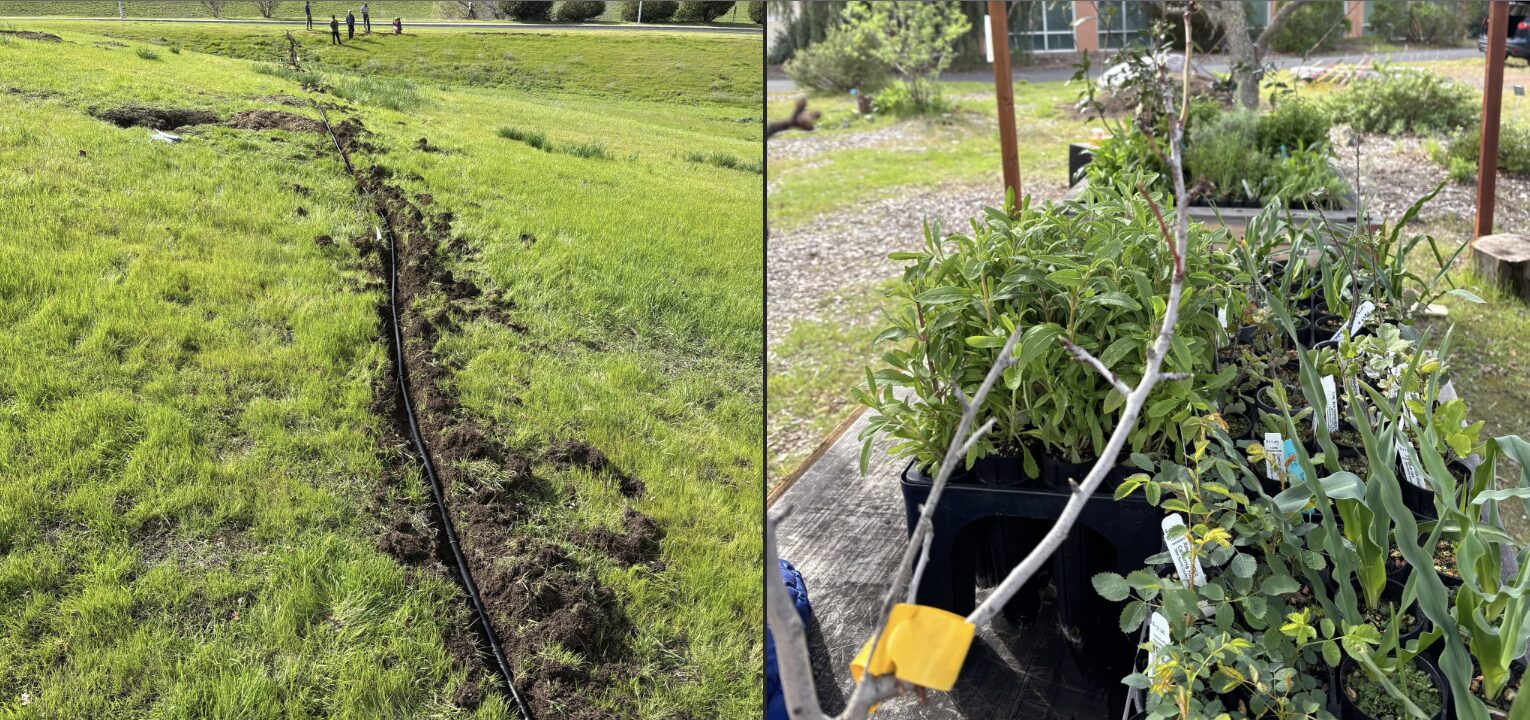
mak-warép Ohlone Land Conservancy is replacing turf with native, drought-adapted plantings at the ṭuuštak Ecocultural Garden, Cal State East Bay's Concord Center. Photo courtesy CSUEB Concord Center
Ahead of any pushback that may arise, Cooley says the merits of the new law are strong.
“It’s important that people know what kinds of areas this law is targeting,” she says. “These are medians of roads, these are areas that no one is using in front of commercial buildings and parking lots. These are not places where there is human activity.”
In a 2022 report, the Pacific Institute estimated that converting landscapes to more efficient layouts could save up to 1.5 million acre-feet of water annually. That’s in a state where cities use about 6.6 million acre-feet each year and farms use 35 million acre-feet. According to reporting from PBS, a similar law passed in Nevada in 2021 could save 25,000 acre-feet annually in the Las Vegas area.
Opportunity abounds for property owners seeking to abide by the new law. They may shift to using untreated irrigation water on nonfunctional turf, let the grass turn brown, or replace the turf altogether. For the latter option, anything goes — gravel and rocks, asphalt, even plastic grass — though officials said they hope compliance leads to more landscaping featuring native plants and trees, which provide shade and cooling effects but generally consume less water than grass.
“There are cooling, environmental benefits that turf provides, but you can have those same benefits amplified using other alternative landscapes that use significantly less water,” says Karina Herrera, the state water board’s conservation program supervisor.
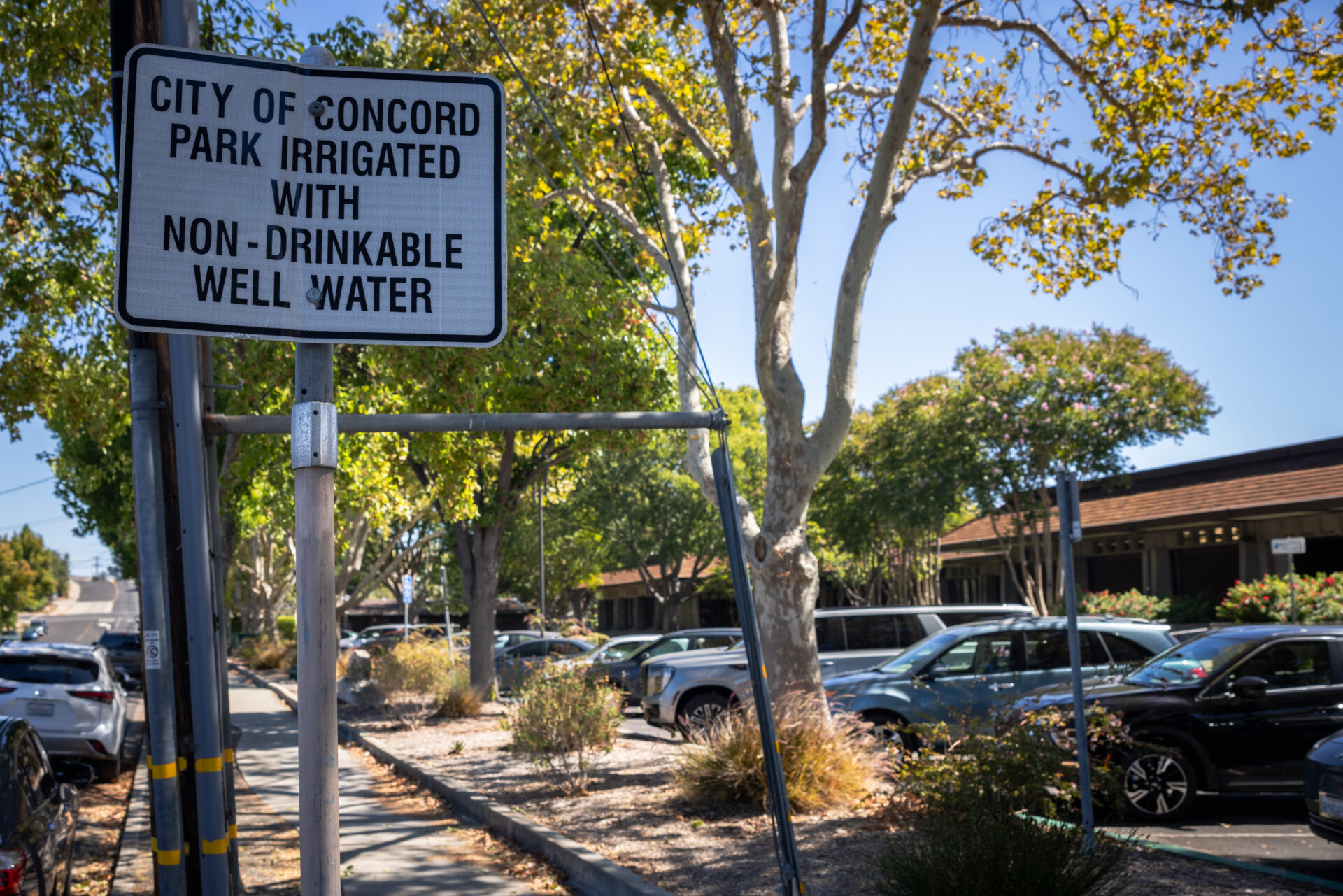
Photo: Richard H. Grant
Multiple sources said Nevada’s new law has helped guide the way for California to follow suit. Though its version does not take legal effect until 2027, many Nevada properties began pulling out nonfunctional turf several years ago — and it has had an unintended and serious consequence. According to a lawsuit filed in response, 100,000 trees in the Nevada area died when the irrigation water used for grass was turned off. Those trees, it turns out, had become dependent on the water that sank beneath the turf.
It’s a consequence that the East Bay MUD’s Rodriguez wants to see avoided in California. She emphasizes that property owners with trees growing in the vicinity of irrigated grass should install drip irrigation once turf and sprinklers are removed. She says, too, that care must be taken to see that drip lines are placed at the proper distance from tree trunks, so that applied water hits their extensive networks of feeder roots.
East Bay MUD has published tips on tree care in the post-lawn era, even offering a “treebate” payment for customers who plant a tree while upgrading their landscaping. Other rebate programs are available for differing types of landscape transformations. The agency also hosts weekly virtual office hours to advise and inform water conservation and sustainable landscaping.
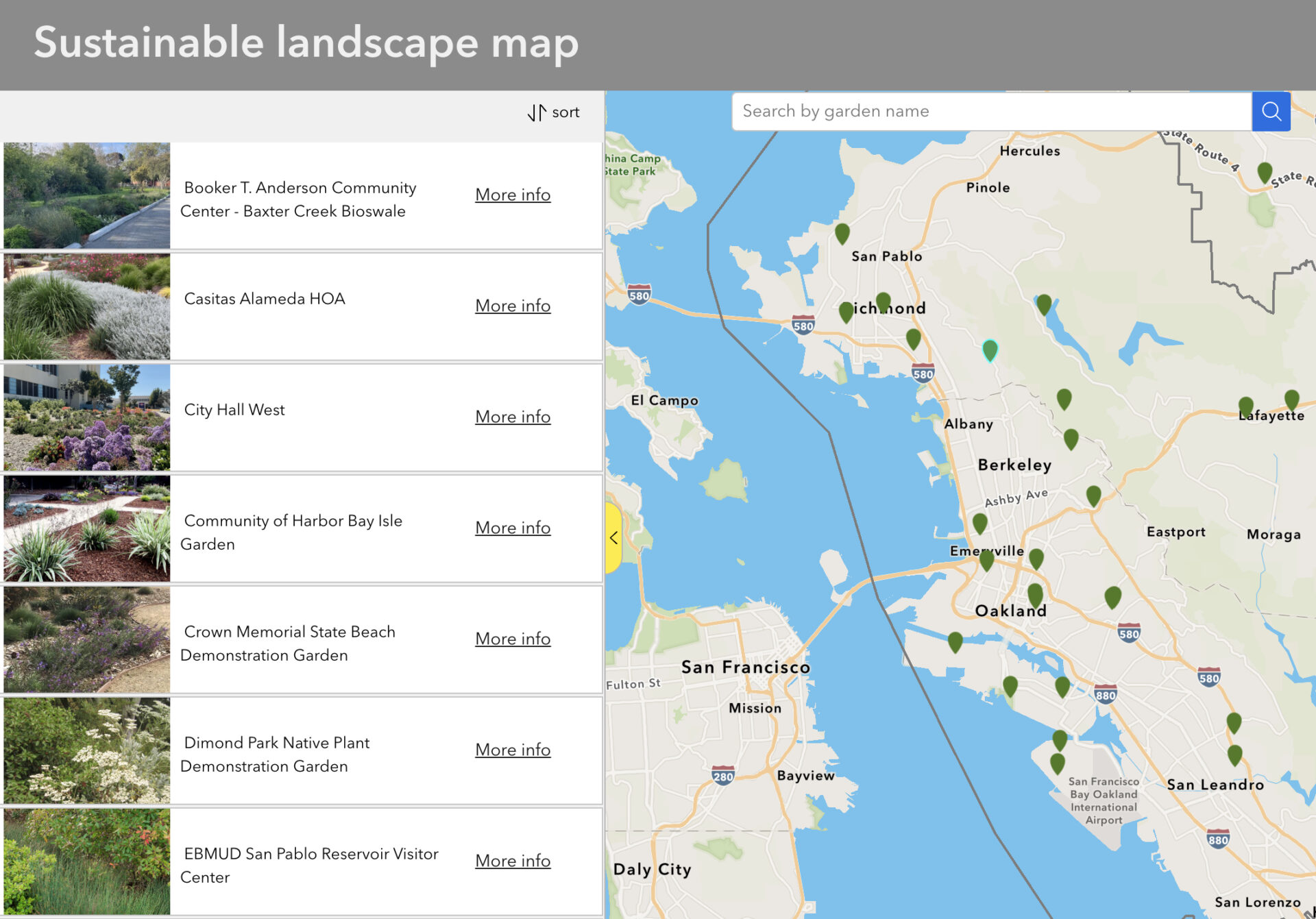
Screenshot of EBMUD database of sustainable landscapes.
According to all sources questioned, there’s been no major resistance to this law in California. Indeed, social norms are changing, with manicured lawns no longer carrying quite the status symbolism of suburban prosperity that they once did. Shortly after Nevada passed its landmark lawn ban, Colorado approved similar restrictions.
As California imposes likeminded rules, alternative landscapes are already fashionable and green turf a fading relic of 1900s landscaping styles. Native plants, drought-tolerant and supportive of insect and bird communities, have gained in popularity among gardeners and landscapers and make arguably more dynamic and attractive arrangements for land cover. Fruit trees, food forests, and community gardens are also increasingly seen as more useful, more reciprocating investments than lawns.
But Cooley says some concerns remain that property owners might simply replace grass with pavement or cement.
“That would exacerbate urban heat island effects and stormwater runoff and other issues,” she says.
Wasting water goes against state policy in general, which deems water conservation “a way of life” and endorses the development of alternative sustainable water supplies. As the new California law acknowledges, “the use of potable water to irrigate nonfunctional turf is wasteful and incompatible with state policy relating to climate change, water conservation, and reduced reliance on the Sacramento-San Joaquin Delta ecosystem.”
Enforcement responsibilities for California’s new law will fall on local water agencies, which are required to update formal ordinances dictating legal use of water. They will also be required to see that local property owners comply. Herrera says her office will be collecting those modified ordinances once the January deadline arrives.
This story was supported with a reporting grant from the North Bay Watershed Association.