



Fire Weather in the Wind
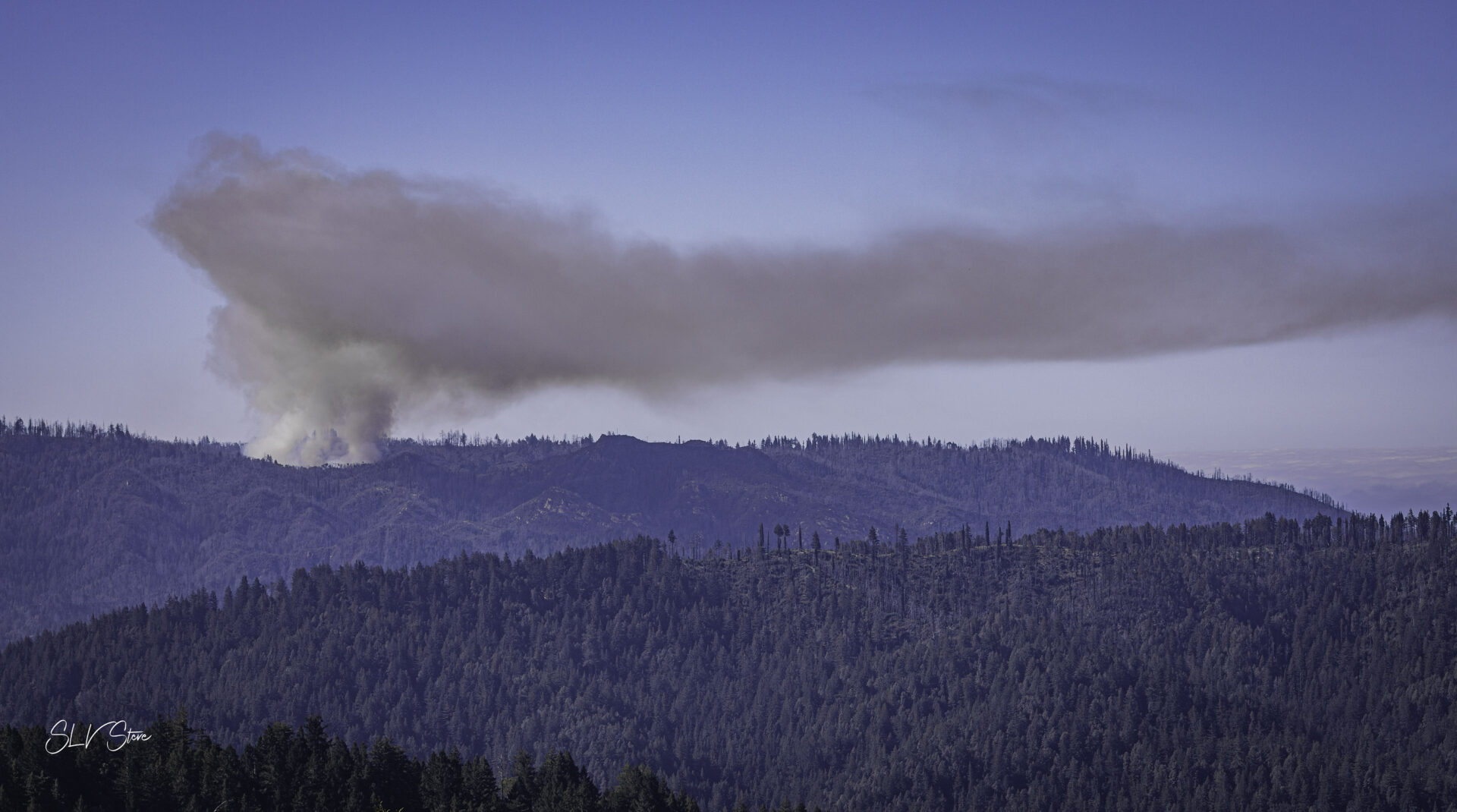
A September 2026 fire in the Santa Cruz Mountains. Photo: Steve Kuehl
It’s an annual weather pattern that strikes fear in the heart of many a Bay Arean. So-called Diablo winds, which arrive every fall, reverse the typical trend of cool, moist air blowing from sea to shore by bringing warm, dry air from inland California — and with it, dramatically elevated fire risk.
Many of the region’s largest, most destructive fires in recent memory have been fanned by stiff easterly or northeasterly winds blowing over parched autumn vegetation.
Here’s why: This time of year, hot interior air over Nevada’s Great Basin begins cooling faster than air along the California coast. Cold air weighs more, so it sinks – and atmospheric pressure builds at the surface.
Since air always flows from high pressure to low, that Nevada air gets pushed west, accelerating through gaps in the Sierra and Coast Ranges. As it sinks toward the Central Valley and then the Bay, the wind heats up and dries out. Humidity often drops into the single digits.
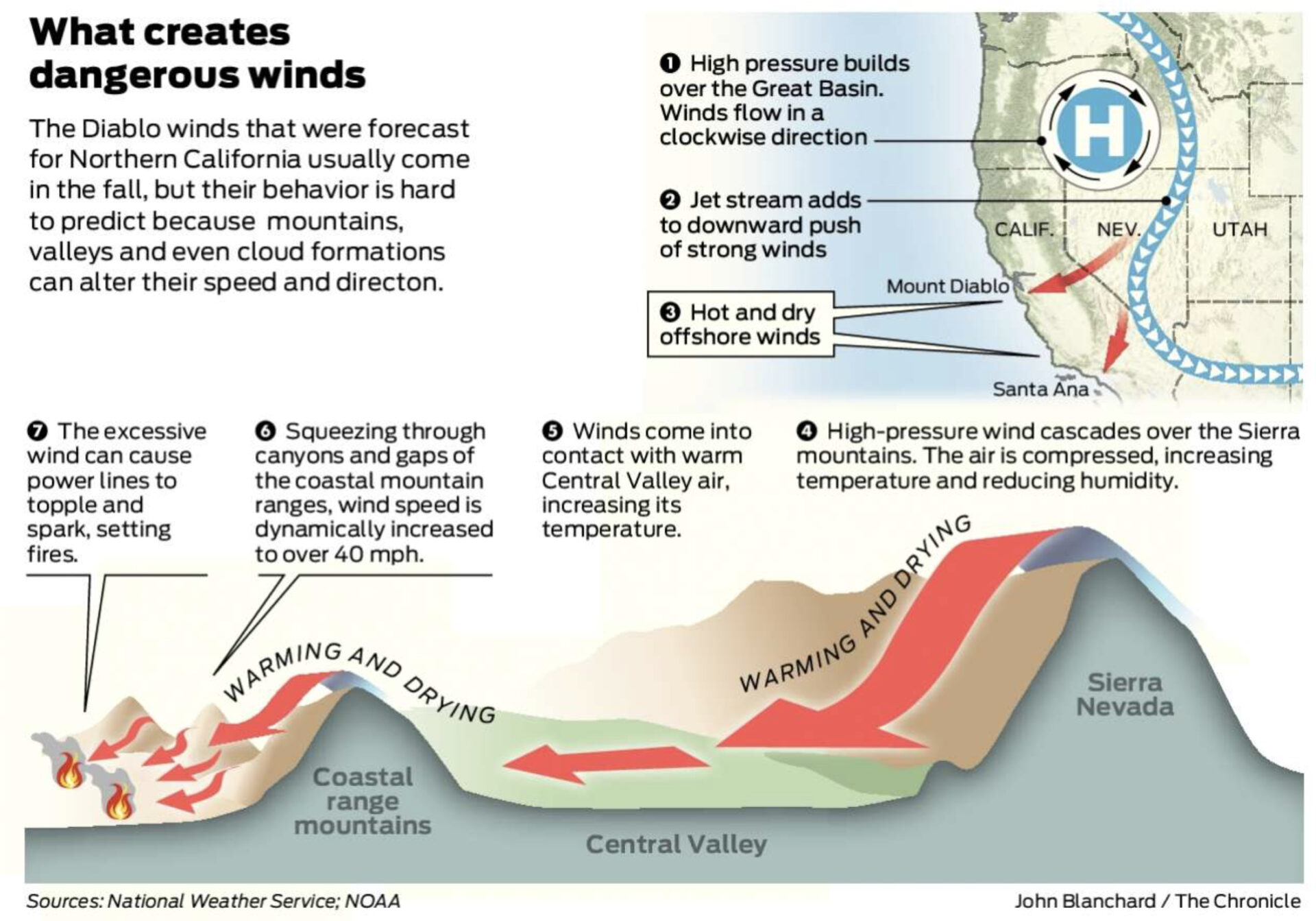
Source: NOAA/SF Chronicle
Other Recent Posts
My Morning Cleaning Up the Oakland Estuary
On Oakland’s Creek to Bay Day, I joined 100 volunteers for I Heart Oakland-Alameda Estuary to remove shoreline trash.
RCDs Pay Extra Attention to North Bay High Schoolers
A $15,000 grant will help three North Bay conservation districts evaluate youth education programs and prepare high school students for environmental careers.
Creeks Make Good & Bad Homes
San Jose State researcher Costanza Rampini explores why the houseless favor creek banks, and how they weather the flood risk.
Bay Area Braces for Record-Breaking El Niño
Record high water temperatures in the Pacific are expected to bring dangerous sea level rise, waves, and rain to the region this winter.
Regional Housing Agency Invests in Affordability
The Bay Area Housing Finance Authority is launching a loan program to support the construction of mixed-income rental properties.
The End is Coming for California’s Untouchable Grass
The law, which applies to grass that isn’t used for recreational purposes, could cut urban water use across California by more than 20% says Oakland thinktank.
Sonoma Vineyard Workers Burn toward a Better Future
A group of immigrant farmworkers are forming a worker-owned cooperative to bring back Indigenous burning practices that used to revitalize the soil.
Climate change won’t alter the fundamental processes behind these timeless winds, known to early settlers of Southern California as Santa Ana winds because of their supposed origin in the Santa Ana Canyon southeast of Los Angeles. But it can certainly make their consequences worse through hotter, drier air; delayed autumn rains; and increased fuel loads from dead trees and heavy grass and brush.
We’ve already seen what can happen when conditions are right. On Oct. 19 and 20, 1991, the Tunnel Fire destroyed 2,840 single-family dwellings and 440 apartment and condominium units in the Oakland and Berkeley hills, setting off a region-wide debate about the suitability of flammable eucalyptus trees that continues to this day.
One thing not in question was that the fire was fed by Diablo winds — though they weren’t called that at the time. The name entered popular parlance after the disaster to differentiate the warm, fire-fueling autumn winds of the Bay Area, which could be said (incorrectly) to originate around Mount Diablo in eastern Contra Costa County, from those of Southern California.
More recently, Diablo winds have been implicated in the catastrophic October 2017 Tubbs, Nuns, and Atlas fires in Sonoma and Napa counties; the October 2019 Kincade Fire in Sonoma County; and the September 2020 Glass Fire, also in Sonoma and Napa counties. Same for the October 2017 Redwood Valley Fire in Mendocino County and the November 2018 Camp Fire in Butte County, technically beyond the Bay Area but fanned by those same easterly winds.
The phenomenon usually eases in early winter, as does fire risk with the first rains. But until then, it’s a fact of life here — and an increasingly worrisome one.