




Sonoma Vineyard Workers Burn toward a Better Future
Years ago, Anayeli Rodríguez left the hills around Oaxaca, Mexico for the vineyards of Sonoma County. But however far she has traveled, the memory of her grandfather’s ritual before the sowing on his farm comes with her, undimmed. Each year, he would pour a shot of tequila into the soil and ask the earth to bless the coming corn or sugarcane. The plants grew and were harvested, and then the stubble was burned to prepare the fields for the next season. And so time passed — growing and burning, season after season.
“We burned so we could sow,” Rodríguez recalls in Spanish.
Controlled cultural fires like her grandfather’s were once widespread among Indigenous people in North America, until European settlers forbade them across much of the continent as part of a broader effort to erase Native cultures. In California, the practice was explicitly outlawed in 1850, and those who dared to set the land on fire were even threatened with being shot. Unlike the United States and Canada, which criminalized fire and enforced suppression aggressively, Mexico restricted traditional burning more unevenly over the 20th century, and bans aimed to protect forests and promote cattle ranching, not force assimilation. As a result, many traditional burning rituals, like the one Rodríguez remembers, endure.
Now, many workers who left Mexico are bringing those fire practices north and using them to regenerate the land. The 2017 Tubbs Fire, which raged through Lake, Napa, and Sonoma counties, changed everything for Rodríguez and other vineyard workers. As they watched the hills burn, they realized their traditions could help save their new home. A fire set with care and intention can restore certain ecosystems and help prevent the ungodly wildfires witnessed in recent years, which climate change is making more common.
“After the 2017 fires, we began doing prescribed burns to burn off pests and dry fuels,” says Jorge Romero, who was among the first to carry out burns in Sonoma rooted in those traditions. “All that to be able to cut down a little on the wildfires.”
What began as roughly a dozen farmworkers has more than doubled. They are trained and backed by North Bay Jobs with Justice, a coalition of more than 30 labor and community groups across Sonoma, Napa, and Marin counties. In recent years, they have brought forests and rivers back to life across the county, and last November they set out to build something on their own: a farmworker-owned co-op to regenerate the land. After a long debate, the more than 20 members agreed to name it Semillas en Manos Unidas, or SEMU for short, which translates to Seeds in United Hands.
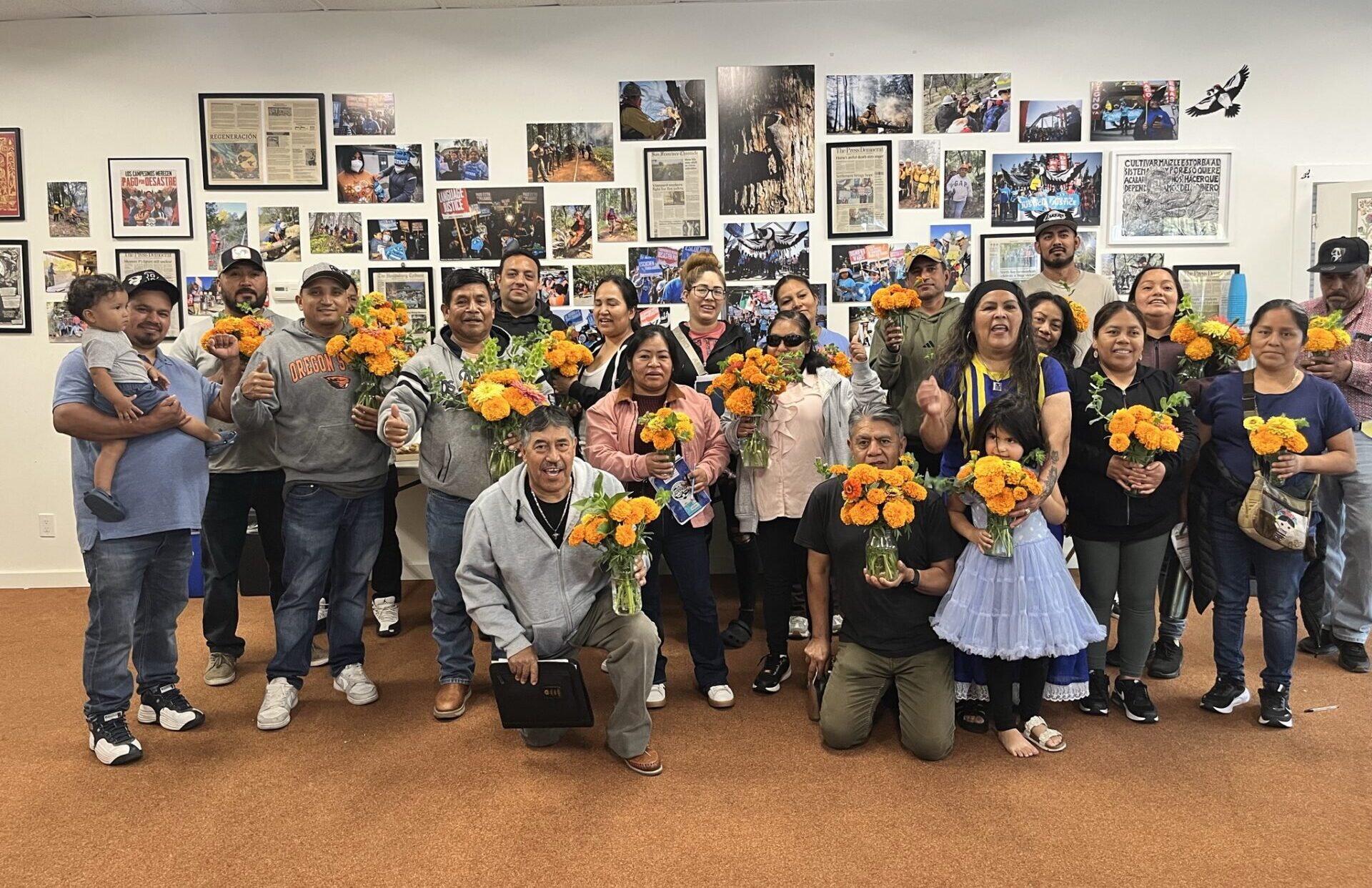
An August SEMU gathering. Photo: North Bay Jobs with Justice Media
The name, SEMU member Anayeli Guzmán explains, is a way of telling the world “they are putting down the seeds of something new, something for the future.”
The co-op has two stated goals: to heal land worn down by decades of industrial farming, and in that process guard it against future fires; and to offer the workers a future they control, a future beyond the vineyards where they have worked for years.
“We chose to operate as a co-op because we don’t want to continue having a boss,” Rodríguez says. “Here, we are all owners. No one is above or below anyone else; we all have equal worth.”
A Future Beyond The Grapes
California’s renowned wine industry is in serious trouble. By its own accounting, the sector still pours $73 billion into the state’s economy and creates more than 400,000 jobs. But Americans are drinking less — Gen Zers in particular — and that shift, along with tariffs and oversupply, has struck producers and affected the livelihoods of many communities who depend on the vineyards.
SEMU workers are well aware of the decline, but they see it as an opportunity, a way out of an industry with a documented record of abuse against them. Their goal, Guzmán says, is to repair the injustices: both the ones they suffered as farmworkers — wage theft, mistreatment, and exploitation — and the ones the land endured from industrial viticulture causing erosion and stripping the soil of vital nutrients.
“For us, the land is essential for life,” she says.
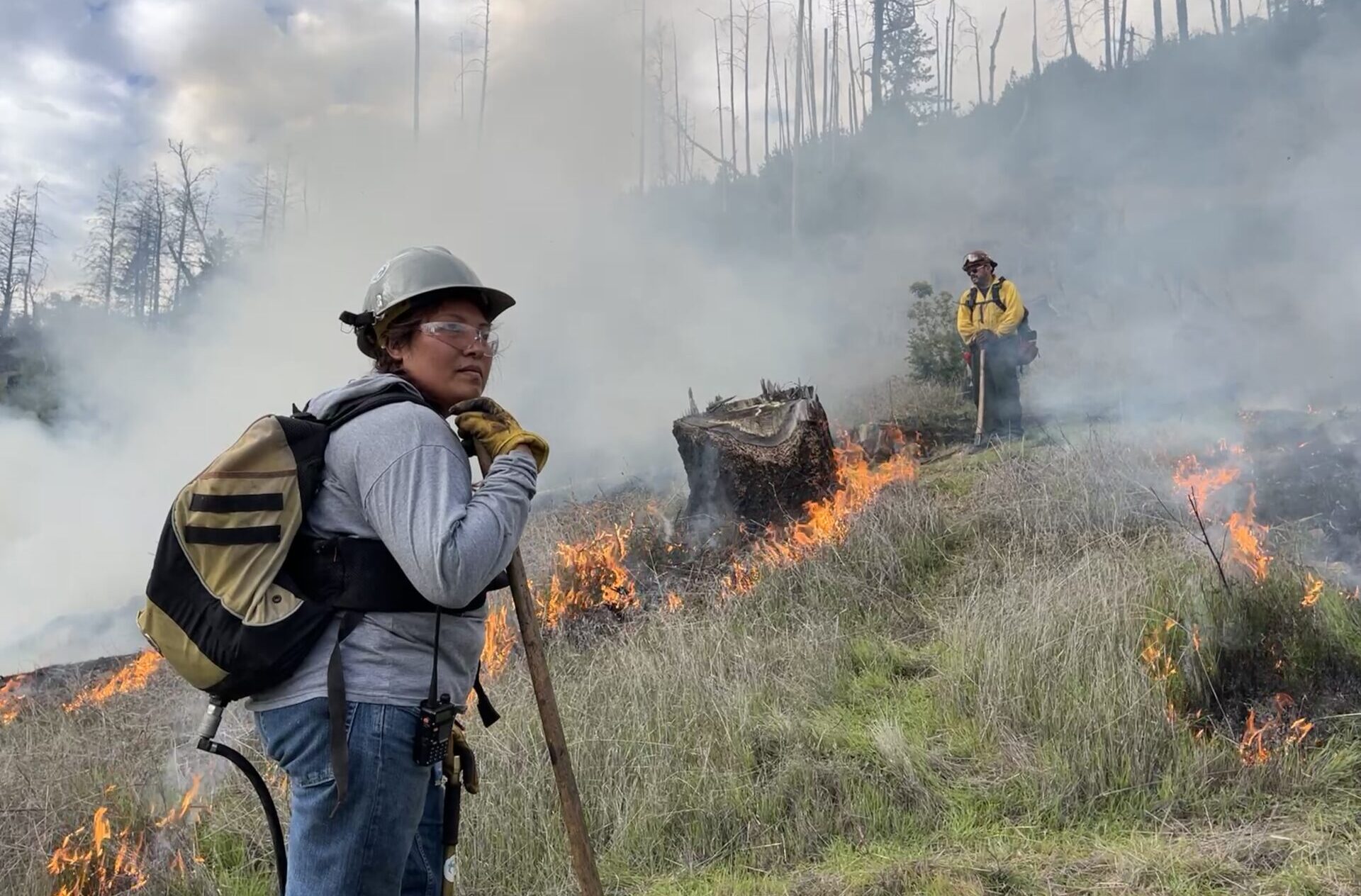
To heal the land, SEMU workers follow a method rooted in their own traditions. Days before a burn, they scan the terrain to judge whether it can hold a fire. If it can, they prepare the ground and mark its boundaries, then trim the lower branches of trees to keep the fire from climbing and spreading uncontrollably. Only then, alongside local Native communities, do they ask for the land’s permission and offer it a blessing by pouring a traditional drink. Then, they burn.
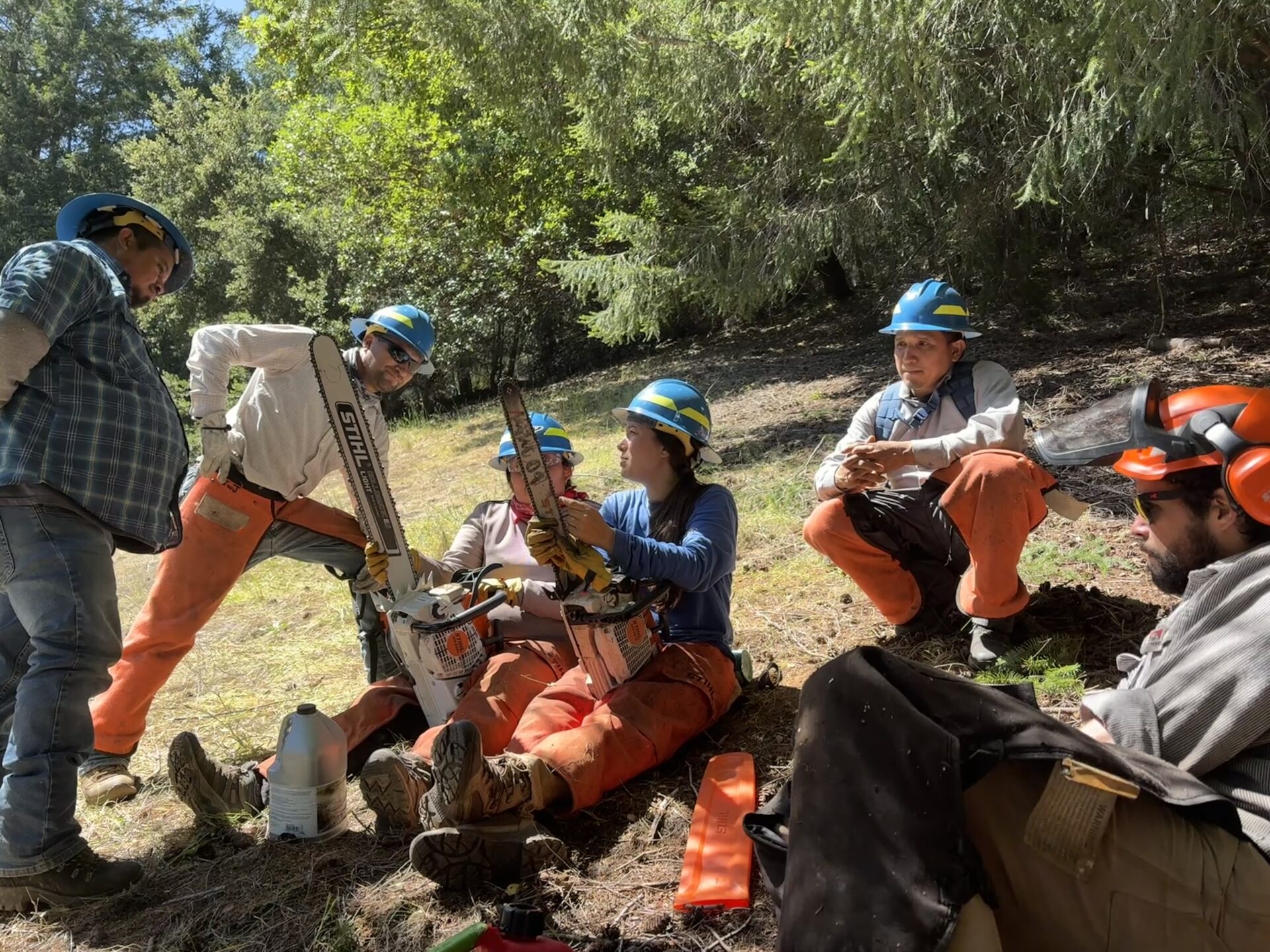
SEMU workers during a chainsaw training in May 2026. Photo: North Bay Jobs with Justice
In the seasons since, Rodríguez has watched this fire bring the land back to life. The crew has seen seeds that slept for more than a century awake and green the soil. The burns, carried north from Oaxaca and other parts of Mexico, have also helped Native communities recover practices they had nearly lost.
“Sometimes they start talking with us, and many of them had no idea how burns used to be done. We tell them how we do it, and they begin to remember how their grandparents did it,” Rodríguez says. “These were practices that they were losing, too. But now, with the big fires that have happened around here, we are bringing that culture back to life.”
SEMU is still developing, and its members are finishing the details to formally establish it. Their dream is to grow into a place where other vineyard workers can own their labor and make the land livable in a warming world.
“The cooperativa is changing all the bad stuff we were living for something better,” Guzmán says. “ It’s the bridge to that dream we all share.”
For Rodríguez, it’s another kind of bridge, one between the Oaxaca she left and the Sonoma she is making. Few things make her happier than a day in the fields, where her parents, grandparents, and the ones before them feel so close.
“I get depressed working indoors. When they tell me there’s a project, I’m happy, delighted with life,” she says. “It’s my best therapist.”
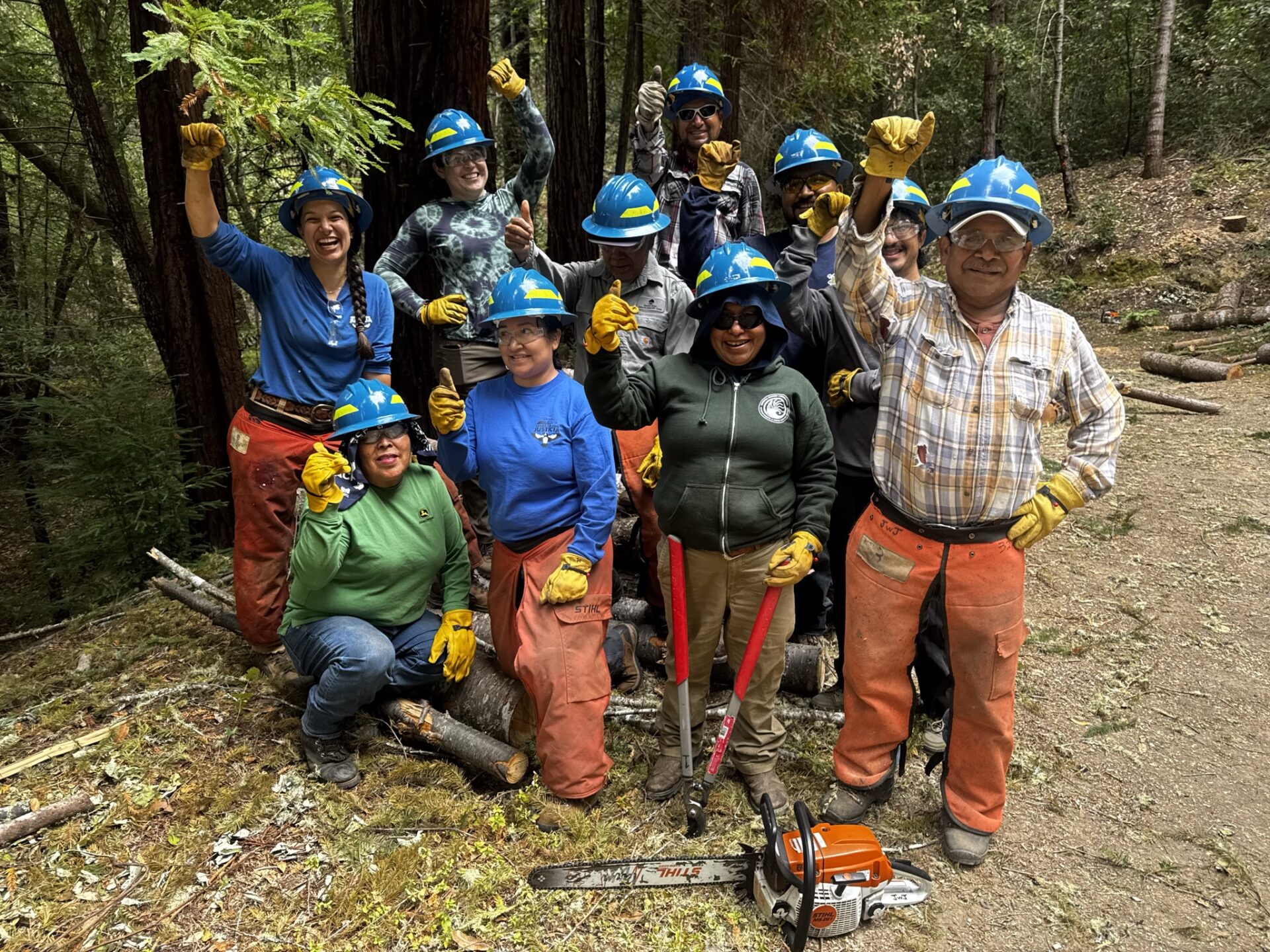
North Bay Jobs With Justice