


San Francisco Youth Explore Flood Risk on Home Turf
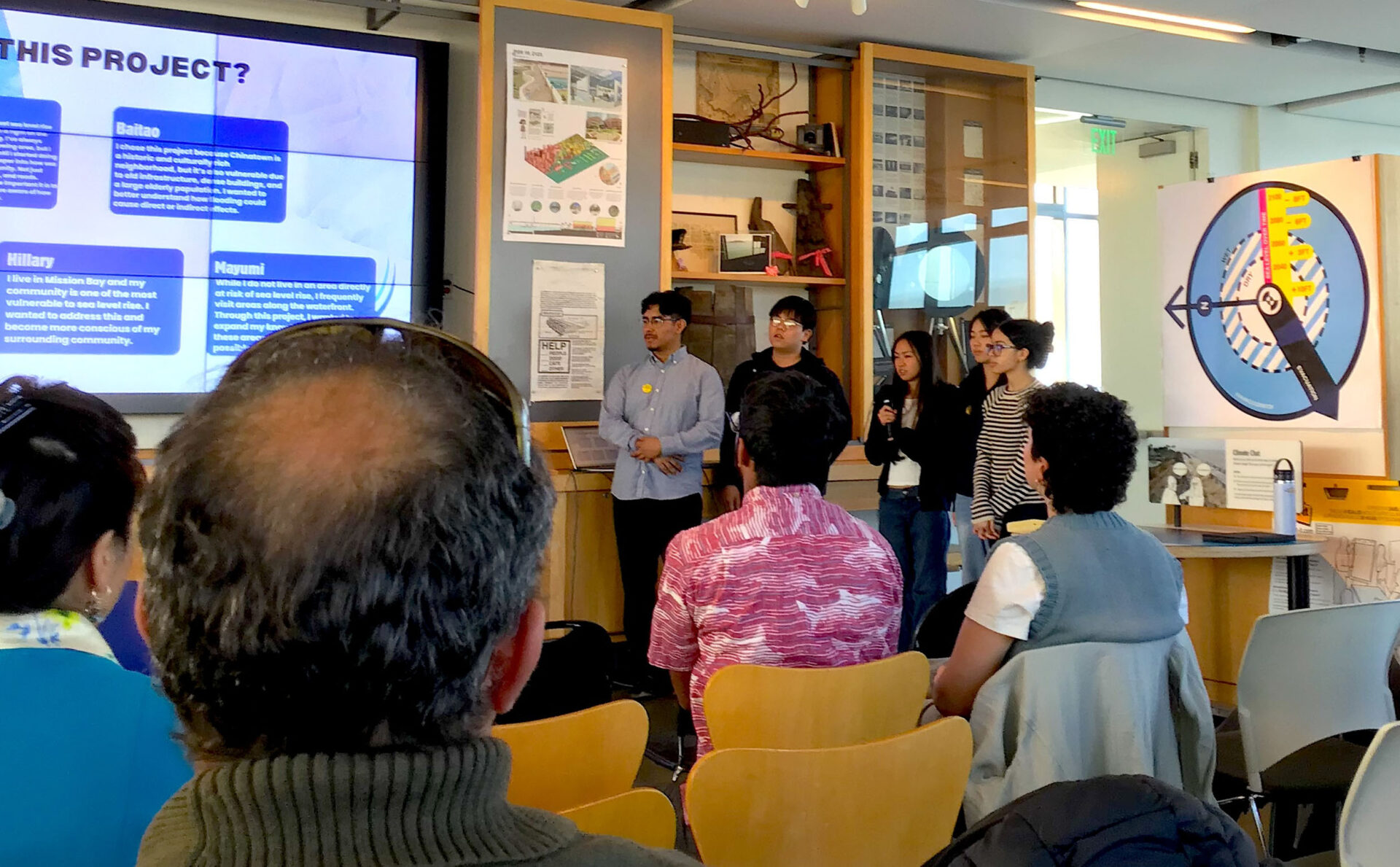
Youth present. Photo: Ariel Okamoto
“I used to think of the city as mainly views and restaurants, I never saw the other side,” said Alex, a dark-haired, bouncy student from San Francisco’s Lowell High School, to a crowd of regional planners, local leaders, and parents at the Exploratorium on May 7. Alex was one of 16 high schoolers who spent 15 weeks between January and March 2025 visiting the urban infrastructure that supports San Francisco and learning from local experts about trash collection and recycling, sewage treatment, port operations, service careers, environmental restoration, sea level rise, and more.
“When I first started working for government, it blew my head open, finding out about how everything works in our city and region,” said Phoenix Armenta, who organized this Shoreline Leadership Academy. Armenta is the senior manager for climate equity and community engagement for the SF Bay Conservation & Development Commission. “I wanted to make sure others figured out how to access everything going on,” they added.
The academy was organized by the Bay Commission to help Bay Area residents learn about flood risks from sea level rise, so they can then become experts for their own communities. The Commission, which is leading regional sea level rise planning efforts, sees informed residents as key to getting community engagement on adaptation options. A pilot academy trained 14 Oakland adults, seven of whom now serve on critical public advisory committees. This second academy focused on youth in San Francisco. A third academy, slated for summer 2025, will work with adults in Contra Costa County.
At the May 7 completion celebration, youth participants presented their special projects and experiences to adults and peers. Teenager Sisto’s favorite tour was Recology: “I liked seeing all the machinery, and the steps they take to sort our trash. We wore safety helmets and vests. It made me feel like I was working there.”
Simonetta organized a trash cleanup around the Ocean Beach firepits: “A lot of locals passing by participated, and they were much nicer than I thought they would be. But we only filled three bags. It was a lot cleaner than I expected.”
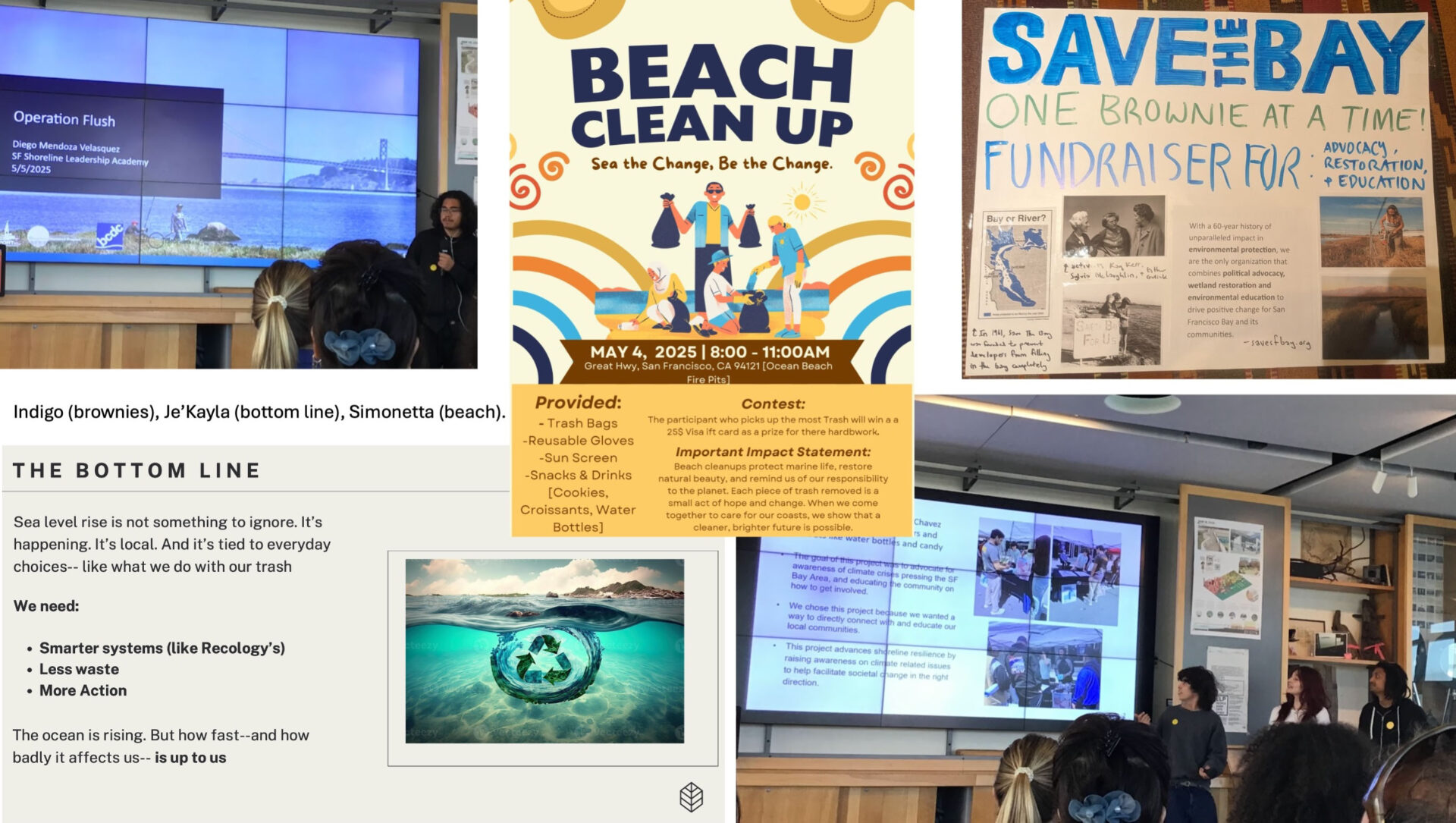
Collage of images from youth presentations. Photos: Ariel Okamoto
Five students worked together to document flooding and flood risk in their home neighborhoods with disposable cameras. Anfal, a young woman whose family emigrated from Morocco, told us how she takes her cat on walks to the bayshore. “I’ve moved a lot in my life, but I really like Mission Bay where I live now. I found out it’s really vulnerable to sea level rise.” Baitao shared a photograph of the new subway station in Chinatown. He explained that though his neighborhood is on a hill, its main connection to the city and region is through underground subway tunnels that could flood. Dylan, a Lincoln High student in a serious button-down shirt with a collar, told us about the day he got robbed in the Inner Mission and “sobbed,” and the day he had to traverse a “really big puddle” at Folsom & 9th after the heavy rainfall of 2023. Mayumi, a Lowell student, captured another giant puddle with her disposable camera in the Marina Safeway parking lot. “It’s a health risk. Mosquitoes can grow there,” she explained. Hilary, a senior also at Lowell, showed a photo of a planter made out of a car tire: “I see residents in my community use resources wisely to create green life.”
According to Baitao, they all learned that climate change isn’t just about science — it’s about “people, history, and justice.”
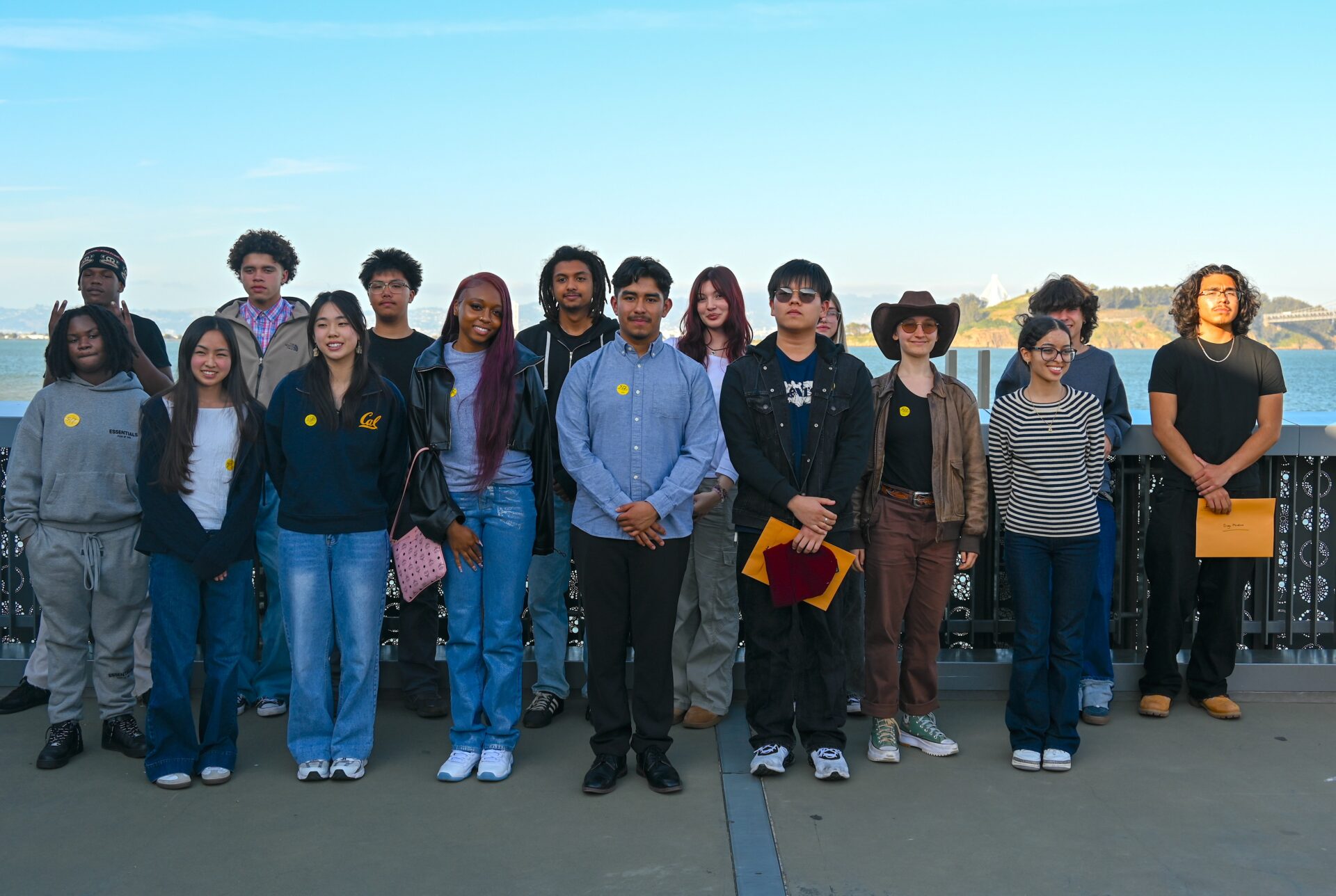
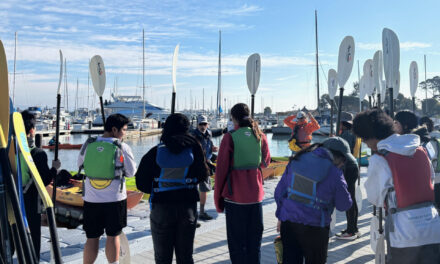
Shoreline Academy participants. Photo: Port of San Francisco
As the presentations continued and ferries surged back and forth outside the windows of the Exploratorium’s Fisher Bay Observatory, the students bubbled, waffled, giggled, consulted, and even powered through technical glitches as they passed the mic.
Indigo, sporting a cowboy hat, talked about the bake sale she held for Save the Bay (raising and donating $85 from her chocolate chip cookies). Diego, who lives in the Excelsior but often visits buddies in Hunter’s Point, shared his research on toxic cleanup progress in the neighborhood surrounding the former naval shipyard, and how flooding could worsen the situation: “I give my friends more credit than I used to for what they have to live with.”
Je’Kayla narrated polished slides with a crystal voice and nailed her take-homes: “The water is rising, but the city isn’t moving, which is a problem.” A team of four students — Dimaryea, Kyle, Caine, Ti’Ari — shared a clip from their “Baywatch” podcast project urging listeners not to be too depressed about sea level rise. The music was good.
Other students — Alex, Sisto, Nalin — thought it would be good to connect with the community, so they organized a table at the Cesar Chavez festival in the Mission District. They gave out water and snacks, and laid out maps so they could talk about flood risk and other things going on in their city. “We weren’t prepared for the amount of people who wanted to donate,” said Nalin, laughing. They had no way to take money for regional sea level rise planning, she said.
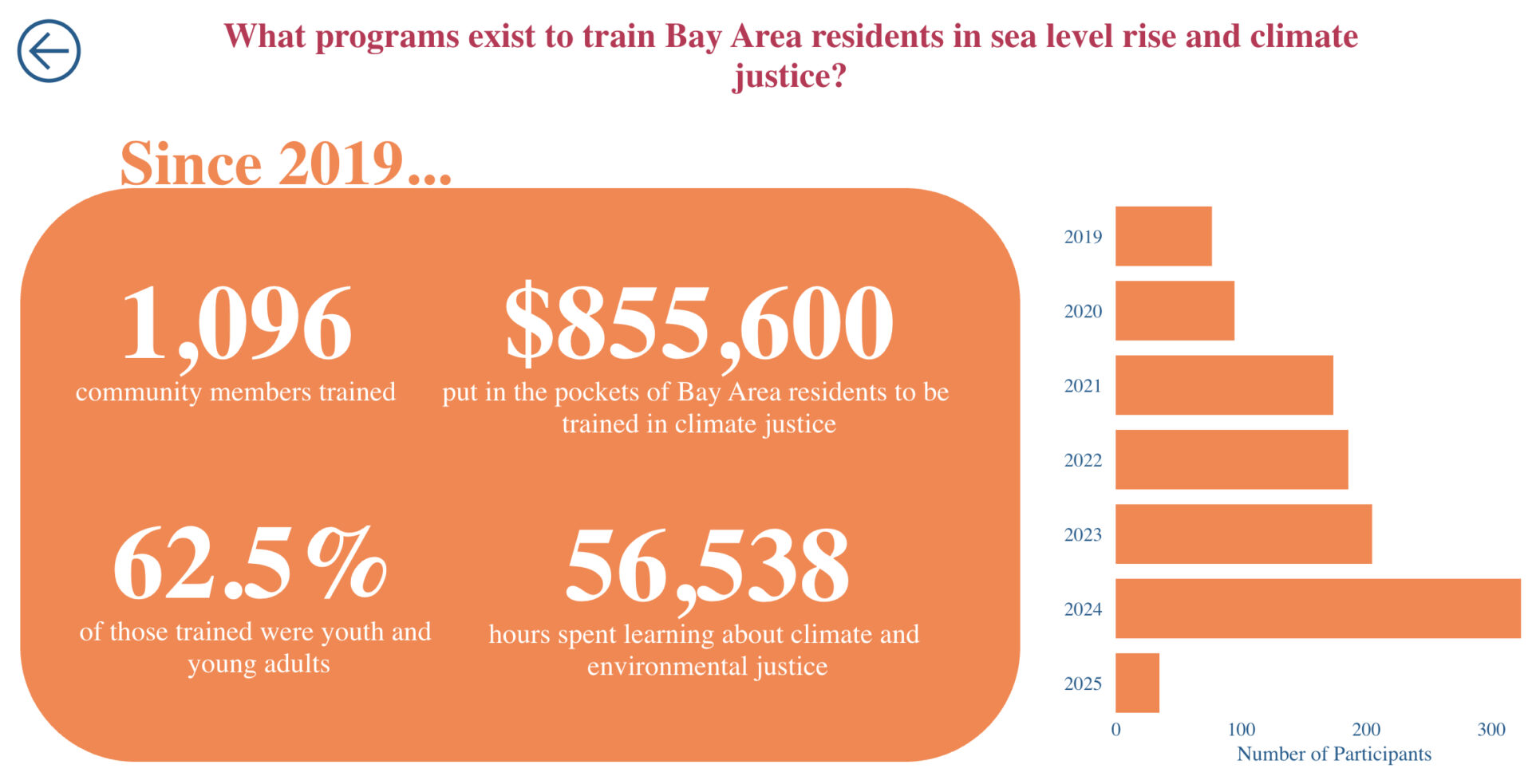
Metrics on engagement from SFBCDC's Bay Adapt program.
Clearly, the investment made by the Bay Commission, Exploratorium, Port of San Francisco, NOAA (who provided grant money), and the many subject matter experts and trainers who gave their time to these young people will pay off. They know something they didn’t know before, learned about careers in public service, observed the strengths and vulnerabilities of their city firsthand. “The program made me realize education doesn’t just happen in the classroom,” said Je’Kayla.
The adults helping out learned, too. “We must never underestimate youth,” said the Exploratorium’s Susan Schwartzenberg. “When you don’t think they are listening, they are truly soaking it all up and can amaze you with their insights, their care for the future, and their newly found ambition for not only themselves, but how they can make a difference in civic life going forward.”
At the end, Armenta handed out certificates and knit caps to the students. She hopes to see more local folks trained in shoreline leadership in the years ahead: “We need a coalition of everyday citizens who understand the issues.”
Other Recent Posts
Regional Housing Agency Invests in Affordability
The Bay Area Housing Finance Authority is launching a loan program to support the construction of mixed-income rental properties.
The End is Coming for California’s Untouchable Grass
The law, which applies to grass that isn’t used for recreational purposes, could cut urban water use across California by more than 20% says Oakland thinktank.
Sonoma Vineyard Workers Burn toward a Better Future
A group of immigrant farmworkers are forming a worker-owned cooperative to bring back Indigenous burning practices that used to revitalize the soil.
Los trabajadores de los viñedos de Sonoma queman por un futuro mejor
Un grupo de trabajadores agrícolas inmigrantes está formando una cooperativa de propiedad de los trabajadores para recuperar las prácticas indígenas de quema que solían revitalizar el suelo año tras año.
New Voices Shape Design of Berkeley’s North Basin Strip
Twenty acres of parkland between the highway and the Berkeley shore are slated for a coast-resilient makeover, with input from locals and stakeholders.
It’s Always Sunny In North Fair Oaks
Residents of the unincorporated community launched their second campaign in two years to get the county to care for dying street trees.
Siempre está soleado en North Fair Oaks
Los residentes de la comunidad no incorporada lanzaron su segunda campaña en dos años para lograr que el condado se ocupe de los árboles de la calle que se están muriendo.