

Santa Rosa Residents Rethink Trees
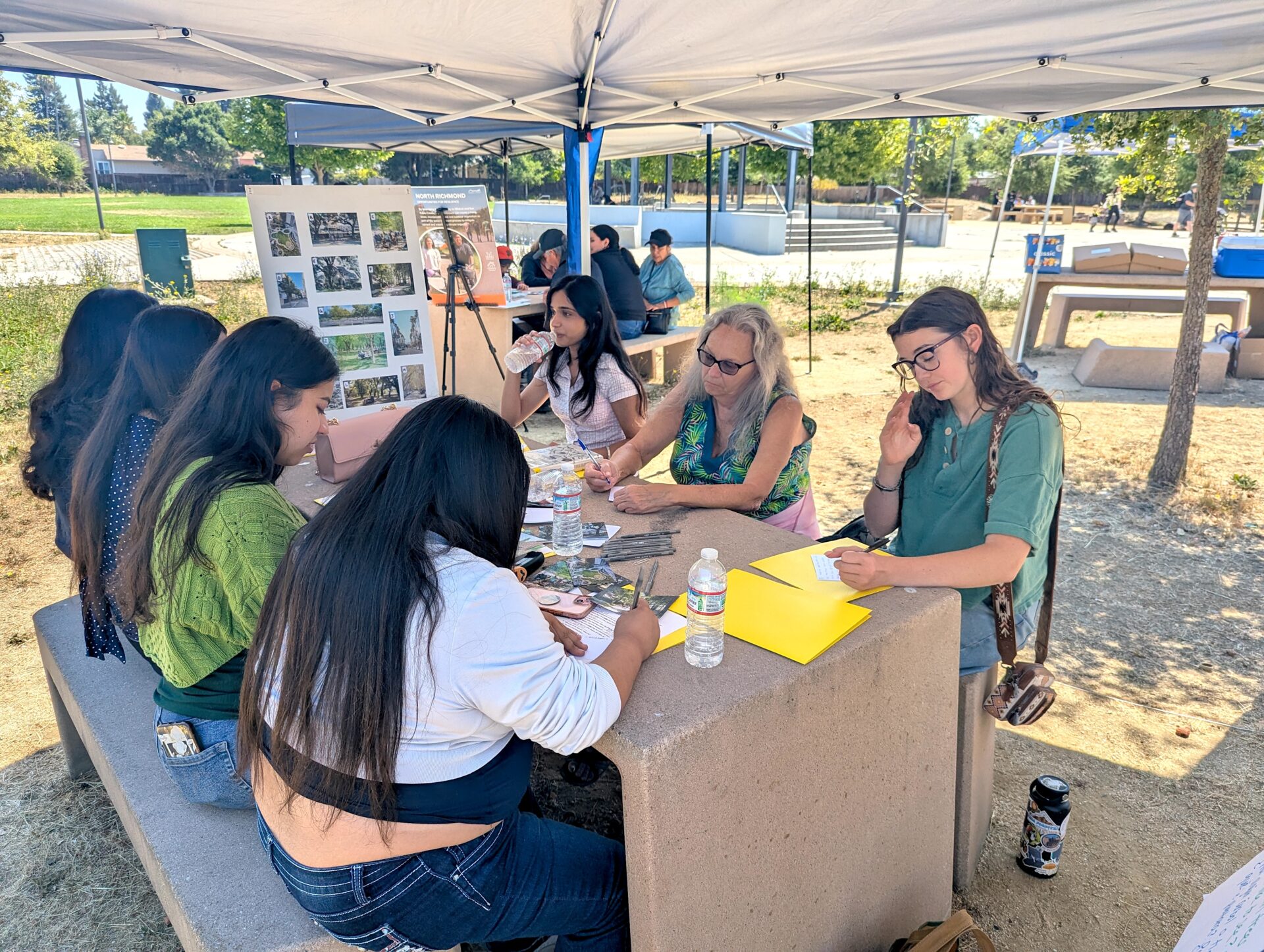
Photo: Sadie Wilson
As the August sun broke through the morning fog in southwest Santa Rosa, two dozen local residents convened in the gravel picnic ground of Bayer Park and Gardens. They found seats under a shaded awning, and the group did what strangers often do: They talked about the weather. Their neighborhood — called Roseland — had gotten hotter over the years, many agreed, with global warming trends apparently taking noticeable effect. Air conditioners had only recently become a valued commodity. One man said he used to live in a cooler place nearer the ocean but was squeezed by rising rent to the much more affordable — but also much hotter — Roseland.
Roseland, in fact, has been recognized by state officials as one of California’s most heat-burdened communities — which is largely attributable to its dearth of street trees and urban canopy. Now, it’s due for a climate mitigation makeover. To carry out this upgrade, the community planning group Greenbelt Alliance, along with Latino Service Providers, is facilitating the use of a $473,115 grant recently awarded by the state to develop an “extreme heat action plan.”
Other Recent Posts
Regional Housing Agency Invests in Affordability
The Bay Area Housing Finance Authority is launching a loan program to support the construction of mixed-income rental properties.
The End is Coming for California’s Untouchable Grass
The law, which applies to grass that isn’t used for recreational purposes, could cut urban water use across California by more than 20% says Oakland thinktank.
Sonoma Vineyard Workers Burn toward a Better Future
A group of immigrant farmworkers are forming a worker-owned cooperative to bring back Indigenous burning practices that used to revitalize the soil.
Los trabajadores de los viñedos de Sonoma queman por un futuro mejor
Un grupo de trabajadores agrícolas inmigrantes está formando una cooperativa de propiedad de los trabajadores para recuperar las prácticas indígenas de quema que solían revitalizar el suelo año tras año.
New Voices Shape Design of Berkeley’s North Basin Strip
Twenty acres of parkland between the highway and the Berkeley shore are slated for a coast-resilient makeover, with input from locals and stakeholders.
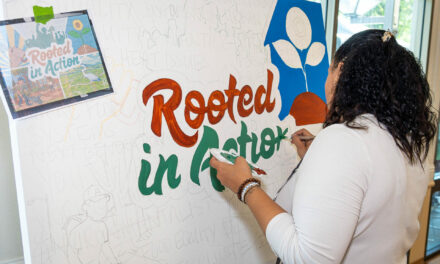
Questions for community discussion. Photo: Sadie Wilson
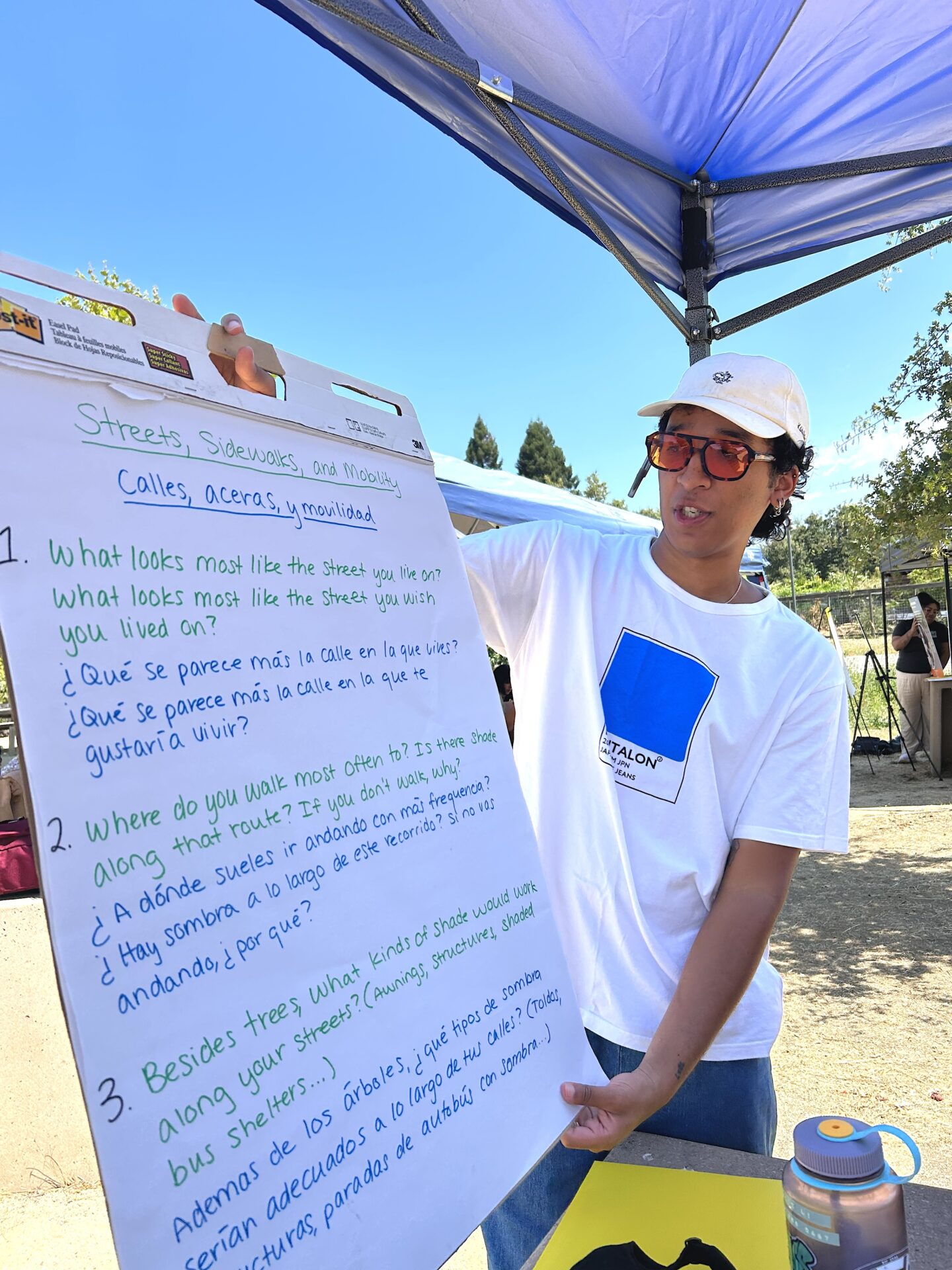
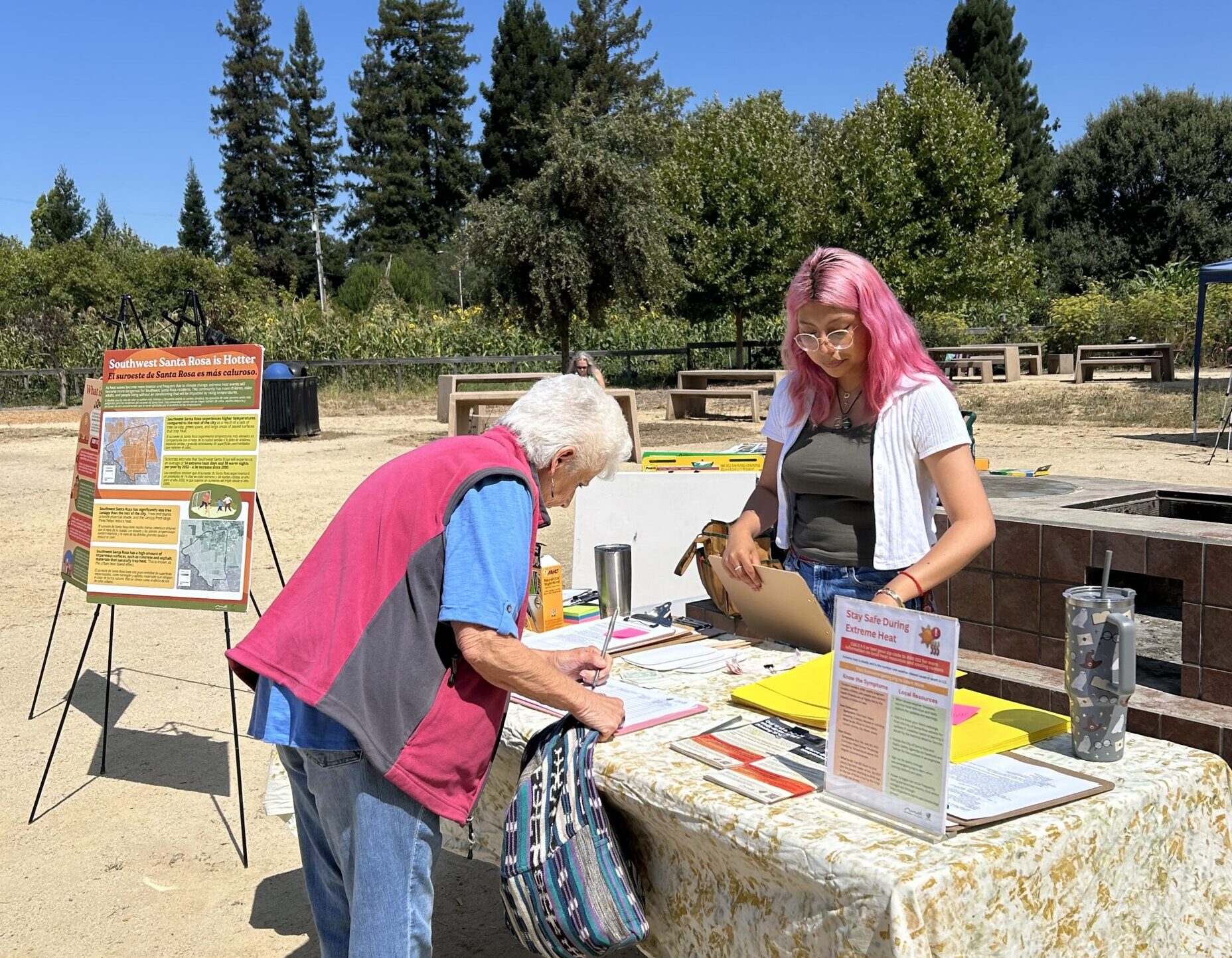
The day’s gathering, hosted by the two groups, featured a clinic showing citizens how to monitor and mediate neighborhood heat. It also sought feedback on what improvements were needed and where in Roseland to help reduce ambient temperatures. The event came on the heels of a variety of other community outreach efforts, including focus groups and a nine-month youth training program.
Ben Rosel, a 27-year-old resident, had come to the day’s event hoping to help initiate what he recognizes as his neighborhood’s need for more greenery. He cited the difference in tree canopy between Roseland, where he lives, and the streets near downtown Santa Rosa.
“You go down that neighborhood — wow, the trees are amazing,” Rosel says. “They’re covering the houses, the sidewalks, and they’re beautiful, they’re luscious. You just don’t get that here.”
Checking in locals for the workshop. Photo: Sadie Wilson
Trees provide shade while also transpiring water, a cooling process that can dramatically reduce temperatures in forested as well as urban areas. Trees along roadways also tend to slow and “calm” traffic, improving overall safety. By contrast, areas lacking trees can be remarkably hotter — as most who bike or walk between neighborhoods during heat spells will observe.
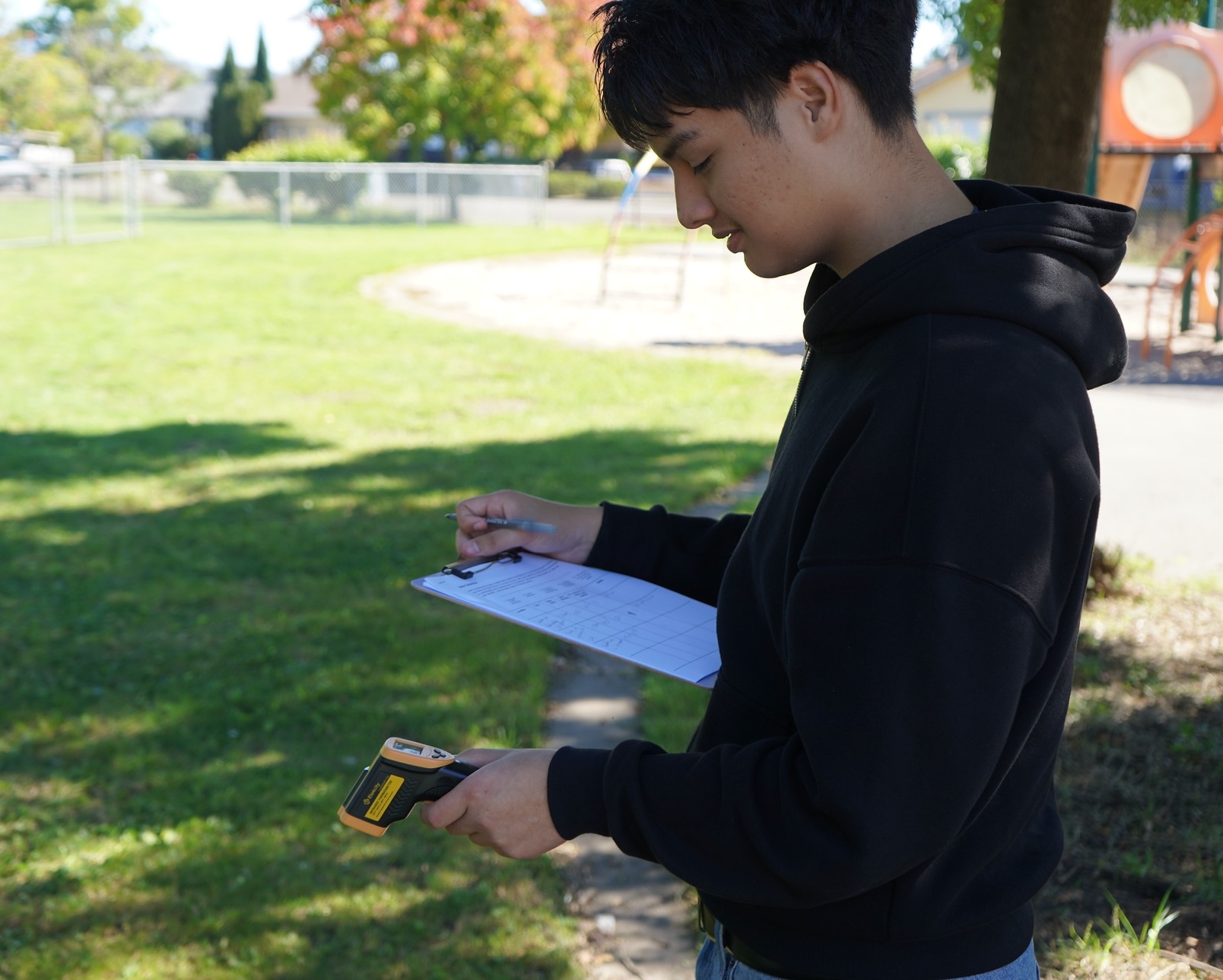
Surface type also affects temperatures, something attendees at the Bayer Park clinic saw for themselves by using infrared “heat gun” thermometers, made available by the organizers. One participant recorded a surface temperature of 95 degrees Fahrenheit on the exposed hardpacked gravel of the picnic ground, 72 degrees on the same gravel in the shade, and just 59 degrees in irrigated grass under the shade of a healthy tree, where it had barely warmed since sunrise.
More formal temperature data would be gathered by participants using pocket-sized digital LogTag temperature recorders loaned out by the clinic organizers. Cesar Estien, an urban ecologist with the firm Second Nature Ecology and Design, gave a brief tutorial on using the devices, which participants would bring home, activate, and return a month later. The temperature readings would be compared to tree canopy patterns to improve high-resolution understanding of how the built and planted environments impact specific urban microclimates.
Heat gun test during a prior Santa Rosa workshop. Photo: Stephanie Manieri, Latino Service Providers
Cities across the country vary wildly in canopy cover. Data from the Arbor Day Foundation shows Santa Rosa shaded by a canopy covering 22% of the city. That’s a jungle compared to the 8% canopy of Bakersfield in the California desert, but it pales against Sonoma’s 30%, Boston’s 51%, and East Hampton’s 61%. Greenbelt Alliance reports that Santa Rosa offers about six acres of park per 1,000 residents, but that in Roseland the ratio wilts to less than one acre per 1,000 people.
“We used to put all the things we don’t want in one place, and only the people who could afford it would live in places that flood the most, the places that are the hottest,” says Sadie Wilson, Greenbelt’s senior director of research and planning, who helped direct the clinic. Southwest Santa Rosa is disadvantaged both economically and infrastructurally, with its lack of greenery just one defect imposed by community leaders generations ago, she says. “Now, we’re in the process of undoing that.”