




Don’t Tidy, Leave Winter Homes for Insects
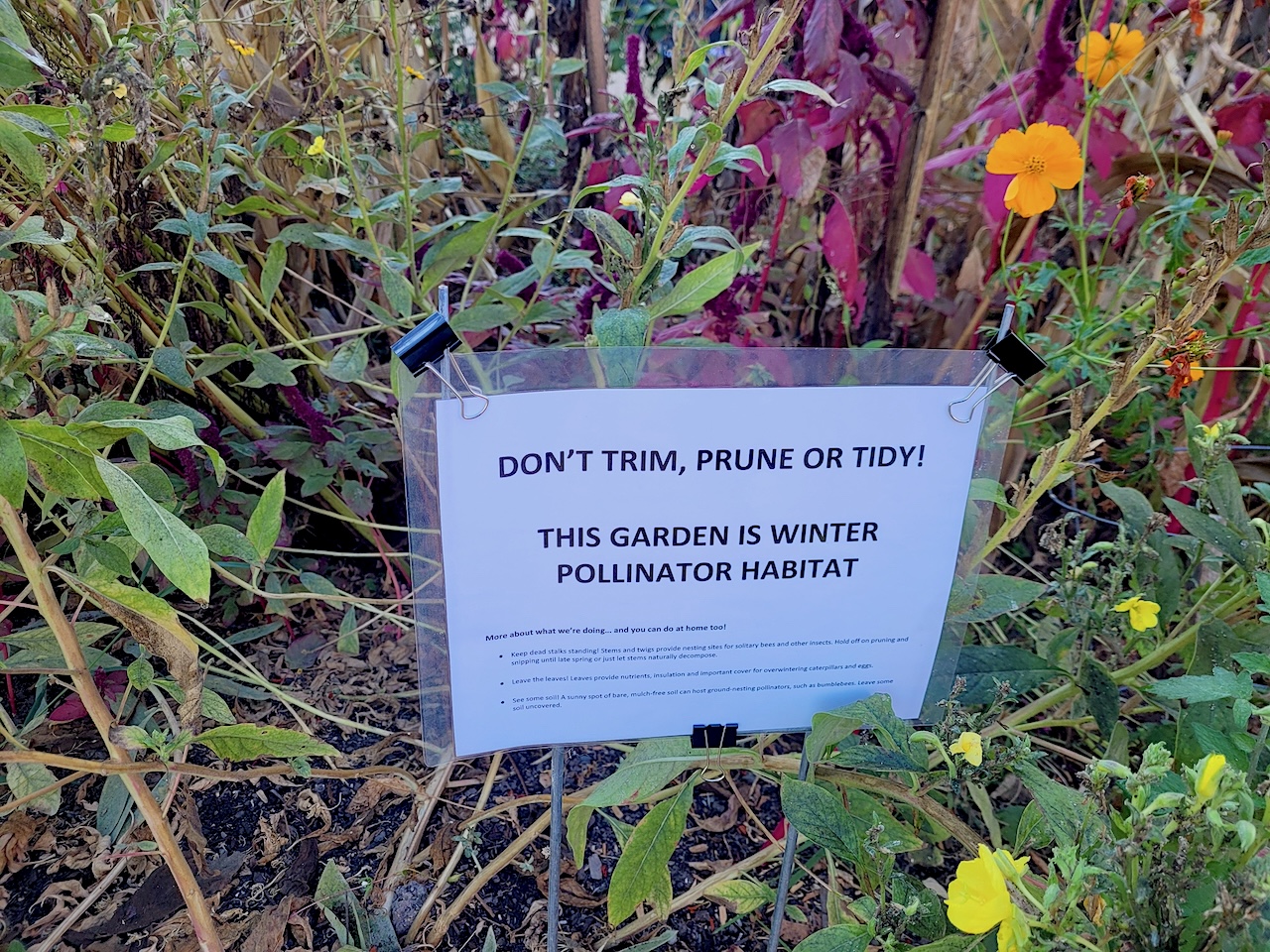
Photo: Jacoba Charles
This is a season when many northern Californian gardeners feel an urge to tidy. Fallen leaves carpet lawns and yard furniture; the annual flowers and vegetables that brought joy throughout spring and summer have turned brown. For many of us, the siren song of compost piles and leaf blowers grows louder every day; it is an ingrained time to trim, pull, and rake all the dead material out of sight.
But there is a different chorus encouraging you to wait and reconsider: advocates for our wild pollinators. Thousands of species of beneficial insects need to find just the right natural space to overwinter in, and a tidy garden offers few options.
“When we create habitat for pollinators, it’s important to consider the whole life cycle of the animals we’re trying to welcome into our gardens,” says conservation biologist Angela Laws, of the Xerces Society. “If we want butterflies and bees in the spring, we need to provide a safe place for them during the winter.”
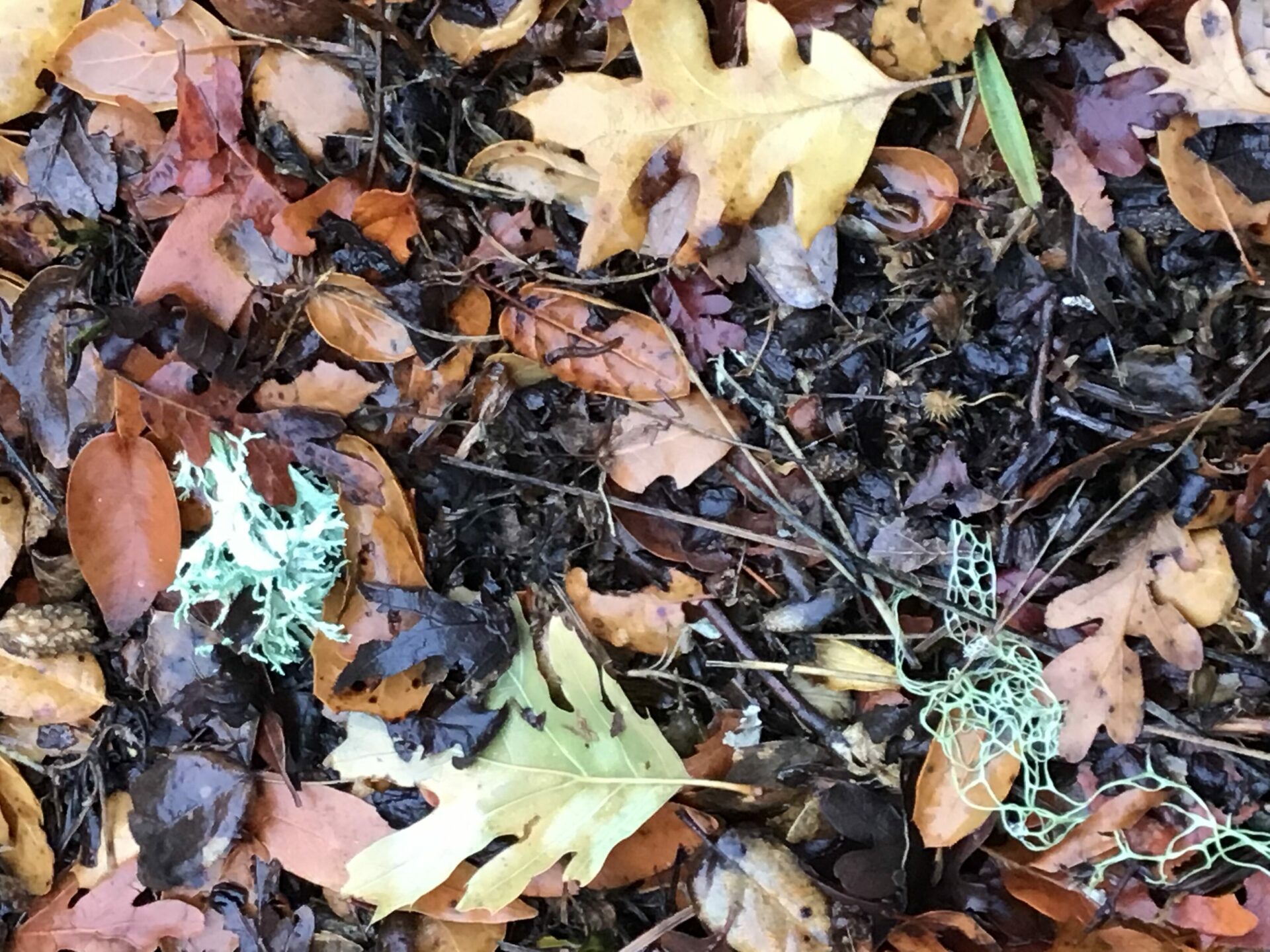
Dead leaves make excellent mulch. Photo: Ariel Okamoto
This is a good policy no matter where you garden, but it is particularly vital in more developed areas — where every scrap of habitat is essential. This habitat is also increasingly important in the face of a changing climate. As our beneficial insects face population declines and climate conditions that are out of step with their biology, they will depend on micro-habitats such as gardens to survive.
However, pollinator-friendly gardening means changing the aesthetic and expectations for your winter garden.
“It’s important for people to get used to a more natural look in their environment,” says Liz Sanders, an instructor with the Regenerative Educational Alliance.
Features to preserve in your winter garden include standing dead stems, particularly those that are “pithy,” or hollow. Different stems host different species, so experts recommend maintaining a variety of shrubs and flowers; thistles, yucca, raspberry, elderberry, and echinacea all make good winter homes for bees, spiders, (beneficial) wasps, and moths. Preserving seed heads is also recommended.
“By leaving some messy parts of our yard, we provide a place for these animals to survive the cold, rainy winters so that they’re ready to emerge in spring,” says Laws.
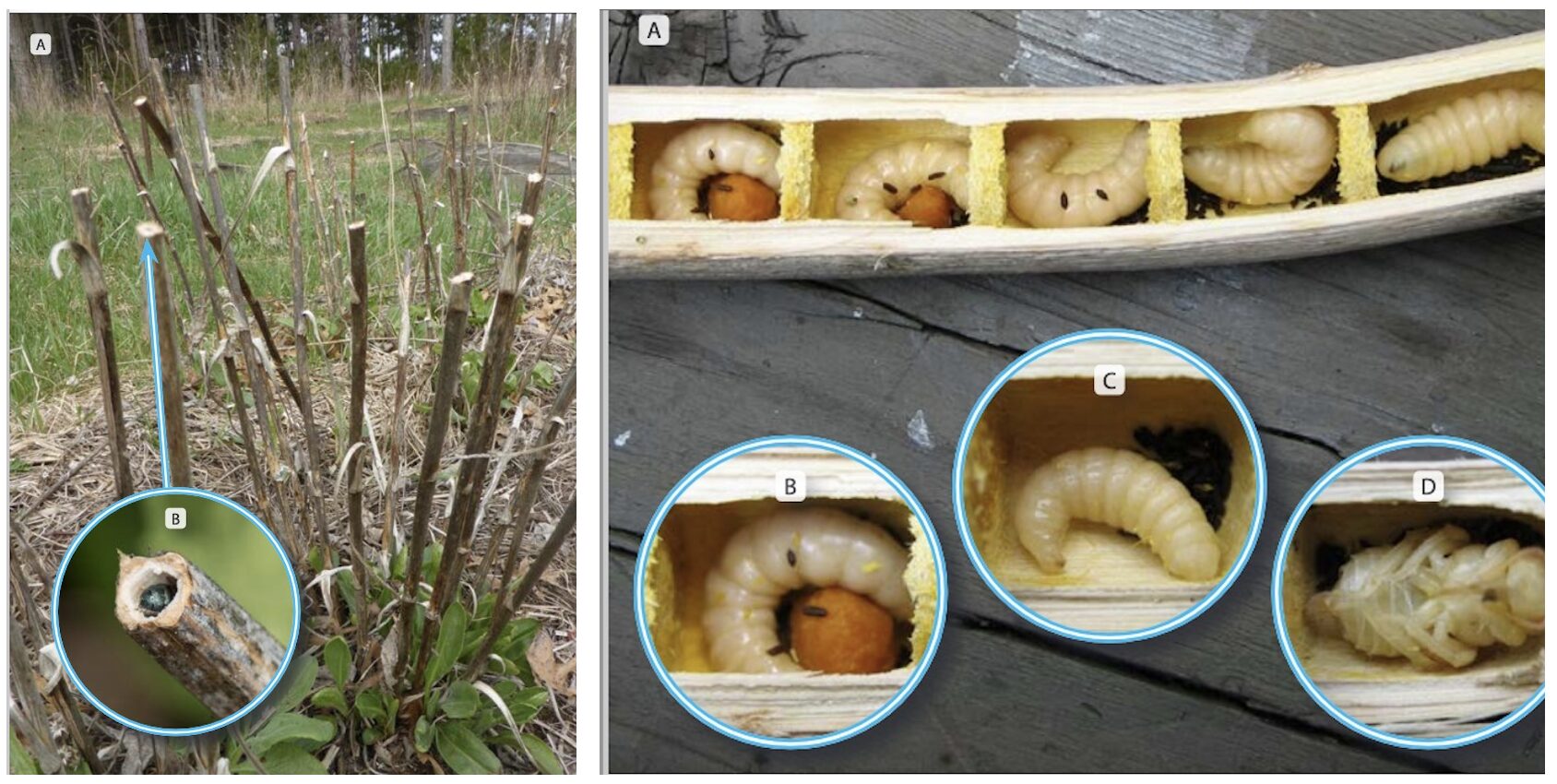
Standing dead wildflower stalks make ideal insect hotels; inside the yucca stems on the right many carpenter bee larvae are developing. Photos: Xerces Society
“Leave the leaves” is another motto for your new winter garden. Leaf litter protects eggs, butterfly chrysalises, and even overwintering queen bumblebees. The layer of leaves also serves as insulation, protecting soil dwellers when temperatures dip below freezing. While a light scattering of leaves won’t hurt your lawn, any unwanted leaves can also be raked into piles around trees, into flower beds, or under shrubs where they will double as mulch and fertilize the surrounding plants. Many commercial forms of mulch — as well as other features such as landscape fabric or gravel — can block ground-dwelling pollinators from needed habitat.
Rock walls, rock piles, stumps, and even standing dead trees (where safe) also offer niches for pollinators to overwinter in. Other tips include avoiding tilling and insecticides.
Offering a diversity of overwintering habitat is key, as each species of pollinator has its own unique life cycle, instincts, and needs. California is home to 1,600 different native bee species alone — and all of them are important pollinators, as are many other insects including flies, moths, butterflies, beetles, and wasps.
“If you let [the tidying] go until the spring, you’re protecting soil and all those insects that are beneficial and that we literally need for pollination,” says Sanders.
Other Recent Posts
New Study Shows Rain Gardens Filter Chemicals Out of Stormwater
Scientists found rain gardens dramatically reduce toxic chemicals in stormwater while providing biodiversity and cooling.
The Tricky Art of Growing Oysters in the Lab So They Can Survive in the Field
The Nature Conservancy, the Amah Mutsun Tribal Band, and others are growing oysters in the lab and planting them in the wild in estuaries around San Francisco Bay.
Printing Without Plastic: The Vintage Machine Winning Over Eco-Conscious Artists
This comic guide to risograph printing explains how the 1980s Japanese machine cuts energy use and avoids plastic toner.
East Bay Kids Fight Extreme Heat in their Schoolyards
Many California schools are ill-equipped to tackle heat, with many campuses lacking sufficient tree coverage. These students are fighting to change that.
How a North Bay Regional Park Helped Me Reconnect With Nature — and Myself
A young Fairfield resident reflects on how hiking during the pandemic became a refuge from digital overload and the growing realities of climate change.
Wild Pigs Rough Up Bay Area Greens
They tear up landscapes in search of food, prey on native wildlife, and damage streams, and warming could bring them closer to urban areas.
Residents Chose Different Ways to Respond to Contra Costa Flood Challenges
Graduates of a shoreline leadership program in Contra Costa County recently pitched their ideas for sea level rise education and adaptation.