



Dancers & Divas Conjure Climate Art and Island History
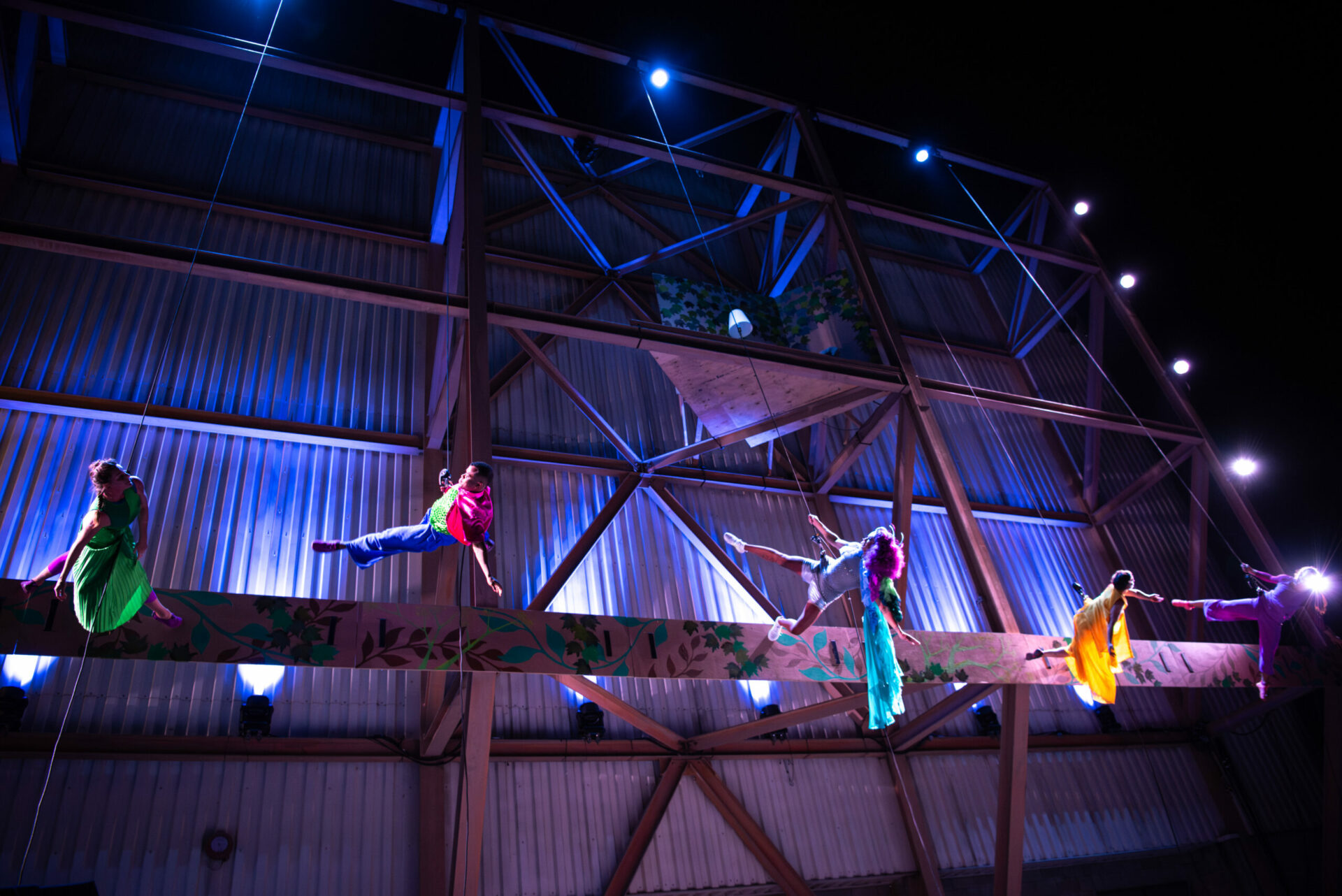
Photo: Brooke Anderson
After decades of redevelopment, Alameda Island’s former naval air base now holds over 100 businesses, sorely needed new housing with hundreds more units on the way, and creative uses ranging from soccer fields to a pumpkin patch. However, last month a small corner of the defunct base served an entirely unique purpose: a 55-foot hangar wall became the vertical stage for a half dozen brightly attired dancers suspended from ropes, a powerful vocalist singing longing songs of the immigrant experience in Spanish and English, and an elaborately-costumed diva narrator speaking a combination of English and Tagalog known as “Taglish” — all performing in front of a packed audience of over a thousand people.
Part of a year-long climate art series called the Rising Tides Initiative, the performance explores both the past and present of Alameda Island’s shoreline — and imagines what a resilient future could look like.
“We wanted [the initiative] to focus on climate change on the island,” says Tara Pilbrow, executive director of Alameda’s West End Arts District. Pilbrow sat down with city staff to learn about their sustainability and climate change initiatives, then worked with the city and two other Alameda nonprofits to put together a grant proposal that received $100,000 from Bloomberg Philanthropies. “I was blown away,” Pilbrow says, by the city’s ongoing and award-winning work around their climate action resiliency plan. “I figured if other people are as blown away as I am, we can use the power of art and engagement in the community to help respond to climate change.”

Photo: Brooke Anderson
At the event, as dusk approached and airplanes floated high overhead, it was warm and clear at Hangar 25. Kids ran amok, attendees chatted at informational tents, families and friends waited for a drink at the pop-up bar before settling down into camping chairs and picnic blankets. The performance opened with recorded vignettes of border crossings along with the story of a Filipina immigrant (played by Wailana Simcock), sharing tales of both human and bird migrations. The stories were accompanied by beautiful singing from Destani Wolf, while the BANDALOOP aerial dancers gracefully leapt and twisted in a reflection of the hardship immigrants face during their peregrinations, the hope that buoys them, and the tough journey our communities have ahead as we adapt to climate change.
The old tarmac where the performance occurred is currently a paved lot vulnerable to sea level rise, but is slated to become a 21-acre wetland under an ambitious proposal called De-Pave Park. “It’s a vision of what Alameda Point may become,” explains Pilbrow, noting how important hope and excitement are in climate messaging. “I think the arts can help give that sense of potential, rather than doom.”
Next in the series is a spring climate photography exhibit at Radium Runway, a cluster of shipping containers that serve as a pop-up art space near Alameda’s new ferry terminal and waterfront park. Later in 2025, more events will be held by Rhythmix Cultural Works, whose August kick-off event featured taiko drummers, interpretive dance, and “The Climate Detective from the Future” sharing time-traveling stories of Alameda’s shoreline.
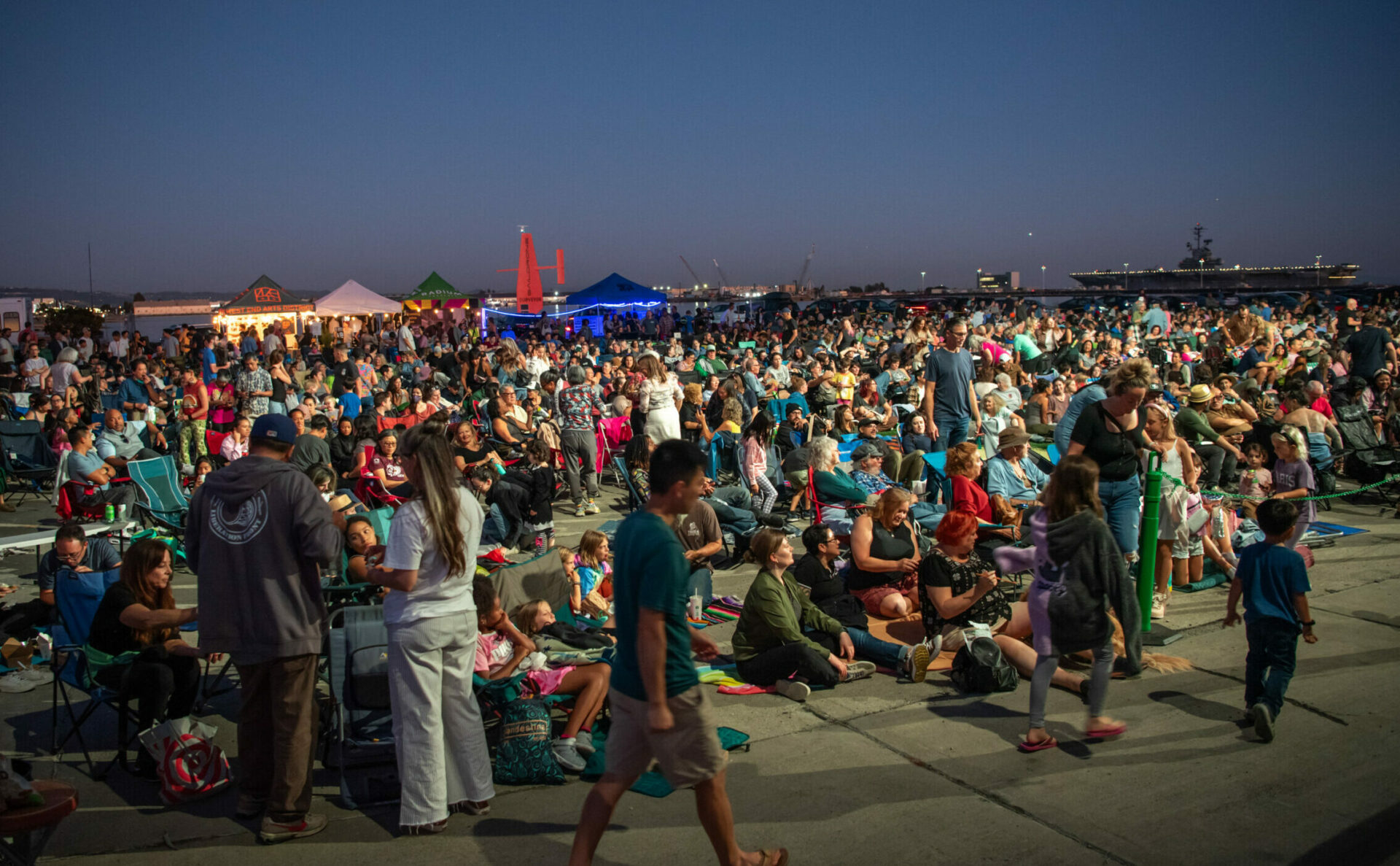
Photo: Brooke Anderson
All of the vibrant performances provide tinder to spark the imagination of what Alameda’s future shoreline could look like. At the end of the Hangar 25 event, while waiting for typical frustrating Alameda traffic that no amount of imagination can erase, many people lingered as the buzz of hundreds of individual conversations radiated up into the warm night off the heavy concrete. And for just a second, one could almost imagine a lush wetland rising up to reclaim land from the bland military tarmac and hangar, the bay’s watery embrace finally returning the area to its natural home.
Other Recent Posts
How Can I Get Clean, Green, Climate-Forward Job Training in the Bay Area?
Looking for a hands-on job working outdoors that actually pays? Here’s a list of training programs.
Santa Rosa Residents Rethink Trees
The heat-burdened Roseland neighborhood is learning how to monitor temperatures and developing an action plan focused on tree shade.
How to Make Conservation a Career
California nonprofits are developing paid apprenticeships to prepare workers for the growing ecological restoration economy.
Raft of Resilience Initiatives Keeps Tahoe Blue
Beach robots, boat inspections, forest thinning, and wetland restoration are among the projects helping the lake confront environmental threats.
Weathering the Present While Training for the Future
A stewardship immersion experience from the School for Inclement Weather and Weaving Earth combines ecological knowledge and spiritual connection.
Feds Meddling With Protections For California Coast
NOAA is reviewing California’s Coastal Management Program in a renewed push for offshore oil and gas drilling.
New Study Shows Rain Gardens Filter Chemicals Out of Stormwater
Scientists found rain gardens dramatically reduce toxic chemicals in stormwater while providing biodiversity and cooling.