



The Sleepy Midterm Race with the Biggest Influence on Climate Policy
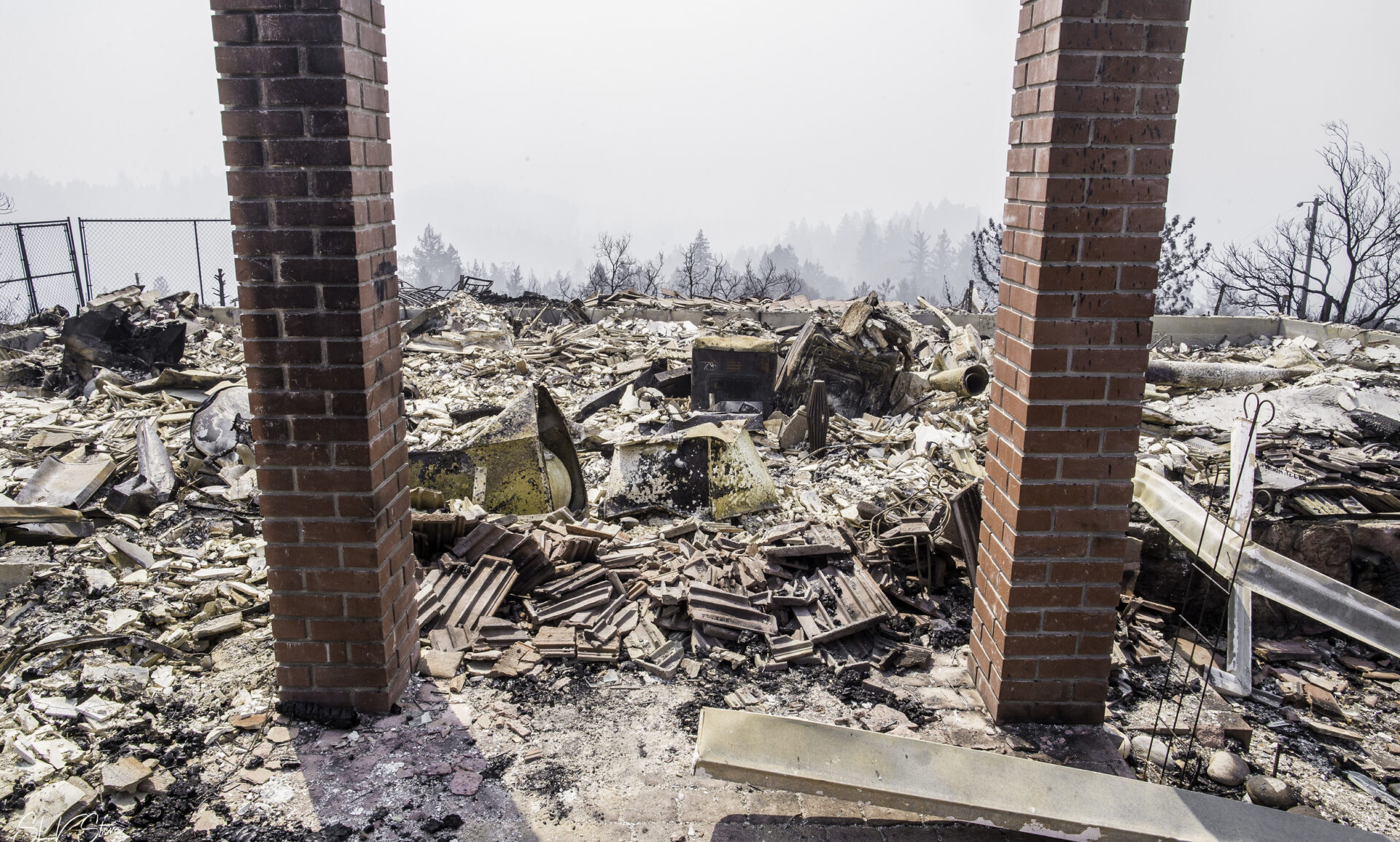
After the Eaton and Palisades fires of January 2025 left more than 18,000 homes and structures destroyed in the LA metro area, insurance payouts to help the rebuild quickly became top of mind for many survivors. But that process didn’t exactly pan out as planned, leaving many homeowners dealing with a bureaucratic nightmare of insurance adjusters, payout delays, higher premiums, and even no coverage at all.
Now, nearly two years later, one vote in next month’s election has the power to change that system. The little known state office of insurance commissioner has significant influence over how insurance companies operate in California and what they charge consumers. The position is up for grabs, and the backstory — how to reward risk reduction or not in insurance coverage — is at the forefront of the race.
Since the LA fires, more than 40,000 claims have paid out over $25 billion, according to a state tracker. But hundreds of survivors say their claims have been delayed, underpaid, or denied. Surveys published last year by the Every Fire Survivor’s Network found that 70% of Eaton Fire survivors reported facing delays or denials, with 61% of them also expecting to lose coverage.
The state and LA County are both suing State Farm after their investigations uncovered hundreds of state law violations in the insurance giant’s response to claims — not just for denying or delaying payouts, but also for underpayment, poor communication, switching policyholders across multiple adjusters, and failing to cover smoke damage.
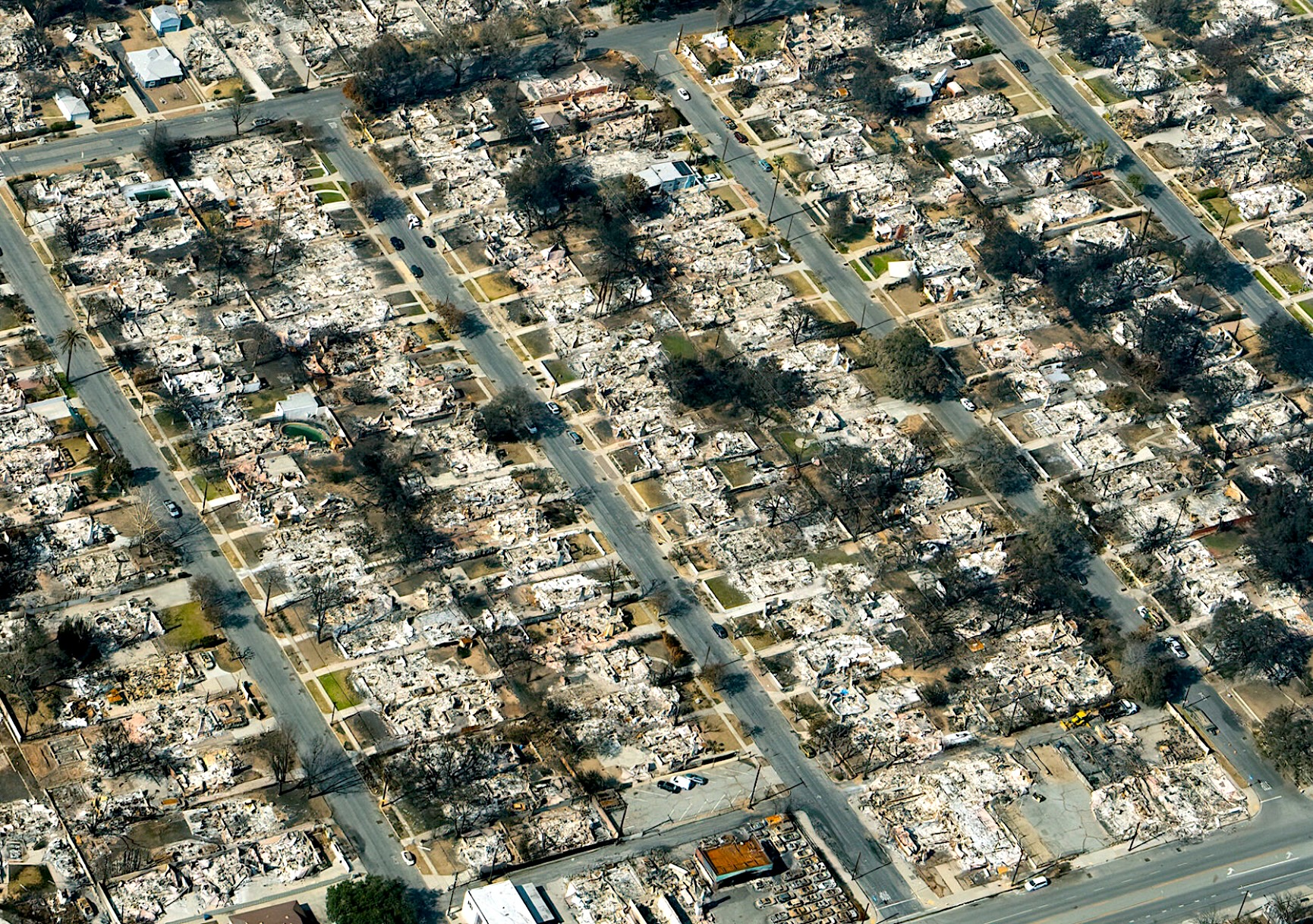
The Eaton Fire of January 2025 ravaged Altadena and left property owners grappling with a complicated insurance landscape. Photo: Mark Holtzman, West Coast Aerial
LA fire survivors called for outgoing Insurance Commissioner Ricardo Lara to step down last year, accusing him of cozying up to the industry in an attempt to save coverage in fire-prone areas. Before the January 2025 fires, he struck a deal to let insurers charge higher rates in exchange for providing a minimum amount of coverage in high-risk locations.
According to a New York Times investigation, that plan backfired, resulting in a loophole that allowed insurance companies to cover safer zip codes in fire country instead of the most vulnerable, as Lara had intended.
Today, though, with Lara’s time in the job waning, voters across the state will be tasked with choosing between two newcomers, and the stakes for climate resilience going forward could be enormous.
“It’s the most important office that nobody has ever heard of,” says Dave Jones, Lara’s predecessor as commissioner and the director of UC Berkeley’s Climate Risk Initiative. “The insurance crisis is the climate crisis canary in the coal mine, and the insurance commissioner is the one office principally responsible for addressing the risks that climate change poses to the insurance industry. So if you care about climate, you should care about who the insurance commissioner is.”
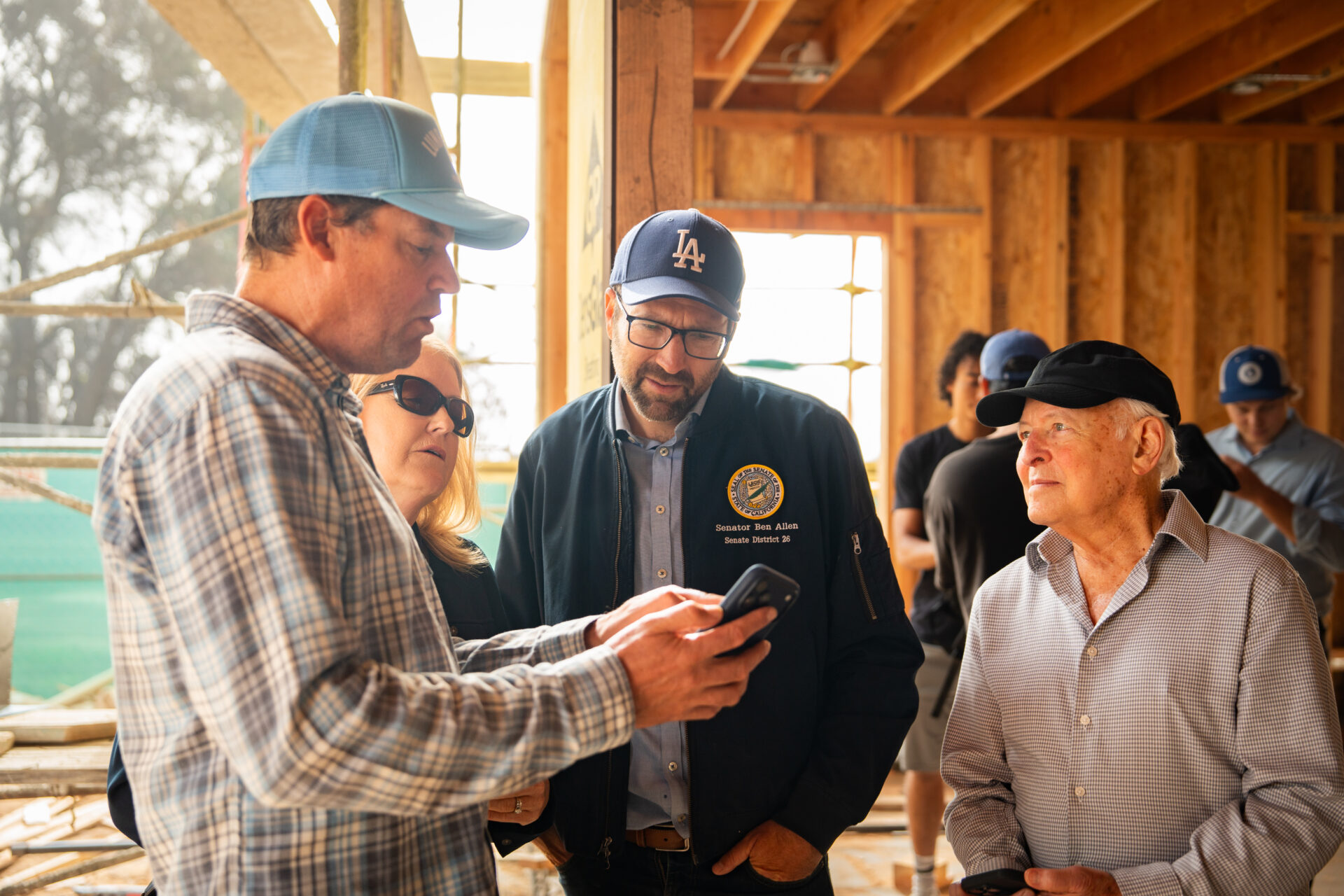
State Sen. Ben Allen meets with homeowners rebuilding after the LA fires. Photo: Ben Allen campaign
This Election Day, State Sen. Ben Allen, who represents the Palisades area, and civil rights attorney and former San Francisco Supervisor Jane Kim are vying for the role. The two are both campaigning on a platform of holding the insurance industry to account and forcing it to reward risk mitigation efforts by communities across the state. Communitywide programs to clear fire-fueling underbrush and debris, create defensible space and “fire break” buffer zones, and develop safe evacuation routes — as places like Marin, Napa, and Tahoe have recently pursued — should result in lower premiums, both candidates argue. But insurers aren’t incentivized to do that under the current system because they profit from taking on risk.
Allen, who is endorsed by the California Democratic Party and environmental groups like Sierra Club, is more of the establishment candidate, having been in the state senate for 12 years and written major climate legislation like Prop 4. Kim, on the other hand, who is endorsed by U.S. Sen. Bernie Sanders and the state’s major labor unions, is proposing a state-run “disaster insurance for all” program that would fundamentally overhaul the system.
Commissioner’s Powers
California is one of just 11 states with an elected insurance commissioner. Prop 103, which established the elected position in 1988, requires the commissioner to approve any rate hikes requested by the industry and gives consumers and advocacy groups the right to challenge policy increases through an intervenor process.
The commissioner and their department are tasked with overseeing auto and home insurance in the world’s fourth-largest insurance marketplace (health insurance largely falls under the separate Department of Managed Health Care).
“The insurance commissioner is potentially the most important office in the state for consumers when you think about financial security, and that’s because the Department of Insurance determines whether you can buy insurance, what it will cost, and if that policy will be there when you need it,” says Carmen Balber, executive director of advocacy group Consumer Watchdog. “Even if they’re not thinking about the insurance commissioner race, most Californians are concerned about whether or not they’ll be able to find insurance and afford it in the future.”
Michael Beck, director of UC Santa Cruz’s Center for Coastal Climate Resilience, agrees, describing the office’s influence on the market as having a “very direct impact on your daily life and security.”
Beck and Colleen Corrigan, sustainability and resilience policy manager at SPUR, note that the biggest shift in insurance over the last several decades is the rapidly rising risk of catastrophic floods and fires. As a result, they and many others — including both Allen and Kim — are intensely focused on how the insurance commissioner can get the industry to reflect risk mitigation work in their pricing instead of simply abandoning communities vulnerable to disasters.
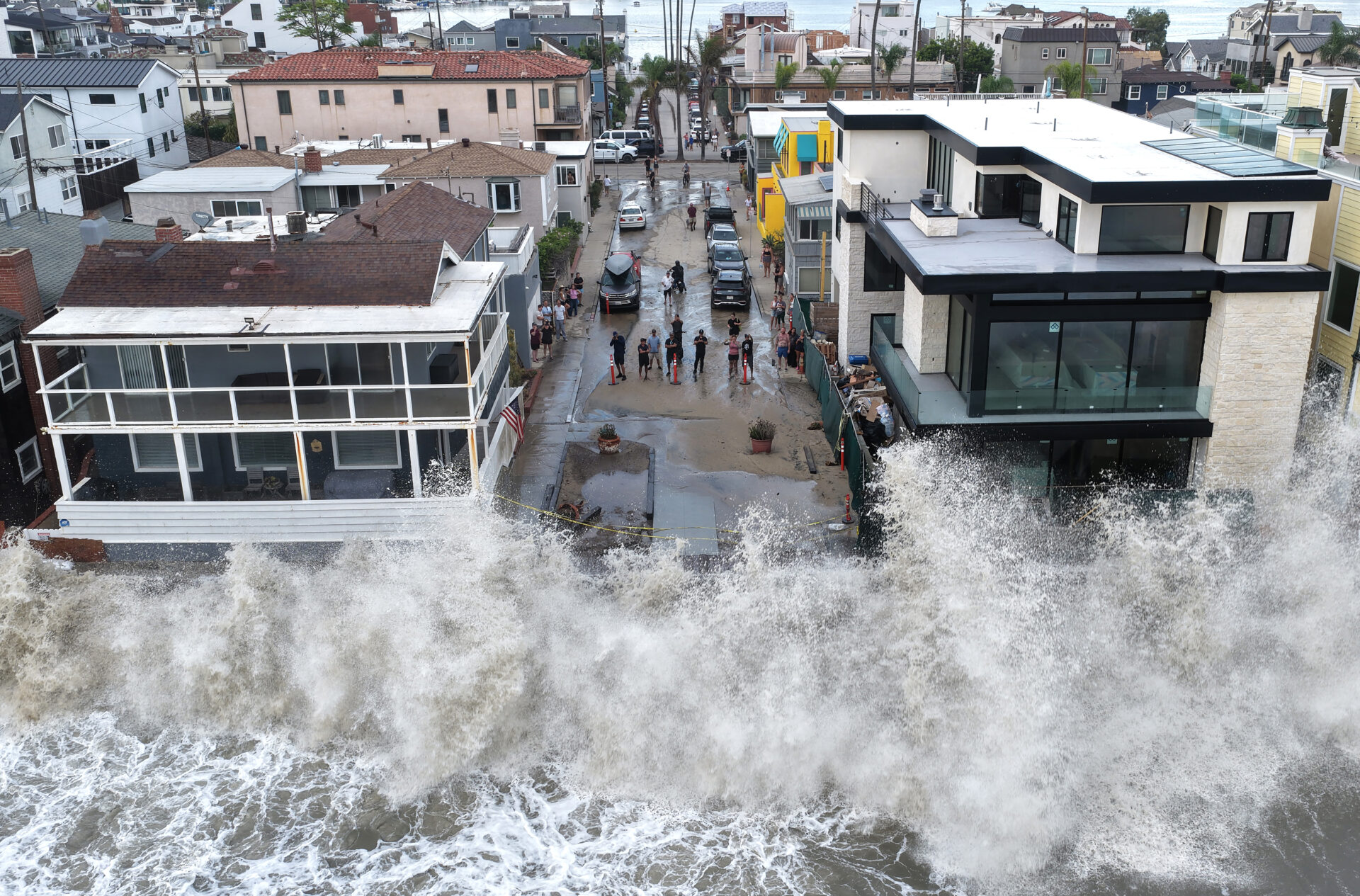
The future of waterfront living, or at least insuring it, is increasingly uncertain as experienced by residents of Long Beach, California this past September. Heavy surf generated by offshore Hurricane Marie, amid record-breaking ocean heat and an emerging El Niño, forced the evacuation of roughly 20 beachfront homes here. Photo: Mario Tama/Getty Images
“The industry is not really incorporating risk reduction in its rates if at all, and that’s a huge problem,” says Beck. “It hasn’t happened yet because insurers make money on risk. They don’t make money on risk reduction.”
But according to Jones, who helped co-author a blueprint of plans for the next insurance commissioner to pursue, a number of levers will be immediately available to the next commissioner on day one. They can, for instance, require insurance companies to account for both property and community scale risk mitigation in their premium pricing models. On top of that, Jones says, the commissioner can sponsor new state legislation that, if passed, would require underwriting models — which an insurer uses to decide whether to take on a risk in the first place — to also factor in risk reduction.
Other options include opening additional investigations into predatory practices by insurance companies, which Jones is encouraging, and looking into the possibility of suing the fossil fuel industry for profiting from climate damage. Corrigan and others want the next commissioner to expose insurance companies’ investments in and underwriting of fossil fuels. Both Allen and Kim are proposing a public data dashboard that would list denial rates, pricing models, and where consumers’ premiums are invested, which experts say is “absolutely” doable.
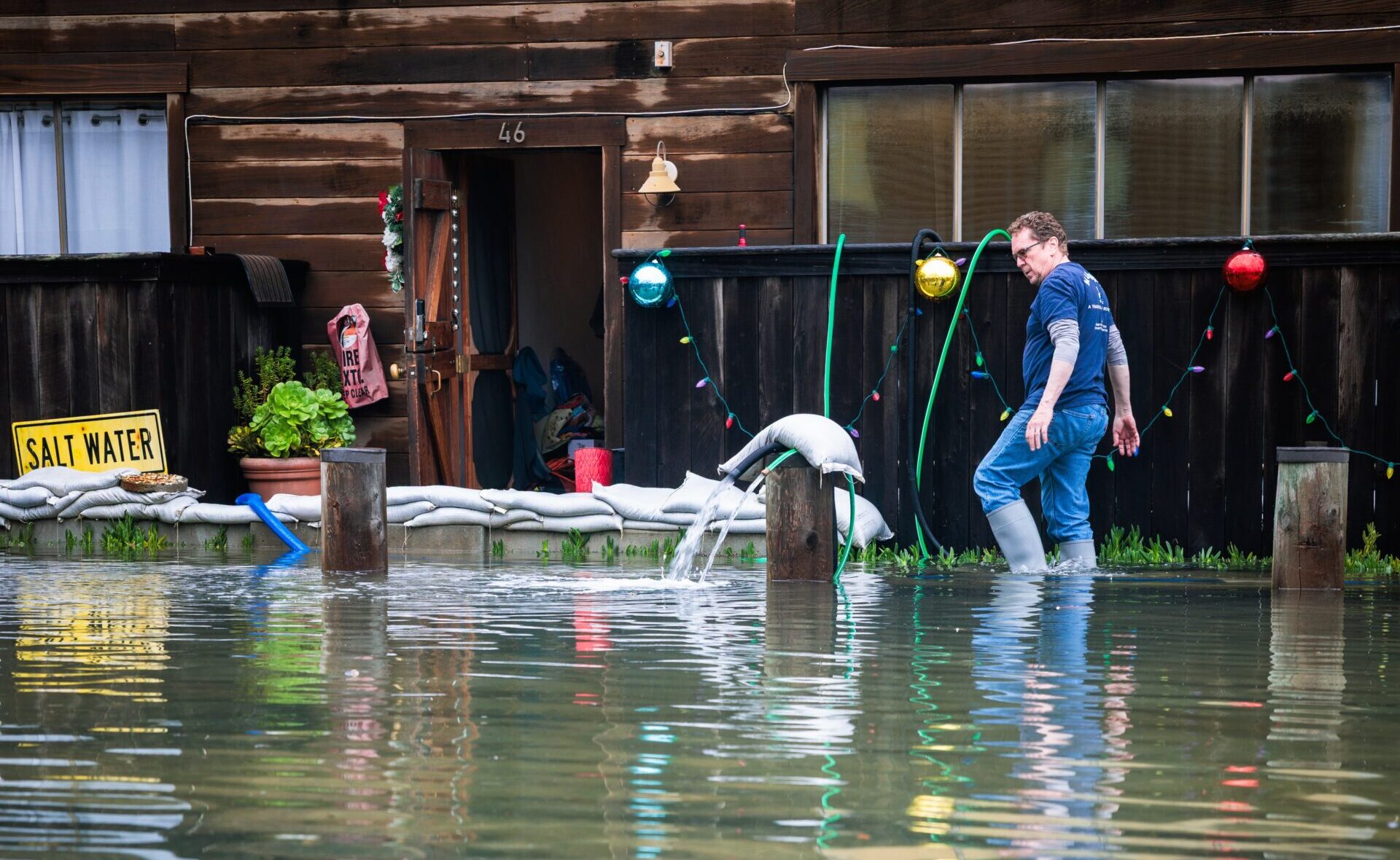
Flooding in Marin in January 2026. Photo: Richard Grant
UC Santa Cruz’s Beck, who studies flooding more closely, also wants to see the Department of Insurance create its own models for flood and wildfire risk so the state has some counterpoint to private companies’ models.
And, on top of all those possibilities, all experts interviewed by KneeDeep say the state needs more grant and loan programs to help people and communities harden their homes and infrastructure if we want to see insurance discounts at all.
“It’s an enormous collective action problem,” Corrigan says. “Your risk is also affected by your neighbor’s risk. If you harden your home completely, but your neighbor has a privacy hedge or a wooden fence, you might still see your insurance reflecting that collective risk because it’s a community level portfolio of risk. So the state is trying to figure out how to finance millions of homes that need some of these retrofits.”
Disaster Insurance for All?
For many experts, this race boils down to one big thing — how you feel about Jane Kim’s disaster-insurance-for-all plan.
Both Kim and her opponent Ben Allen know the next commissioner will have to get people off the FAIR Plan, California’s “insurer of last resort.” That plan was originally designed in the late 1960s to cover Black and Brown homeowners who couldn’t access any other insurance because of redlining. But hundreds of thousands of households statewide have poured onto the plan over the last five years as insurance companies deem more and more areas too risky to cover, particularly because of wildfires.
Corrigan explains that FAIR is more expensive than traditional insurance and requires supplemental coverage to insure your whole property, as well. She describes Allen’s platform as “more geared toward reforming and strengthening the system,” and he’s proposed returning the FAIR Plan to “a true safety net and not the default option.”
Kim, however, is trying to create an entirely new system that would require approval by the state legislature. If it were to pass, it would create a new state-run disaster insurance pool, where the portion of property insurance premiums covering catastrophes would be transferred from private insurers to the state. Under Kim’s plan, the state would then spend the returns from investing that money on risk mitigation.
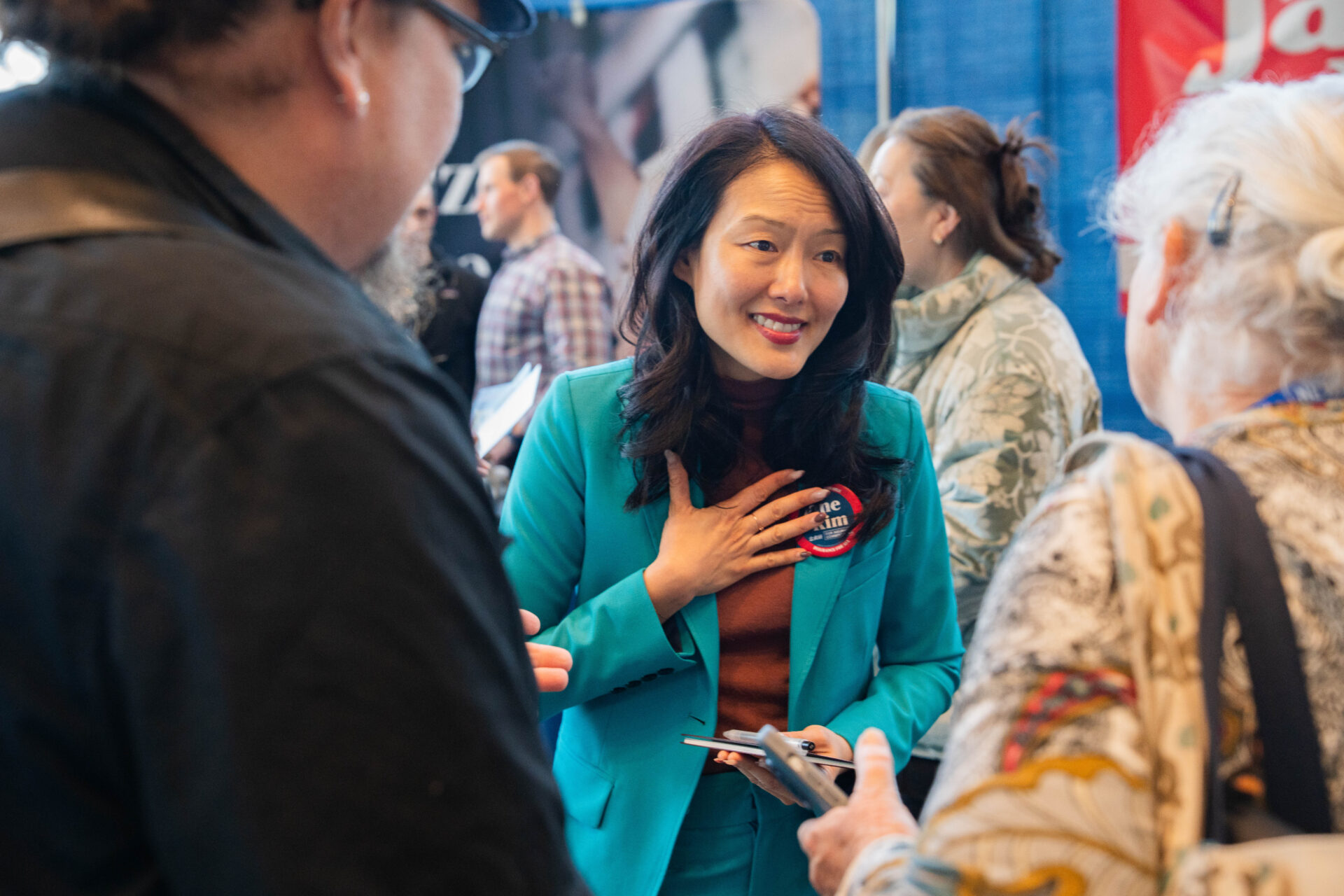
Jane Kim meets with voters at the 2026 California Democratic Party convention. Photo: Jane Kim campaign
But it would have to be phased in over time, Kim acknowledges, because private insurers have spent decades building up billions of dollars that can readily be liquidated to pay out claims in the event of a major disaster. As a result, the state would need reinsurance (basically insurance for insurance companies) to cover potential disasters at first while it builds up its pool of money from premiums.
“Climate disaster is spiraling out of control in this country. We have to think about how to invest some of the revenue that we’re already spending to drive down risk and not just line the pockets of shareholders, cause that’s currently what’s happening,” Kim said in an interview with the LA Times. “The resources exist. They’re just not being invested in the right places.”
In his own interview with the Times, Allen criticized Kim’s proposal as a “FAIR Plan on steroids.” Both Jones and Consumer Watchdog’s Balber also find the idea to be unfeasible, calling it a promise by a candidate that ultimately can’t be kept and also worrying about the state being stuck with the risk instead of private companies.
For her part, Kim says she’s “heard a lot of the critiques,” and that “everything has to be on the table.”
“Doing more of the same is not the safe choice,” she says. “It’s the most expensive one.”
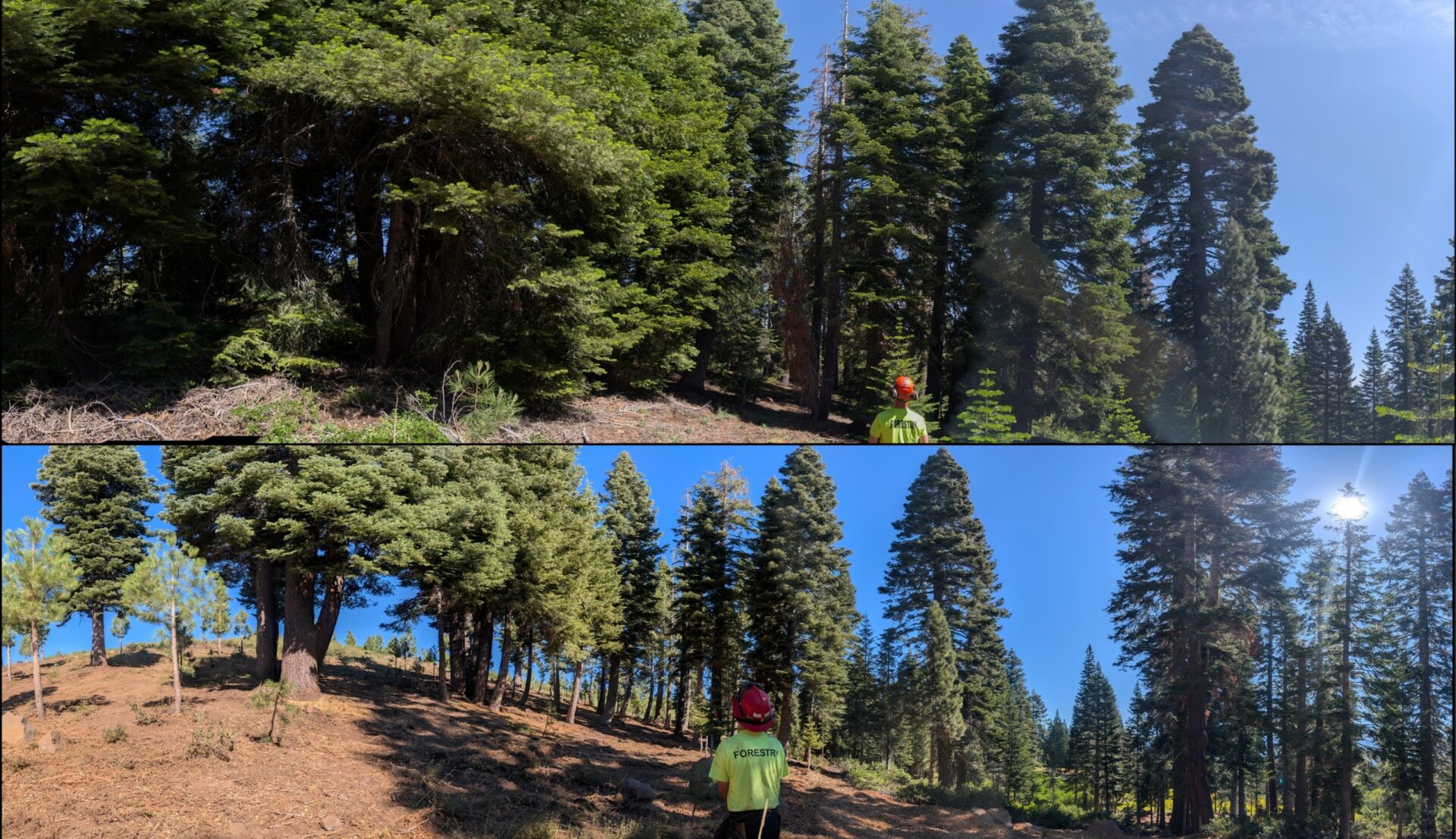
Risk reduction work around Tahoe-Donner communities has helped a local homeowners association get better insurance rates. Photo: Brandon Huttenlocher
In his LA Times interview, Allen called insurance for all “pie in the sky,” preferring “to reform the insurance system in a way that’s really going to work for working people right now.”
“As the commissioner, I need you [the insurance industry] to be willing to invest in Madeira and Truckee and Napa and the Palisades and Altadena. But I also recognize that I can’t demand that you throw caution to the wind and insure areas that are irresponsible to insure,” Allen said. “So let’s work together to come up with a paradigm shift with regard to risk reduction standards that are going to meet the needs of communities, make communities more safe, and at the same time make insurance more affordable and available.”
Ultimately, voters will have to decide what they think by Election Day on Tuesday, Nov. 3. Ballots were mailed to all registered voters on Monday, Oct. 5, and ballot drop-off boxes opened Oct. 6. You can also vote ahead of Election Day at an early voting location. Polls will be open in-person from 7 a.m. to 8 p.m. on Nov. 3.
“The task of the next insurance commissioner is this increasing responsibility to not only bring insurers back and regulate how they behave, but also guide the state during this journey of mitigating our risk,” Corrigan says. “Because if we’re all going to live here and deal with fire, we have to undertake home hardening at a pretty monumental scale.”