



It’s Always Sunny In North Fair Oaks
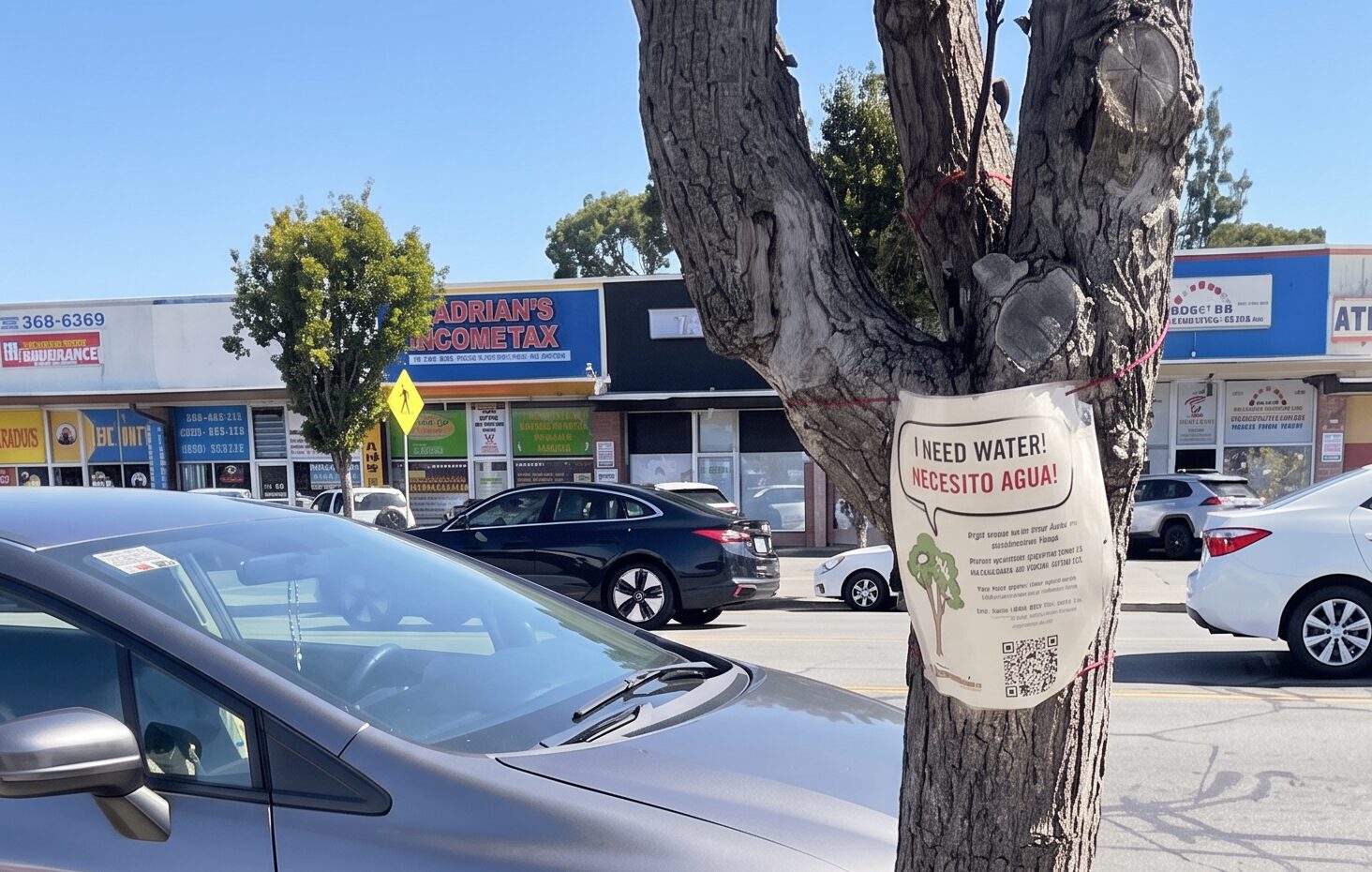
Photo: Gaby Valencia
Even elementary schoolers can tell the trees look different in North Fair Oaks, says Gabriella Valencia, a nurse practitioner who has lived for more than two decades in this unincorporated community sandwiched between wealthy Atherton and Redwood City. Pointing at a quintessential Atherton street, generously shaded with large trees, a friend’s child asked, “Why is it we can’t have the same trees they have over there?” says Valencia. “She said, ‘Is it because we’re not rich like them?’”
Entering North Fair Oaks, a low-income, majority-Hispanic neighborhood that relies on the county for public services, you’ll immediately notice “a total break in the canopy,” says Valencia. The 20 or so spaces for trees that line Middlefield Road, the sunny community’s main thoroughfare, are filled with stunted trees, dried-up trunks, or nothing at all.
But Valencia and over 100 other community members are determined to hold San Mateo County accountable for its tree maintenance — and help the community become greener, cooler, and more resilient in the process. Last month, they launched their second petition in two years calling on county public works to inspect its irrigation systems and plant new trees.
In this densely-packed working-class community, 20 trees can make a difference, adds Everardo Rodriguez, president of the North Fair Oaks Community Alliance and former member of the community council. When planted 25 years ago, he says these trees were the first he remembers along Middlefield Road in this neighborhood.
Since many houses here have poor insulation, this shade could have made life measurably cooler, in addition to the more intangible benefits of a greener, more oxygenated street. But instead, Rodriguez and Valencia have watched trees die one by one over the last quarter century.
Other Recent Posts
Regional Housing Agency Invests in Affordability
The Bay Area Housing Finance Authority is launching a loan program to support the construction of mixed-income rental properties.
The End is Coming for California’s Untouchable Grass
The law, which applies to grass that isn’t used for recreational purposes, could cut urban water use across California by more than 20% says Oakland thinktank.
Sonoma Vineyard Workers Burn toward a Better Future
A group of immigrant farmworkers are forming a worker-owned cooperative to bring back Indigenous burning practices that used to revitalize the soil.
Los trabajadores de los viñedos de Sonoma queman por un futuro mejor
Un grupo de trabajadores agrícolas inmigrantes está formando una cooperativa de propiedad de los trabajadores para recuperar las prácticas indígenas de quema que solían revitalizar el suelo año tras año.
New Voices Shape Design of Berkeley’s North Basin Strip
Twenty acres of parkland between the highway and the Berkeley shore are slated for a coast-resilient makeover, with input from locals and stakeholders.
Siempre está soleado en North Fair Oaks
Los residentes de la comunidad no incorporada lanzaron su segunda campaña en dos años para lograr que el condado se ocupe de los árboles de la calle que se están muriendo.
Can Nature Help California’s Coast Fight Fire and Floods?
Local and state leaders gather for September summit on how to mainstream nature-based infrastructure.
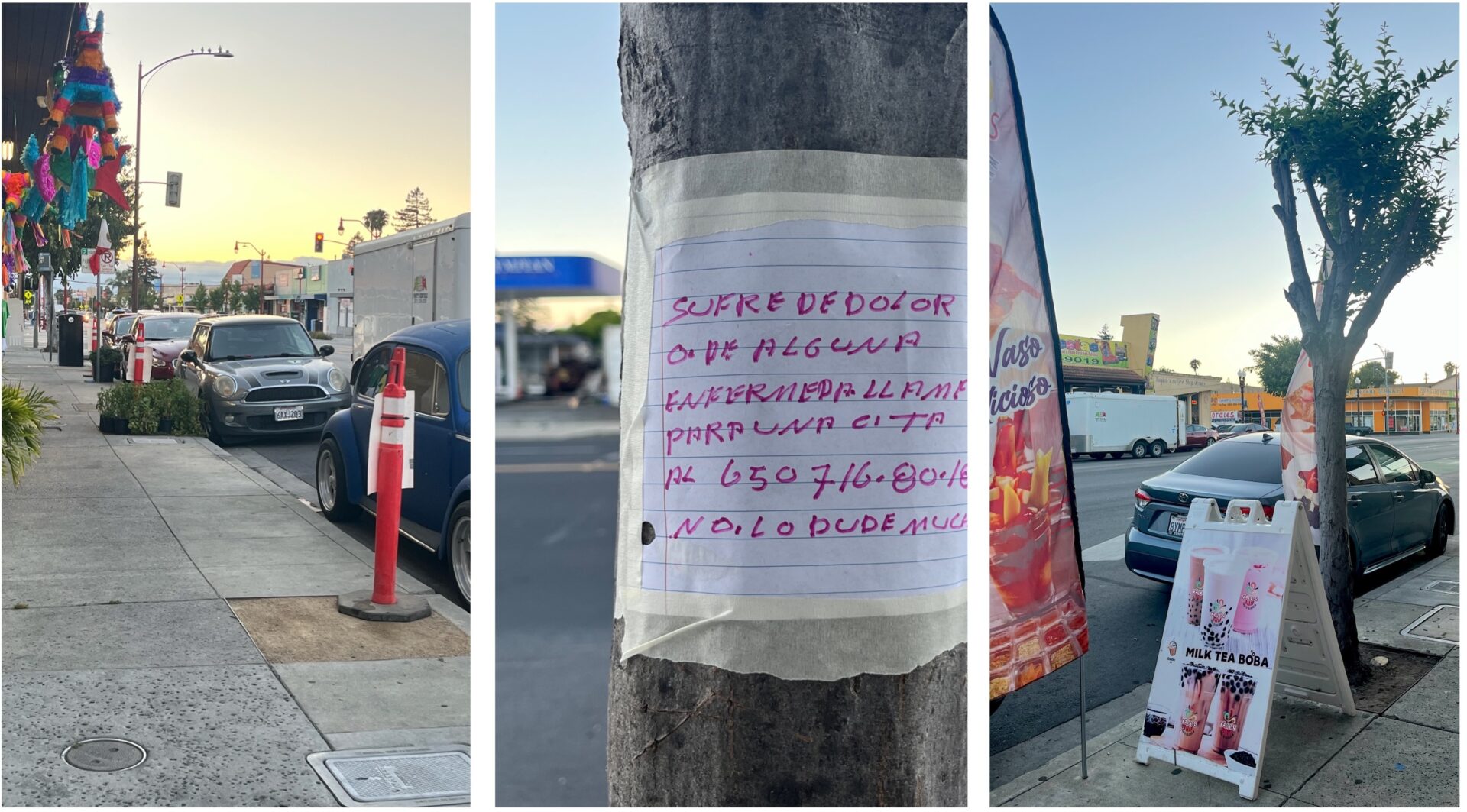
Empty planting spots and suffering or stunted trees in North Fair Oaks. Photos: Gaby Valencia
Tree maintenance is hard and often requires dedicated professionals and funding. Neighboring Atherton, which has half the population of North Fair Oaks, and Redwood City have dedicated city arborists and community groups devoted to the municipality’s trees. Berkeley also has an urban forestry unit, where two staff members are tasked with responding to resident concerns about tree health, says Ava Dillard, a former urban forestry fellow with the City of Berkeley. “They’re busy around the clock,” she notes.
With no municipal advocate, “we just think the county is used to neglecting North Fair Oaks,” says Rodriguez. The frustration has built steadily. Rodriguez says he received no recognition of his previous complaints about tree maintenance over a decade ago. County officials acknowledged Valencia’s first petition in 2024, which 40 residents signed. “But nothing has been done,” Valencia says. “Nothing, nothing, nothing.”
After receiving the second petition, Kryzsztof Lisaj, the assistant director of public works, has promised to inspect the trees’ irrigation system, which he says was installed with the trees. (Rodriguez and Valencia both say they have never noticed an irrigation system for the trees.) Lisaj also noted that an upcoming $750,000 congressional earmark will help renovate most of Middlefield Road, including replacing and replanting trees once construction begins in 2028 or 2029.
But Rodriguez calls this response “ridiculous” after the community has already waited two years for a reply to its last petition. “It is not acceptable to wait two [more] years because there’s at least things they can do,” he says, like planting missing trees.
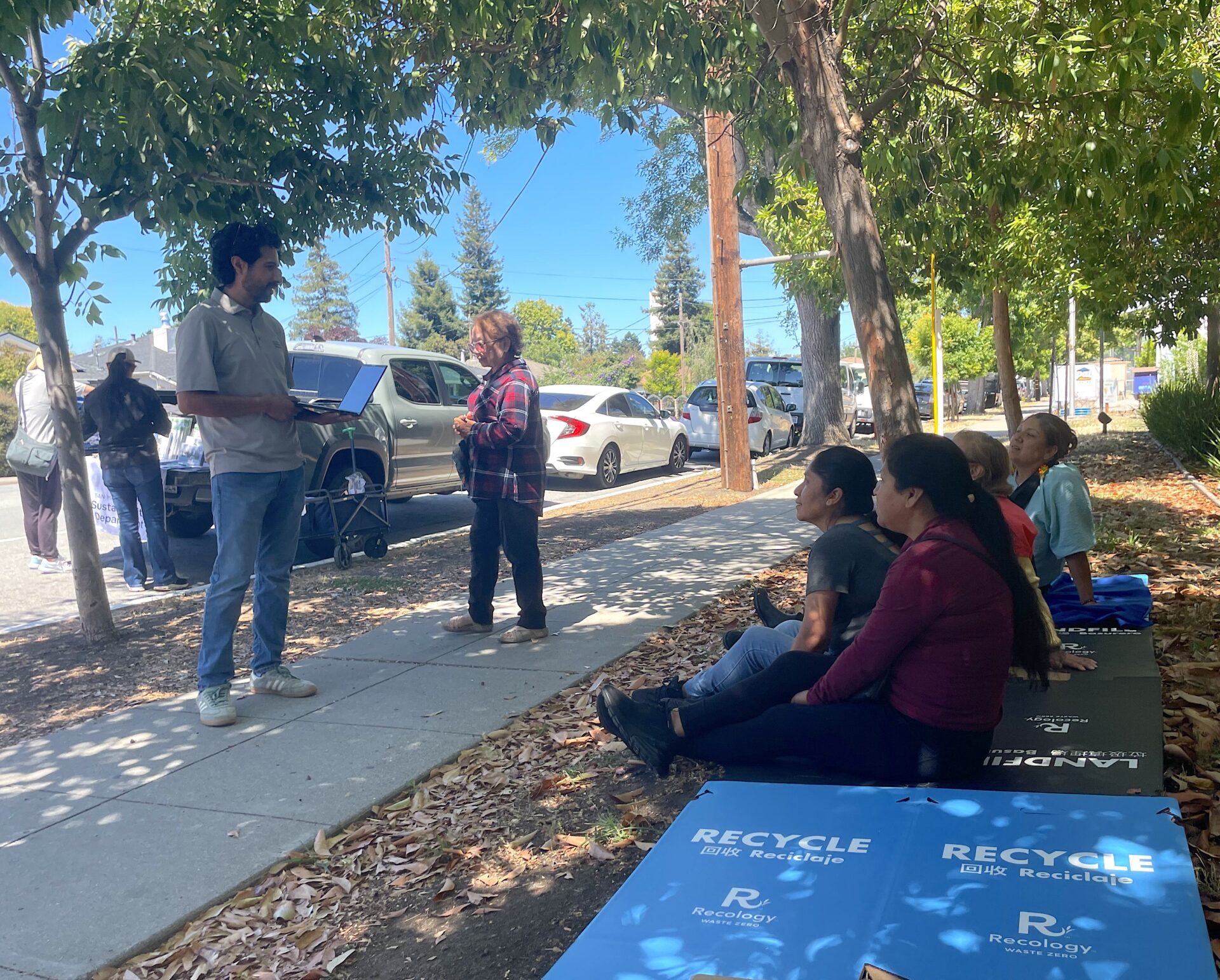
Valencia, after years of working at local medical centers, knows most North Fair Oaks residents are worried about things other than street trees — paying the rent, buying food, living far away from their families.
“I’m not naive enough to think that caring for the trees is going to solve all the problems in North Fair Oaks,” she says. “But if we have a really difficult situation in our lives, and we happen to be able to sit under the shade of a tree, it can improve our life even just a tiny bit.”
MORE
- North Fair Oaks Residents Create Clean Air Refuges, KneeDeep November 2022
- KneeDeep Stories about Equity