



Can Nature Help California’s Coast Fight Fire and Floods?
Climate change is giving the upper hand to the winds, weather, and water we spend so much time trying to control. In recent weeks, like a mass shooting, intense floods and wind took aim across our country and abroad, sweeping away our puny homes, felling trees, and sending rocks and water caterwauling down canyons from Zion to Nepal, ending thousands of lives in the process. And this right after a summer of fire and heat.
“The fact is that a lot of our communities and infrastructure were never built with nature in mind, and as nature becomes more unstable from climate change, we’re increasingly vulnerable,” California Secretary of Natural Resources Wade Crowfoot said in an interview after a September 2 summit hosted by his agency at the Metro Center in San Francisco.
Attended by more than 100 Bay Area leaders in climate adaptation policy, funding, and project implementation, the summit sought to identify ways nature-based solutions can improve the resilience of the California coast to climate change.
“California has been a leader in carbon neutrality, with a focus on technology, but our blind spot has been the connection between the atmosphere and the biosphere,” Crowfoot said at the summit. “Our emissions savings are being swamped by wildfires. Unless we help our lands become healthier, we won’t be able to curb emissions.”
For the Bay region, making waterfront lands healthier has involved “building a body of practice” around restoring thousands of acres of wetlands, said State Coastal Conservancy leader Amy Hutzel at the summit. Her colleagues discussed progress on living shoreline projects in the state’s estuaries (whole suites of restored subtidal, tidal, and upland habitats and reinvigorated natural processes) and dune restorations and experimental artificial reef installations on the Central Coast. These efforts have also helped more “people connect to place,” said the Conservancy’s Jessica Davenport.
When communities have a chance to weigh in and explore traditional versus more experimental nature-based coastal protection options, added the Conservancy’s Evyan Sloane, they often opt for the latter: “They don’t always choose a seawall or revetment. They chose the ‘scary’ solution — the project that has the capacity to self-recover.” And by “scary,” she clearly meant innovative.
Other Recent Posts
Fire Weather in the Wind
As the hot Nevada air cools every fall, it gets pushed west to lower pressure areas over the Central Valley, where the wind heats up and dries out.
My Morning Cleaning Up the Oakland Estuary
On Oakland’s Creek to Bay Day, I joined 100 volunteers for I Heart Oakland-Alameda Estuary to remove shoreline trash.
RCDs Pay Extra Attention to North Bay High Schoolers
A $13,500 grant will help three North Bay conservation districts evaluate youth education programs and prepare high school students for environmental careers.
Creeks Make Good & Bad Homes
San Jose State researcher Costanza Rampini explores why the houseless favor creek banks, and how they weather the flood risk.
Bay Area Braces for Record-Breaking El Niño
Record high water temperatures in the Pacific are expected to bring dangerous sea level rise, waves, and rain to the region this winter.
Regional Housing Agency Invests in Affordability
The Bay Area Housing Finance Authority is launching a loan program to support the construction of mixed-income rental properties.
The End is Coming for California’s Untouchable Grass
The law, which applies to grass that isn’t used for recreational purposes, could cut urban water use across California by more than 20% says Oakland thinktank.
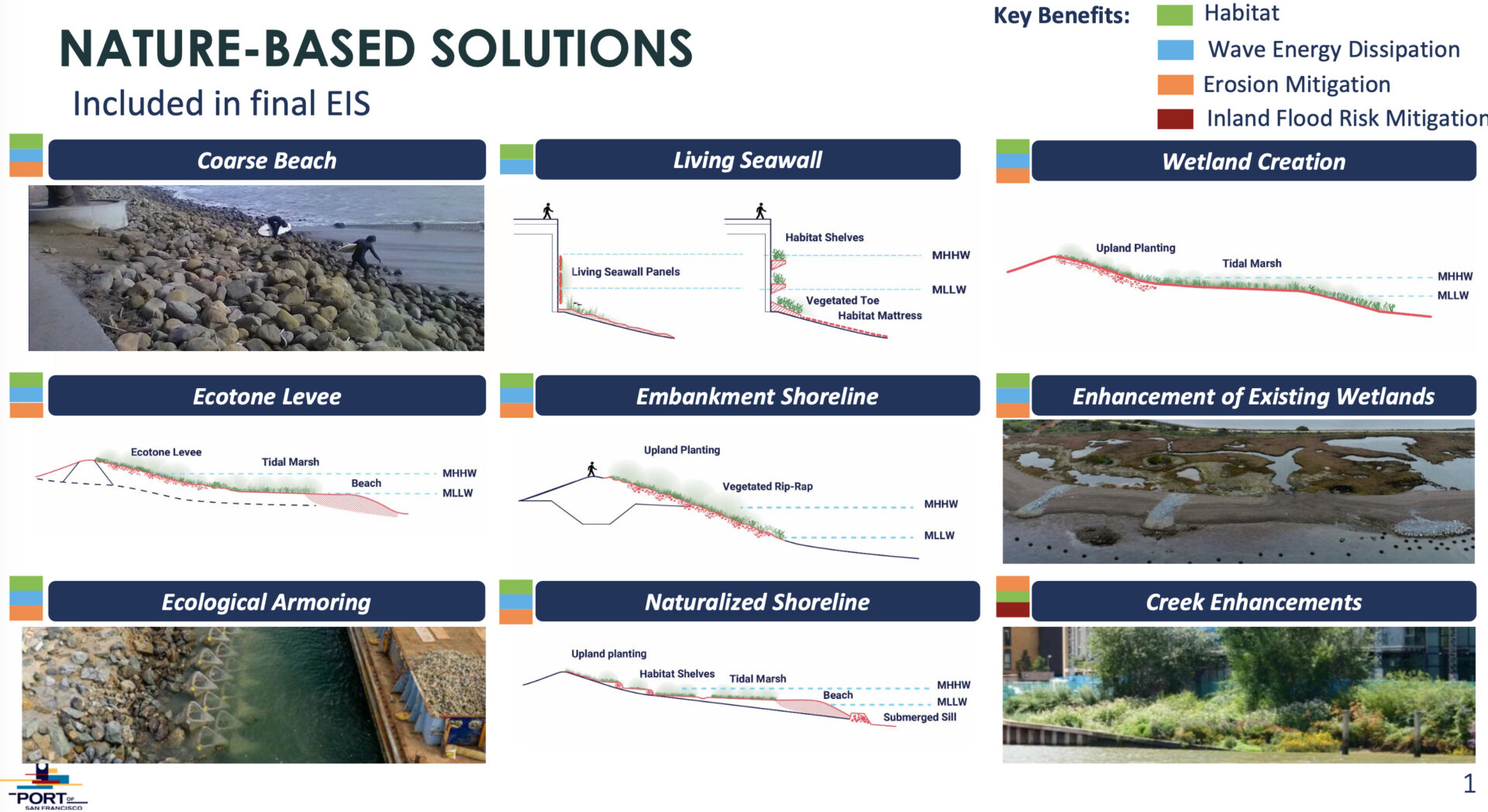
Local shoreline solutions examined in a waterfront resilience environmental impact statement. Source: Port of San Francisco
One visible example of a community’s deep dive into adaptation can be found in Ventura at Surfers’ Point, which just witnessed completion of the second phase of a managed retreat project for its waterfront designed to accommodate the ocean’s advance, not fight it.
While “retreat” has a hollow ring in land use conversations, it’s the logical response when half the cliff is falling into the ocean, and the sand and mud are visibly being scoured away. Combination projects that employ both retreat and protection for the coast — and experiment with nature-based infrastructure — are now the leading edge of California climate adaptation thinking.
“We need a mind shift. We need to create more pilot projects and learn by doing. And we also need to identify and support local leaders willing to take the risk,” Jenn Eckerle, director of the state’s Ocean Protection Council, said at the summit.
Leaders perhaps like Larry Goldzband of the San Francisco Bay Conservation and Development Commission, who seems to be listening to locals when they say getting the greenlight from regulators on these kinds of projects still takes too long given the urgency of rising sea levels.
“One of the things I think about now when permitting [bayshore adaptation] projects is to allow for as much flexibility as possible, and to allow for imperfection,” said Goldzband at the summit.
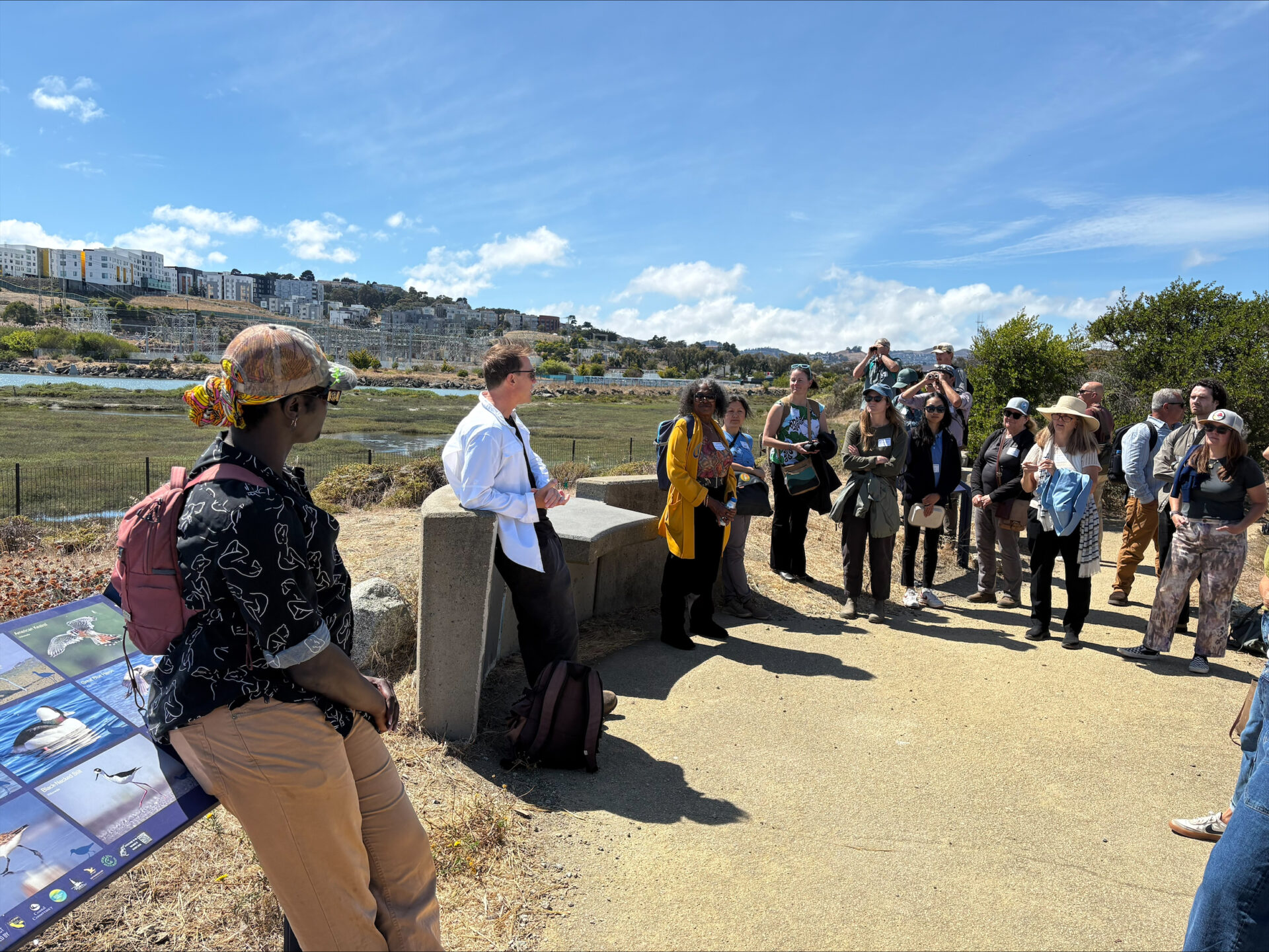
Summit participants take an afternoon field trip to Heron's Head park in San Francisco, a restoration and erosion control project including gravel beach, oyster reef balls, and native plantings. Photo: Amy Hutzel
The summit covered a variety of both bayshore and outer coast problems and solutions in the works, as well as efforts to simplify project permitting at multiple levels, including local permits from BCDC.
The state’s Cutting Green Tape program, meanwhile, has processed hundreds of streamlined permits in the last five years. According to manager Brad Henderson of Cal Fish & Wildlife, the program has approved more than 400,000 acres and 1,400 stream miles of restoration and enhancement projects, and more than 10 million acres of terrestrial habitat connections, while saving project proponents more than $17 million and 709 months of delay. “We see ourselves as investors and partners, not regulators,” he said at the summit.
While funding from the state is generally flowing toward climate resilience projects, especially to pilots, future dollars to build and maintain full-scale adaptation projects remain uncertain.
“The main barrier is that nature-based solutions are often thought of as ‘extra.’ We need to get these projects out of ‘pilot land,’ out of ‘environment land,’ and into infrastructure upgrades,” said Julie Beagle, a federal scientist working on the beneficial reuse of dredged sediment to combat sea level rise.
The September Coasts summit was part of eight landscape-specific climate solutions summits being held between July and November around the state by The Nature Conservancy and the California Resources Agency.
“We need to mainstream nature-based solutions across our government, across our communities,” Crowfoot said in a follow-up interview. “What I hope to see is that all agencies and all communities that are advancing infrastructure — whether it’s roads, it’s clean energy, it’s housing — do that in a way that works with nature and not against nature.”
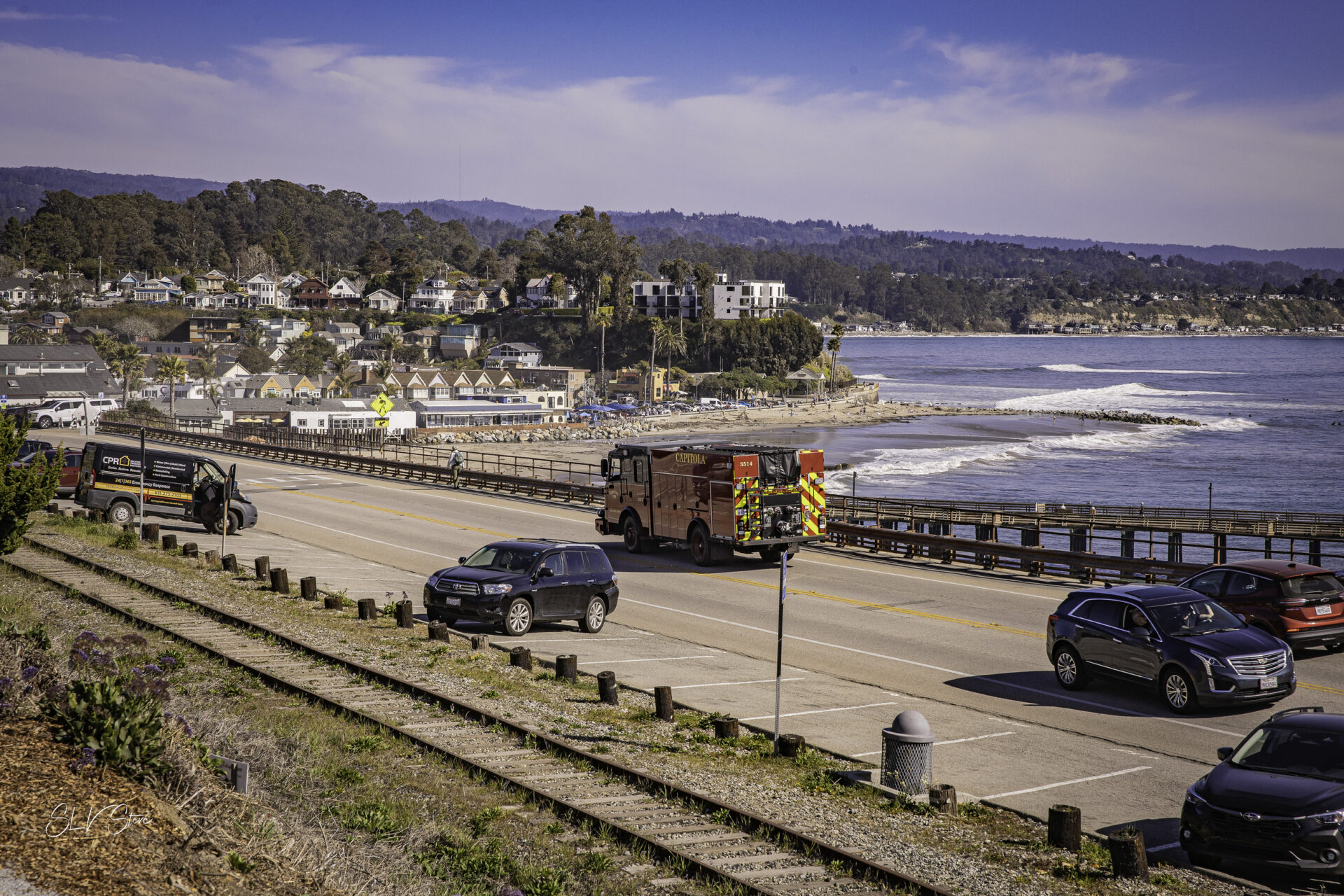
Top Photo: Santa Cruz coast by Steve Kuehl.