



Wild Pigs Rough Up Bay Area Greens
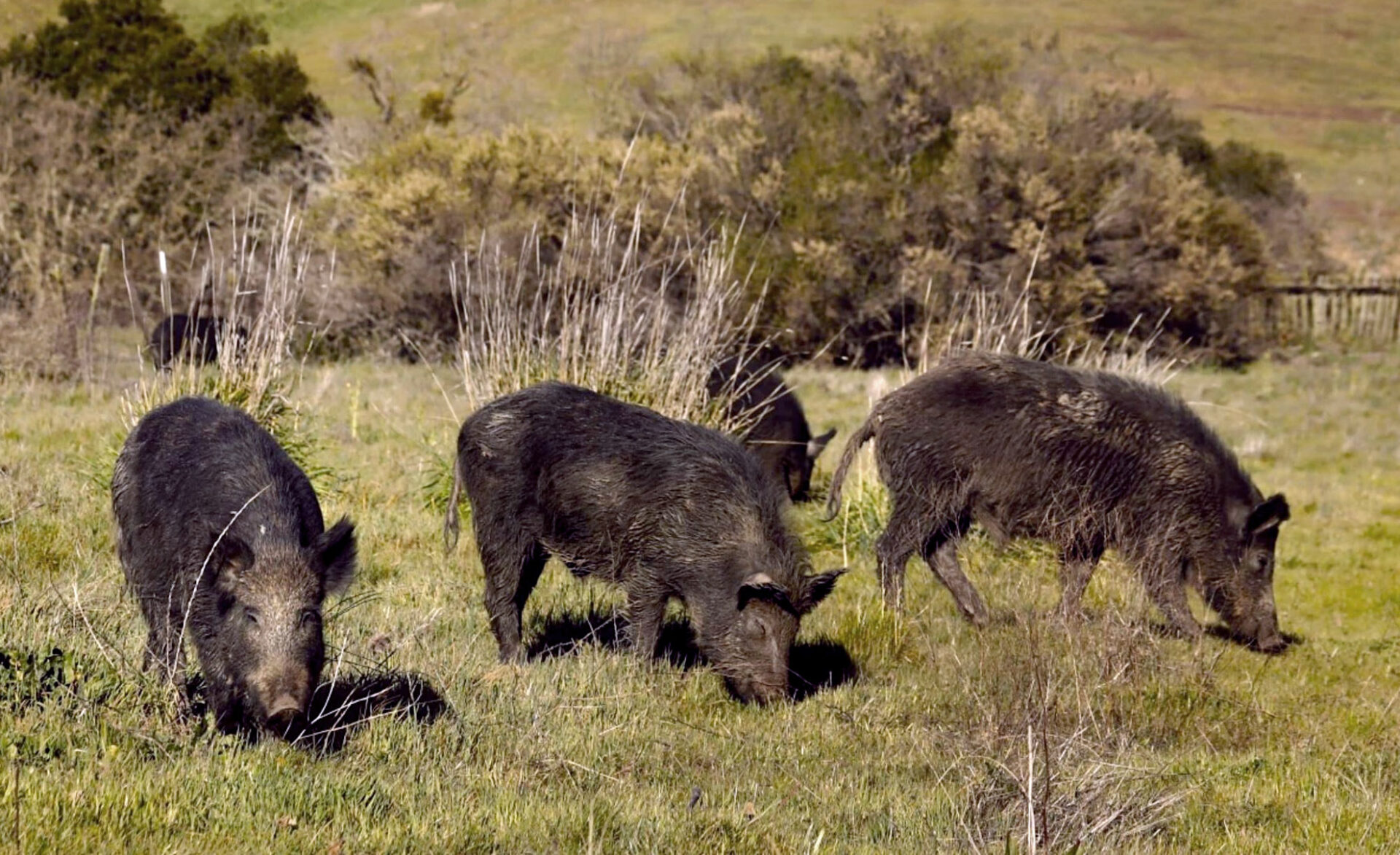
Photo: City of Morgan Hill
Wild pigs are rarely seen in the Bay Area, but it’s clear they’re here from the evidence they leave behind: hoof prints; grainy, black-and-white camera-trap sightings; and damaged natural and cultivated landscapes alike.
With summer on the horizon, that damage is only going to get worse. As the land dries out and hardens, wild pigs will find their way to greener pastures: lawns, fields, vineyards, golf courses. Last summer, wild pigs made headlines in Sonoma County when they ransacked the grounds of a small school in Geyserville.
“They’re trying to snuffle up the loose ground because it’s irrigated, and they’re looking for roots and tubers and insects,” explains Stacy Martinelli, a Santa Rosa-based environmental scientist with the California Department of Fish and Wildlife. “Irrigated soil is soft, and they can turn that over, and find more of an abundance of roots and bulbs and things like that.”
When they’re not tearing up turf, wild pigs hang out in woodlands and open grasslands foraging for acorns, a critical food source for many native species. Worse yet, they eat reptiles and amphibians, small mammals, and ground-nesting birds and eggs. Their wallowing and rooting also degrades streams, indirectly harming native fish.
Climate change may affect wild pigs’ seasonal foraging behaviors by bringing them into closer, more prolonged contact with developed areas. On average, the Bay Area is likely to see fewer, larger storms; higher winter temperatures; and longer, more extreme summer heat waves. If the earth dries out earlier in spring, wild pigs could turn to irrigated landscapes earlier in the season. Likewise, if significant winter rains arrive late, the animals’ transition to more remote, natural areas — where, again, they can cause a lot of ecological damage — may also be delayed.
Other Recent Posts
Can Nature Help California’s Coast Fight Fire and Floods?
Local and state leaders gather for September summit on how to mainstream nature-based infrastructure.
Guide to Nature-Based Infrastructure Around the Bay Area
Regional leaders are testing eight types of climate adaptation and shoreline flood protection projects that work with nature instead of against it. Here’s an overview.
How Can I Get Clean, Green, Climate-Forward Job Training in the Bay Area?
Looking for a hands-on job working outdoors that actually pays? Here’s a list of training programs.
Santa Rosa Residents Rethink Trees
The heat-burdened Roseland neighborhood is learning how to monitor temperatures and developing an action plan focused on tree shade.
How to Make Conservation a Career
California nonprofits are developing paid apprenticeships to prepare workers for the growing ecological restoration economy.
Raft of Resilience Initiatives Keeps Tahoe Blue
Beach robots, boat inspections, forest thinning, and wetland restoration are among the projects helping the lake confront environmental threats.
Weathering the Present While Training for the Future
A stewardship immersion experience from the School for Inclement Weather and Weaving Earth combines ecological knowledge and spiritual connection.
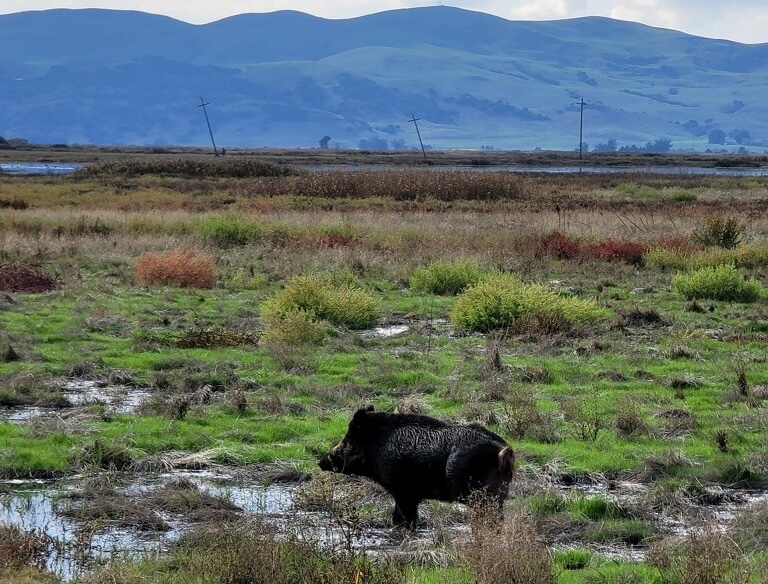
Hunting season for Solano County’s Joice Island in 2026. Photo: CDFW
The wild pig (or “wild boar,” colloquially) is actually a cross between two non-native species, and humans must take full responsibility for its presence here. Beginning in the early 1700s, Spanish and Russian settlers brought domestic pigs (Sus scrofa domestica) to California as livestock. Some of those pigs went feral and later mated with European wild boars (Sus scrofa wild type) imported by a Monterey County landowner in the 1920s. Today, their hybrid progeny are well established throughout California, present in 56 of the state’s 58 counties, and particularly prominent in the Bay Area, Central Coast, and Sierra foothills, according to the Department of Fish and Wildlife.
Granted, no one really knows how many wild pigs there are in the region. The agency doesn’t survey the wild pig population here or anywhere else, Martinelli says. The best population estimates come from extrapolating figures on hunting tag returns and depredation permits, but those are a secondary indicator at best. (CDFW’s wild pig take report for 2024-25 shows that 2,224 pigs were taken legally statewide, including 275 in the nine-county Bay Area.)
Wild pigs are not exactly treasured by naturalists, to put it mildly – but they are by local hunters, the folks mostly likely to get eyes on them, who are arguably doing Bay Area ecosystems a solid by harvesting those they can for meat.