


Strong Leader, Light Touch: Caitlin Sweeney
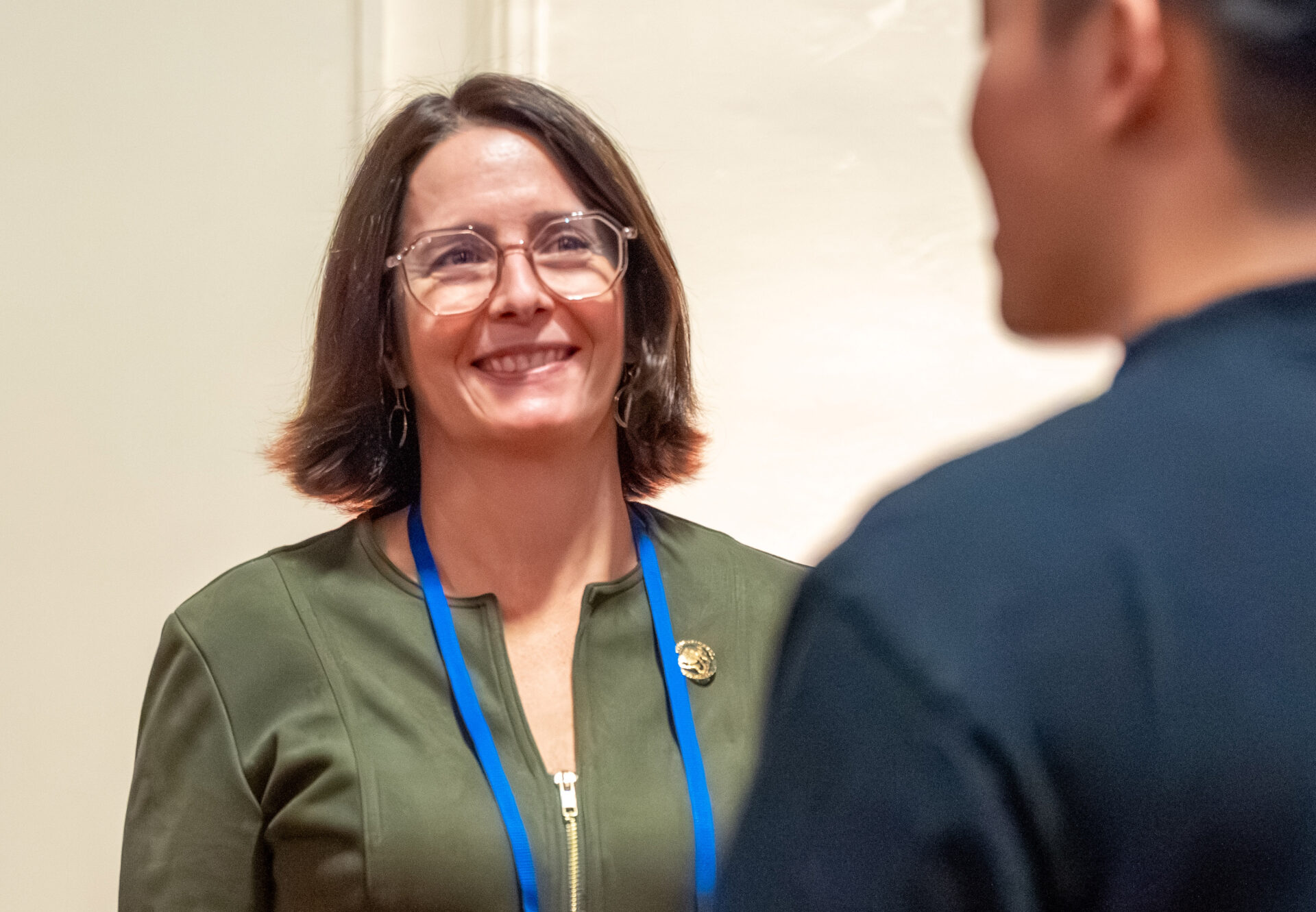
After 15 years at the San Francisco Estuary Partnership, Director Caitlin Sweeney retired this June. The Partnership — one of 28 National Estuary programs across the country — is a collaborative regional program encompassing agencies, nonprofits, scientists, and citizens that has worked for more than 30 years to protect and enhance the San Francisco Bay Delta Estuary. Today, the Partnership is leading many big-ticket, multi-partner climate change adaptation projects around the Bay, managing about $100 million at any given time.
Sweeney began her career at the California Coastal Commission, and spent more than a decade at the San Francisco Bay Conservation and Development Commission, including serving as chief deputy director. During this time, Sweeney has both observed and facilitated a shift in environmental policy and planning from narrowly defined issues such as habitat restoration and contaminant mitigation to an emphasis on regionalism and multi-benefit projects.
As Sweeney sees it, the Bay Area is particularly well equipped to take on the complex planning and policy tasks required to adapt to a changing climate. As she told attendees at last October’s State of the Estuary Conference, “an integrative and collaborative approach is something that we excel at here in this region. We are very good at not only identifying where the interdependencies already exist, but also where the opportunities are for coming together in new and novel ways to tackle the most pressing and complex challenges of our time.”
KneeDeep Times reporter Cariad Hayes Thronson interviewed Sweeney about her career and the changes she has observed over the years.
Q: How did you choose this line of work?
I always had an interest in science, but I really didn’t want to be stuck in a lab. I joke that as an undergrad I couldn’t decide if I wanted to be a dance major or a scientist. I was looking for a way to integrate science with people. I found out about this master’s program that combined ocean science and policy, and I thought, that’s it! At the time, that applied policy-science approach was really new. So that seemed like a perfect fit.
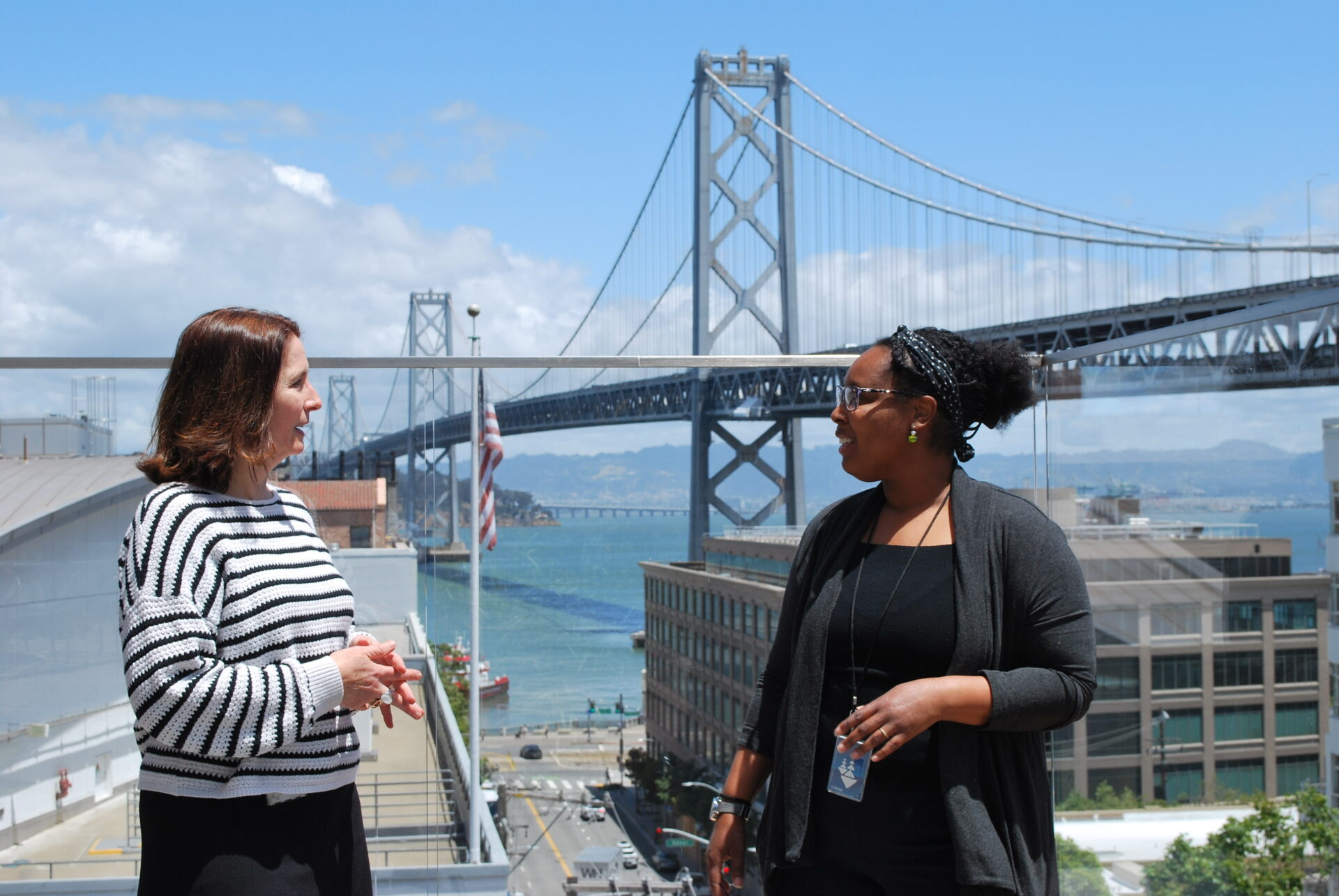
Sweeney and the Partnership’s Alexis Gabriel. Photo: Liz Juvera
Q: What are the biggest changes you’ve seen over your 15 years with the Estuary Partnership?
When our core environmental laws were enacted in the late ’60s and early ’70s, they were necessarily very focused and very siloed. That’s what we had to do then to get these really critical foundational environmental laws passed. But in the ensuing decades, we’ve come to realize that that kind of siloed approach isn’t serving us as well as we need it to. We’ve had to evolve our profession to [embrace] a broader focus that acknowledges the connection between the health, resilience, and vitality of our estuary and the health, resilience, and vitality of the people that live and work and play in and around it. We’ve had to expand our approach to be more holistic, collaborative, and diverse.
We are [now] working more alongside communities, and taking an approach that serves communities as well as the Estuary, so there are different and more people around the table. There are new partnerships, and more of a focus on developing trust with a diverse suite of interests. So we can have a shoreline project now that not only restores wetlands to increase habitat and ecosystem function, but also provides for [better] water quality that benefits not only fish, but the people that eat the fish and the people that swim in the bay, that provides open space and habitat, and recreational opportunities, and flood protection. We are really taking this more multi-benefit approach to the work that we do.
Q: How has the Partnership’s work shifted as a result of climate change?
There’s definitely an urgency around climate change that we didn’t feel 15 or 20 years ago, and it is integrated in everything that we do. It is absolutely increasing the pace and scale of our work to restore habitats around the estuary, for example, and put into place the protections that we need for adjacent communities and infrastructure. And it’s not just about sea level rise anymore, we’re also considering the effects of increased heat and wildfire. These climate impacts affect almost every aspect of our work.
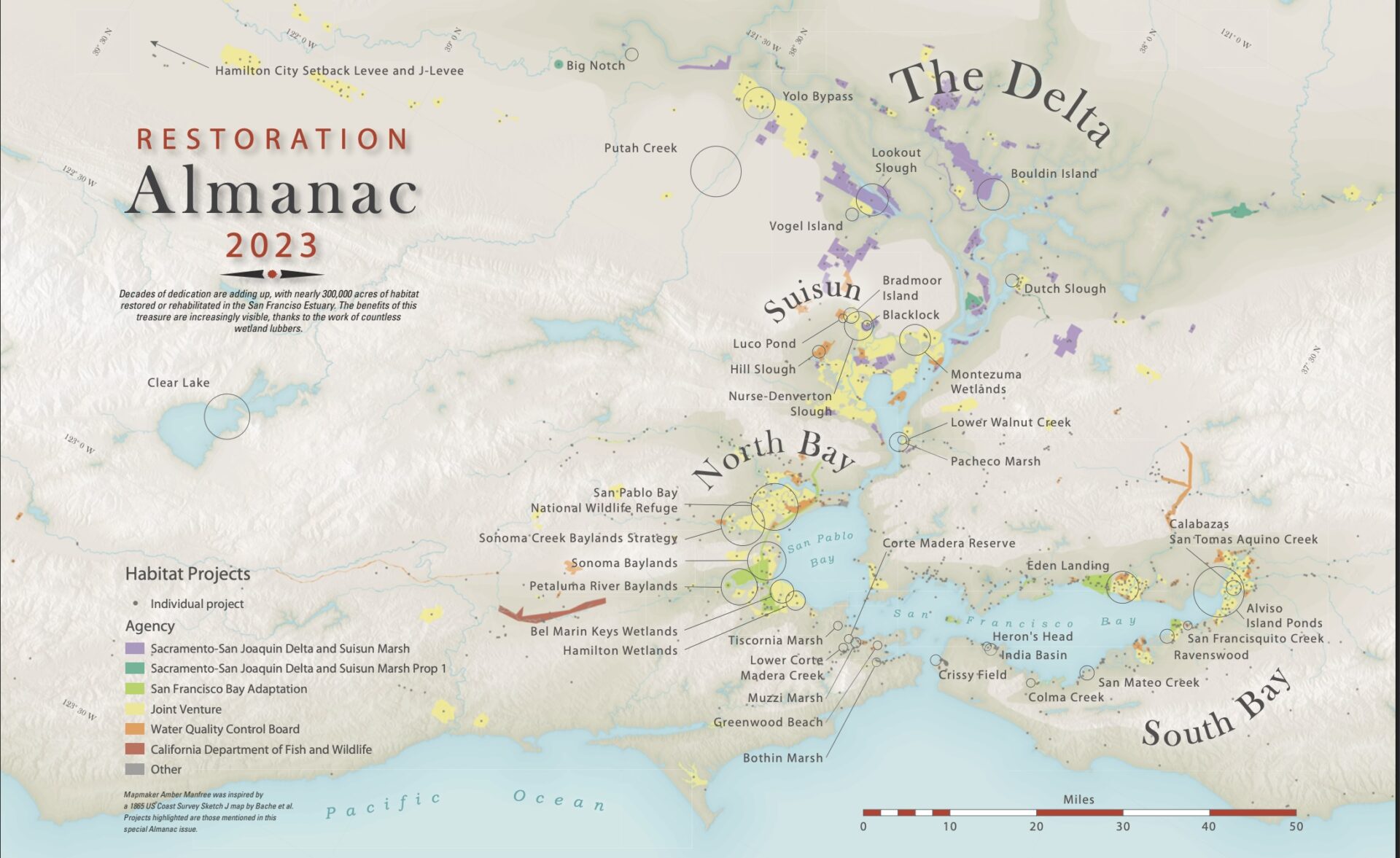
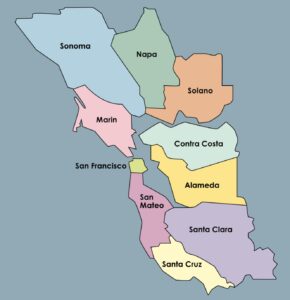
Sweeney's tenure covered a period of significant restoration of San Francisco Estuary habitats, in which the Partnership collaborated with diverse partners to steward the Delta and Bay as one system. Source: Estuary News Almanac of Restoration, March 2023, Map by Amber Manfree
Q: What’s one thing you learned in a previous job that proved invaluable in your most recent job?
At BCDC, I learned how to be a creative bureaucrat, which is a term of art coined by Will Travis, the previous executive director at BCDC. A creative bureaucrat is somebody who embraces innovation, who is resourceful, who has imaginative problem-solving skills. Creative bureaucracy means that “no” is not the first answer, even if “yes” or “maybe” takes a lot more time. Being a creative bureaucrat means allowing for some risk taking and embracing adaptability.
Successful creative bureaucracy is dependent on building relationships and trust. It’s inherently about people. So I learned that my work to increase the health and resilience of the estuary is really about people.
Q: What would you tell other women moving into leadership positions?
When I became the chief deputy director at BCDC, I was the first woman at the executive level. I was definitely in a room where I was the only woman in a leadership position.
One thing I would suggest is to seek out your mentors, male and female. And build a community of women who are your peers across organizations, or even across disciplines, because that network will sustain you and help you navigate the unique challenges of leadership as a woman.
It’s also important to remember that traits that women have been more conditioned to possess, like compassion and humility, can go hand-in-hand with confidence and ambition. When you find yourself in rooms where you’re the only woman, it may feel like a disadvantage, but what you’re bringing to the table — your different lived experience, your different world view — is a strength, not a weakness. And I would expand on that to apply more generally to any core identity that differentiates you from the dominant identity in a room. Your uniqueness is a strength. Your participation in the discussion will result in a better outcome.
Lastly, if any core aspect of your identity is different from the qualities of a typical or archetypal leader, you have the opportunity, and I would say even the responsibility, to continue to open up the leadership circle to others.
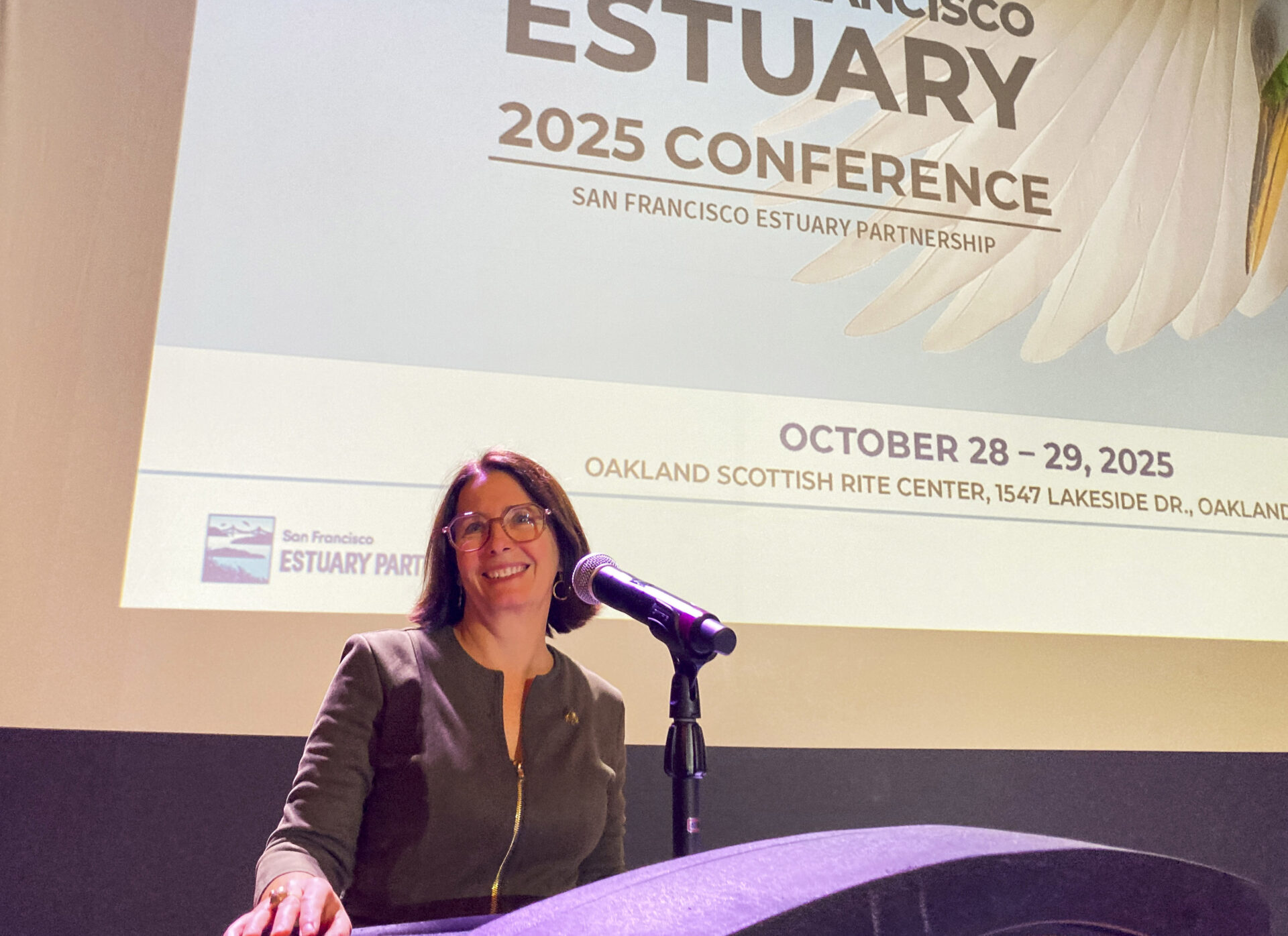
Photo: Joey Kotfica
Q: How did DEI become a cornerstone of many management priorities in our region over the last decade, and where are we now?
We’ve recognized that the policy decisions that we made decades ago resulted in disproportionate negative impacts to some communities. We also recognized that the potential benefits of the policy decisions we make now to correct those impacts may not be distributed equally. So we have begun the slow and sometimes painful process of figuring out how to think more holistically about how to apply an equity lens to everything that we do, both internally and externally.
I think we’ve accomplished a lot in reframing our work, but perhaps accomplished less in the actual application. It takes a lot of time, and I think it’s one of the areas where I see the most tension now. There’s so much urgency now, with the pace of sea level rise and other climate-related impacts, yet we have to take the time to work alongside communities, considering equity every step of the way. It’s time that we feel like we don’t have, and yet if we don’t take the time, the outcomes will not be optimal.
Q: Any regrets? Things left undone?
One of the best things about my job is that it’s always changing. It’s never boring, there’s always something new to do, there’s always some evolving opportunity or issue that’s arising, so there’s always something undone. If it’s not undone today, it’s gonna be undone a week from now, 10 years from now. That’s just the evolving nature of our work.
So I’m not sad about it. I’ve been so honored to be able to work alongside such amazing, creative, talented, compassionate, smart people that I feel very good about stepping away and watching all the great work that’s yet to happen.
MORE
- Sweeney’s Aha Moment at BCDC
- Restoration Almanac, Estuary News 2023