





Printing Without Plastic: The Vintage Machine Winning Over Eco-Conscious Artists
 A Contributor from our Next-Gen Inspiration Team
Most people know that paper sourcing and the resulting deforestation is a pressing environmental issue — but what about the printing process itself, and what comes afterward?
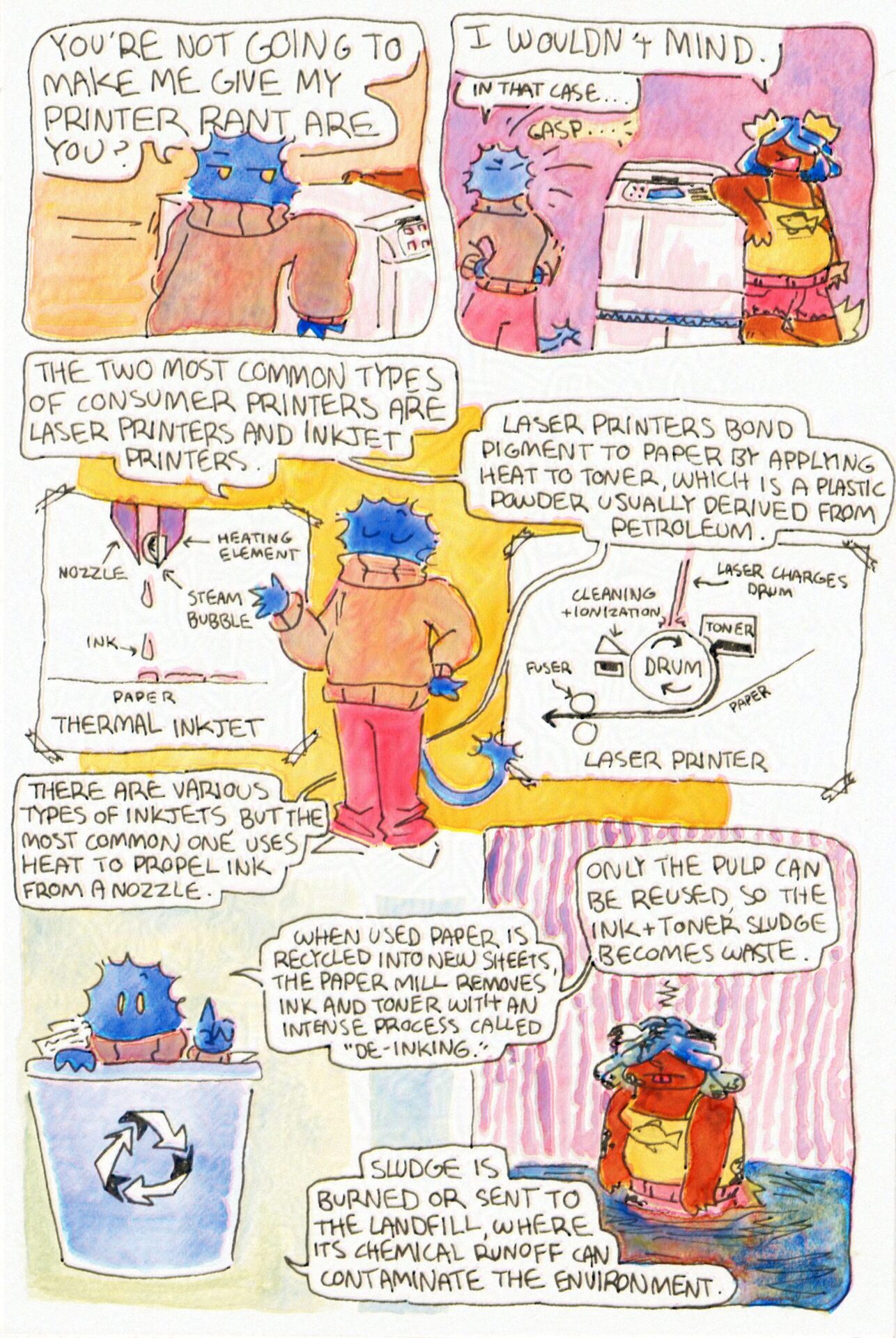
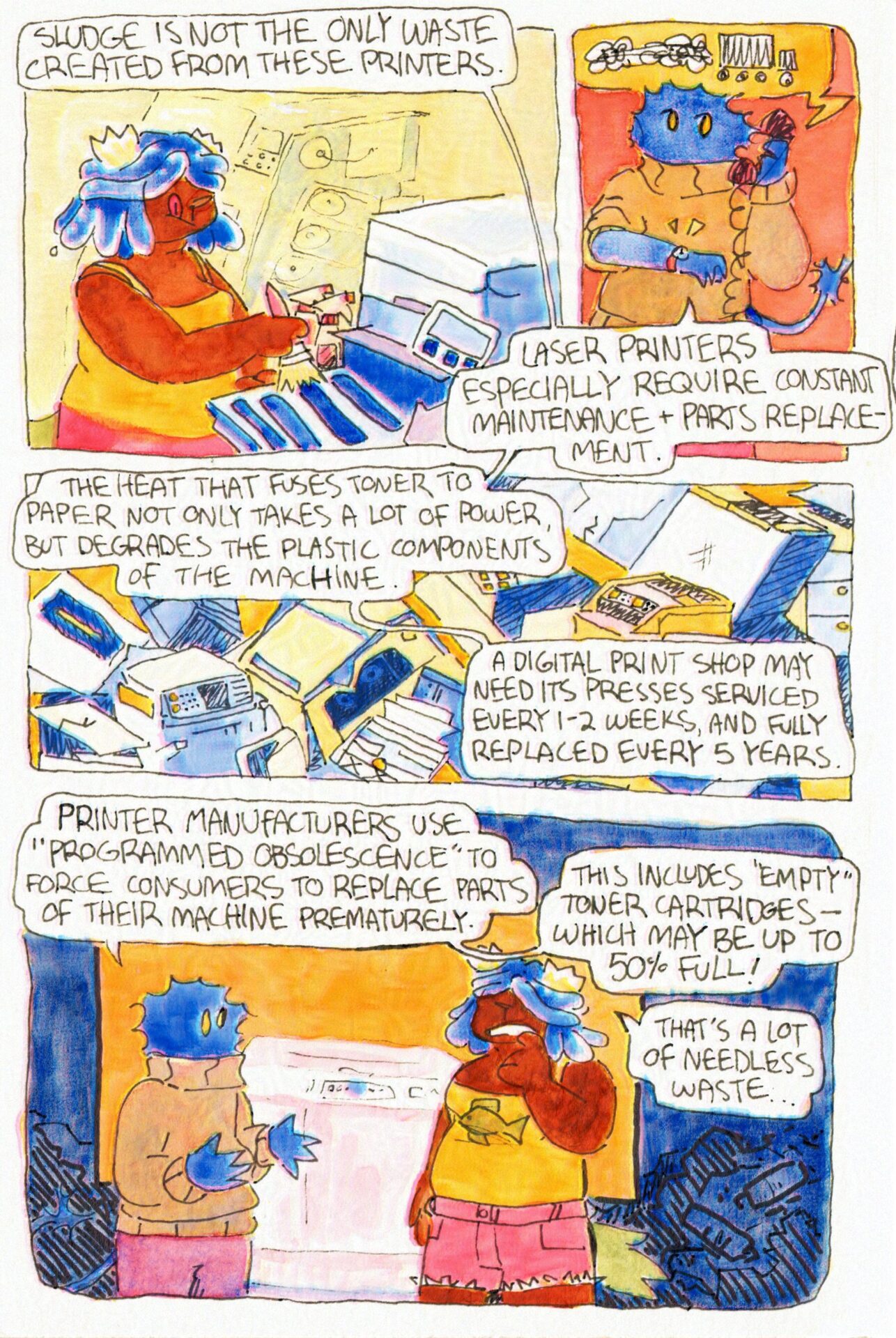
Ink and toner pose issues in both their production and disposal. Laser printer toner is made from petroleum-derived plastics and isn’t compostable, and inkjet ink emits volatile chemicals during printing and can contaminate large batches of pulp during recycling. Both ink and toner are sent to the landfill in large quantities, often with remaining usable product still in the cartridge. That leftover material causes chemical runoff from landfills and contaminates groundwater.
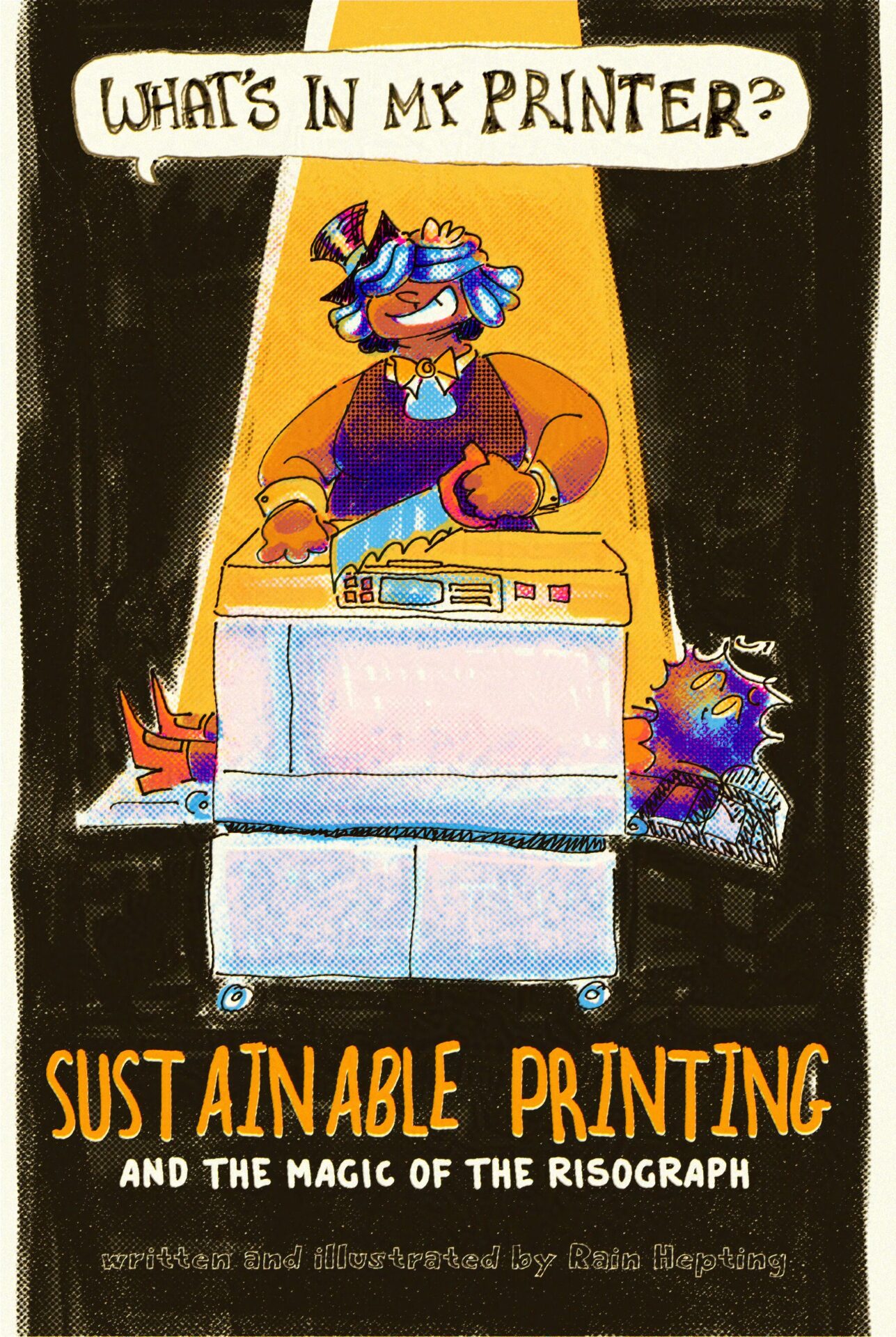
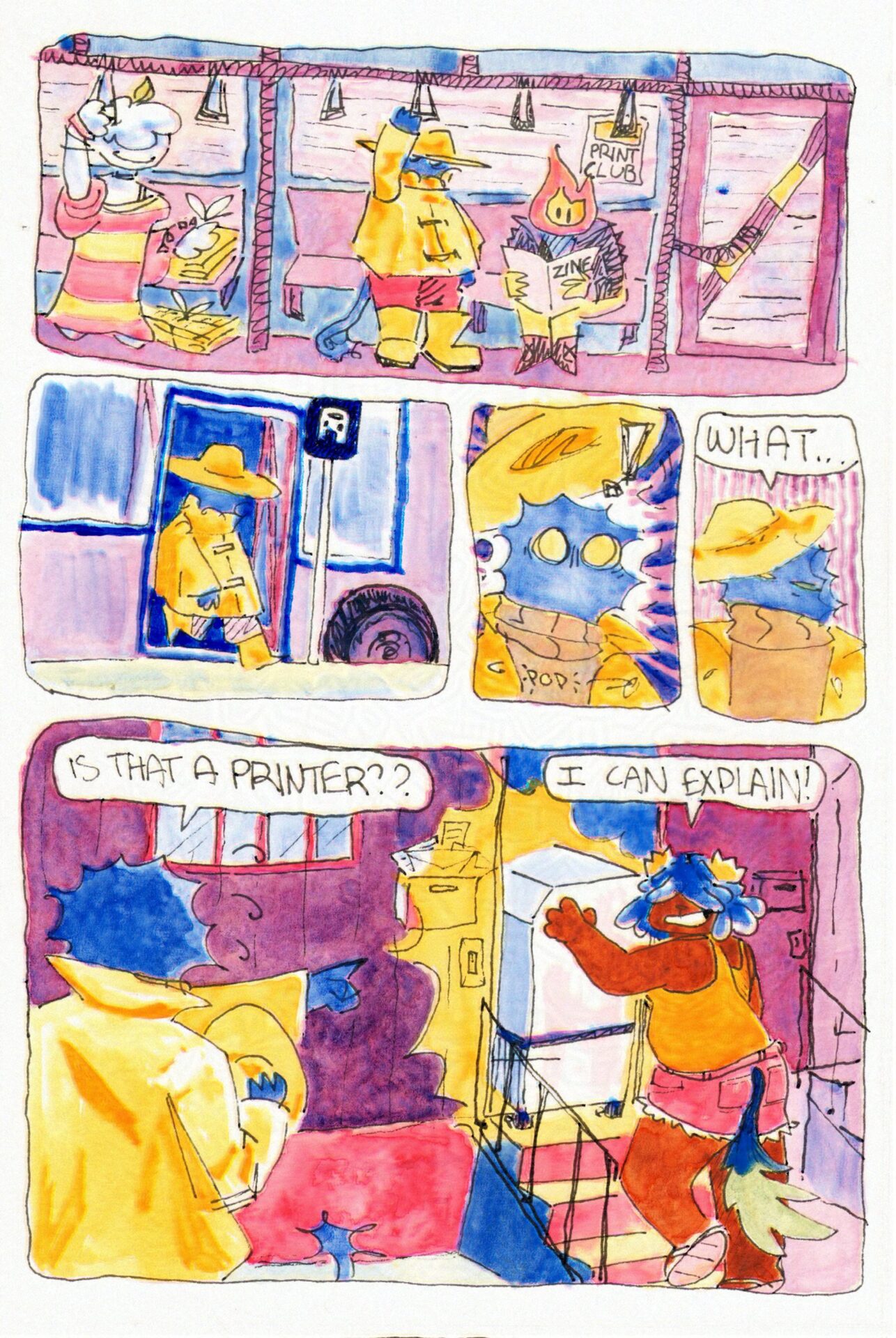
But there are alternative printing options friendlier to the climate, as shown in this comic strip from KneeDeep contributing cartoonist and reporter Rain Hepting. While some are making a substantial effort to refill and remanufacture used ink and toner cartridges, there are also entirely different types of machines.
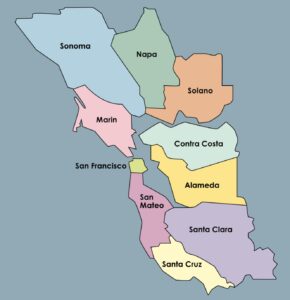
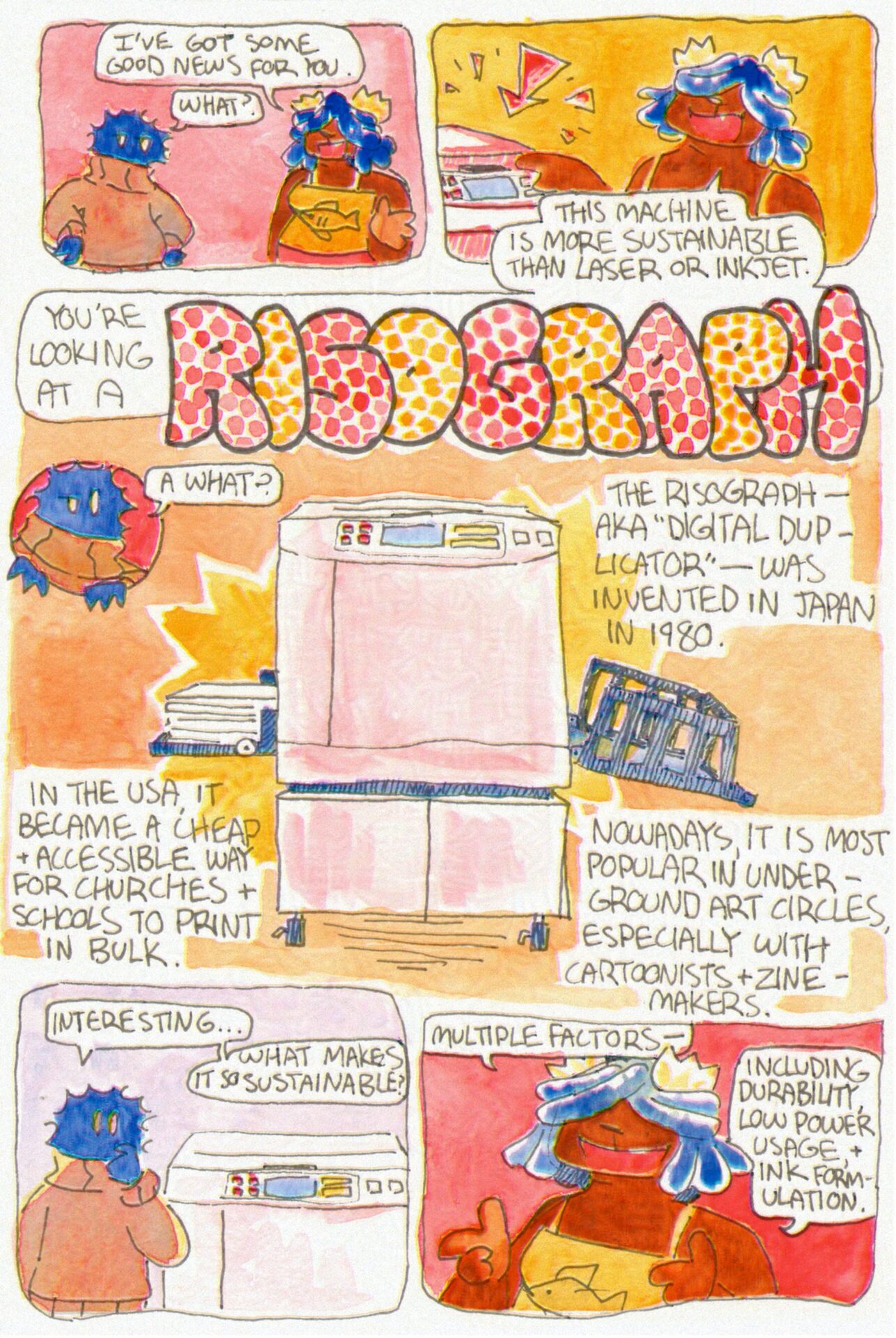
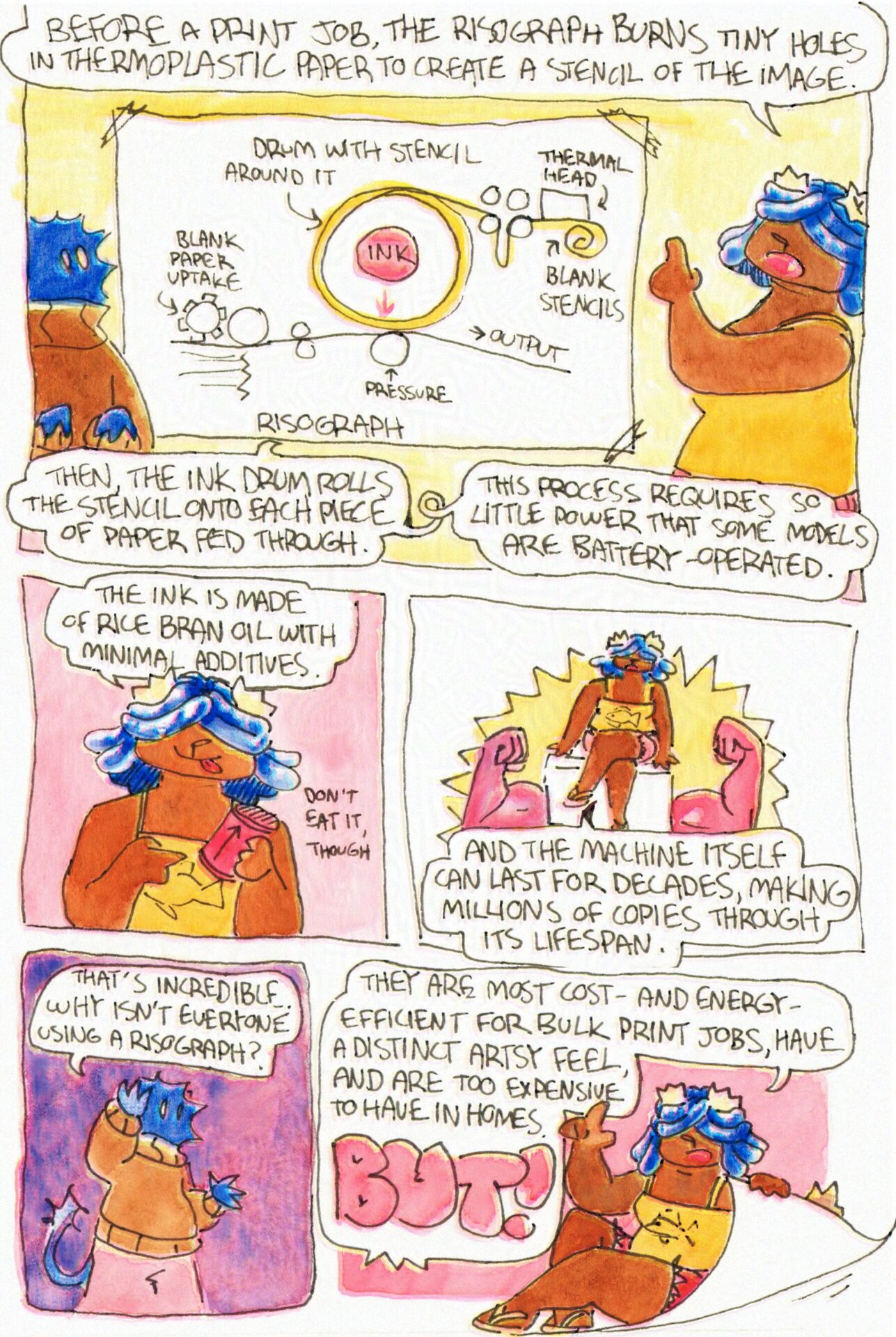
Enter the risograph: a Japanese stencil duplication machine from the ’80s that uses vegetable-oil inks, consumes about half the power of a typical laser printer, and prints five times as fast. The risograph, once common for bulk printing in schools, churches, and political movements, rose in popularity among American cartoonists and zine makers through the 2010s. The tradition is still alive and well in the Bay Area at collectivist print shops and underground comics conventions, including at the locations listed below.
Click or scroll to view

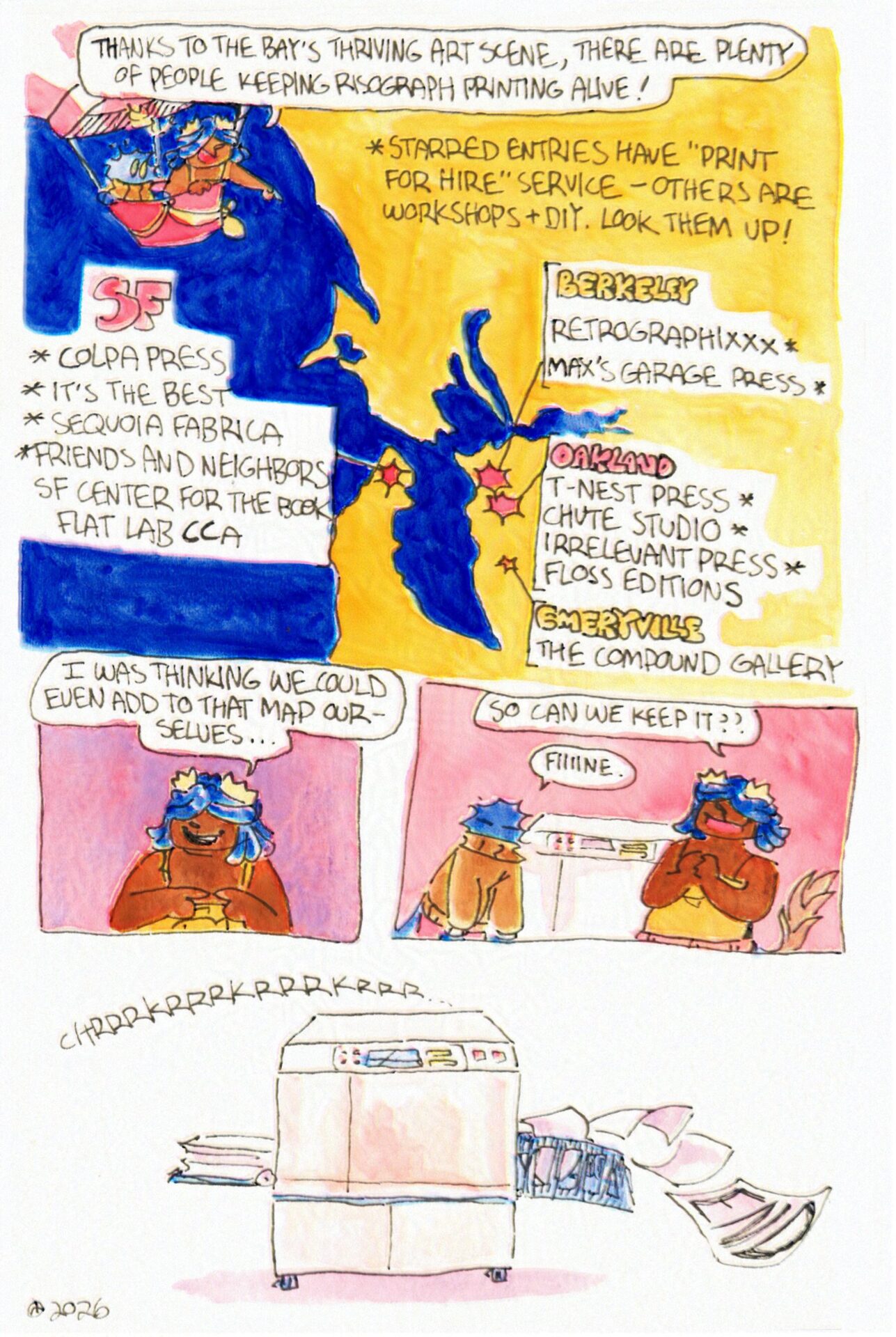
Emeryville
Sources
- Inside Laser Printer Toner: Wax, Static, Lots of Plastic (Wired)
- Ink Cartridges and the E-Waste Crisis
- Risograph Workbook
- Risograph Basics (Purdue University)
- Risograph’s Environmental Performance
- Assessment of the impact of toner composition, printing processes and pulping conditions on the deinking of office waste paper (Journal of Environmental Chemical Engineering)
- Safety Data Sheets