



New Year Immerses Concord Residents in Flood Preparations

Intense rains and flash floods are becoming more frequent in communities across the East Bay due to increased evaporation rates from global warming, with the most recent warnings of flash flood danger for Alameda and Contra Costa counties issued on January 5th. By this time, however, residents had had longer than usual to prepare for the wet season.
For nearly a decade, Contra Costa County resident Maria Nunez has made a daily commute through the series of rolling hills from Bay Point to her job at the Giant Wash Laundromat in Concord. Accommodating heavy rain seasons can be difficult. When it storms, she has to change her commute. “I go through another path other than my usual route because it’s safer and faster,” she says.
The city of Concord, with its many creeks, is susceptible to moderate levels of flooding, especially from October to April. The city stretches across two separate watersheds, including the Walnut Creek watershed — the largest in Contra Costa County.
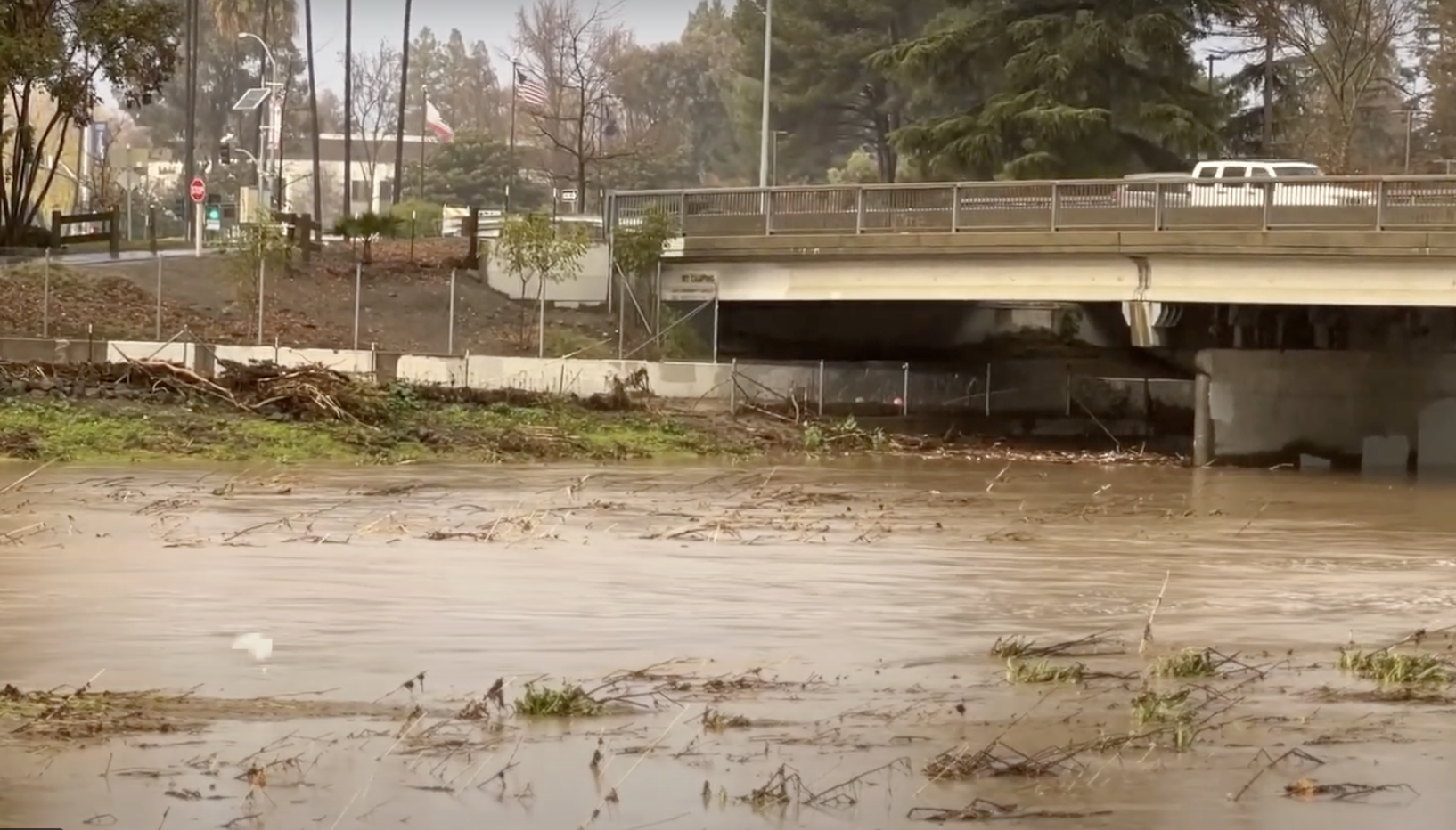
Walnut Creek’s flood control channel swollen with rains in 2023. Photo: Bay Area Telegraph
Other Recent Posts
Fire Weather in the Wind
As the hot Nevada air cools every fall, it gets pushed west to lower pressure areas over the Central Valley, where the wind heats up and dries out.
My Morning Cleaning Up the Oakland Estuary
On Oakland’s Creek to Bay Day, I joined 100 volunteers for I Heart Oakland-Alameda Estuary to remove shoreline trash.
RCDs Pay Extra Attention to North Bay High Schoolers
A $15,000 grant will help three North Bay conservation districts evaluate youth education programs and prepare high school students for environmental careers.
Creeks Make Good & Bad Homes
San Jose State researcher Costanza Rampini explores why the houseless favor creek banks, and how they weather the flood risk.
Bay Area Braces for Record-Breaking El Niño
Record high water temperatures in the Pacific are expected to bring dangerous sea level rise, waves, and rain to the region this winter.
Regional Housing Agency Invests in Affordability
The Bay Area Housing Finance Authority is launching a loan program to support the construction of mixed-income rental properties.
The End is Coming for California’s Untouchable Grass
The law, which applies to grass that isn’t used for recreational purposes, could cut urban water use across California by more than 20% says Oakland thinktank.
Founder and chair of community initiative Friends of Concord Creeks, Fareed Nabkel does regular check-ups on a nearby creek to his home in Concord. It’s a small tributary of the larger Mount Diablo Creek, which stems from the Mount Diablo Creek Watershed. He says that we could see a “slow, continuous flow” of water throughout local creeks for the rest of the rainy season.
According to Nabkel, creeks throughout the city have been consistently modified throughout the years to reduce flooding but some areas are still problematic. Nabkel recalls a specific area of concern near the Diablo Creek Golf Course: “Twenty years ago there had been flooding seen there, and now there was flooding again,” he says. “I would not be surprised if they see more flooding coming out.”
Flash flooding is an experience residents are familiar with — including Nunez, who recalled an experience in 2023 where nearly a foot of water engulfed the road around her, causing her to completely postpone commute and work plans. “When I drove through low spaces on Willow Pass… I [had to be] cautious of the [water] levels and wait it out.”
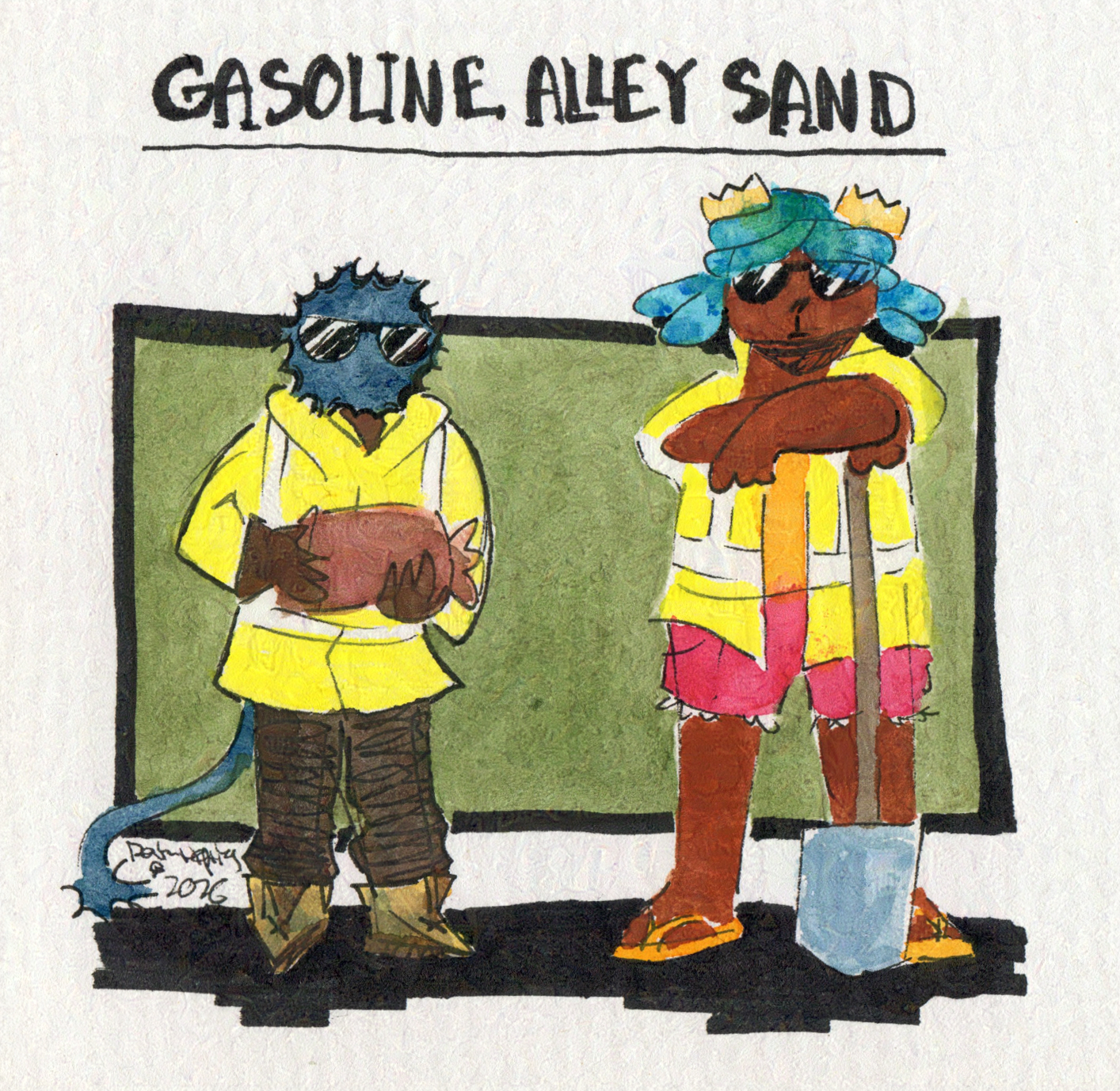
Art: Rain Hepting, KDT Community Reporting Fellow
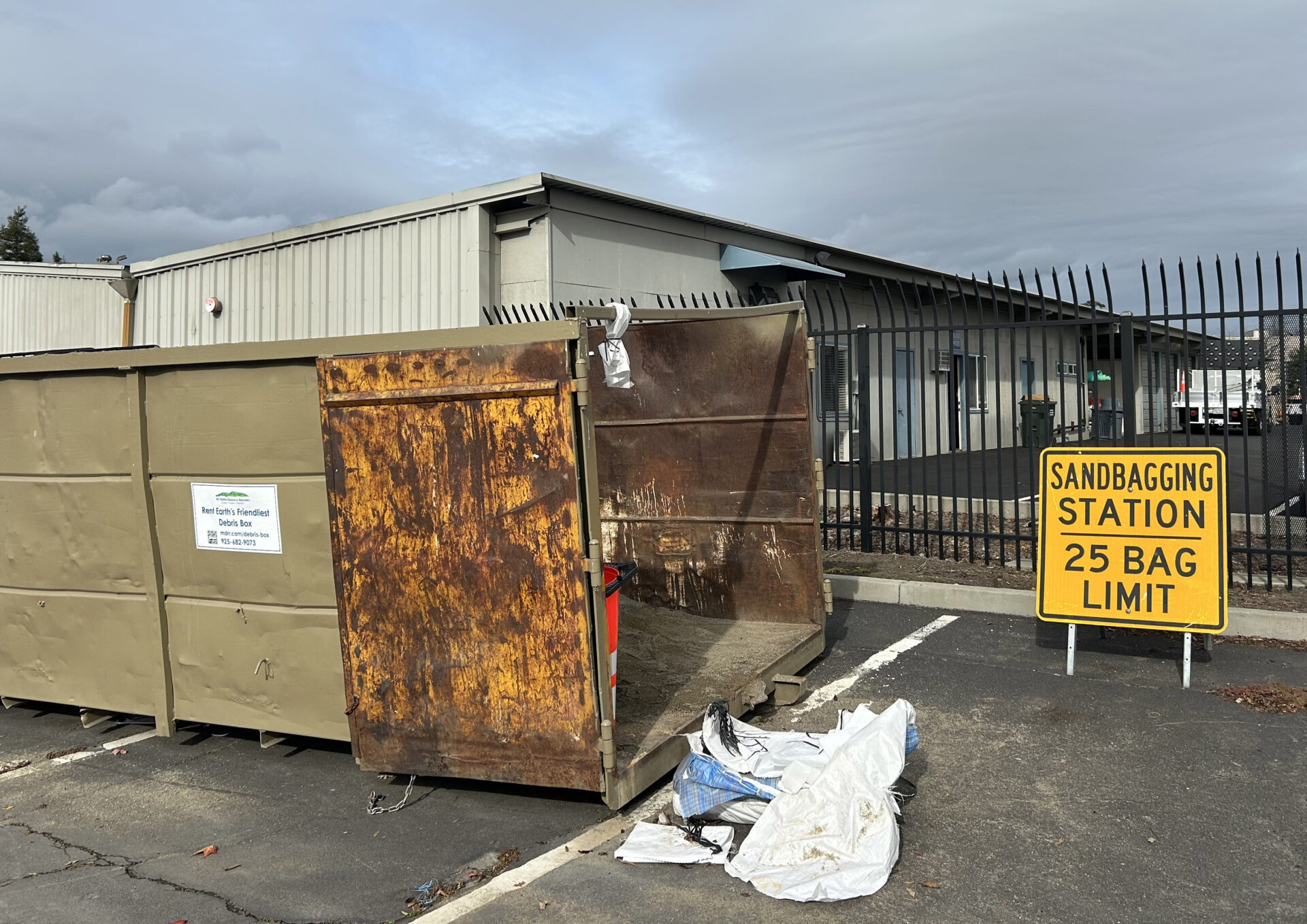
Those whose commute is flooded can stay home, but what if that home is flooded too? The city of Concord maintains a completely free, 24-hour sandbagging station for all residents to help them protect their homes. Similar to six other sandbag locations across the county (Bay Point, Pleasant Hill, Martinez, Walnut Creek, Knightsen, and Richmond), the station encourages locals to collect sandbags to have on hand, in case flooding reaches their front-door steps. In Concord the station is located in a place named Gasoline Alley. The self-serving station is a large, metal crate of sand, providing shovels and packing bags for residents.
Sandbags are a low maintenance and affordable flood damage prevention option that can be easily stored for later. In the time of a flood, placing them in entrance areas such as doorways can effectively redirect and absorb water flow, reducing water damage.
Nunez made sure to grab six sandbags at the station for her household of four. Her family has safely stored them throughout their home, awaiting their potential moment as sudden winter storms have begun rolling in.
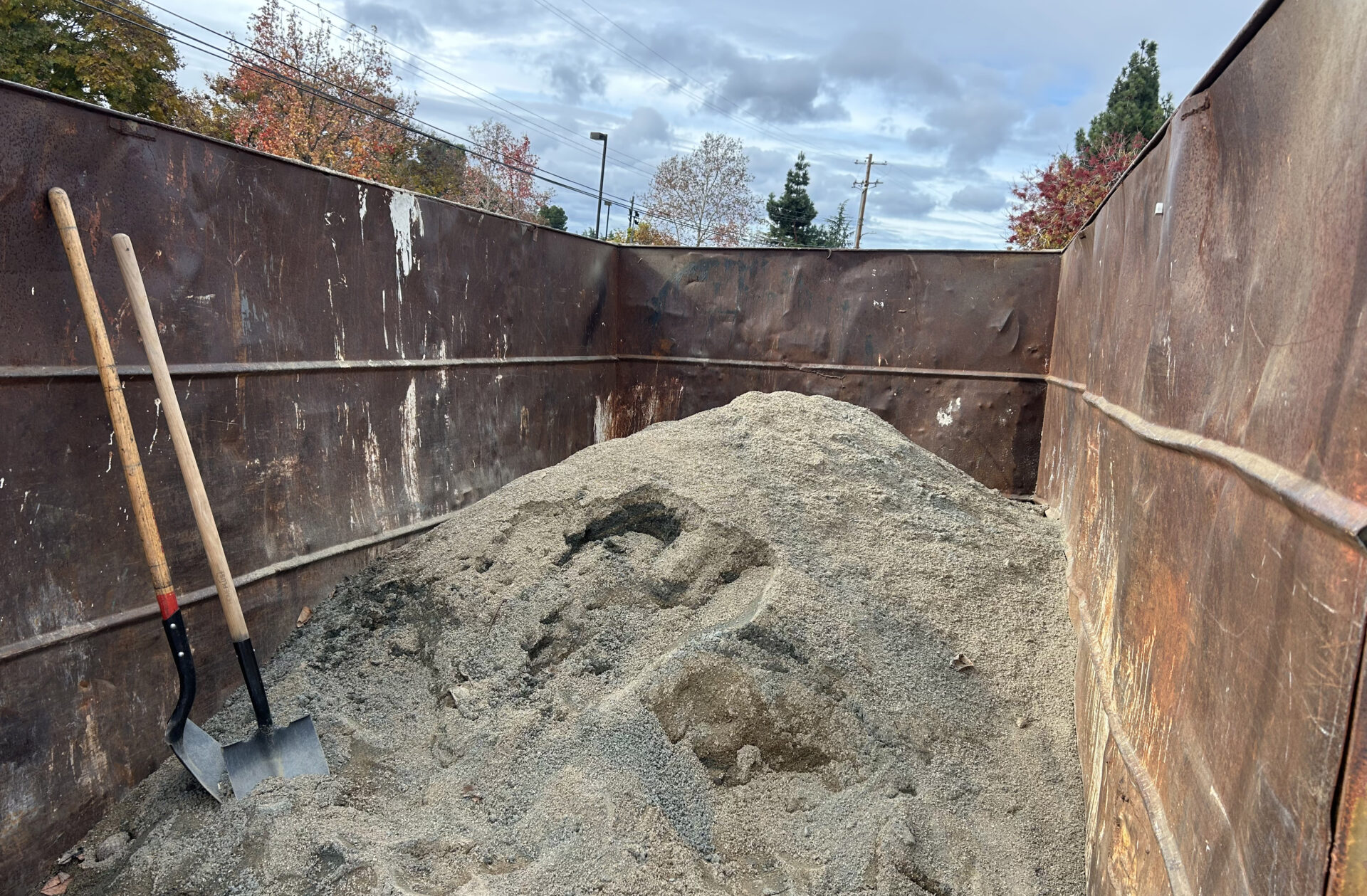
Both sand and shovels are available to residents at the Concord sandbagging station. Photo: Gracebelle Ma’ake
With the long, dry run up to the holiday season, locals have had time to fill their sandbags and get prepared — but Concord is not in the clear yet. As light showers open the new year, residents are encouraged to take precautions and budget extra time for commutes during the wet season.
Nabkel also says that there’s also community support in place for people impacted by flooding. “They can reach out to [Friends of Concord Creeks], and we can connect them to local contractors or companies,” he says. The group has an active social media presence connecting residents throughout the city.
He also encourages residents to contact the Flood Control District within Contra Costa County, who are “the people to notify” if any flooding issues are noticed.