


Creeks Make Good & Bad Homes

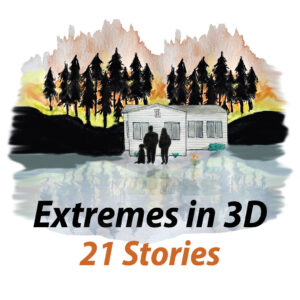
Art: Christina Alvear
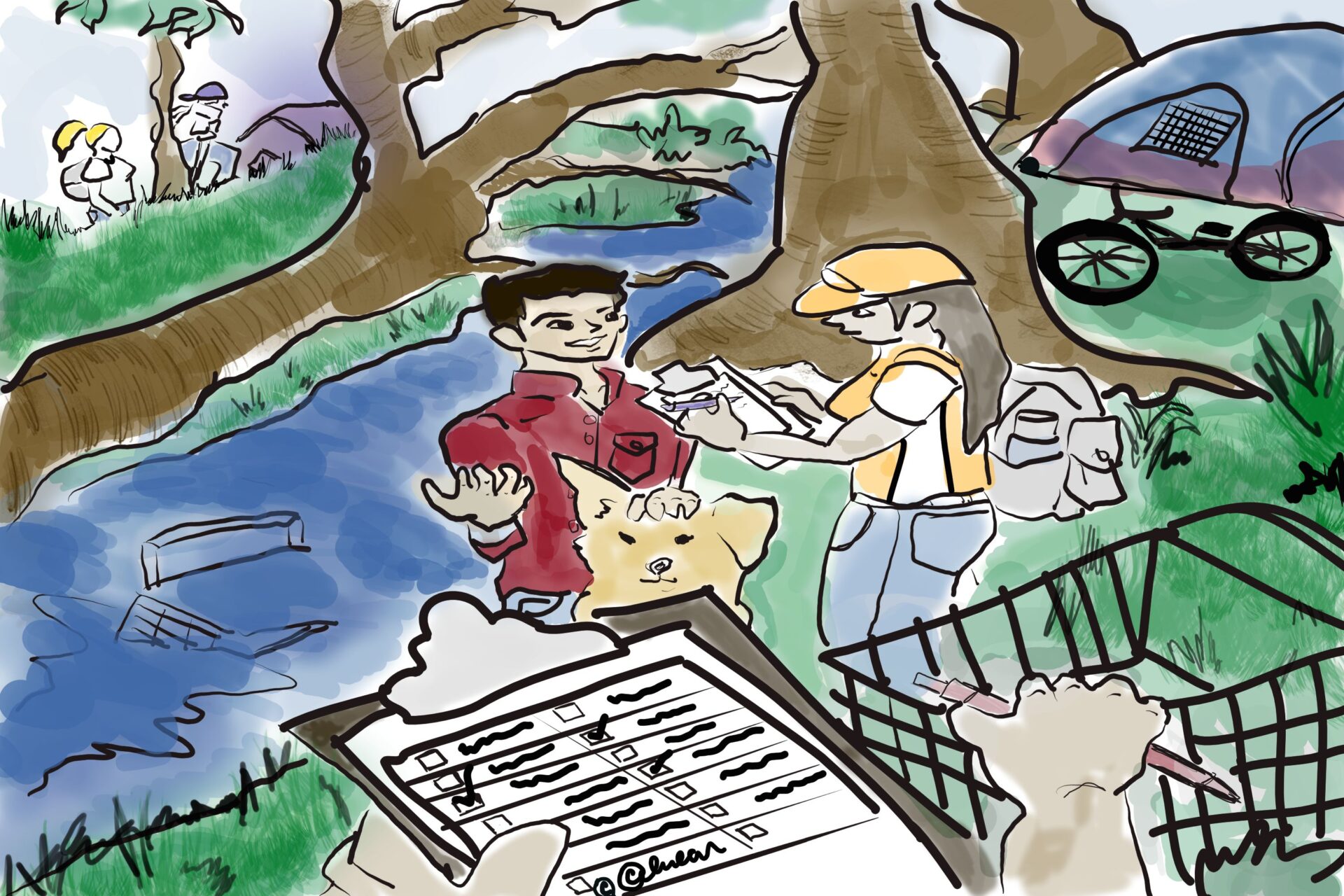
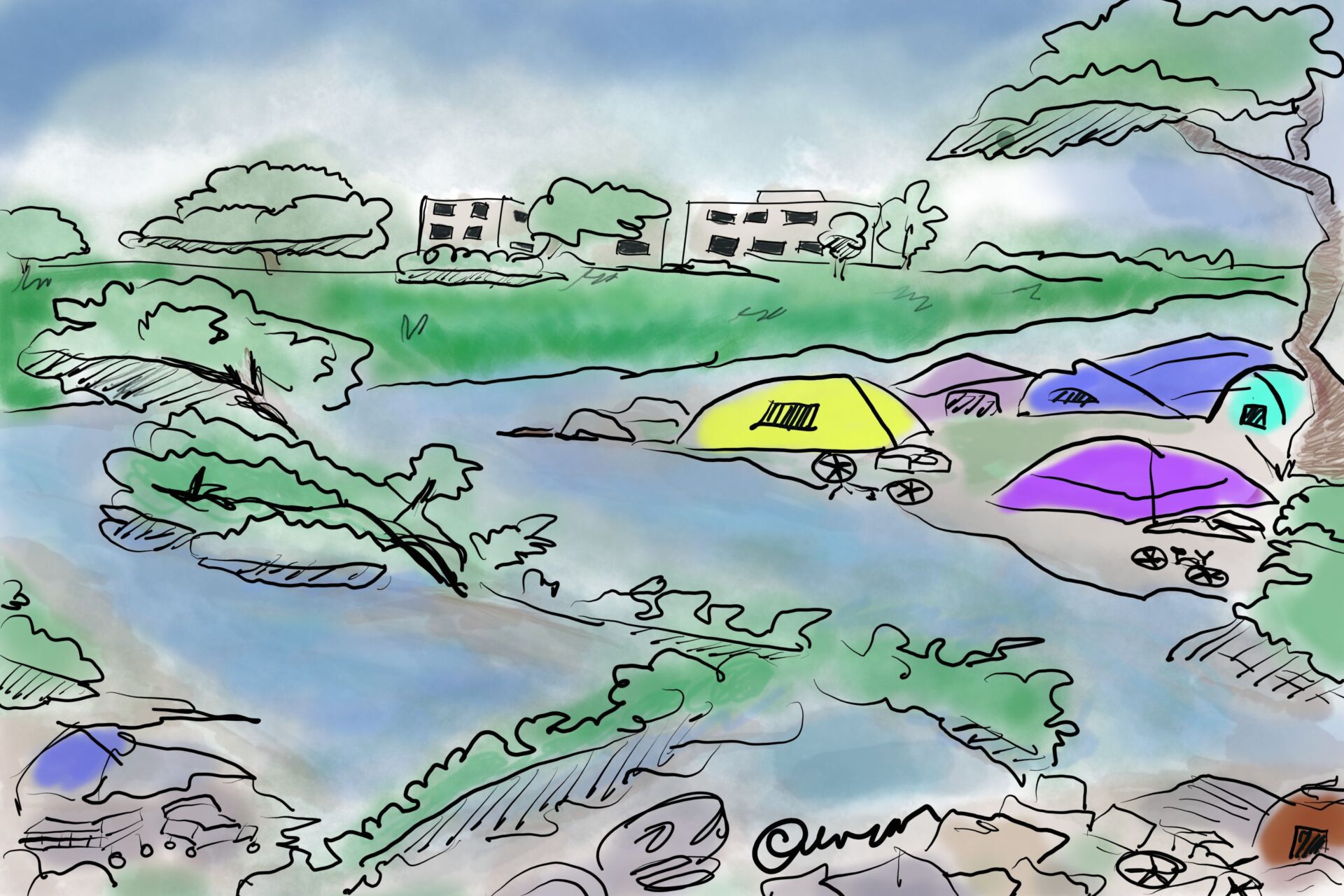
Costanza Rampini, a researcher at San José State University, has spent two years with her team at homeless encampments tucked alongside urban creeks and streams studying how climate change, homelessness, and urban streams intersect.
Homeless encampments are common amid a lack of sufficient affordable housing and shelters in California. The state accounts for nearly half of the nation’s unsheltered and homeless population. In the Bay Area alone, nearly 40,000 people lack shelter.
Rampini found that people have been setting up encampments alongside creeks largely because of the independence of camping outside: shelters were often crowded and had strict policies.
“They liked their autonomy that they don’t feel like they have at shelters,” says Rampini.
But being alongside creeks left individuals vulnerable to increasing flooding and extreme heat, which was often exacerbated by a lack of mobility.
Rampini’s team found that 48% of interviewees said they couldn’t relocate during a flood, largely for fear that their belongings would be stolen or that they wouldn’t be safe in shelters. During heat waves or drought, 53% of interviewees said they wouldn’t relocate because of discomfort with traditional housing or cooling centers, or issues with transportation — only 7% had a working car.
“So a lot of folks are really just telling us, ‘If the river’s flooding, if it’s raining outside, we just ride it out in our camp. We don’t want to leave,’” says Rampini.
Encampment esidents also often didn’t receive weather alerts because they didn’t have reliable access to phones or cell service. While 82% said they received a warning about extreme weather, nearly half received that warning through word of mouth.
“What you end up getting is these citizens who really have no idea what to expect for the next couple days,” says Matthew Lee, an SJSU graduate student who worked on the project. “The first day, it could be like this torrential rain. … And then the next day, it could be blistering hot. So it’s extremely hard for them to adapt to the changes in the local weather.”
Other Recent Posts
Fire Weather in the Wind
As the hot Nevada air cools every fall, it gets pushed west to lower pressure areas over the Central Valley, where the wind heats up and dries out.
My Morning Cleaning Up the Oakland Estuary
On Oakland’s Creek to Bay Day, I joined 100 volunteers for I Heart Oakland-Alameda Estuary to remove shoreline trash.
RCDs Pay Extra Attention to North Bay High Schoolers
A $15,000 grant will help three North Bay conservation districts evaluate youth education programs and prepare high school students for environmental careers.
Bay Area Braces for Record-Breaking El Niño
Record high water temperatures in the Pacific are expected to bring dangerous sea level rise, waves, and rain to the region this winter.
Regional Housing Agency Invests in Affordability
The Bay Area Housing Finance Authority is launching a loan program to support the construction of mixed-income rental properties.
The End is Coming for California’s Untouchable Grass
The law, which applies to grass that isn’t used for recreational purposes, could cut urban water use across California by more than 20% says Oakland thinktank.
Sonoma Vineyard Workers Burn toward a Better Future
A group of immigrant farmworkers are forming a worker-owned cooperative to bring back Indigenous burning practices that used to revitalize the soil.
Art: Christina Alvear]
Researchers also saw how prolonged exposure to conditions like extreme heat or flooding could severely impact people’s health: more than 60% of interviewees reported having a health condition that affected their daily life.
Abby Espinosa-Gonzalez Bellolio, another grad student who worked on the research project, interviewed a woman in Spanish. Bellolio learned she had mobility issues that prevented her from standing for long periods of time. Not having access to the restroom felt “humiliating” for the woman, and it was difficult for her to access resources without speaking English.
“She was an older lady. … She had all these intersectional identities, and that really set her at an increased vulnerability as opposed to someone who is able-bodied and able to speak English and able to navigate different bureaucracies and institutions,” Bellolio says.
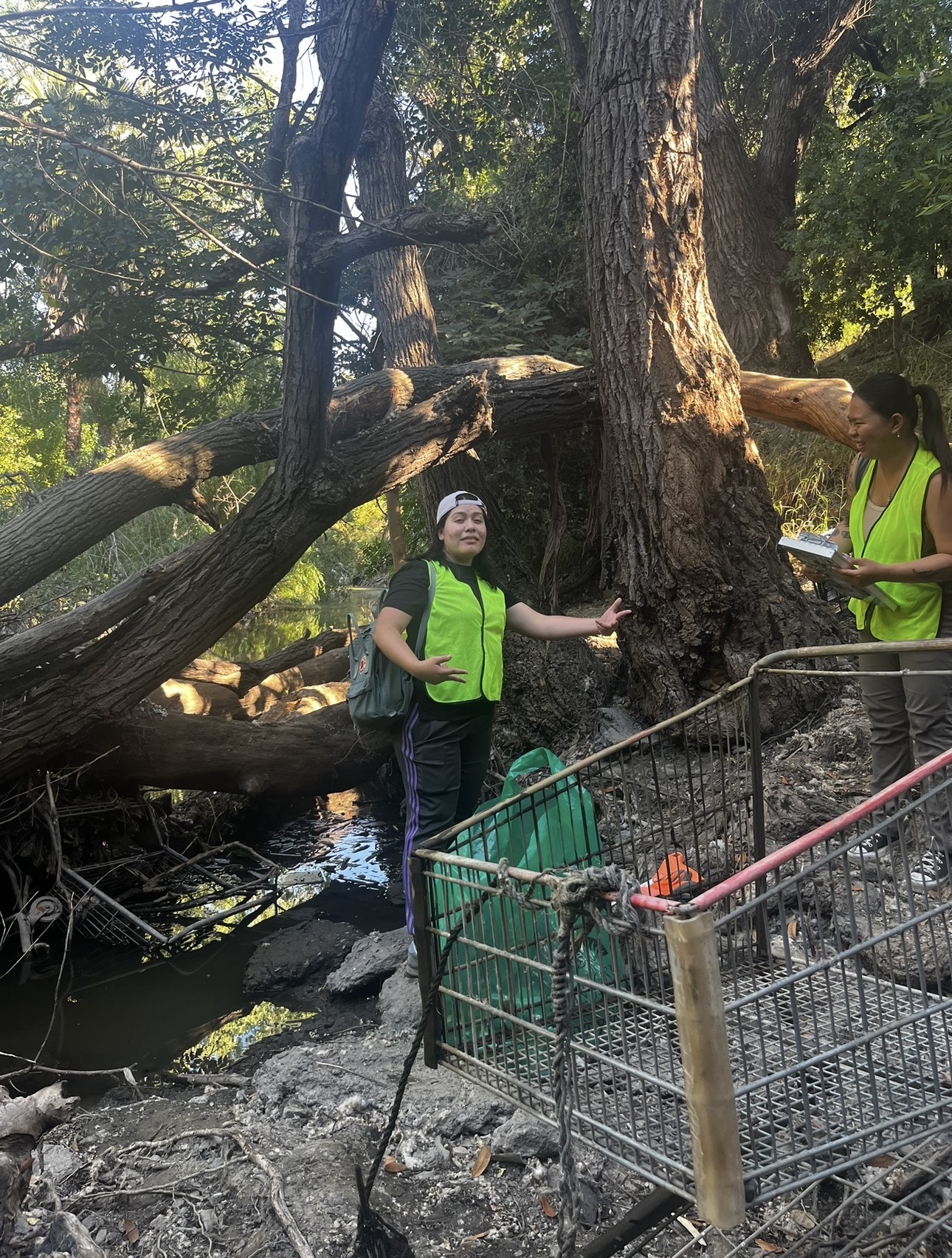
Rampini also notes that people experiencing homelessness often aren’t included in environmental studies, which motivated her work. Joining colleagues at UC Davis who studied physical attributes and changes in the region’s creeks, Rampini’s team interviewed 300 unhoused individuals living in Bay Area stream-side encampments using a community-based participatory research framework. They plan to send their research back to community organizations for them to better support unhoused people in their areas.
“Community-based participatory research is so important because it’s not just institutions coming into a space and extracting data,” Bellolio says. “It’s institutions coming into a space and fortifying resiliency within.”
What Bellolio noticed the most from her work was seeing the sense of community within encampments.
SJSU research team on the job. Photo: Costanza Rampini
“A lot of times, folks really see each other as their first support group,” says Rampini. “Some of them refer to each other as family, like ‘my street brother,’ ‘my street sister,’ ‘my street mom or dad.’”
The researchers found that 83% of encampment residents said they helped one another during floods, moving belongings and sharing resources with each other.
Research shows that mutual aid and social networks — like those developed in these encampments — are also a key factor in building resilience against climate change, according to Rampini.
While traditional emergency planning often assumes people have access to transportation and somewhere safe to evacuate to, that’s not always the case for unhoused individuals, adds Bellolio.
“[Proponents of] climate solutions need to consider whether [solutions are] actually accessible to vulnerable populations,” she says. “I think that it’s important to recognize that mutual aid, community knowledge, and adaptive resources are forms of resiliency, and we can lean more into that.”