




San Mateo Antes Up for Flood-Free Future
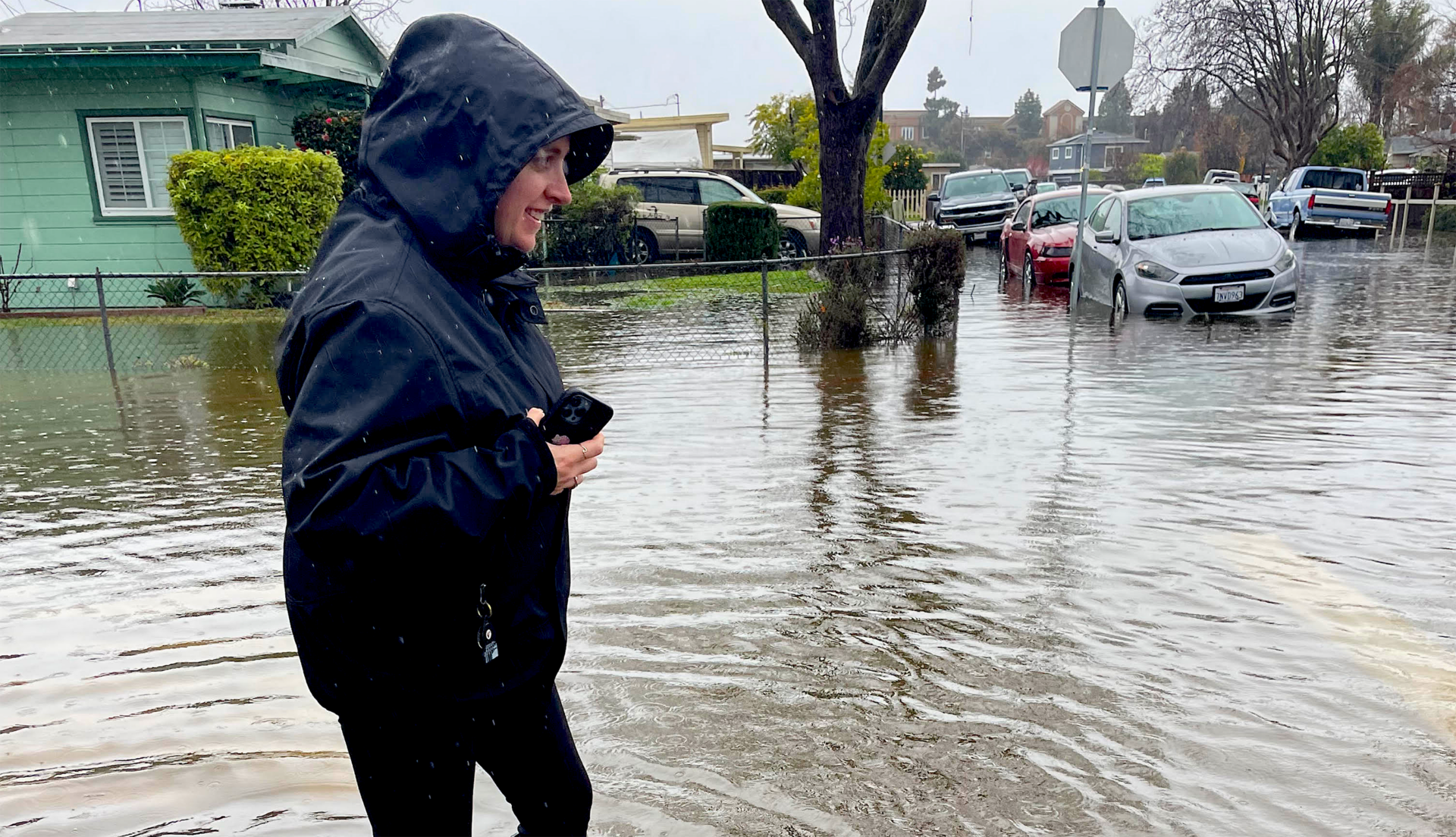
When San Mateo Creek topped its banks during last winter’s relentless winter storms, Danielle Cwirko-Godycki’s home became one of thousands in the city to flood. The event highlighted San Mateo’s aging and underfunded stormwater infrastructure, and prompted Cwirko-Godycki to spearhead a campaign to create a revenue fund dedicated to rehabilitating the city’s flood protection system. The effort culminated last month in the passage of a parcel tax that will raise $4 million annually to upgrade and maintain the city’s network of storm drains, culverts, creeks, and pump stations, as well as dredge Marina Lagoon, which was designed as a flood control basin but last year spilled into nearby neighborhoods.
“We have a $168 million deficit worth of projects in terms of what needs to be upgraded,” says Cwirko-Godycki, who founded Flood Free San Mateo in the aftermath of the 2022-2023 storms. “San Mateo has 17 creeks. Their culverts were designed for 100-year flood events, but because they’re over 70 years old, some of them can’t even withstand a 10-year storm event.” She notes that although San Mateo has historically experienced flooding every 20 years, the National Oceanic and Atmospheric Administration now predicts it’s now likely to be every five to eight years.
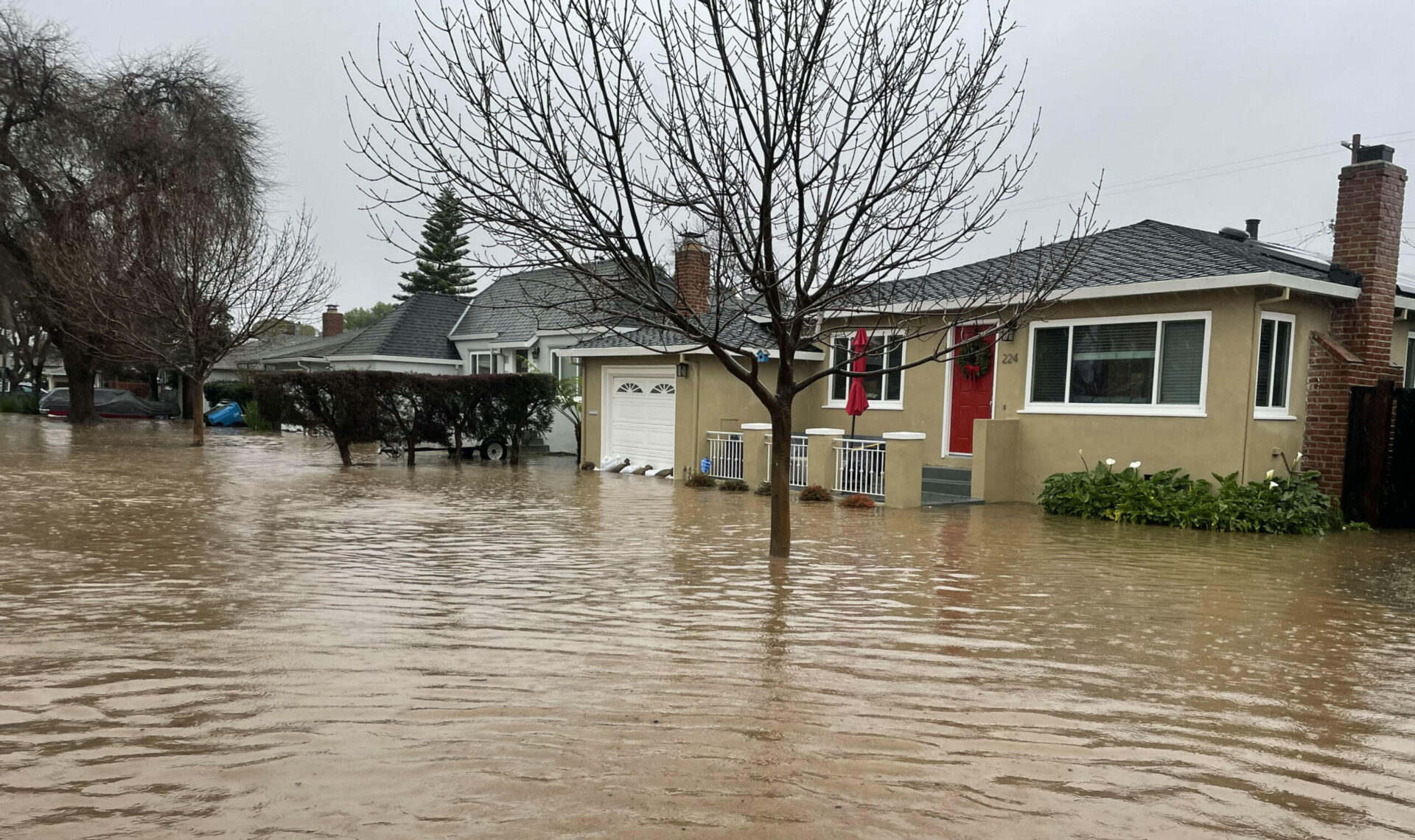
Flooding on San Miguel Way, in “The Village,” during 2022-2023 atmospheric river events. Photo: Flood-Free San Mateo
Cwirko-Godycki initially found it hard to get the City Council’s attention. But tapping her experience as a former organizer for Barack Obama, she soon began networking with businesses and residents. “We found almost 10,000 homes and businesses that flooded across San Mateo and then it just kind of spiraled into the city council reaching out and asking us to help get this ballot measure passed.”
“The community told us that we really had to do a lot more,” says San Mateo Mayor Lisa Diaz Nash. “They got themselves together and worked closely with our Department of Public Works, and came up with a plan.”
In November, property owners received a ballot seeking approval for a Community Flood and Storm Protection Fee. The measure, which passed with almost 52% of the vote, will impose a fee averaging $8 per month, depending on parcel size.
“We went with $8 because when we surveyed likely voters that was what came back as what residents could tolerate,” says Cwirko-Godycki. The actual amount needed to fund current projects is closer to $19 per parcel; her organization is working with the city to pursue additional state and federal funding to close the gap. “The $8 fee gets us on the dartboard to go after matching funds. You are only eligible for some of these critical grants if the community has a stormwater fee.”
The funds will go into a dedicated enterprise account, meaning they cannot be diverted to other projects.
“I think that was a big selling point.” says Cwirko-Godycki. “People know that the city will have accountability. The money’s not going into the general fund, it’s going into the specific infrastructure account.”
Other Recent Posts
Regional Housing Agency Invests in Affordability
The Bay Area Housing Finance Authority is launching a loan program to support the construction of mixed-income rental properties.
The End is Coming for California’s Untouchable Grass
The law, which applies to grass that isn’t used for recreational purposes, could cut urban water use across California by more than 20% says Oakland thinktank.
Sonoma Vineyard Workers Burn toward a Better Future
A group of immigrant farmworkers are forming a worker-owned cooperative to bring back Indigenous burning practices that used to revitalize the soil.
Los trabajadores de los viñedos de Sonoma queman por un futuro mejor
Un grupo de trabajadores agrícolas inmigrantes está formando una cooperativa de propiedad de los trabajadores para recuperar las prácticas indígenas de quema que solían revitalizar el suelo año tras año.
New Voices Shape Design of Berkeley’s North Basin Strip
Twenty acres of parkland between the highway and the Berkeley shore are slated for a coast-resilient makeover, with input from locals and stakeholders.
It’s Always Sunny In North Fair Oaks
Residents of the unincorporated community launched their second campaign in two years to get the county to care for dying street trees.
Siempre está soleado en North Fair Oaks
Los residentes de la comunidad no incorporada lanzaron su segunda campaña en dos años para lograr que el condado se ocupe de los árboles de la calle que se están muriendo.
Can Nature Help California’s Coast Fight Fire and Floods?
Local and state leaders gather for September summit on how to mainstream nature-based infrastructure.
Guide to Nature-Based Infrastructure Around the Bay Area
Regional leaders are testing eight types of climate adaptation and shoreline flood protection projects that work with nature instead of against it. Here’s an overview.
How Can I Get Clean, Green, Climate-Forward Job Training in the Bay Area?
Looking for a hands-on job working outdoors that actually pays? Here’s a list of training programs.
Both Cwirko-Godycki and Nash credit grassroots organizing with the success of the measure.
“We did a big public education push, writing articles to the press, as well as door knocking and cold calling,” says Cwirko-Godycki. The campaign was funded by a ballot measure committee, which raised more than $55,000 in donations from the community. The committee spent approximately $25,000 on walk pieces, mailers, robotexts and other campaign materials and donated the leftover funds to three local non-profits.
“The Flood Free people organized across the city,” says Nash, noting that the whole City Council participated in the door knocking campaign. “People were saying, you know, this is everyone’s problem because all of our water flows to the Bay. And if we don’t fix this problem, now, it’s just going to get worse and worse as climate change makes the storms worse and worse. So we were crossing our fingers but believing in our community. I’m told it’s very unusual for something like this to pass the first time out. And it did.”
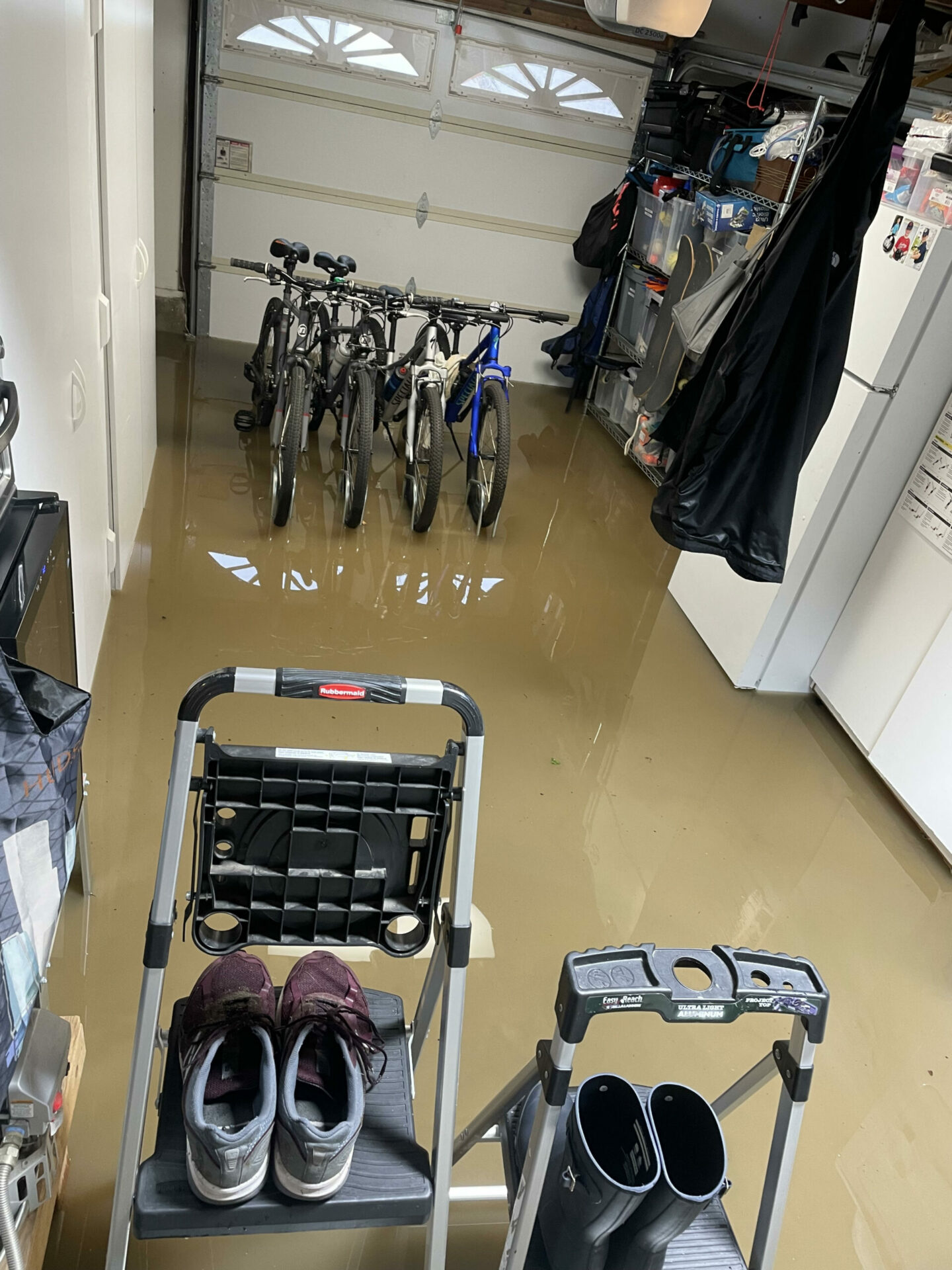
Flooding crept into unexpected corners last winter. Photo: Flood-Free San Mateo