


Radio Tale of a Submerged City
On a soft, foggy San Francisco morning, Soraya Broussard wakes up, stretches, and smiles as she looks out from her hilltop near Land’s End over the calm ocean water covering Golden Gate Park. At the Duboce Triangle, which is now a beach, the Tsongas family begins their day as we hear the town gossip about them, while a nearby pandemic recluse emerges to collect the basket of fruit that the neighboring house of orphans have left for her.
These are scenes from The Forever Wave, a locally-produced radio play that takes place in a world where the sea level has risen 200 feet and turned San Francisco’s hills into an archipelago of islands.
“The idea of a drowned San Francisco after significant sea level rise had been on my radar for a long, long time,” says Nicole Gluckstern, the playwright and director.
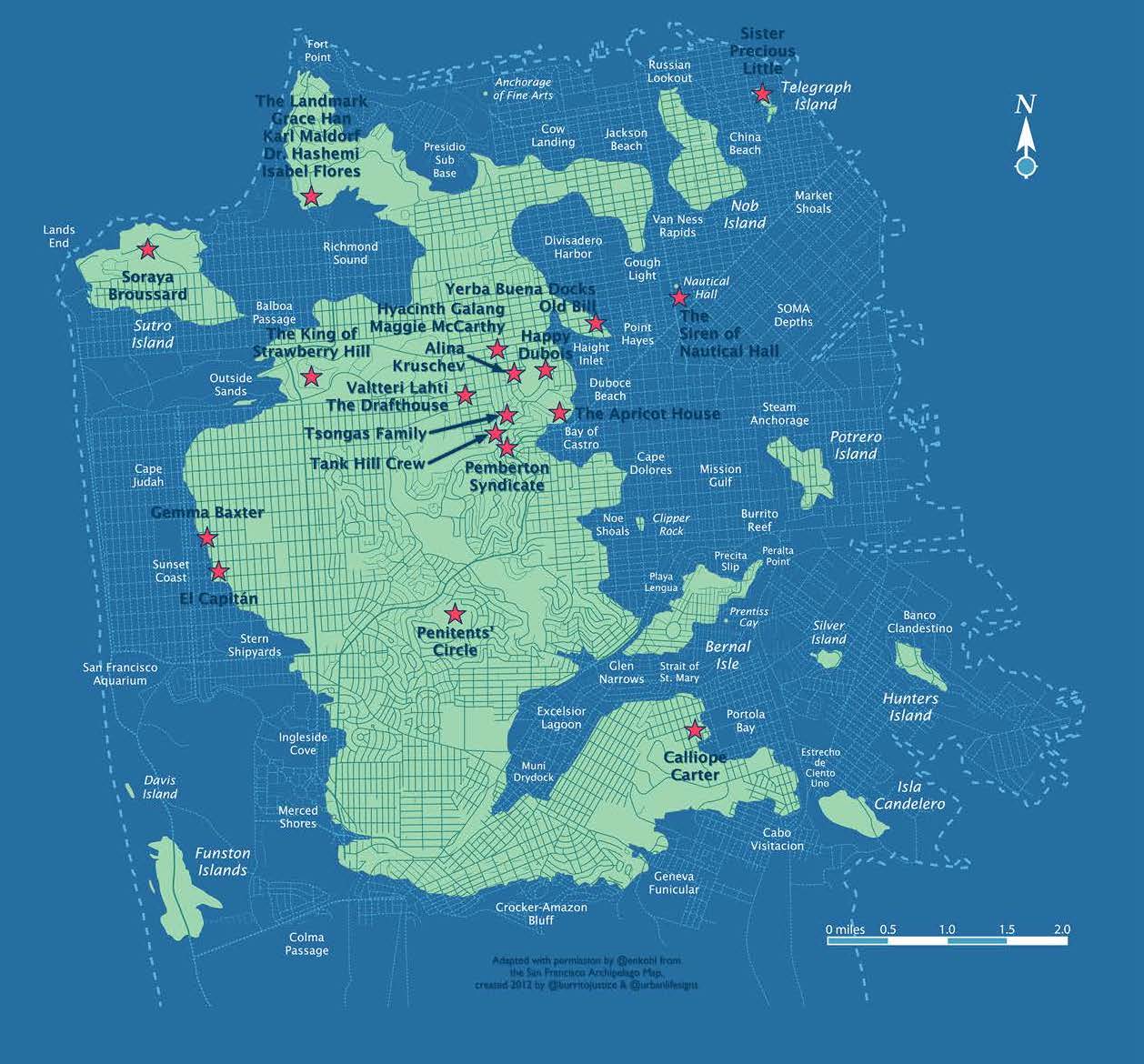
San Francisco’s hills left as islands after 200 feet of sea level rise, adapted from the San Francisco Archipelago Map (2012).
The Forever Wave, closely based on the structure of the 1954 Welsh radio play Under Milk Wood, has over 60 characters voiced by 12 actors. The narrative floats in and out of their thoughts and stories over the course of 24 hours. Characters range from drag queen nun Sister Precious Little at Coit Tower on Telegraph Island, to a reminiscing captain on a fishing boat, to a group of hard-working health care workers at the Presidio which has returned to its origins as a hospital. As in Under Milk Wood, Gluckstern flows her narrative from dreams and spirits into scenes of everyday life. The audience hears from both the dead and the survivors of a massive tide that has submerged most of San Francisco, and listens to a new society that is unfettered by the raging inequities of our present day.
“I wanted to transpose Under Milk Wood to a kinder, gentler San Francisco,” explains Gluckstern. “There are multiple voices from the past and present, and inter-generational voices are very important to me.”
For San Francisco history buffs there are some clear nods to the colorful past in this drowned future, from the parrots of Telegraph Hill, to the Coit Tower nun based on the Sisters of Perpetual Indulgence, to an Emperor Norton-esque character called the King of Strawberry Hill who creates his own money.
Unlike many climate fiction and even non-fiction works that strongly emphasize the worst climate change impacts and their sobering aftermath, The Forever Wave refreshingly explores the opportunities that rebuilding with a blank slate offers.
“I definitely wanted this to be less about the disaster and more: what are you going to do after the disaster?” Gluckstern says. “How are we going to survive it as individuals or as a society?”
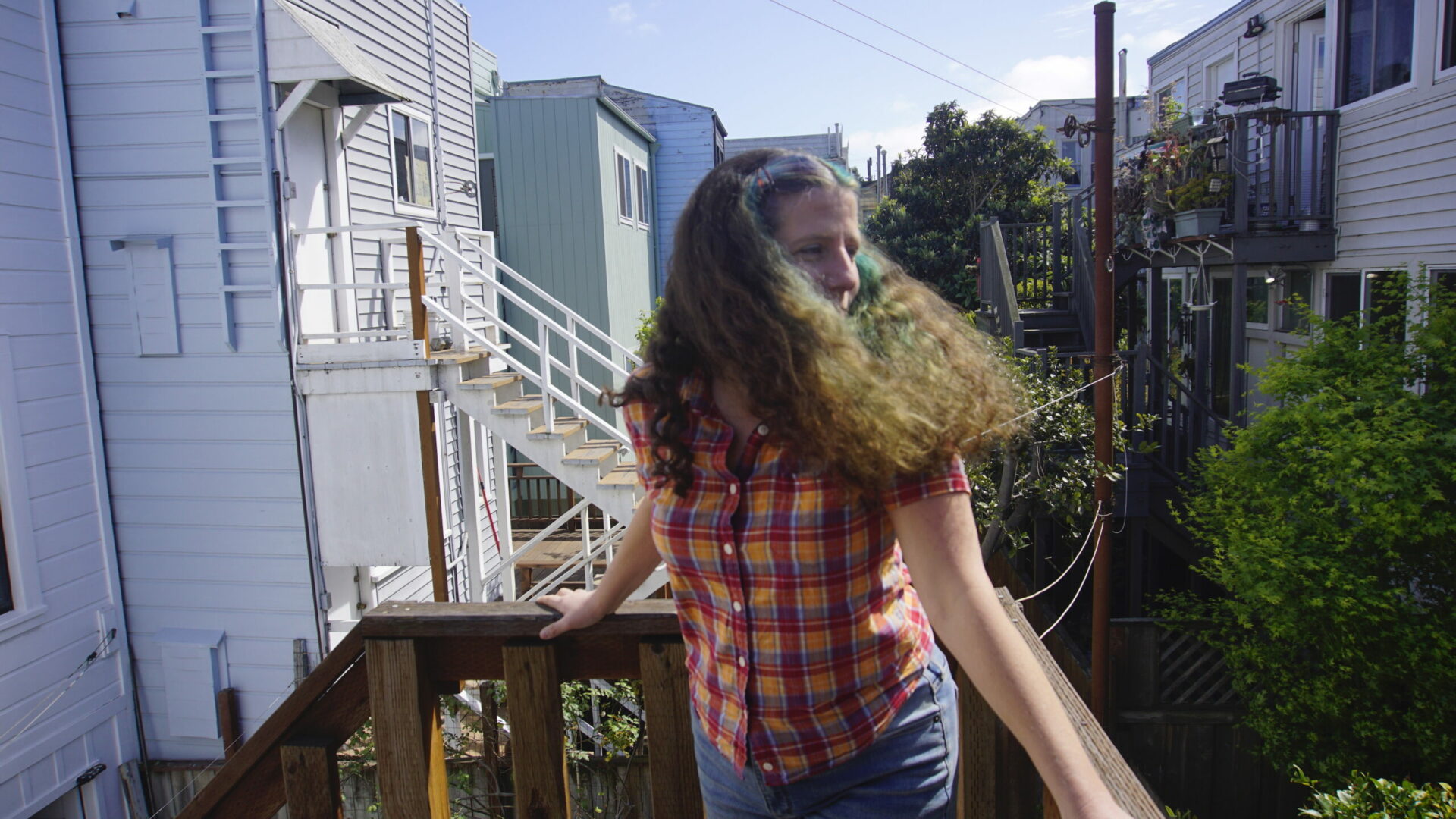
The playwright Nicole Gluckstern at home in San Francisco. Photo: John Rock.
While Gluckstern freely admits that 200 feet of sea level rise by 2070 is implausible, it was inspired by an infamous sea level rise map that San Franciscan cartographers Burrito Justice and Brian Stokle created in 2012. For The Forever Wave, Justice and Gluckstern created a new version with the islands and communities from the play (see above).
The actors, audio engineers and sound designers were all pulled together through Gluckstern’s connections from decades of work in the Bay Area theater scene, including narrators Nathaniel Justiniano and Megan Trout. The play opens with “The Gates”, a haunting tune by San Francisco legend Mark Growden, who wrote the song as a direct response to Hurricane Katrina, followed by the more optimistic “Esperanza” by the Mission District-based Banda Sin Nombre.
The Forever Wave debuted in March 2023, playing for several months on community radio stations around the Bay Area, from KWMR in West Marin to KSFP in San Francisco to KACR in Alameda. Gluckstern and the play are now touring the international Fringe Festival circuit as a digital, on-demand production. They participated in the Philly Fringe Festival in September and are currently at the Melbourne Fringe through October 22.
Other Recent Posts
Feds Meddling With Protections For California Coast
NOAA is reviewing California’s Coastal Management Program in a renewed push for offshore oil and gas drilling.
New Study Shows Rain Gardens Filter Chemicals Out of Stormwater
Scientists found rain gardens dramatically reduce toxic chemicals in stormwater while providing biodiversity and cooling.
The Tricky Art of Growing Oysters in the Lab So They Can Survive in the Field
The Nature Conservancy, the Amah Mutsun Tribal Band, and others are growing oysters in the lab and planting them in the wild in estuaries around San Francisco Bay.
Printing Without Plastic: The Vintage Machine Winning Over Eco-Conscious Artists
This comic guide to risograph printing explains how the 1980s Japanese machine cuts energy use and avoids plastic toner.
East Bay Kids Fight Extreme Heat in their Schoolyards
Many California schools are ill-equipped to tackle heat, with many campuses lacking sufficient tree coverage. These students are fighting to change that.
How a North Bay Regional Park Helped Me Reconnect With Nature — and Myself
A young Fairfield resident reflects on how hiking during the pandemic became a refuge from digital overload and the growing realities of climate change.
Wild Pigs Rough Up Bay Area Greens
They tear up landscapes in search of food, prey on native wildlife, and damage streams, and warming could bring them closer to urban areas.
Residents Chose Different Ways to Respond to Contra Costa Flood Challenges
Graduates of a shoreline leadership program in Contra Costa County recently pitched their ideas for sea level rise education and adaptation.
Strong Leader, Light Touch: Caitlin Sweeney
Ahead of her retirement earlier this month, the Estuary Partnership director sat down with KneeDeep to discuss her achievements and the future of the Bay.
Unmasking Regionalism
Regional leaders say the Bay Area has built ambitious climate resilience plans. Now comes the harder task: funding and implementing them.