



Region Reconnoiters on 30×30 Aspirations

Keeping a third of California land unpaved might seem ambitious in a state where the car remains king, but even politicians are cozying up to the idea, at least in theory. Both Governor Newsom and President Biden have committed to the global 30×30 initiative, which aims to preserve 30% of the world’s land and water by 2030. “[The initiative] builds off of biologist E. O. Wilson’s call to conserve half of the Earth: 30% is an important milestone on the way to 50%,” Annie Burke, executive director of the Together Bay Area coalition, explains.
However, California’s proposed budget for 2023-2024 includes a 43%, $561 million cut to coastal resilience funding according to the Sierra Club, which could significantly hamper the state’s commitment to the 30×30 goals.
“It’s not 2030 yet, but we haven’t reached 30% yet either,” warns Burke. “Funding is really critical – we need to continue to make the case for climate resilience in the state budget and potential statewide law.”
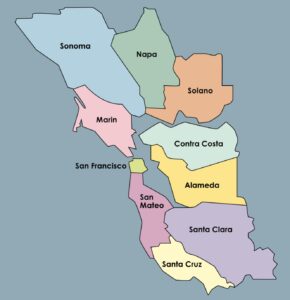
To advocate for this funding, Together Bay Area – a regional coalition of over 70 nonprofits, public agencies, and Native American tribes – has collated around 117 projects that further the 30×30 milestones. From South Bay salt pond preservation to Sonoma lands restoration to new outdoor trails, these hyper-local projects aim to preserve the Bay’s unique micro-climates and mitigate the effects of climate change. The coalition hopes that their list provides a powerful model for what 30×30 entails in practice: a collective region-wide response to climate adaptation. “None of these projects are done in isolation,” Burke explains. “Public agencies work with nonprofits, and vice versa. They all end up being multi-benefit and multi-partnered.”
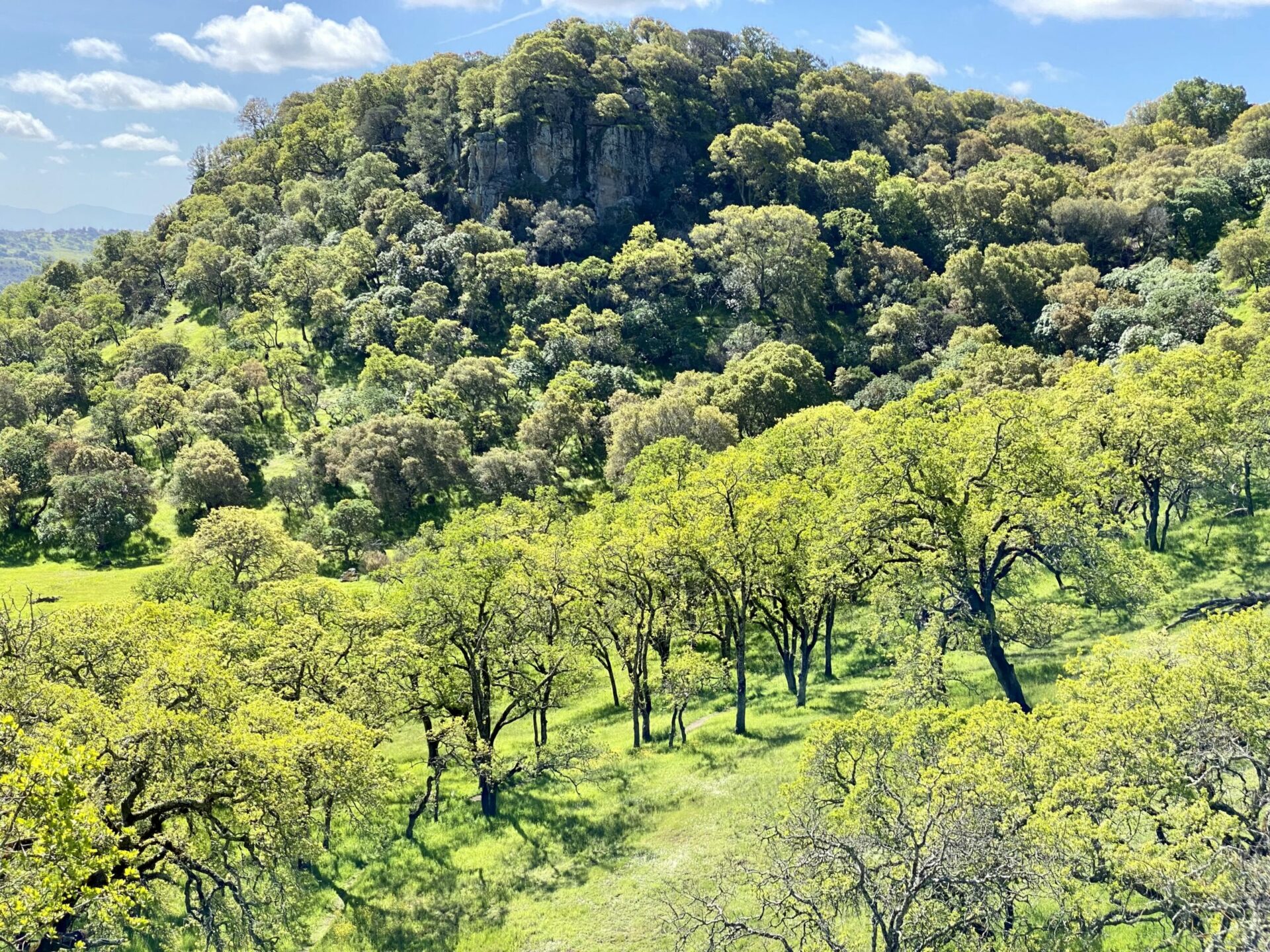
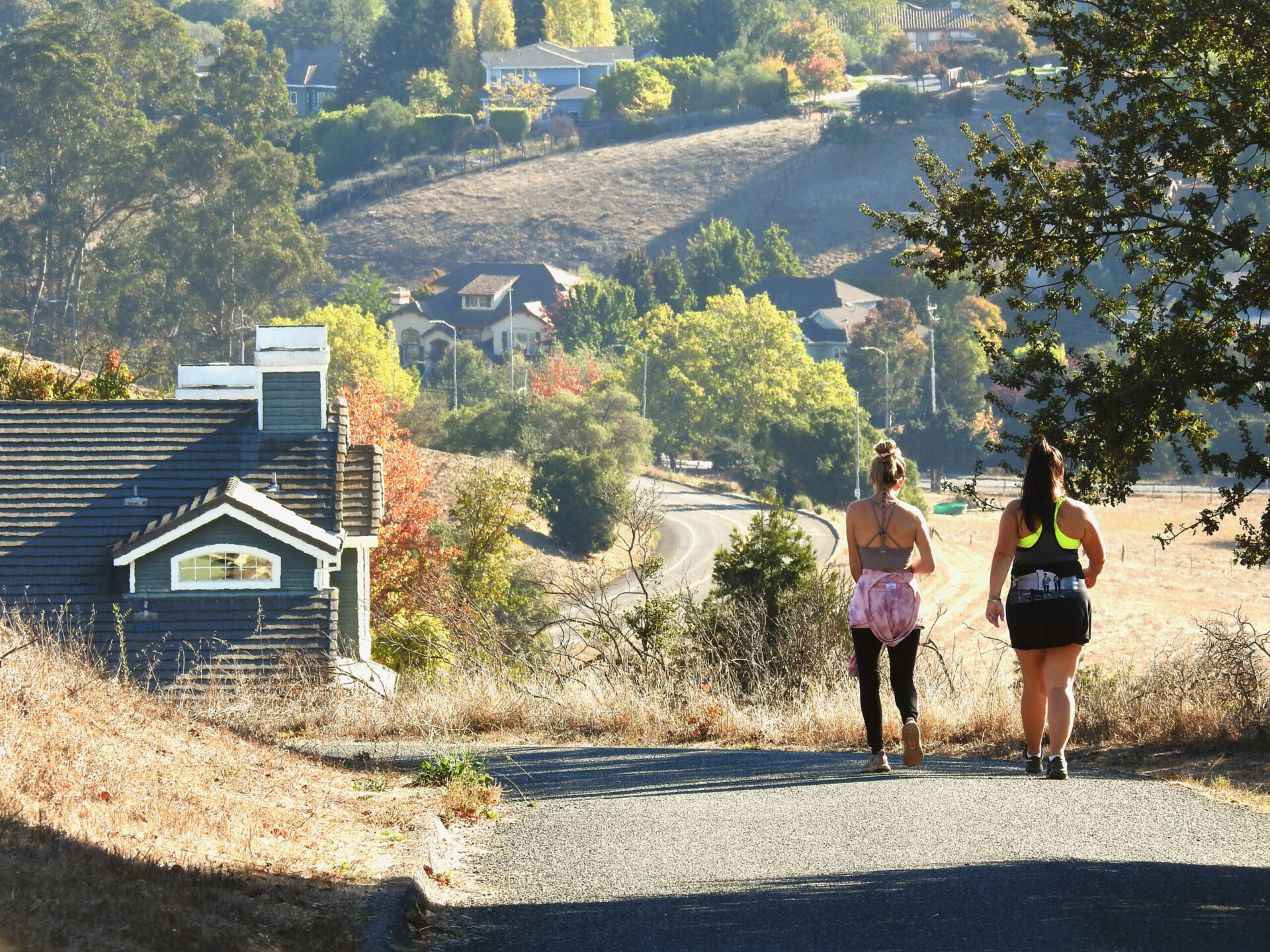
Parklands hosting rare blue oaks at the edge of Solano County sprawl. Photo: Robin Meadows.
Though implementing these projects would cost an estimated $700 million, it would also create 19,000 jobs, increase the economic value of California land, and foster resilience to climate change-related natural disasters. California wetlands, for example, function as sponges for sea level rise; coastal forests decrease wildfire risk; and both act as biodiversity hotspots for vital flora and fauna.
The Governor’s Office finalizes the California state budget in May, and the Bay Area coalition plans to keep fighting for climate resilience projects even in a period of relative austerity. Burke says, “I understand the need for a balanced budget, but we just don’t believe that this is where those cuts should happen. Without biodiversity, we as a species are in big trouble. Nature-based solutions pay off in the long run, because it doesn’t get cheaper to deal with these issues: they become more expensive.”
Burke isn’t daunted by the challenges. “A lot of people, a lot of money, and a lot of energy are going towards climate resilience. Depending on where you cast your eyes, you can see a lot of good.”
Other Recent Posts
Feds Meddling With Protections For California Coast
NOAA is reviewing California’s Coastal Management Program in a renewed push for offshore oil and gas drilling.
New Study Shows Rain Gardens Filter Chemicals Out of Stormwater
Scientists found rain gardens dramatically reduce toxic chemicals in stormwater while providing biodiversity and cooling.
The Tricky Art of Growing Oysters in the Lab So They Can Survive in the Field
The Nature Conservancy, the Amah Mutsun Tribal Band, and others are growing oysters in the lab and planting them in the wild in estuaries around San Francisco Bay.
Printing Without Plastic: The Vintage Machine Winning Over Eco-Conscious Artists
This comic guide to risograph printing explains how the 1980s Japanese machine cuts energy use and avoids plastic toner.
East Bay Kids Fight Extreme Heat in their Schoolyards
Many California schools are ill-equipped to tackle heat, with many campuses lacking sufficient tree coverage. These students are fighting to change that.
How a North Bay Regional Park Helped Me Reconnect With Nature — and Myself
A young Fairfield resident reflects on how hiking during the pandemic became a refuge from digital overload and the growing realities of climate change.
Wild Pigs Rough Up Bay Area Greens
They tear up landscapes in search of food, prey on native wildlife, and damage streams, and warming could bring them closer to urban areas.
Residents Chose Different Ways to Respond to Contra Costa Flood Challenges
Graduates of a shoreline leadership program in Contra Costa County recently pitched their ideas for sea level rise education and adaptation.
Strong Leader, Light Touch: Caitlin Sweeney
Ahead of her retirement earlier this month, the Estuary Partnership director sat down with KneeDeep to discuss her achievements and the future of the Bay.
Unmasking Regionalism
Regional leaders say the Bay Area has built ambitious climate resilience plans. Now comes the harder task: funding and implementing them.