




Martinez Residents Want More Than Apologies — They Want Protection
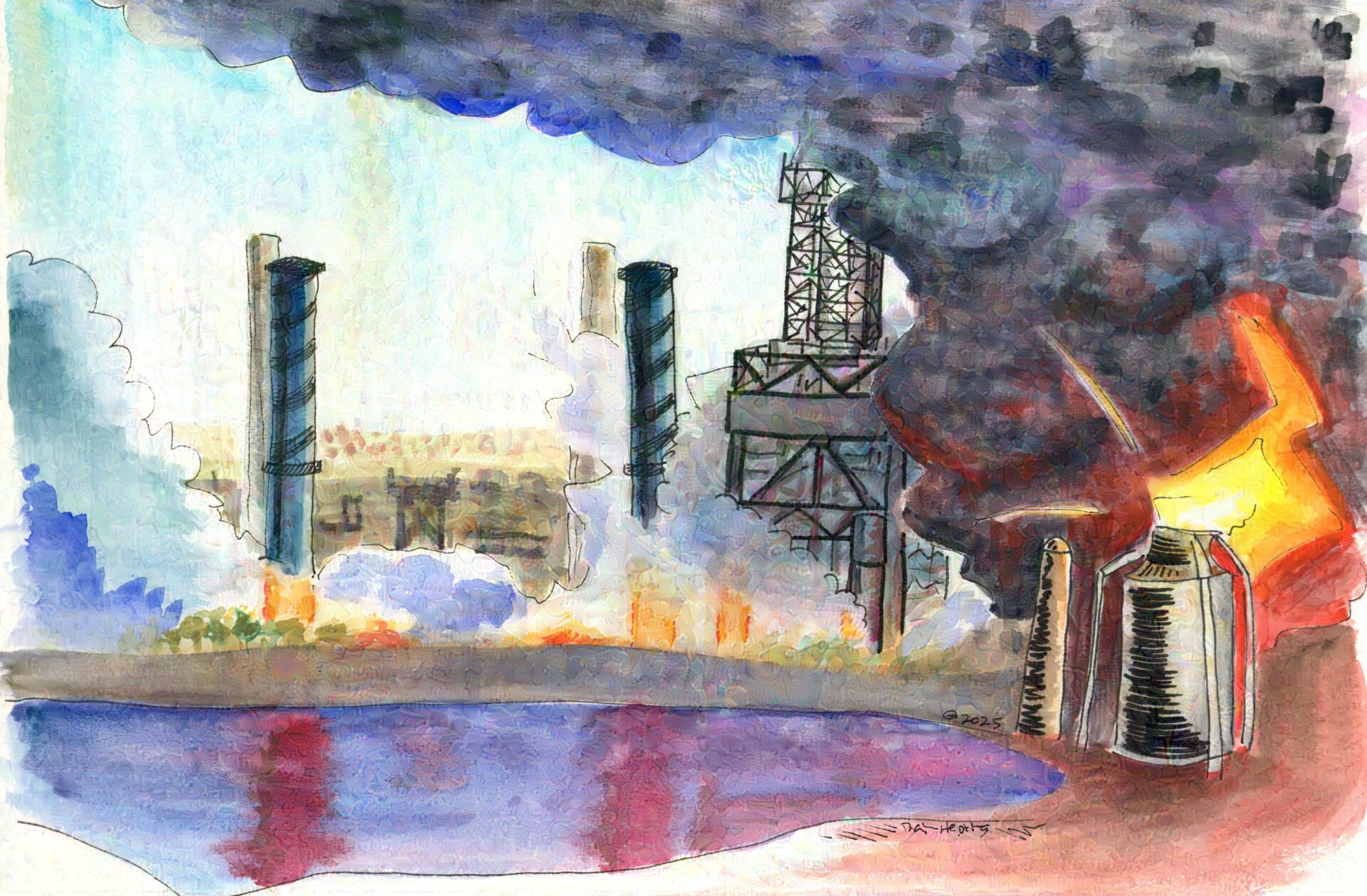
Art: Rain Hepting
Nearly three years after a massive release of toxic dust coated homes, gardens, and cars across Martinez, many residents say the question is no longer what went wrong at the oil refinery in their backyard in 2022 — but what it will take to make the community more resilient the next time something happens.
And lately, the “next time” feels less hypothetical, says Heidi Taylor, co-founder of the advocacy group Healthy Martinez and a local family law attorney.
During a maintenance procedure at the Martinez Refining Company in February of this year, workers loosened bolts on a pressurized pipe, causing flammable hydrocarbons to escape and ignite. The fire spread in less than a minute, according to KQED, and sirens echoed across the city as residents scrambled to sort through text alerts, automated phone calls, and social media posts that at times offered conflicting instructions.
“Living in Martinez means you start the day with a smile and hope you end it with one,” says Taylor. “At any moment, you could get a Level 1, 2, or 3 alert, and it can derail your whole day. That’s just the reality here.”
For Taylor, who moved to downtown Martinez in 2022 — just months before the refinery’s release of toxic catalyst dust — the incidents reveal deeper, long-standing vulnerabilities in the town’s regulatory systems: older homes that offer little protection from outdoor air, an alert network that relies on a confusing mix of sirens and phone notifications, gaps in publicly accessible emissions data, and oversight processes that often leave residents learning about incidents long after they’ve happened.
“During the fire, we were sitting at our dining table with the sirens going off, asking whether we should go or stay,” she recalls. “Shelter in place only works if your home can actually keep toxins out. Ours can’t — and most homes here can’t.”
Martinez is a small town of roughly 38,000 people on the northeastern shore of the San Francisco Bay. Historically a hub of heavy industry, it sits along a corridor lined with refineries and chemical plants, with neighborhoods just blocks from industrial sites.
Healthy Martinez has distributed more than 1,000 HEPA filters to residents, but Taylor says individual stopgaps only go so far. “We’ve been kept in the dark and under-resourced,” she says. “We need accurate alerts, real air monitors, the best technology at the refinery, and real enforcement — not after the fact, but before something goes wrong.”
Contra Costa County has pledged to expand alert enrollment and improve messaging, but Taylor argues that what Martinez lacks is a resilient system built for frontline communities living in the shadow of fossil-fuel infrastructure.
The solutions she and other advocates outline resemble the broader climate-adaptation strategies emerging across the state:
- Real-time air monitoring that residents can trust
- Rapid, automatic exceedance notifications that don’t wait for regulatory agency approvals
- Upgraded home infrastructure — from windows to doors — for safe indoor air
- Clean-air centers modeled after responses to wildfire outbreaks
- A long-term transition plan for workers, contaminated land, and the refinery’s eventual closure
Other Recent Posts
Fire Weather in the Wind
As the hot Nevada air cools every fall, it gets pushed west to lower pressure areas over the Central Valley, where the wind heats up and dries out.
My Morning Cleaning Up the Oakland Estuary
On Oakland’s Creek to Bay Day, I joined 100 volunteers for I Heart Oakland-Alameda Estuary to remove shoreline trash.
RCDs Pay Extra Attention to North Bay High Schoolers
A $13,500 grant will help three North Bay conservation districts evaluate youth education programs and prepare high school students for environmental careers.
Creeks Make Good & Bad Homes
San Jose State researcher Costanza Rampini explores why the houseless favor creek banks, and how they weather the flood risk.
Bay Area Braces for Record-Breaking El Niño
Record high water temperatures in the Pacific are expected to bring dangerous sea level rise, waves, and rain to the region this winter.
Regional Housing Agency Invests in Affordability
The Bay Area Housing Finance Authority is launching a loan program to support the construction of mixed-income rental properties.
The End is Coming for California’s Untouchable Grass
The law, which applies to grass that isn’t used for recreational purposes, could cut urban water use across California by more than 20% says Oakland thinktank.
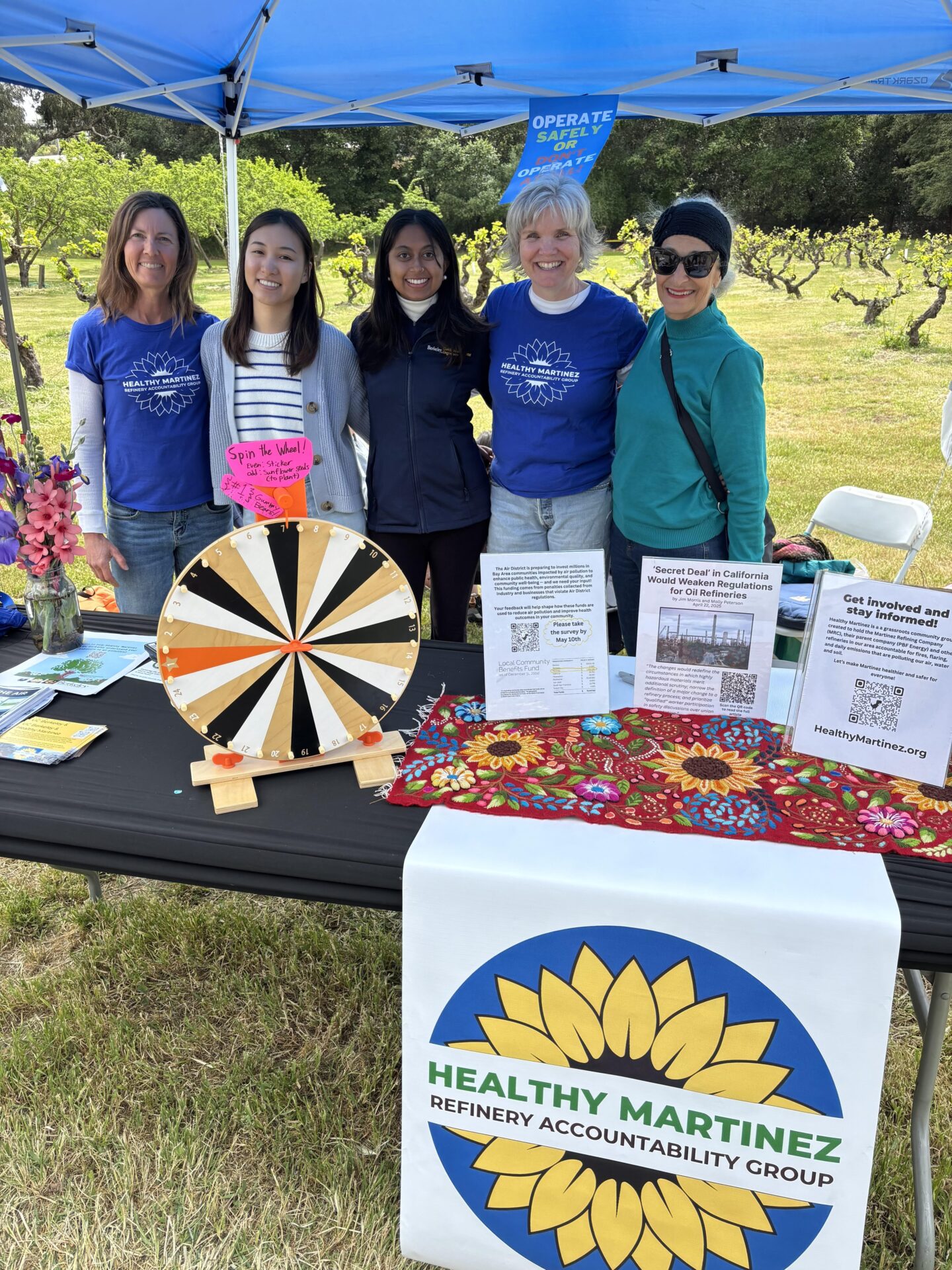
Heidi Taylor (second from right) with Healthy Martinez volunteers. Photo courtesy Heidi Taylor
“If the only protection they offer is to shelter in place, then make sure our homes are safe places to shelter,” Taylor says. “Replace doors and windows. Provide safe food if our gardens get contaminated again.”
She argues that these upgrades shouldn’t fall on the homeowners, but that they should be funded by the refinery responsible for the hazards, also noting that it’s not standard for residents in any community to have to retrofit their houses because of industrial accidents. “Asking residents to fix their own homes because of refinery pollution is backwards,” she says. “The people creating the risk should be investing in our safety.”
The February fire forced the refinery to shut down major units for months. While MRC partially restarted operations in late April, it has been running at reduced capacity ever since. The company is now seeking approval to resume full production later this year.
California depends on the Martinez refinery for nearly 10% of the state’s fuel supply, and industry advocates point to its economic importance during the transition to renewable energy. But residents say the company’s poor safety record and growing health problems among locals are leaving frontline communities too vulnerable for their own good.
With MRC now preparing to resume full operations for the first time since the February fire, Taylor says the community is watching closely. “They’re getting ready to start up again, and the question is whether the safety culture is going to change,” she says. “I’m tired of waiting for them to do the right thing.”
Artist Rain Hepting is also a 2025-2026 Community Reporting Fellow with KneeDeep.
MORE
- The Path to a Just Transition for Benicia’s Refinery Workers, KneeDeep Sept 2025
-
Cleaner Air, Fewer Health Hazards from Bay Area Refineries, KneeDeep Sept 2021