



Newark Needs Housing, But Could Shoreline Serve A Higher Purpose?

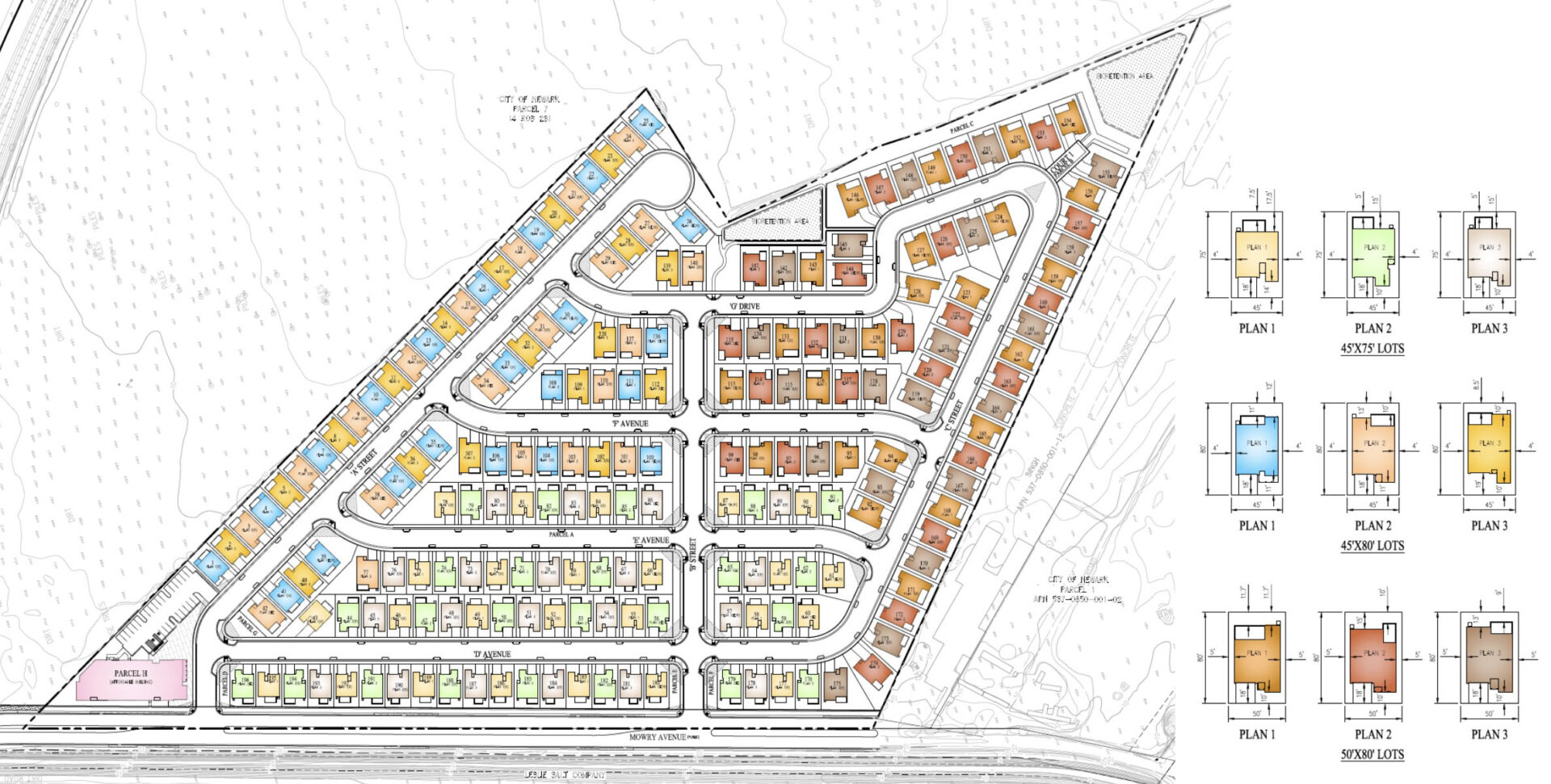
A blueprint of the Mowry Village Project’s proposal for 196 single-family homes and 30 affordable apartment units along wetlands in Newark. Rendering: Integral Solutions
Dozens of people packed into Newark’s city council chambers on November 23 to protest a proposed housing development along the city’s shoreline. Though the project could help Newark alleviate its housing shortage, environmentalists argue it’s the wrong place to build when considering the impacts of climate change.
The proposed development, Mowry Village Project, would be located in Newark’s Area 4, which contains 500 acres of wetlands and borders the Don Edwards San Francisco Bay National Wildlife Refuge. Mowry Village isn’t the first housing project along the shoreline: in 2019, Newark’s city council approved the controversial “Sanctuary West” project to build hundreds of homes on the edges of wetlands. Environmental groups sued, alleging the city’s environmental review was inadequate, but courts sided with the developer in 2022. Now, the project is undergoing permitting.
The Mowry Village Project would build 196 single-family homes and 30 affordable housing units in an apartment complex. Developers would clean up the current site, the Pick-n-Pull auto junkyard, and convert it into housing.
“We see this as an opportunity to take a blighted area and turn it into a beautiful, vibrant housing community,” Vince Fletcher, vice president of land acquisition at Integral Communities, said at the Planning Commission meeting.
Other Recent Posts
Fire Weather in the Wind
As the hot Nevada air cools every fall, it gets pushed west to lower pressure areas over the Central Valley, where the wind heats up and dries out.
My Morning Cleaning Up the Oakland Estuary
On Oakland’s Creek to Bay Day, I joined 100 volunteers for I Heart Oakland-Alameda Estuary to remove shoreline trash.
RCDs Pay Extra Attention to North Bay High Schoolers
A $13,500 grant will help three North Bay conservation districts evaluate youth education programs and prepare high school students for environmental careers.
Creeks Make Good & Bad Homes
San Jose State researcher Costanza Rampini explores why the houseless favor creek banks, and how they weather the flood risk.
Bay Area Braces for Record-Breaking El Niño
Record high water temperatures in the Pacific are expected to bring dangerous sea level rise, waves, and rain to the region this winter.
Regional Housing Agency Invests in Affordability
The Bay Area Housing Finance Authority is launching a loan program to support the construction of mixed-income rental properties.
The End is Coming for California’s Untouchable Grass
The law, which applies to grass that isn’t used for recreational purposes, could cut urban water use across California by more than 20% says Oakland thinktank.
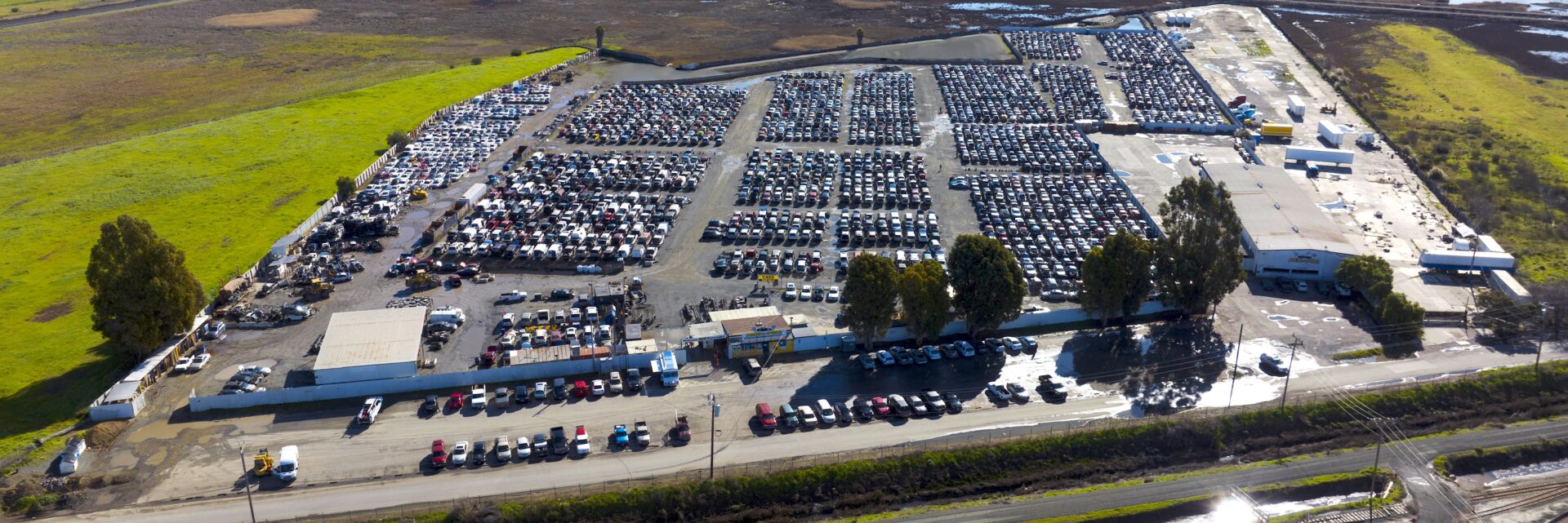
The site currently houses an auto junkyard. Photo: Integral Solutions
Developers also say the project is a chance to address Newark’s housing shortage. Like most of the Bay Area, the city is facing an affordable housing crisis. Almost half its renter households are cost-burdened, meaning they spend more than 30% of their income on rent.
Evan Knapp, Integral Communities’ principal, says the project will provide both affordable housing and single-family homes. “The city felt like they had other high-density, townhouse sites,” Knapp says. “So this meets the goal of providing brand-new housing to somebody that doesn’t want a townhouse in a higher density area.”
The area sits on the edge of industrial salt ponds, open space, and degraded wetlands. It’s designated by FEMA as a moderate flood zone, and could face temporary flooding during storms. To avoid the risks of sea level rise, the developers plan to raise the site by approximately two feet and nearby Mowry Avenue by one to three feet, according to Knapp.
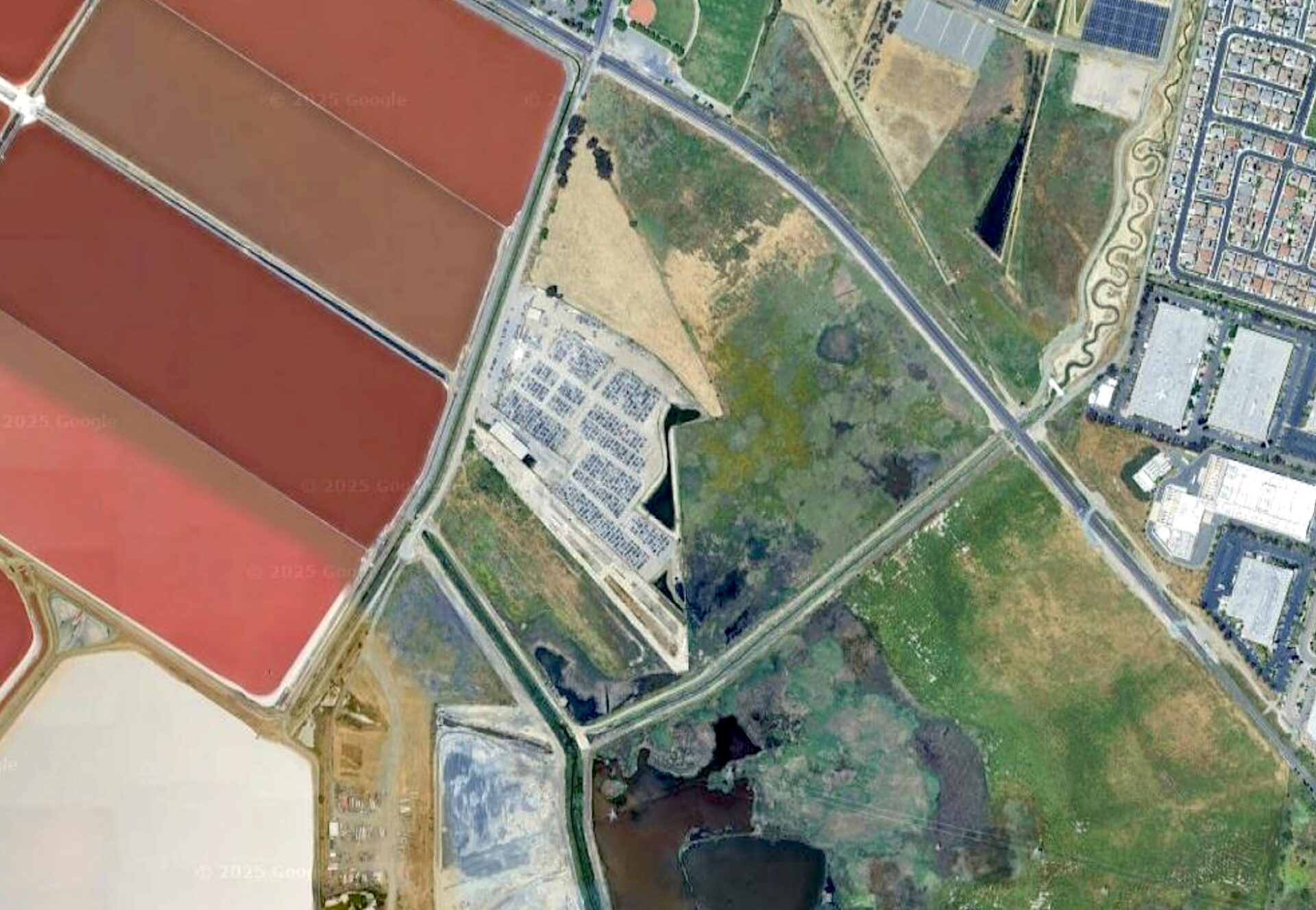
Junkyard site surrounded by orange salt ponds and open space. Photo: Google
But the shoreline is an important site for climate resilience, says Victorina Arvelo, senior South Bay resilience manager for the Greenbelt Alliance. Recently, the San Francisco Bay Restoration Authority awarded $25 million to the Trust for Public Land to acquire part of Newark’s Area 4 for restoration and public access. The authority says it provides an opportunity for tidal marsh restoration and flood protection for nearby communities.
Because of centuries of development, the Bay Area has lost almost 90% of its wetlands, which act as carbon sinks and provide a buffer for floods and sea level rise.
As sea levels rise, Newark’s coastal habitats and wetlands could naturally adapt by migrating inland, but not if they push up against man-made structures like housing projects in a process known as coastal squeezing.
By building on the shoreline, Newark will lose the ability to use the area as a buffer zone to sea level rise, which Arvelo warns could cost the city down the line.
“The city is going to need hundreds of millions of dollars to protect existing infrastructure from sea level rise,” Arvelo says. “The best cost-effective nature-based solution that they have, and it’s right there on a silver tray, is to protect and restore the wetlands.”
Despite environmental concerns, Newark’s Planning Commission voted unanimously to recommend the project to the city council, largely because of the need for affordable housing. Although the city has been meeting its targets for high-income housing, it’s behind on targets for low- and middle-income housing. The project mostly includes high-income, single-family homes — the median home price in Newark is $1.25 million — but its affordable housing component would meet around 5% of the city’s goals.
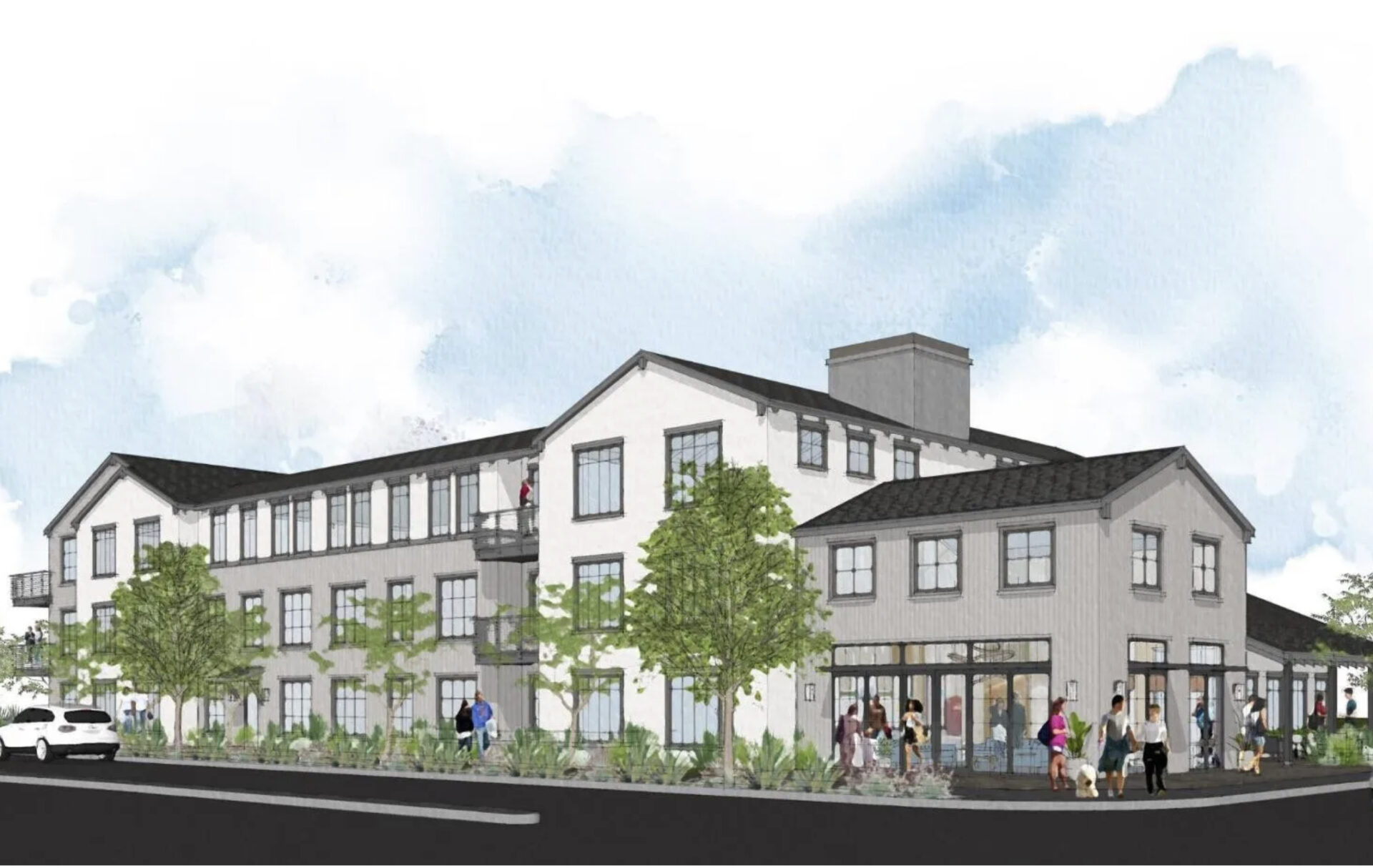
Affordable apartments included in the project. Rendering: Integral Solutions
Precious Sumagaysay, a junior at Newark Memorial High School, says it’s disappointing to see the commission support the project.
“Growing up in the Philippines, I actually lived through flooding. Flooding didn’t only destroy our homes, it disrupted our family and our safety,” Sumagaysay says. “So when I see Newark building in flood-prone areas, I don’t just see it as a building plan, I see it as a future crisis.”