



SF Hires Fast-Charger to Direct Environment Department

Every month, the board members of San Francisco’s Commission on the Environment convene at City Hall, where they offer advice and shape policy for the city’s Environment Department. Around the two hour mark of last month’s meeting, a drowsiness had settled over most of the room. In contrast, Tyrone Jue, the new Director for the Department of Environment, remained alert and focused. When his colleague finished a detailed presentation about efforts to cut down on pesticide use in the city, Jue was first to speak, asking her to spell out the abbreviations from an earlier slide.
Tyrone Jue’s appointment this July by Mayor London Breed comes after a year of serving as acting-director for the department. He assumed the role after his predecessor resigned amid allegations she accepted a $25,000 bribe from Recology, a Bay Area waste management company (a later audit revealed no wrongdoing). I spoke with Director Jue about his plans to advance the department’s top priority: The implementation of Mayor Breed’s 2021 Climate Action Plan, which aims to achieve net zero emissions for the city by 2040.
“A lot of the strategies [to realize the plan] still need to be developed,” Jue says.
With a two-decade track record of pursuing climate initiatives, Director Jue has earned a reputation as an effective climate leader with a deep appreciation for the multifarious ramifications climate policy has on disadvantaged communities. Notably, as a board member of the Bay Area Air Quality Management District, a public agency that regulates sources of air pollution for the region, Jue played a pivotal role in the district’s 2021 adoption of Regulation 6-5, which required two of the state’s largest oil refineries to reduce their pollution. John Bauters, the current chair for the district, says Jue’s speech at the time, in which he acknowledged the many workers whose jobs would be threatened by the rule, but ultimately prioritized remedying the air quality for the communities near the plan, persuaded other board members. “Tyrone was one of a chorus of directors who helped solidify a strong yes vote,” Bauters says.
Jue has brought this fervor for equitable climate solutions into his new job. Early into his tenure, Jue required that all department staff conduct a racial equity scan of their work. Jue believes the mandate has allowed the department to “be better stewards of public resources and public trust.”
Other Recent Posts
Regional Housing Agency Invests in Affordability
The Bay Area Housing Finance Authority is launching a loan program to support the construction of mixed-income rental properties.
The End is Coming for California’s Untouchable Grass
The law, which applies to grass that isn’t used for recreational purposes, could cut urban water use across California by more than 20% says Oakland thinktank.
Sonoma Vineyard Workers Burn toward a Better Future
A group of immigrant farmworkers are forming a worker-owned cooperative to bring back Indigenous burning practices that used to revitalize the soil.
Los trabajadores de los viñedos de Sonoma queman por un futuro mejor
Un grupo de trabajadores agrícolas inmigrantes está formando una cooperativa de propiedad de los trabajadores para recuperar las prácticas indígenas de quema que solían revitalizar el suelo año tras año.
New Voices Shape Design of Berkeley’s North Basin Strip
Twenty acres of parkland between the highway and the Berkeley shore are slated for a coast-resilient makeover, with input from locals and stakeholders.
It’s Always Sunny In North Fair Oaks
Residents of the unincorporated community launched their second campaign in two years to get the county to care for dying street trees.
Siempre está soleado en North Fair Oaks
Los residentes de la comunidad no incorporada lanzaron su segunda campaña en dos años para lograr que el condado se ocupe de los árboles de la calle que se están muriendo.
Can Nature Help California’s Coast Fight Fire and Floods?
Local and state leaders gather for September summit on how to mainstream nature-based infrastructure.
Guide to Nature-Based Infrastructure Around the Bay Area
Regional leaders are testing eight types of climate adaptation and shoreline flood protection projects that work with nature instead of against it. Here’s an overview.
How Can I Get Clean, Green, Climate-Forward Job Training in the Bay Area?
Looking for a hands-on job working outdoors that actually pays? Here’s a list of training programs.

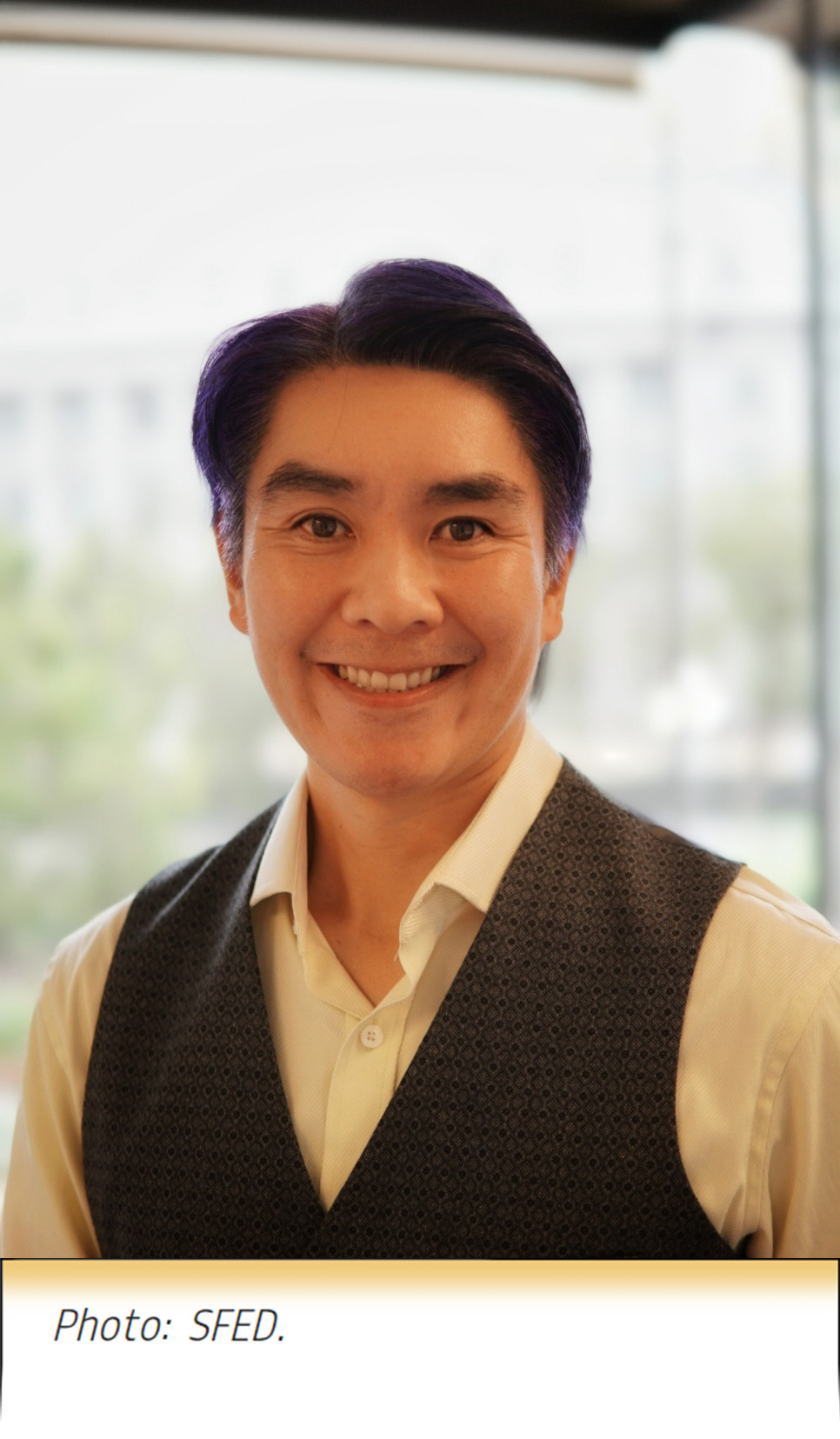
Jue (left) meets other community leaders at a Cal Academy of Sciences event. Photo: SFED.
This coupling of racial equity and climate action has materialized in the department’s efforts to build more electric vehicle fast-charging stations throughout the city. While Jue was acting director in 2022, the department received a $2.4 million grant to help advance its net zero emissions efforts. Jue made sure the Bayview, a historically underserved neighborhood, wasn’t left out of the mix, enlisting the help of a community-based organization in selecting a site for a fast charging station.
Jue believes his commitment to environmental justice comes from his upbringing. Jue is Chinese American and grew up in San Francisco, living in Chinatown with his grandmother. Given that he comes from a marginalized community, Jue now finds it second nature to consider everyone in the work he champions for the city. He is also humbled to be the first person of color to serve as Director for the Environment Department. “I see myself deeply tied to all the work I do, and it grounds the work,” Jue reflects.
Jue also attributes some of his success to the state of California itself, saying that it not only makes his job easier but also warms his heart to be surrounded by peers pursuing a progressive climate agenda.
Near the end of our conversation, Jue offered advice to the many states, agencies and people who look at his department’s work for guidance. He suggested they reach out to groups that inspire them. “You are not alone, and you do not need to act like you are alone,” he says.
As for advice to youth and future climate leaders, Jue implored them to remain persistent, focused, and hopeful about their potential to address the climate crisis. “Things are never as bleak as they seem because we have the capacity to change and inspire change in others,” he says.
Correction: In the version of this article published on November 15, KneeDeep inaccurately reported that Jue’s predecessor accepted a bribe. This was not the case according to a later audit, and we have since corrected our mistake.