


Pleasant Hill Gets Sustainable Street Improvements

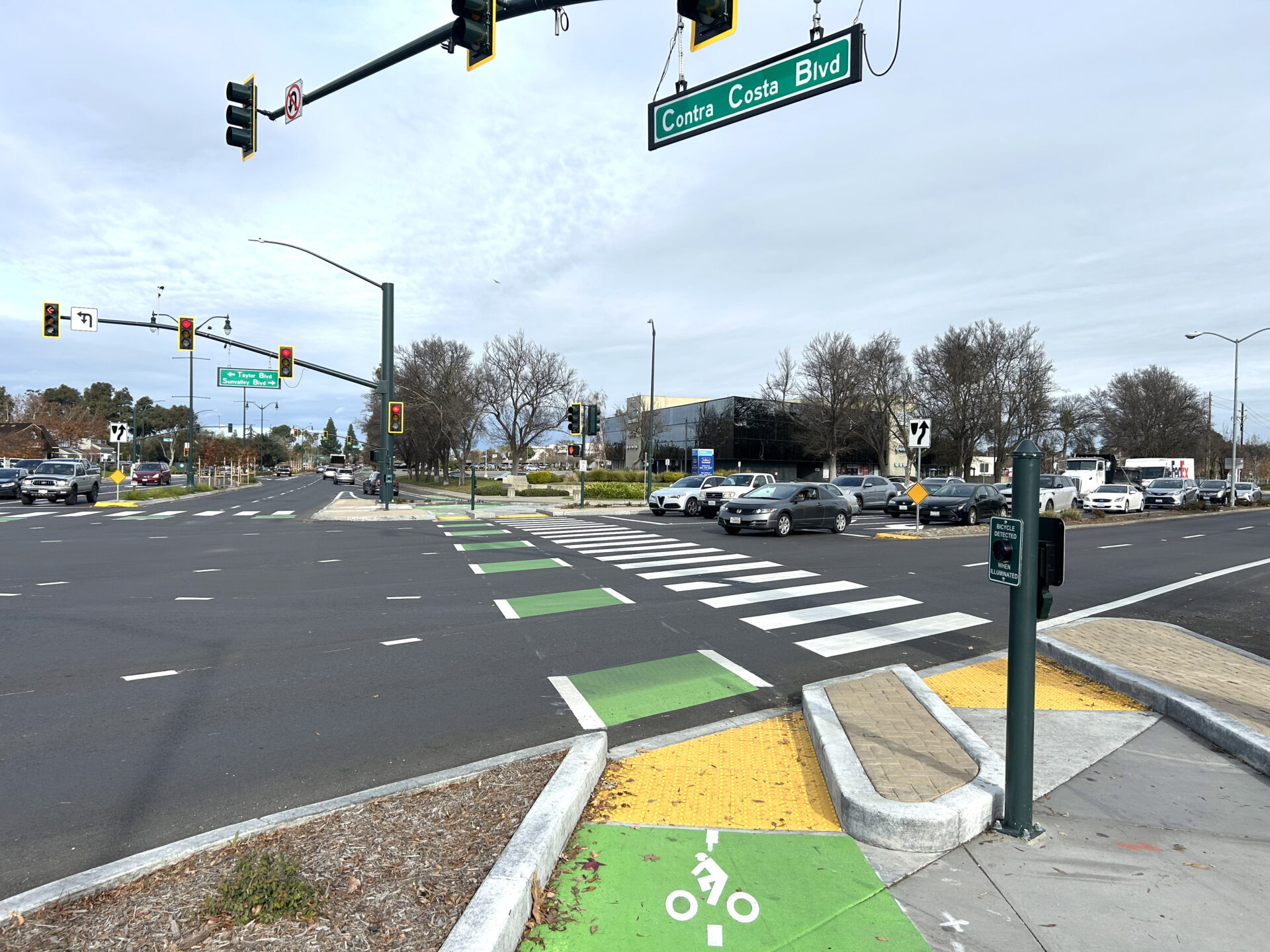
A complete street intersection including new accessible pedestrian signal system, colored crosswalk treatment, and pavement striping. Photo: Gracebelle Ma’ake
In the East Bay’s Pleasant Hill, the corner of Contra Costa and Taylor boulevards was long a chaotic intersection for drivers, pedestrians, and cyclists alike, says longtime resident Colleen Noland.
“When growing up in Gregory Gardens in the early 2000s, I never felt comfortable walking/biking this intersection due to high traffic speeds in all directions,” Noland says.
But today, the completed Contra Costa Boulevard Improvement Project has made several modifications to this problematic site in an attempt to improve safety for walkers and bikers — while simultaneously reducing car speeds.
Prior to the project’s completion last spring, the intersection of Contra Costa, Taylor, and Sunvalley boulevards provided few and far between faded crosswalk markings warning commuters of pedestrian presence. And due to the width of the street, three pedestrian islands were previously added for safe crossing from one side of the road to the other — but issues like uneven slabs and cracks visibly accumulated over the years.
Combined with high traffic volume, updates to the nearly 65-year-old roadway design were critical to ensure safe passage and mobility for all commuters — drivers and non-drivers alike.
The project focused on modern accessibility and safety improvements, including audible crosswalk systems and ADA compliant ramps, enabling confidence in independent navigation for all pedestrians. Other upgrades included environmentally-friendly systems and practices, like 1,000 linear feet of recycled water pipeline, LED street lighting, and wide, buffered bike lanes that Noland, who is also a cycle instructor for Bike East Bay, says “will help slow speeds so bikes can also make the turn safely, and so motorists look for pedestrians crossing.”
Other Recent Posts
How Can I Get Clean, Green, Climate-Forward Job Training in the Bay Area?
Looking for a hands-on job working outdoors that actually pays? Here’s a list of training programs.
Santa Rosa Residents Rethink Trees
The heat-burdened Roseland neighborhood is learning how to monitor temperatures and developing an action plan focused on tree shade.
How to Make Conservation a Career
California nonprofits are developing paid apprenticeships to prepare workers for the growing ecological restoration economy.
Raft of Resilience Initiatives Keeps Tahoe Blue
Beach robots, boat inspections, forest thinning, and wetland restoration are among the projects helping the lake confront environmental threats.
Weathering the Present While Training for the Future
A stewardship immersion experience from the School for Inclement Weather and Weaving Earth combines ecological knowledge and spiritual connection.
Feds Meddling With Protections For California Coast
NOAA is reviewing California’s Coastal Management Program in a renewed push for offshore oil and gas drilling.
New Study Shows Rain Gardens Filter Chemicals Out of Stormwater
Scientists found rain gardens dramatically reduce toxic chemicals in stormwater while providing biodiversity and cooling.
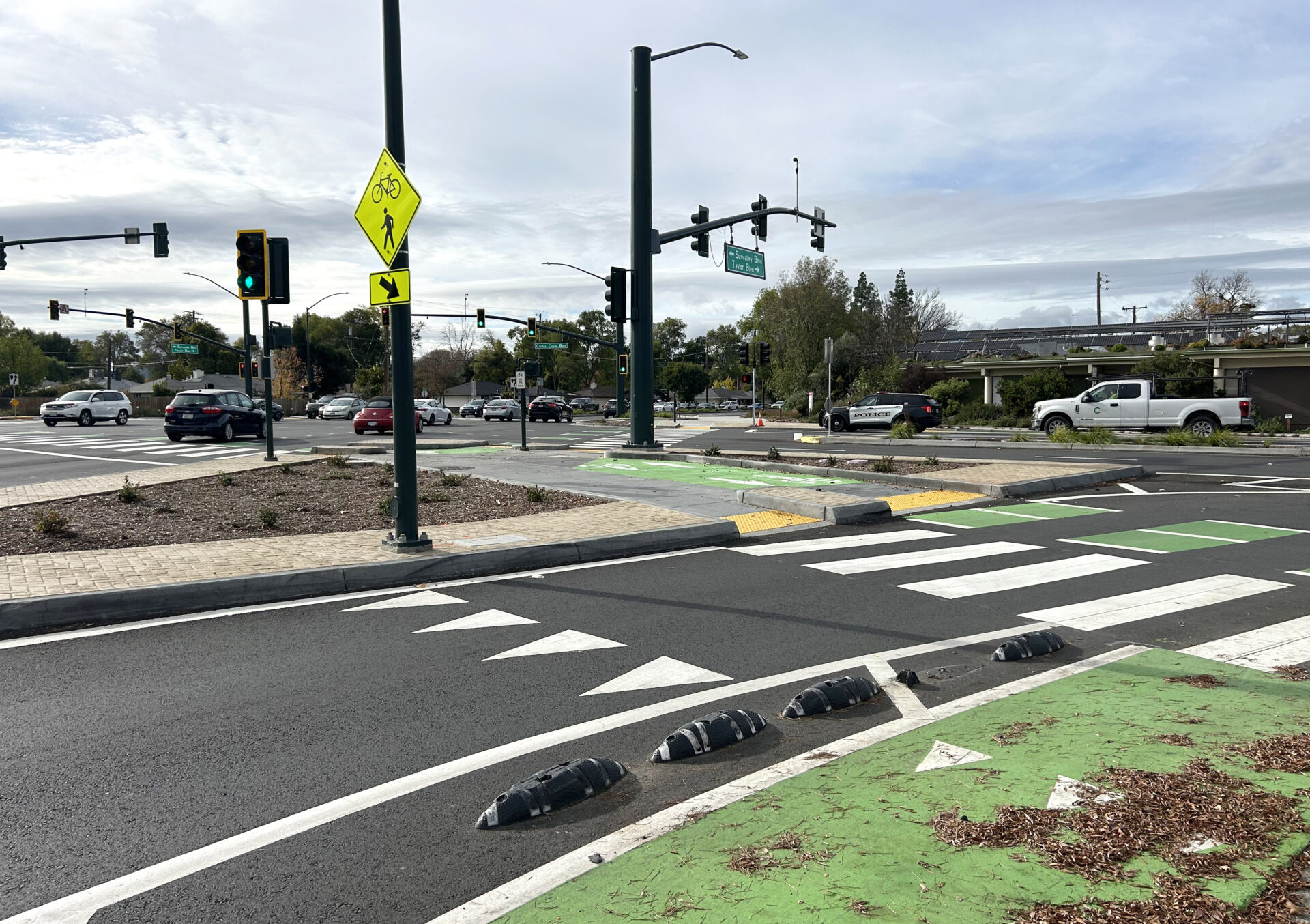
New high-visibility, buffered bike lanes use prominent markings, signs, and colors. Photo: Gracebelle Ma’ake
At their 2025 Awards Ceremony & Winter Celebration, the Institute of Transportation Engineers awarded its national Transportation Award for Complete Streets to the City of Pleasant Hill in recognition of the project. The San Francisco Bay Area chapter of the ITE honored the shared efforts of the city and an external design firm it hired called Sanbell to improve the road’s security, accessibility, and sustainable commutation on the evening of Dec. 3 in Oakland.
There was a “wide range of measurables” to win the Complete Streets award, says Joseph Faria-Poynter, section secretary of SF Bay ITE. The award recognizes projects for road designs catered to accessible transit and that encourage non-motorized active transportation.
“At a broad scale, the idea of complete streets is making a street more accessible, granting access to all forms of transportation, all modes, all people,” Faria-Poynter says. “The idea is to bridge the gap to provide equal opportunity to people in cars, taking transit, riding their bikes, and walking. Our streets should be designed for everyone.”
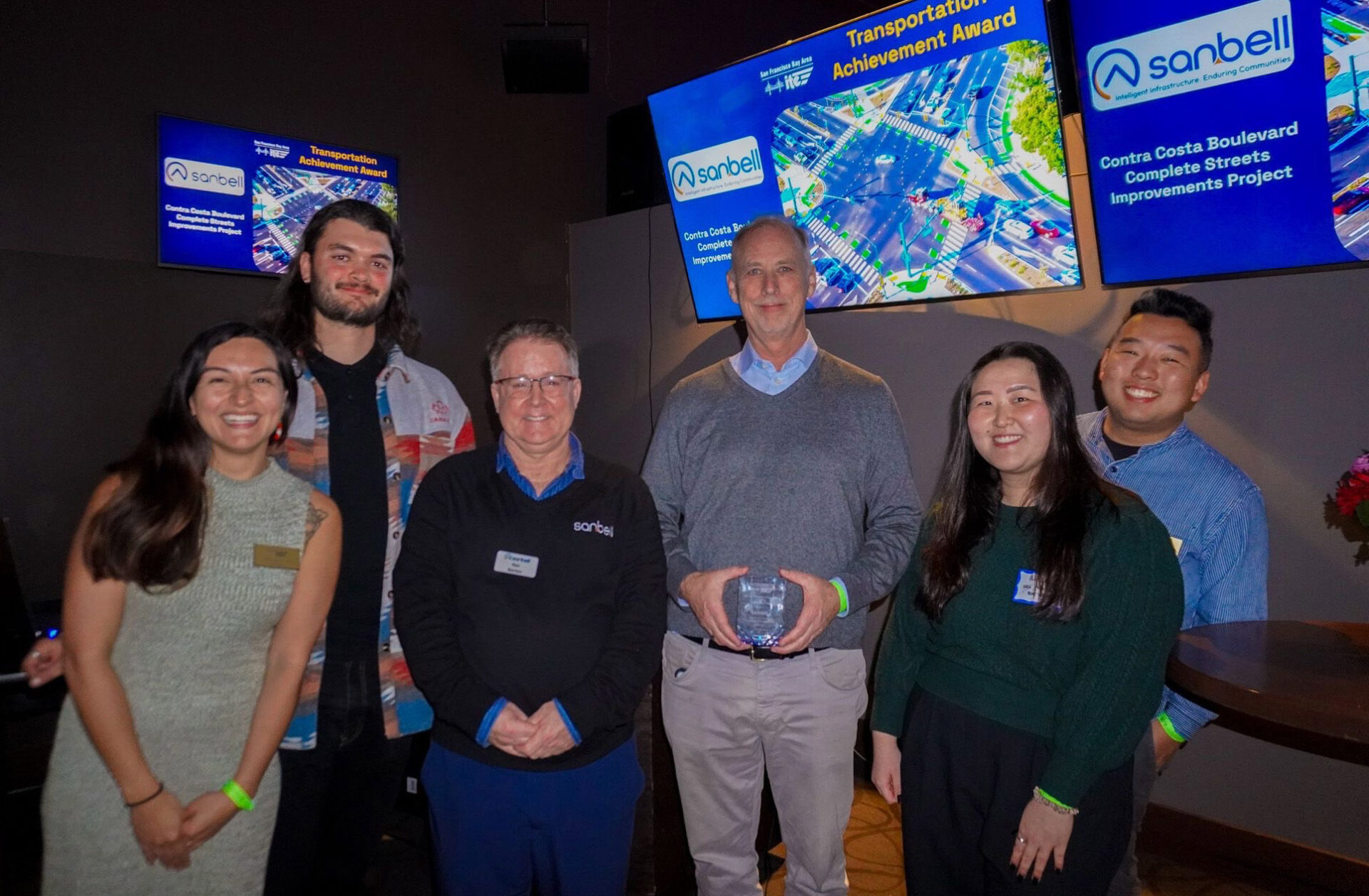
The Sanbell design team accepts the Transportation Award for Complete Streets at the 2025 Awards Ceremony & Winter Celebration. Photo: Joseph Faria-Poynter
Weeks after the awards ceremony, however, the project received mixed reactions from residents about its effects on drivers.
In a Facebook post, the city publicly announced its achievement on Dec. 10. The post briefly touched on several key modifications to the road, including the installment of bicycle video detection systems and “Intelligent Transportation Systems” that alert drivers of pedestrian/bicyclist presence with LED lighting during times of less visibility.
The spacious, on-the-road bicycle lanes sparked controversy among commenters, who shared hundreds of viewpoints on the project’s installments.
One commenter said the new systems create “unnecessary traffic” for drivers in forceful promotion of eco-friendly alternatives while commuting across the four-way intersection of Taylor and Contra Costa.
Another user said the road upgrade creates “More vehicle congestion” and criticized the fact that “Bike lanes (low usage) overlap with pedestrian paths. Resulted in less safe vehicle traffic.”
As a major corridor within the town, the road directly connects key commercial, business, and educational facilities across the city. Traveling along major destinations such as the Sun Valley Mall and the city’s downtown area, Contra Costa Boulevard serves as the longest regional arterial through Pleasant Hill. The route facilitates more than 30,000 vehicles daily, according to the Contra Costa Transportation Authority.
According to the California Energy Commission’s website, vehicles contribute the most to greenhouse gas emissions in the state, accounting for about half of all carbon emissions. Public road designers in communities across Bay Area counties are seeking to create accessible, practical solutions for local commuters.
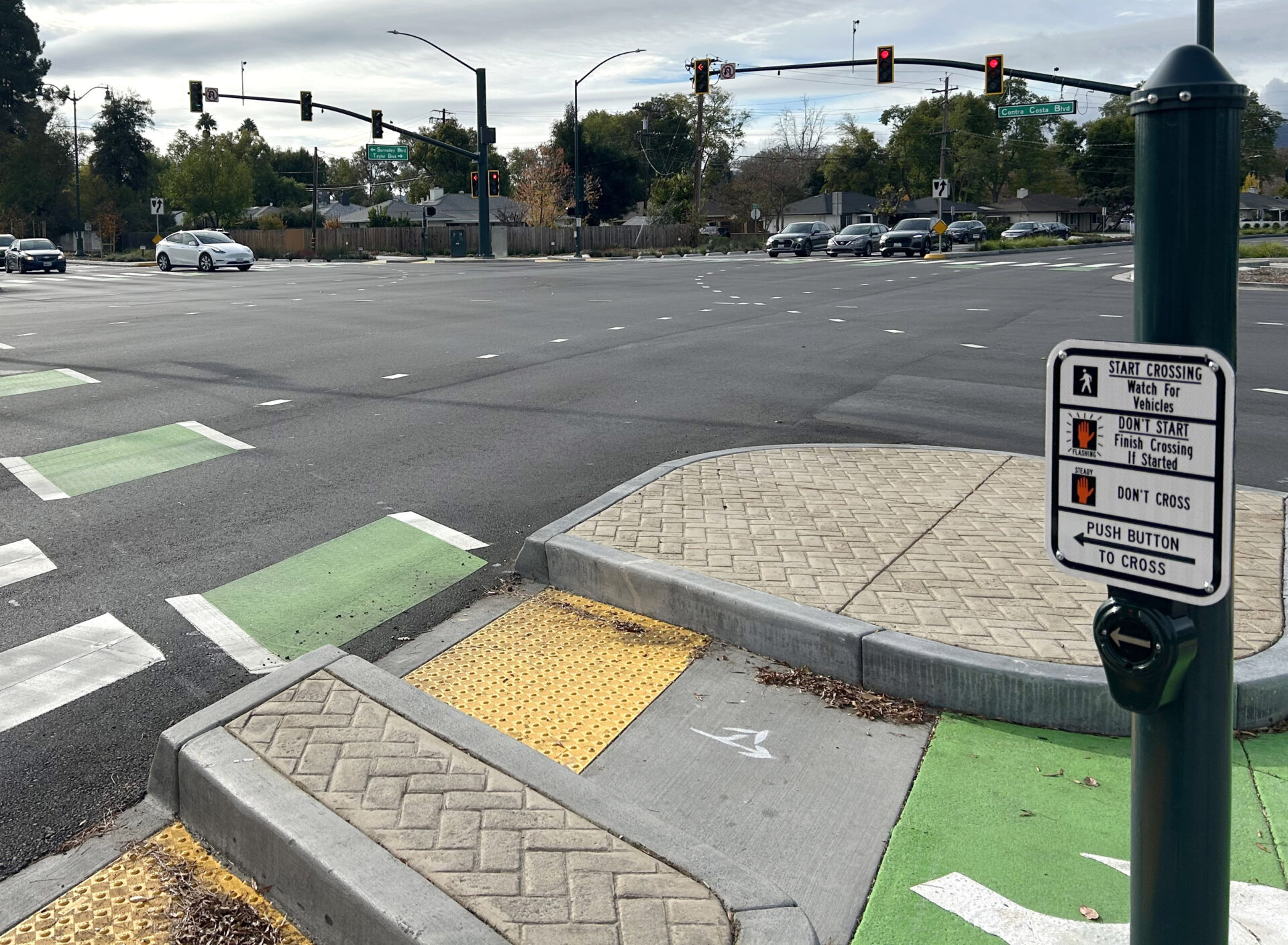
New audible push button system and ADA compliant ramps. Photo: Gracebelle Ma’ake
California is a highly-car dependent state, with outdated protective street designs and a lack of cohesive infrastructure for pedestrian/cyclist use. Noland, who is a frequent cyclist around the city, finds the improvements exciting, though she critiqued the practical placement of the project.
“The safety modifications do not connect walking/biking commuters to places they want to go, such as Pleasant Hill BART, the Crossroads Shopping Center, DVC [Diablo Valley College], or the Iron Horse Trail,” she says. “I think it would be more impactful to add safety improvements where there are currently lots of pedestrians/cyclists, for example near Iron Horse Trail, and expand from there.”
Faria-Poynter is on board with that vision. With the city’s connection to a network of trails and improved bike lanes, future plans could “aim to meld everything together and make it easier for everybody,” he says. “Not just prioritize personal vehicles.”