



Solano Samples Air And Finds Dirt
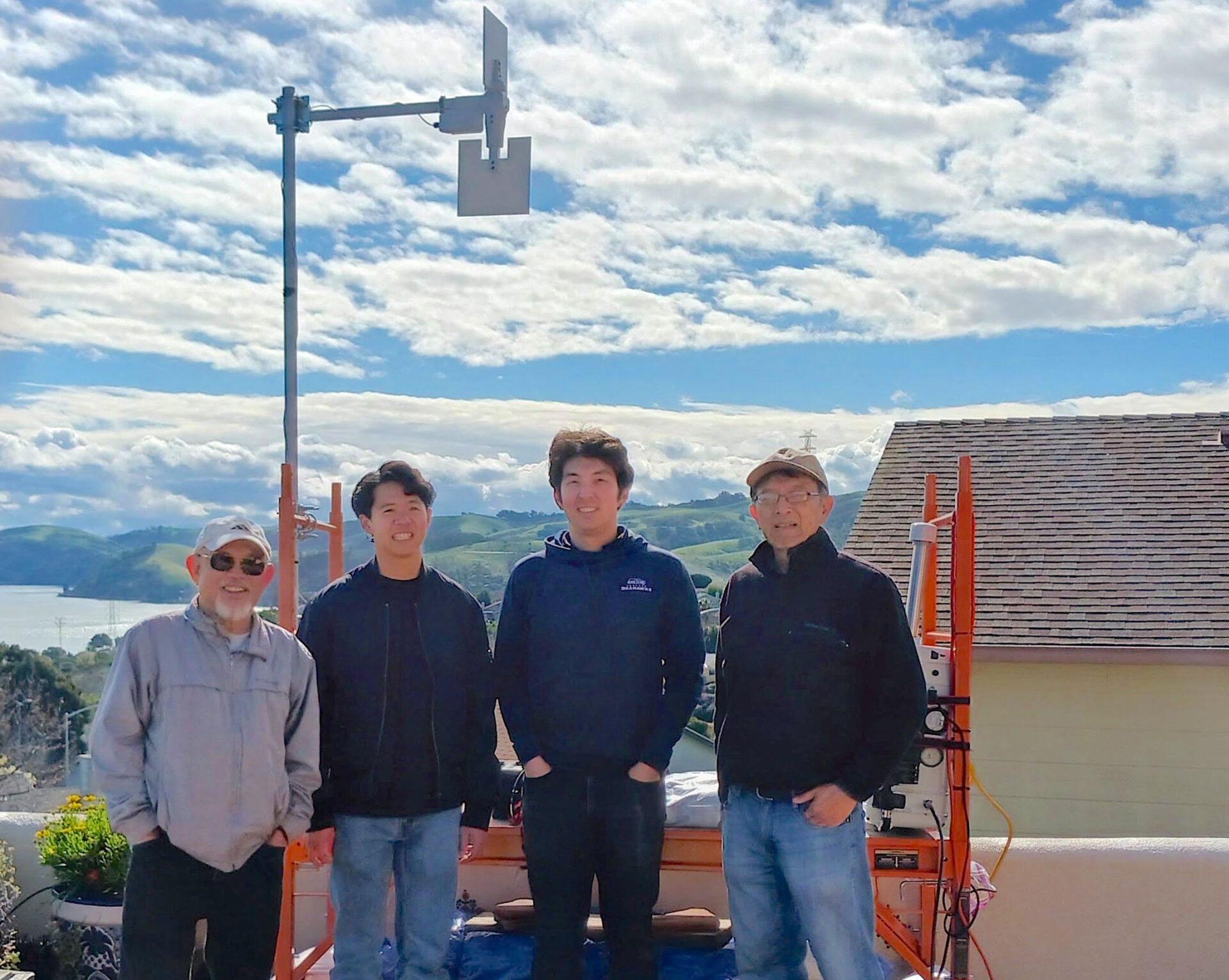
Ken Szutu (right) in front of a Carquinez Strait air quality sensor. Photo courtesy Ken Szutu
A fine film of dust on the tabletop is something you might expect to find after a week away on vacation. But for residents of one Vallejo neighborhood, it was once an everyday occurrence. They’d wipe the table in the morning, and by evening it would be covered in dust again — until one resident complained, and the right people, like Ken Szutu, paid attention.
“Complaining is fine, but how do you move to the next step?” says Szutu, a tech retiree who runs a citizen air quality monitoring network in Vallejo and serves on the Bay Area Air District’s community advisory council. The answer, he says, is threefold: keep good records, ask for an inspection, and follow up.
It took five years of citizen follow-up before the air district ordered the closure of Crown Hill Materials, a plant that mixed cement for concrete and in the process dusted the neighborhood, exceeding its permitted emissions. Szutu will never forget the jubilant call he got after the plant closure from the very same resident who started the inquiry: “I can finally open my windows!” the caller said.
Szutu told this story at a countywide air quality summit held by the community organization Sustainable Solano on October 17 in Suisun City. His session on regulatory action closed out the all-day event, which covered everything from who’s at risk from air pollution in Solano County to where the pollution comes from and how air quality is monitored. Afternoon sessions shared skills, like how to tell compelling stories to change policy, as well as tips, like what types of house plants can help purify indoor air.
Other Recent Posts
Your Nine-County Guide to Bay Area Storm Prep
KneeDeep has you covered with this nine-county list of resources available in case of storm-related emergencies this winter.
Check Your Project Status: It’s All Here
The Bay Adapt Project and Funding Navigator is a first-of-its-kind, one-stop shop where everyone can find project statuses and funding ideas.
A Man Who Wears Many Hats
The leader of the San Mateo RCD’s Forest Health and Fire program says his mantra is to “be open to being wrong.”
Who’s In Charge? What Projects Make the Cut?
The region has made progress planning for sea level rise, but who will coordinate a $100 billion effort over the coming decades remains an open question.
A Bulwark for San Francisco’s Skyscrapers?
A new joint federal and local plan maps out 13 strategies to protect 7.5 miles of San Francisco’s waterfront from sea level rise and future flooding.
Will El Niño Winter Bring Climate Chickens Home to Roost?
A dangerous combination of warm Pacific waters, Kelvin waves, king tides, and storms could disrupt life and infrastructure across the region this winter.
Inside SLR Baseball, My Summit Takeaways
A gathering of 300+ Bay Area climate leaders highlighted growing momentum on sea level rise planning — and the challenges that could slow progress.
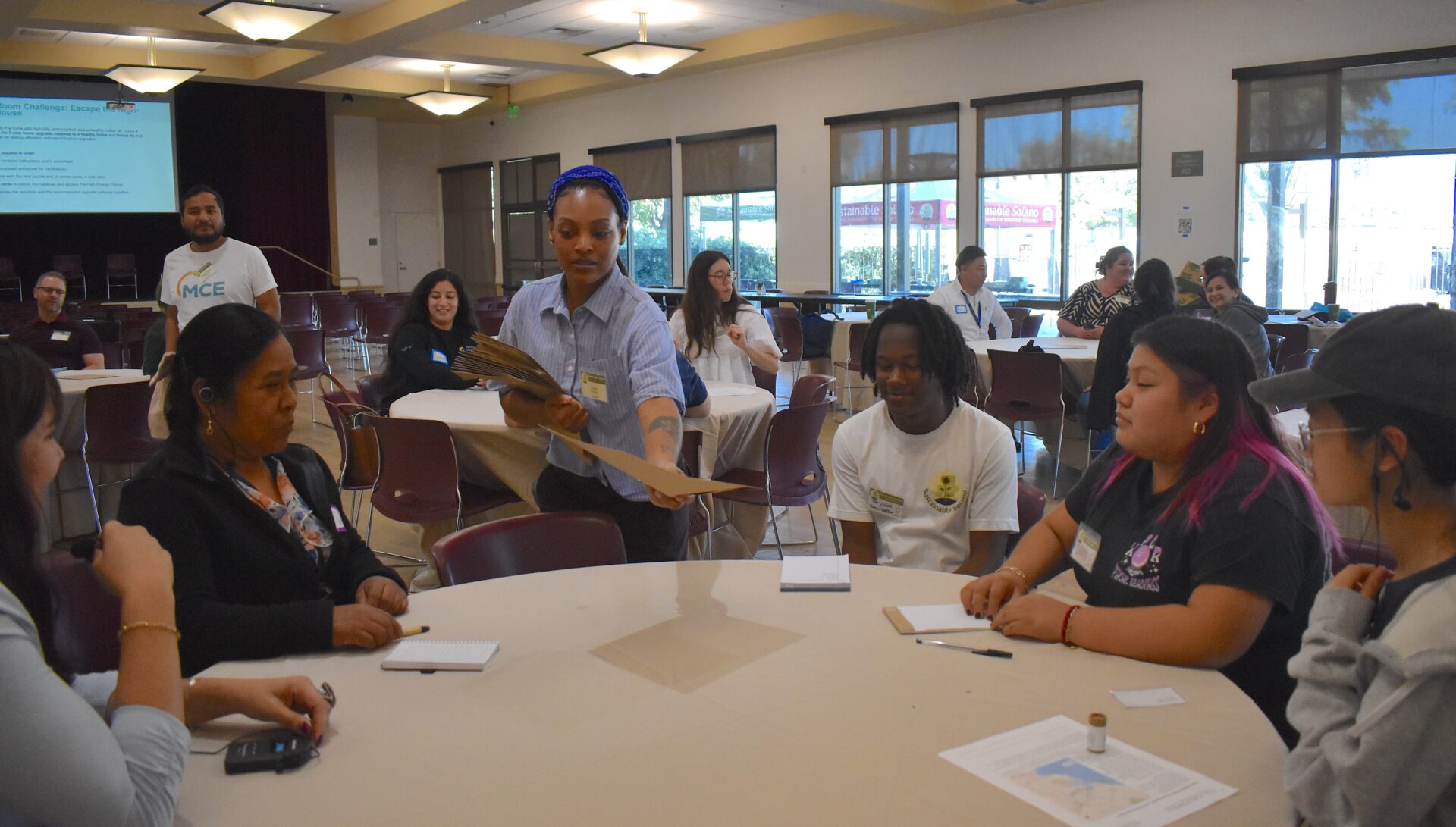
Sharing skills and stories at the summit. Photo: Sustainable Solano
“Air quality isn’t just something that affects small areas. It’s a regional issue,” says Sustainable Solano’s Willa Gruver. Largely focused on community health, the group invited residents and activists from Vallejo, Benicia, Rio Vista, Fairfield, and other towns to the summit, and also got experts from UC Davis, the California Air Resources Board, and the Bay Area Air District to present technical information central to the conversation.
“We wanted to create a space where the different groups could come together from smaller regions to share resources and projects and connect with folks who are further along in this work,” says Gruver.
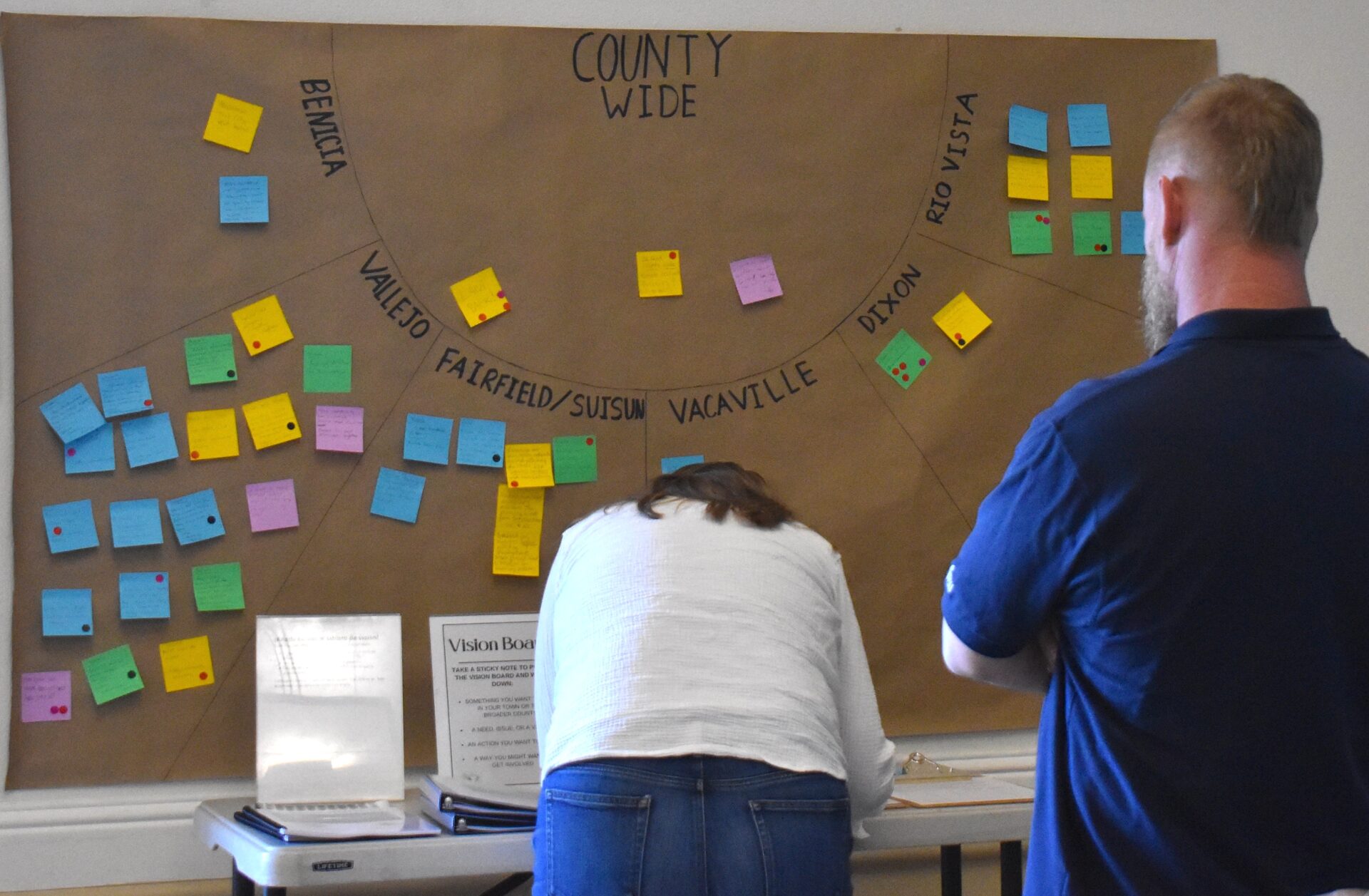
Locals contribute to countywide vision at the event. Photo: Sustainable Solano
In preparation, Gruver’s group asked the Air Resources Board to track down the sources and scope of emissions in Solano. At the summit, the board’s Erika Trinidad presented findings. Petroleum refining is the biggest stationary source of nitrous oxide (NOX) and fine particulate matter (PM 2.5) emissions. By far the largest share of countywide NOX emissions is caused by aircraft, construction equipment, trains, farm equipment, and other off-road mobile sources. And five times more of the county’s total PM 2.5 emissions come from residential wood and fuel burning than from petroleum refining.
“Everyone in the communities along the Carquinez Strait suffers from the same air quality impacts. It just depends which way the wind blows,” says Szutu.
CARB’s assessment was the focus of one of 10 sessions at the summit, all carefully chosen to cover topics identified as important to county residents in a Sustainable Solano survey. Gruver hopes the planning committee convened to organize the event will evolve into a working group that can, in turn, produce a county air quality guide and weigh in on the 2028 update of Solano County’s general plan.
On the air quality radar for the general plan update are newer problems like wildfire smoke and data centers.
“That’s a topic a lot of people are talking about,” says Szutu, who listened to four presentations on data centers at the Air District’s October 29 community advisory council meeting.
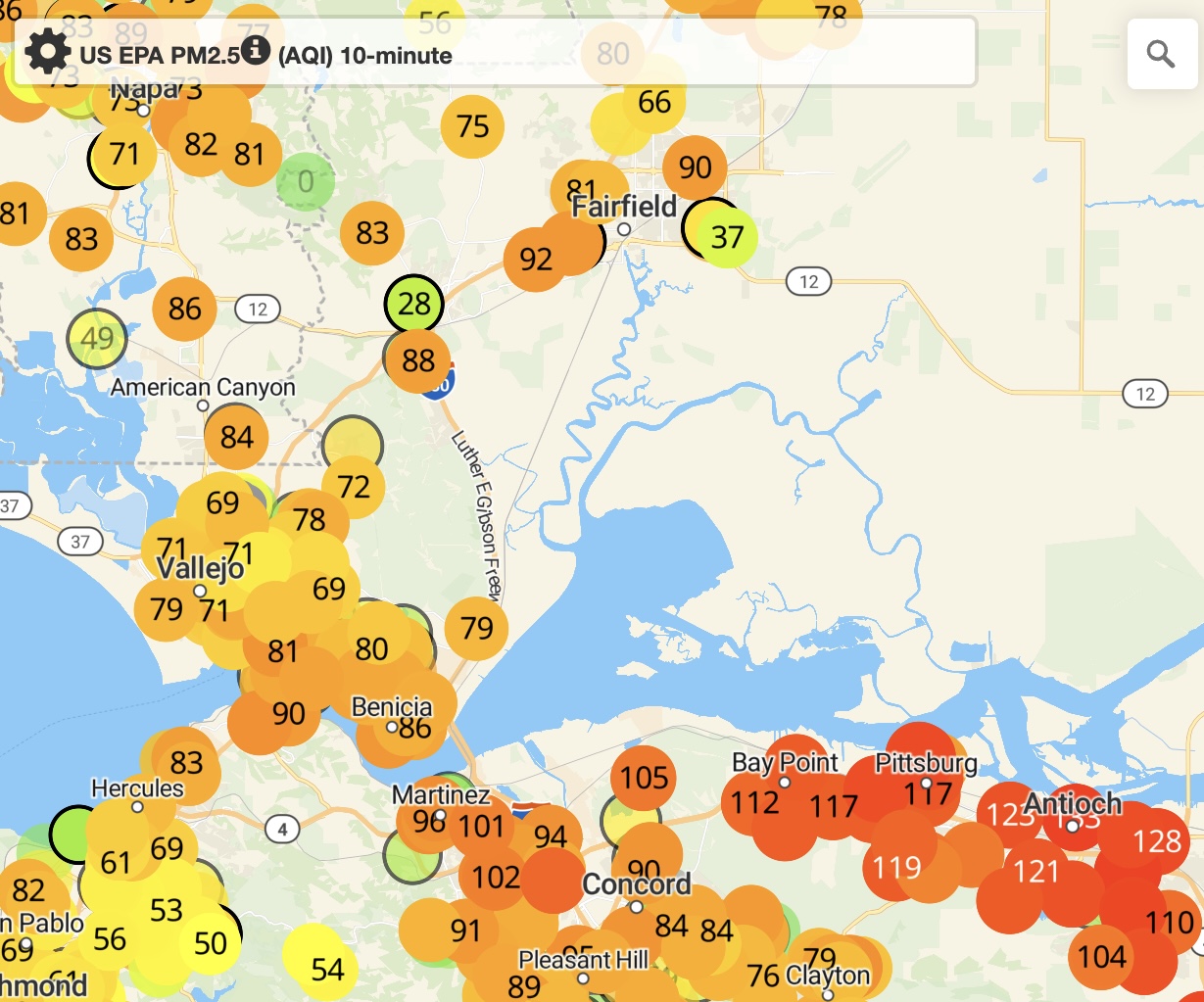
Image: Purple Air
Whatever the threats on the horizon, the county’s residents seem to be steadily acquiring the skills, tools, and information necessary to protect their lungs.
“If you look at the Purple Air map now, most of the monitors were installed by us, but we’re pushing for more,” says Szutu, referring to the many new remote monitoring sensors the Vallejo Citizen Air Monitoring Network is working with UC Davis to install. The group’s current priorities include modeling which way the wind really blows and training locals to be clean air ambassadors when it comes to problems like the Crown Hill dust up.
“Even though it took us a long time [to close that plant], we did it,” says Szutu. “Solutions can happen!”