


A Man Who Wears Many Hats
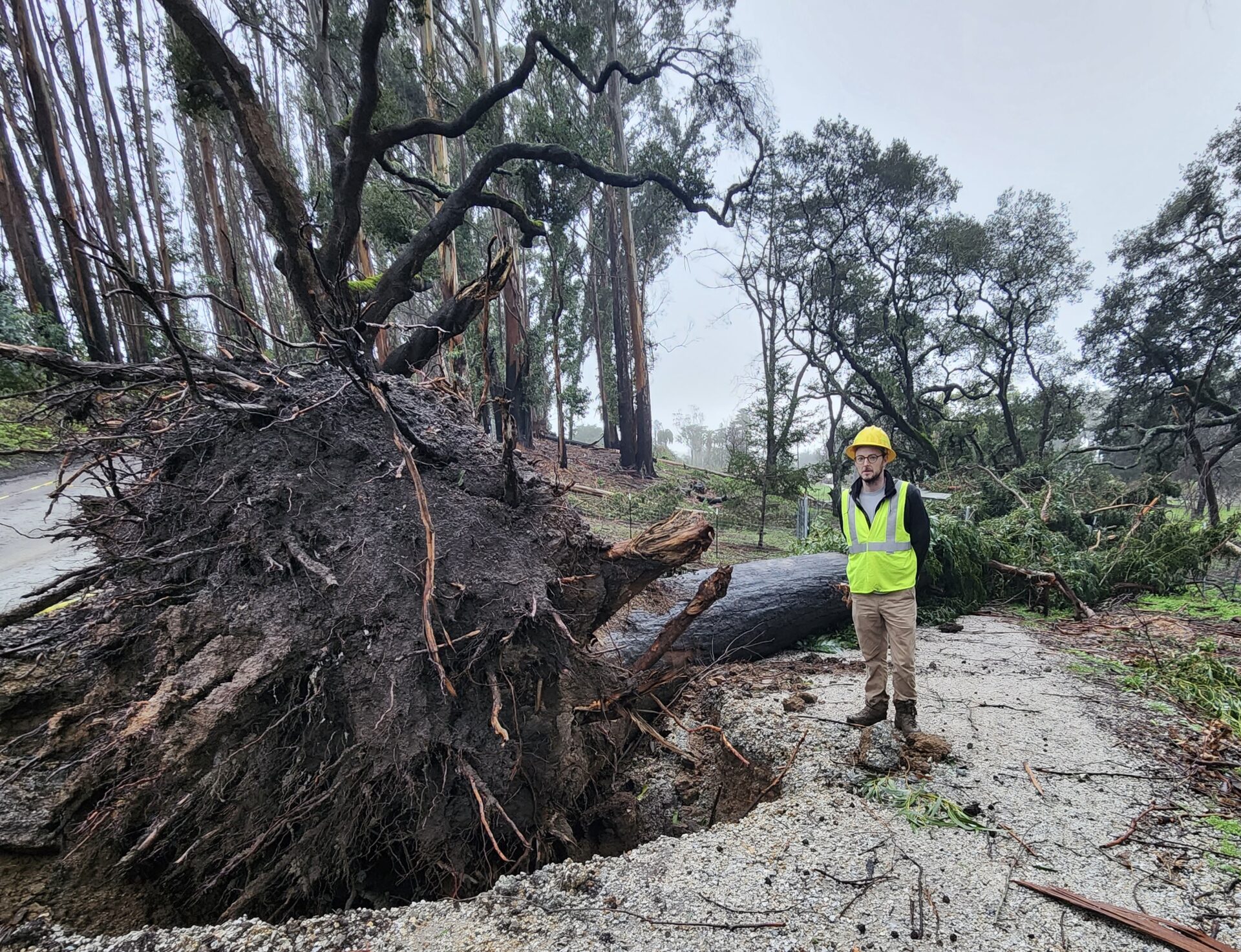
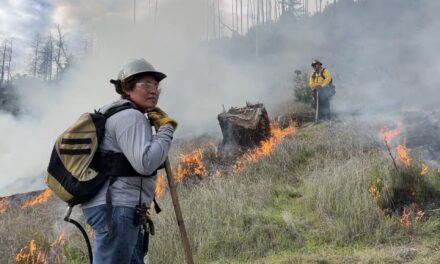
Since lightning strikes incinerated thousands of acres of Santa Cruz and San Mateo counties in 2020, local agencies have been working to create environments where wildfire is an ecological process rather than a catastrophic force.
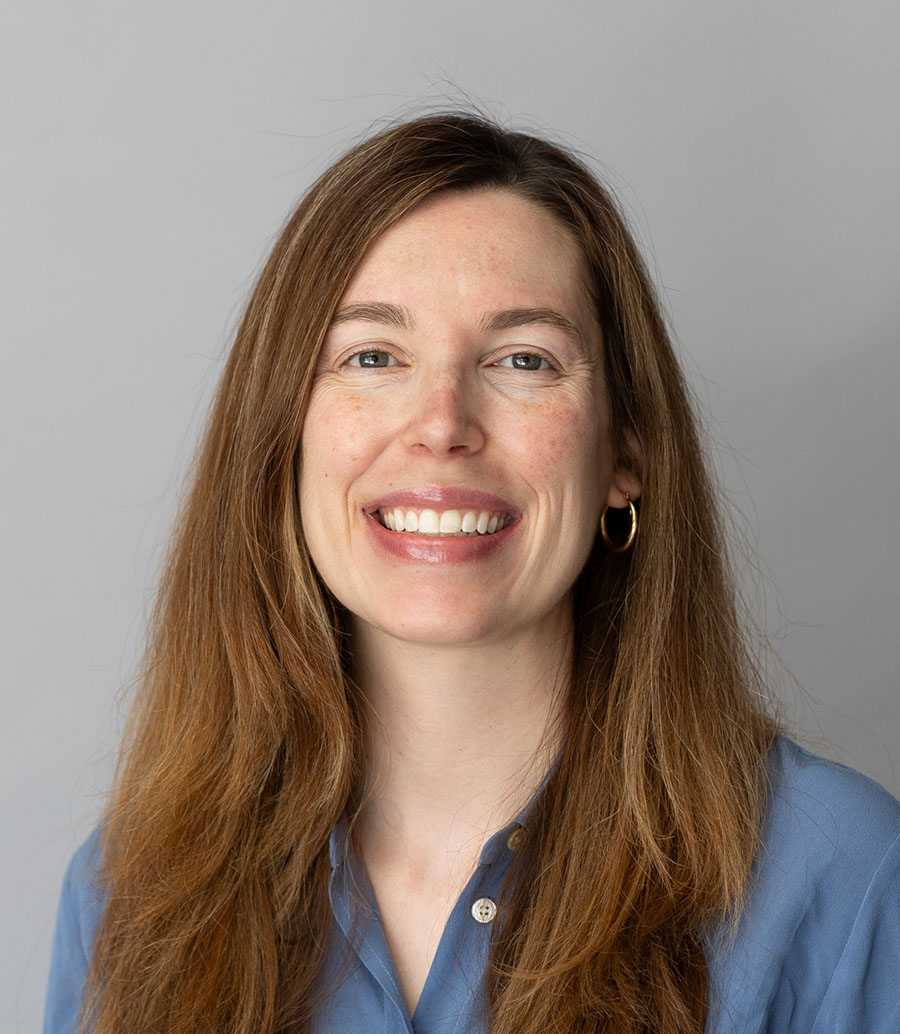
One person leading these efforts is Timothy Federal, who runs the Forest Health and Fire program at San Mateo County’s Resource Conservation District.
Federal, a native of Charlotte, North Carolina, came to love the outdoors while camping in the Appalachian Mountains as a child. He studied geography as an undergraduate at the University of North Carolina Wilmington, and earned a master’s degree in biogeography at Appalachian State University. Living in the Blue Ridge Mountains sparked his interest in conservation work. He went on to lead restoration projects in 53 national parks and conservation units from Alaska to Arizona.
In the Bay Area, Federal has focused on forest health and rehabilitation. In Marin County, he developed an early detection rapid response program for Lagunitas Creek vegetation management while working for the Golden Gate National Parks Conservancy. Since arriving in San Mateo, he has focused on bringing the resource conservation district’s 157,000 acres of coastal land back into balance, addressing a century’s worth of fire suppression and clear-cut logs that impact forest health.
Other Recent Posts
Your Nine-County Guide to Bay Area Storm Prep
KneeDeep has you covered with this nine-county list of resources available in case of storm-related emergencies this winter.
Check Your Project Status: It’s All Here
The Bay Adapt Project and Funding Navigator is a first-of-its-kind, one-stop shop where everyone can find project statuses and funding ideas.
Solano Samples Air And Finds Dirt
After helping shut down a polluting Vallejo cement plant, residents are working to expand community-led air quality monitoring across Solano County.
Who’s In Charge? What Projects Make the Cut?
The region has made progress planning for sea level rise, but who will coordinate a $100 billion effort over the coming decades remains an open question.
A Bulwark for San Francisco’s Skyscrapers?
A new joint federal and local plan maps out 13 strategies to protect 7.5 miles of San Francisco’s waterfront from sea level rise and future flooding.
Will El Niño Winter Bring Climate Chickens Home to Roost?
A dangerous combination of warm Pacific waters, Kelvin waves, king tides, and storms could disrupt life and infrastructure across the region this winter.
Inside SLR Baseball, My Summit Takeaways
A gathering of 300+ Bay Area climate leaders highlighted growing momentum on sea level rise planning — and the challenges that could slow progress.

Photo courtesy Timothy Federal
Federal’s motto is to “be open to being wrong.”
While working to increase fire resilience in Half Moon Bay, Federal says it was “tempting” to fully remove eucalyptus trees near homes and replace them with more fire resilient, native vegetation. But that same grove was a habitat for monarch butterflies. The RCD worked with Xerces Society biologists and CAL FIRE to instead thin smaller trees and remove brush while keeping the canopy and larger branches that shelter monarchs.
“As one of the first projects in our area to utilize this treatment design in monarch overwintering habitat, the work we did helped build the regional understanding and capacity to advance similar projects that will help protect homes and butterflies simultaneously,” Federal says.
Last year, Federal completed another project clearing understory vegetation in La Honda — a 19-mile shaded fuel break just north of the CZU Fire — to protect the community from future wildfires. The work mitigated the risk of forest pathogens and protected rare species vulnerable to fire.
Federal describes how, if a fire climbs up one side of the ridge and reaches the shaded fuel break at the top, it should drop from the canopy to the ground. This makes it safer for firefighters, because the fire won’t be over their heads.
“The project was both for residents to get out of the area and for firefighters to get in,” says Federal.
Another benefit of the project was getting to talk to landowners outside of an emergency setting. “[When] fight or flight sets in, it’s not the best situation to educate people about the impacts of a wildfire,” he said. Federal has been working with locals and agencies on a forest management plan that empowers community members to steward their land “in perpetuity.”
“The Santa Cruz Mountains are really unique,” he says. “It’s all a fabric of public and private ownership. A lot of it is building relationships with those different landowners, especially in an uncertain climate future when we’re looking for resilience against a multitude of threats that face us.”
He urges those looking to work in forest management to approach projects as generalists, not experts, even if they have deep knowledge of a subject.
“Being flexible and able to learn new information is important,” he says. “There’s no one-size-fits-all approach to forest resilience.”