


Climate Change, A Scorpion’s POV
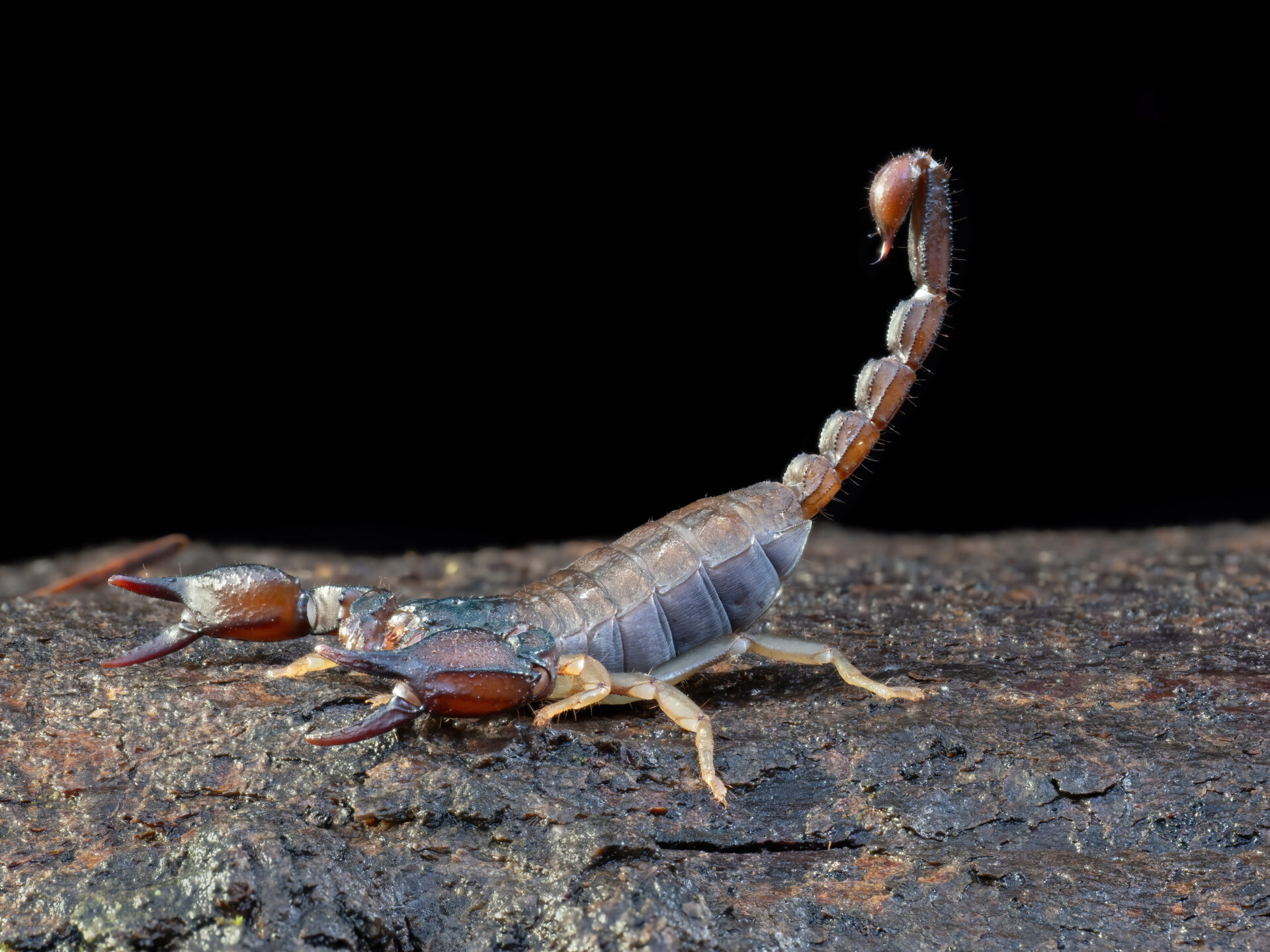
Western forest scorpion spotted in Sonoma County. Photo: Alan Rockefeller
Twenty thousand years ago, ice sheets nearly 4,000 feet thick covered parts of the Sierra Nevada. The climate statewide was much cooler and wetter, allowing pine, firs, and other trees now found in the mountains to blanket much of the Central Valley. In these forests under rocks and logs likely lived the western forest scorpion, a two- to three-inch long brown arachnid with mild stings.
As the climate warmed and the last ice age came to an end, the scorpions followed the forests as they slowly retreated toward the cool, damp coast and up into the Sierra Nevada. Today, western forest scorpions are found in coastal forests north of Santa Cruz, much of the Sierra Nevada, and parts of Oregon.
“The western forest scorpion is probably a relic from a period of time in which North America had a much cooler environment,” says arachnologist Lauren Esposito, director of a network of research stations called Islands & Seas. “When talking about scorpions and climate change, it’s hard to get more emblematic than the western forest scorpion, given how far it’s come in terms of surviving past climate changes and where it has left to go as the climate changes again.”
Scientists believe the forest-loving scorpion’s habitat is shrinking even farther as human activities damage forests and carbon emissions warm the planet. This species is not alone, either. Development and climate change are altering scorpion habitat throughout the state, which is spelling trouble for the shy arachnids that are often tied to specific ecosystems.
Esposito is collecting western forest scorpions for the California Conservation Genomics Project, which seeks to document the genetic variation within individual species. She has observed that, following severe wildfires — which are typically a result of hot, dry weather and the suppression of less intense fires — western forest scorpions usually disappear for a long time.
Extreme fires destroy forests and likely cook the scorpions in their burrows, Esposito says. “We’ve sampled habitats five, 10 and 20 years post burn, and we’re not seeing scorpions following high-intensity fires,” she adds. “Our hypothesis is that they are repopulating from the edges [of the burn area], and these scorpions only move a maximum of two meters per night.”
While scorpions are losing habitat to climate change, projects that aim to mitigate global warming can also threaten them.
As a high school student, Prakrit Jain found two scorpion species that are new to science. One of these, the Koehn Lake scorpion, only lives in a one-square kilometer piece of the Mojave Desert next to Koehn Lake, which is a salty, seasonal pond called an alkali sink.
Other Recent Posts
Can Nature Help California’s Coast Fight Fire and Floods?
Local and state leaders gather for September summit on how to mainstream nature-based infrastructure.
Guide to Nature-Based Infrastructure Around the Bay Area
Regional leaders are testing eight types of climate adaptation and shoreline flood protection projects that work with nature instead of against it. Here’s an overview.
How Can I Get Clean, Green, Climate-Forward Job Training in the Bay Area?
Looking for a hands-on job working outdoors that actually pays? Here’s a list of training programs.
Santa Rosa Residents Rethink Trees
The heat-burdened Roseland neighborhood is learning how to monitor temperatures and developing an action plan focused on tree shade.
How to Make Conservation a Career
California nonprofits are developing paid apprenticeships to prepare workers for the growing ecological restoration economy.
Raft of Resilience Initiatives Keeps Tahoe Blue
Beach robots, boat inspections, forest thinning, and wetland restoration are among the projects helping the lake confront environmental threats.
Weathering the Present While Training for the Future
A stewardship immersion experience from the School for Inclement Weather and Weaving Earth combines ecological knowledge and spiritual connection.
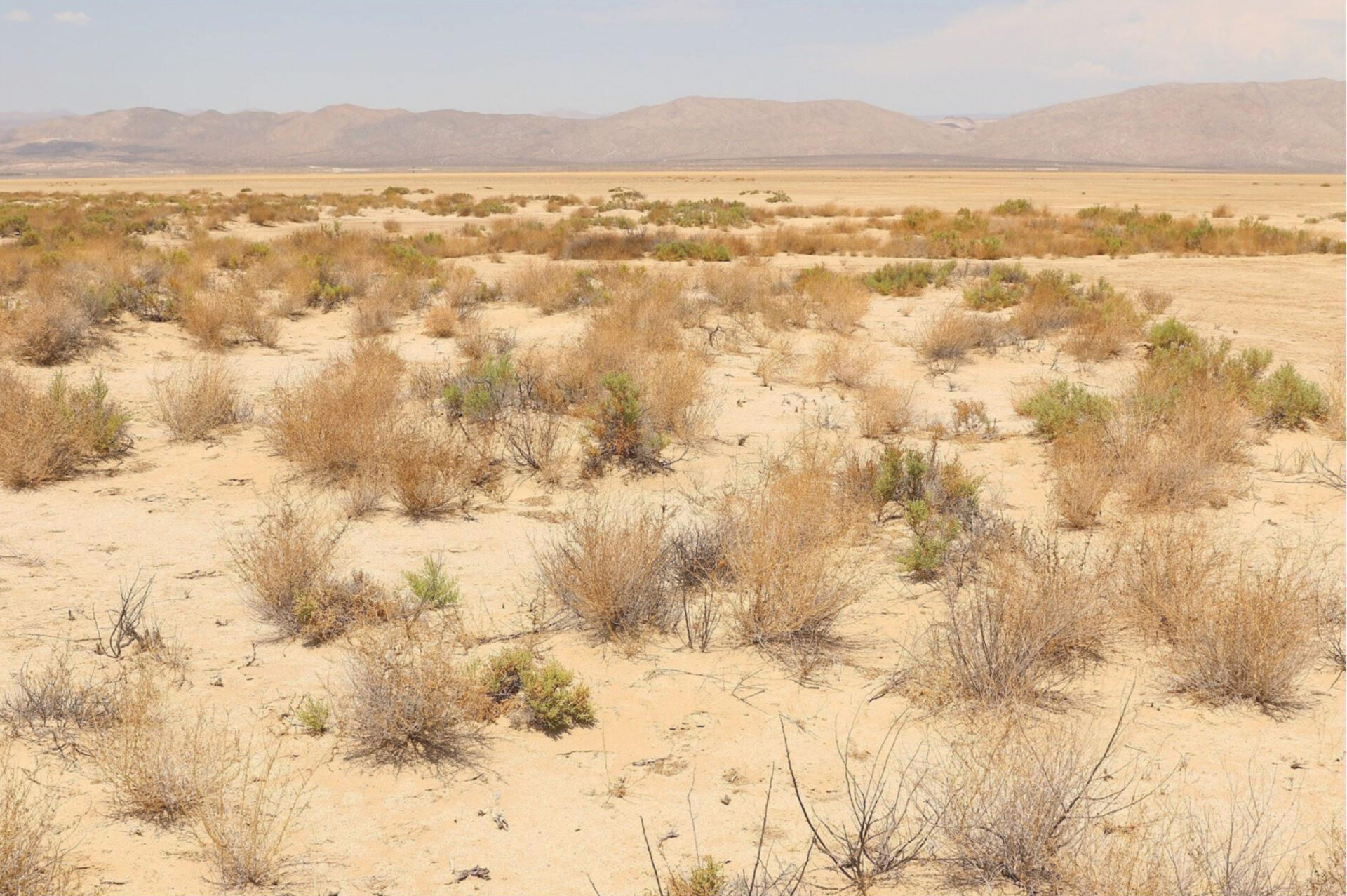
Location in the Mojave Desert where Prakrit Jain first identified the Koehn Lake scorpion. Photo: Prakrit Jain
“The entire patch of land that the scorpion is living on is zoned for solar energy,” says Jain, who will begin a PhD in biology at the University of New Mexico in August. “The scorpion would almost certainly go extinct if such a facility is constructed.”
Like its western forest counterpart, the Koehn Lake scorpion probably lived across a larger area in the cooler, wetter climate of the last ice age. But as glaciers melted and the area around the lake grew drier, only an area one-third the size of Central Park remained damp enough to support the scorpions. Jain expects human-caused climate change will further shrink their habitat. The average temperature around Koehn Lake is projected to increase by six degrees Fahrenheit by 2100.
“The scorpions and the whole ecosystem occur where groundwater approaches the surface,” Jain says. “As the climate becomes even warmer and drier, we expect their habitat will contract even further.”
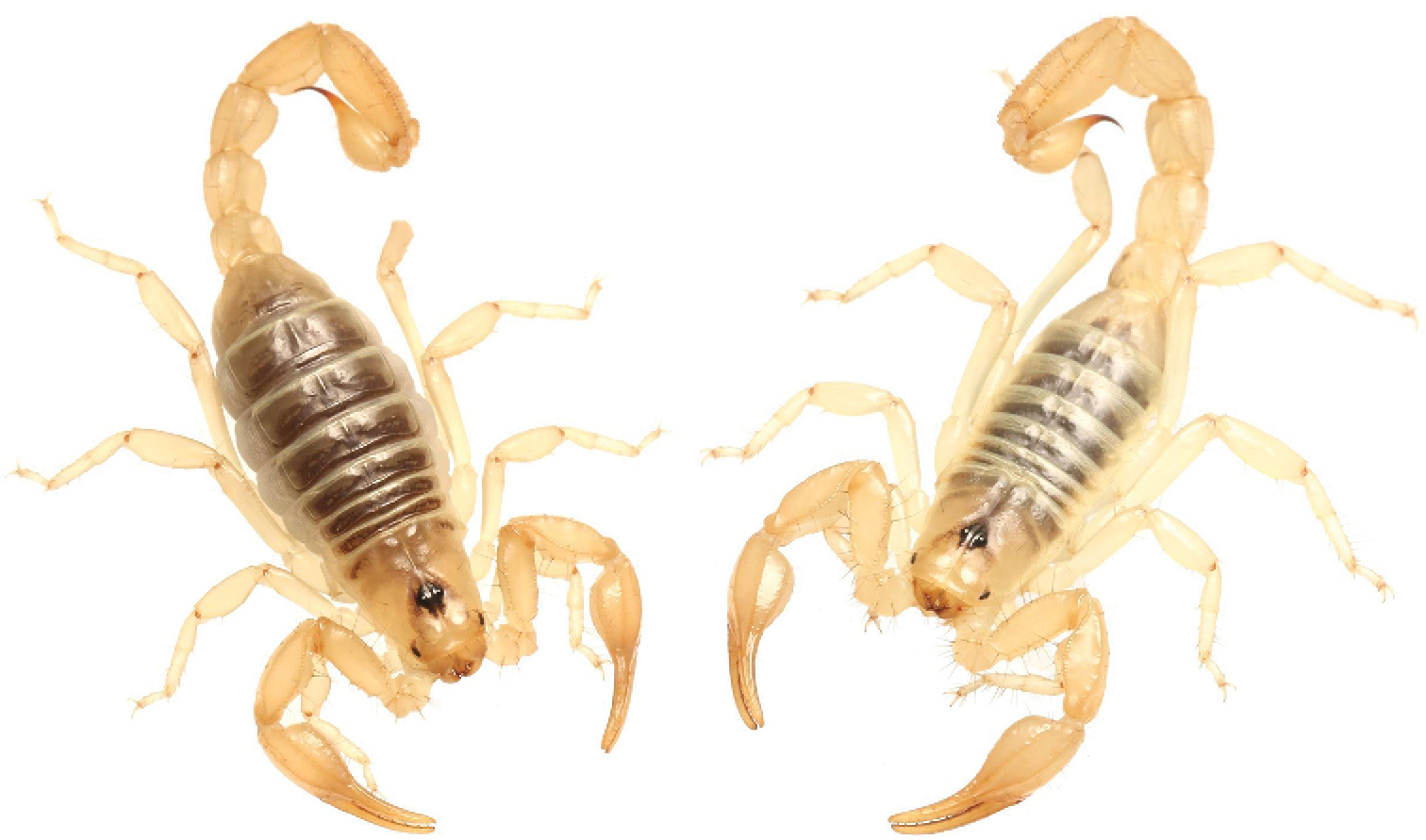
Young Koehn Lake scorpions. Photo: Prakrit Jain
Jain is currently petitioning the federal government to list his newly-described scorpion as a threatened species. He’s also encouraging the Bureau of Land Management, the agency that manages the scorpion’s habitat, to keep the humble arachnid in mind when approving plans for solar arrays.
“One of the reasons that living in California is so interesting is that we have so many of these rare, special species,” Jain says. “If we destroy this habitat to make a solar farm or to make anything else, it’s going to affect everything in the habitat. We will have lost an entire unique segment of the landscapes of California.”