


Protecting Birds as Burlingame’s Iconic Trees Come Down
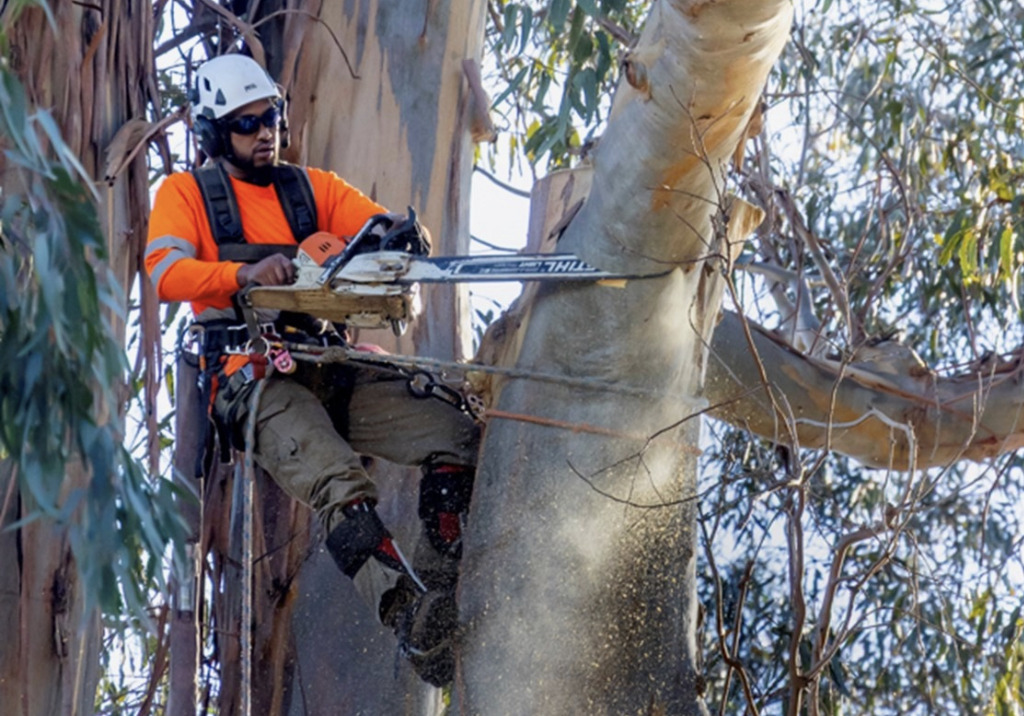
A Caltrans worker cuts down a tree on El Camino Real in Burlingame. Photo: Caltrans
For more than a century, massive eucalyptus trees — some reaching 100 feet tall and five feet in diameter — have flanked El Camino Real in Burlingame. They beautify the roadway and provide a windbreak, but they also notoriously tear up the road and sidewalks with their shallow roots, limit visibility, and contribute to flooding because they shed strips of bark that clog gutters and litter the road.
A $173 million, four-year project is addressing this problem. Caltrans began tearing down blue and manna gum eucalyptus trees and English elms in January, but what will happen to the local wildlife inhabiting the tree canopy?
To protect these animals, a biologist is inspecting trees before their removal to ensure they don’t have any nesting birds or other wildlife, according to Caltrans. The agency will also plant 430 new trees along the nearly four-mile stretch known as the Howard-Ralston Eucalyptus Tree Rows.
Scientists have found two bird species nesting: Anna’s hummingbird, which has unique iridescent green and rose-pink colored feathers, and the oak titmouse, a small gray-brown songbird with stubby bills. The hummingbirds breed between December and May, according to the National Park Service. The mother bird’s white, jelly-bean-sized eggs hatch after 14 to 19 days. The young fledge in 20 to 30 days.
Crews cordon off 50 feet of space around a tree with active nests, says Jeneane Crawford, a Caltrans public information officer.
“The biologists check on the nests every day to make sure that they’re [the birds] not experiencing distress,” she says. “If the birds show distress, they [workers] move the equipment, and once the fledglings have left the nest, they can … take the tree down.”
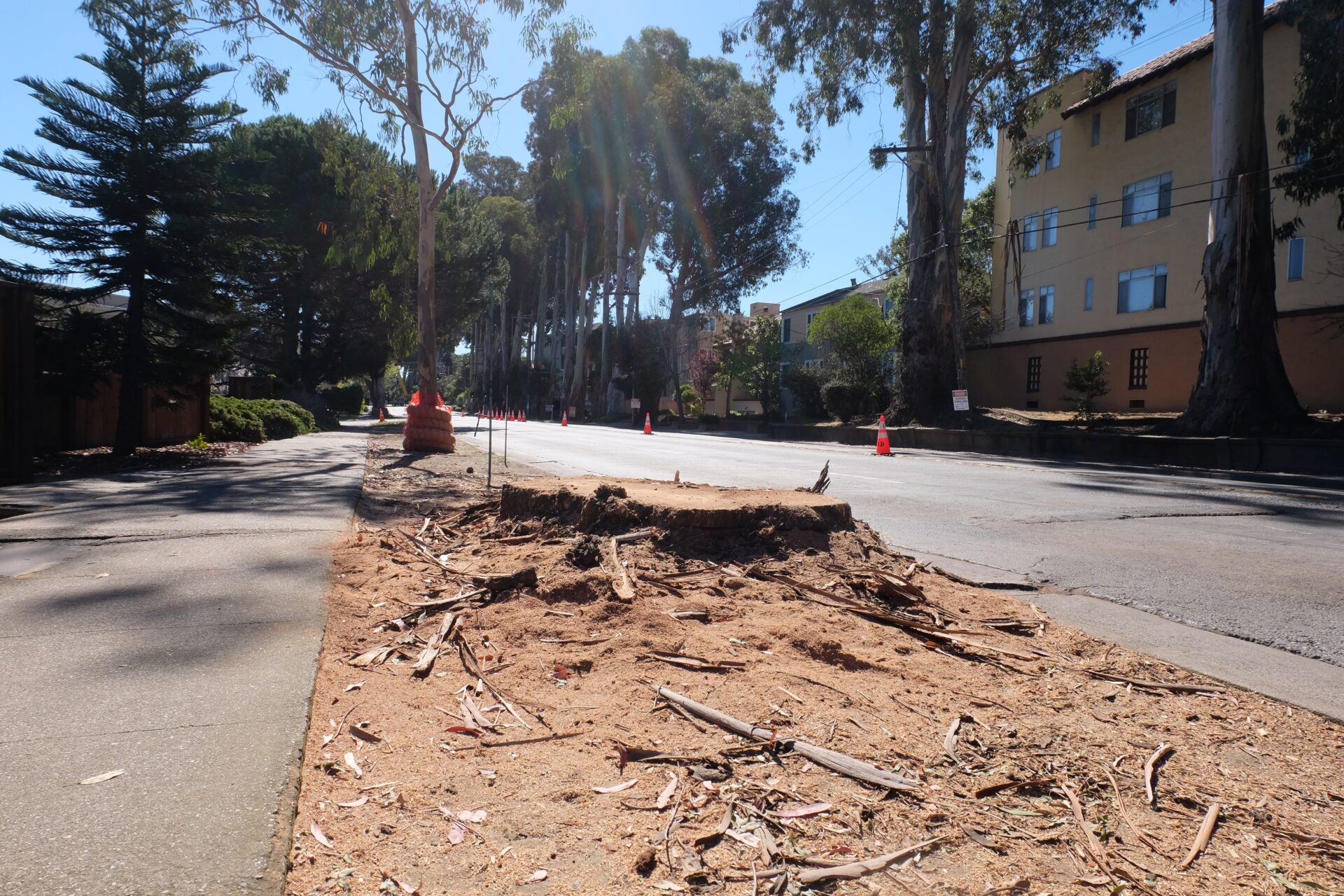
Remnants of a recently removed tree. Photo: Angela Swartz
Biologists are also on the lookout for bats, but haven’t spotted any yet, Crawford adds.
A task force consisting of the Burlingame Historical Society, city staff, Caltrans architectural historians, landscape architects, and arborists studied dozens of species when considering new trees to plant. They chose drought and disease resistant varieties — ghost gums, lemon-scented gums, mountain gums, sunshine elms, and triumph elms — with narrower trunks that shed less bark and have less invasive root systems. Because the rows are on the National Register of Historic Places, all new trees need to be elm or eucalyptus.
“Caltrans generally favors native trees,” says Caltrans Senior Landscape Architect Kimberly White. “There are some situations where they really just aren’t the best choice.” That could mean soils are substandard, space is limited, or drainage is poor in some locations.
Rana Creek Nursery is already growing the new eucalyptus trees. Caltrans will use bubbler irrigation systems with small, rotating balls to water the tree roots, White said.
Burlingame Historical Society President Jennifer Pfaff is pleased with the planned irrigation systems, recalling how past new plantings failed because of irregular watering.
“For most people who live around here, it’s almost like looking at buildings. You get a sense of place and can get disoriented [without the trees],” says Pfaff. But she expects the new eucalyptus trees to be fast growing, hopefully bringing shade cover back to the roadway quickly.
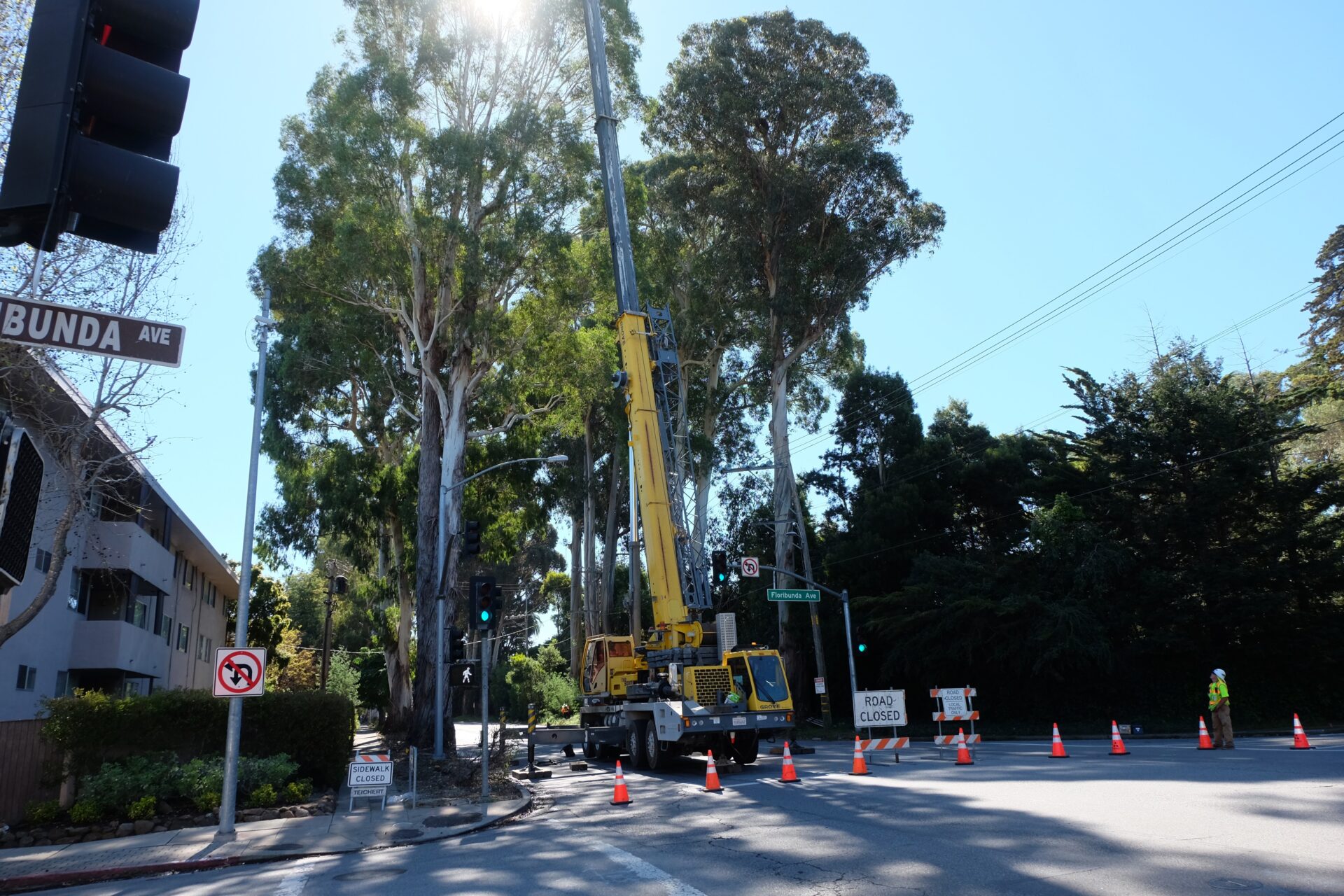
Construction workers block off the road before cutting down trees. Photo: Angela Swartz
All involved hope to “replicate the grandeur” of the original trees without the infrastructure damage and disease. As of March 27, Caltrans had cut down about 100 trees, and it plans to fell almost 400 trees in total.
“This ongoing process will ultimately reinvigorate [John] McLaren’s original vision over the next several decades as the heritage eucalyptus and elms gradually reach the end of their lifespan,” the application for historic preservation states.
Other Recent Posts
Fire Weather in the Wind
As the hot Nevada air cools every fall, it gets pushed west to lower pressure areas over the Central Valley, where the wind heats up and dries out.
My Morning Cleaning Up the Oakland Estuary
On Oakland’s Creek to Bay Day, I joined 100 volunteers for I Heart Oakland-Alameda Estuary to remove shoreline trash.
RCDs Pay Extra Attention to North Bay High Schoolers
A $15,000 grant will help three North Bay conservation districts evaluate youth education programs and prepare high school students for environmental careers.
Creeks Make Good & Bad Homes
San Jose State researcher Costanza Rampini explores why the houseless favor creek banks, and how they weather the flood risk.
Bay Area Braces for Record-Breaking El Niño
Record high water temperatures in the Pacific are expected to bring dangerous sea level rise, waves, and rain to the region this winter.
Regional Housing Agency Invests in Affordability
The Bay Area Housing Finance Authority is launching a loan program to support the construction of mixed-income rental properties.
The End is Coming for California’s Untouchable Grass
The law, which applies to grass that isn’t used for recreational purposes, could cut urban water use across California by more than 20% says Oakland thinktank.