


Optimizing the Health Benefits of Urban Greens

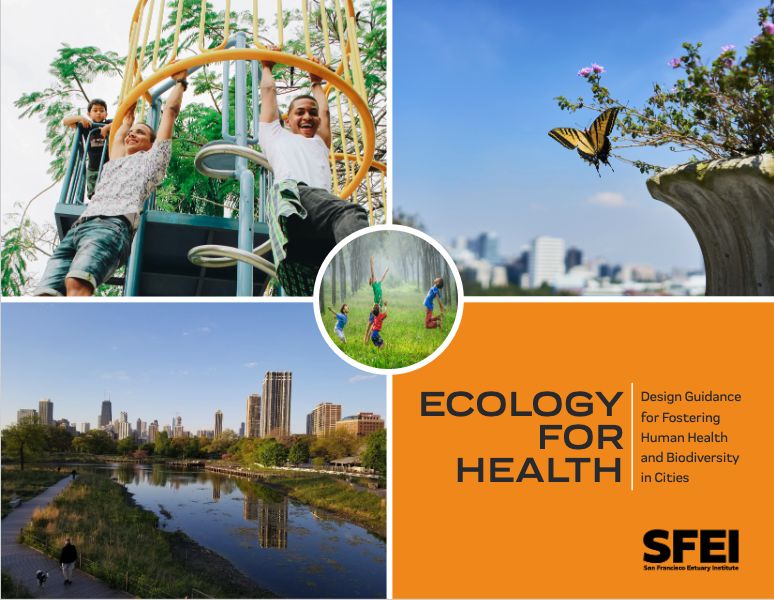
The same features in urban parks that support biodiversity can also benefit human health. Even biodiversity itself may help us — and the San Francisco Estuary Institute (SFEI) wants to see more of it. To that end, the nonprofit released an innovative report in September called Ecology for Health. It’s a practical guide for planners and designers to aid both biodiversity and human health in urban settings.
Research into the link between nature and human health goes back decades. But scientists continue to learn more about which aspects of parks and other green spaces in cities — such as recreational amenities, shade, views, or plants and animal life — are most associated with different mental and physical health outcomes in humans, says SFEI environmental analyst Jennifer Symonds. One of seven co-authors of the report, Symonds also led an exhaustive review of the existing literature.
A conclusion that’s become increasingly clear (and that inspired SFEI to produce the guide in the first place, Symonds says) is that plant, animal, fungal, and human life can be intertwined to a fascinating extent, even in urban settings.
Two recent studies suggest that greater bird diversity is tied to better human well-being. And a 2007 study showed a positive association between overall plant diversity and human psychological well-being: the more of one, the more of the other. Plant species richness also has been linked to human microbiota biodiversity, Symonds says. “That is linked to improved human health, including reduced skin disease,” among other benefits.
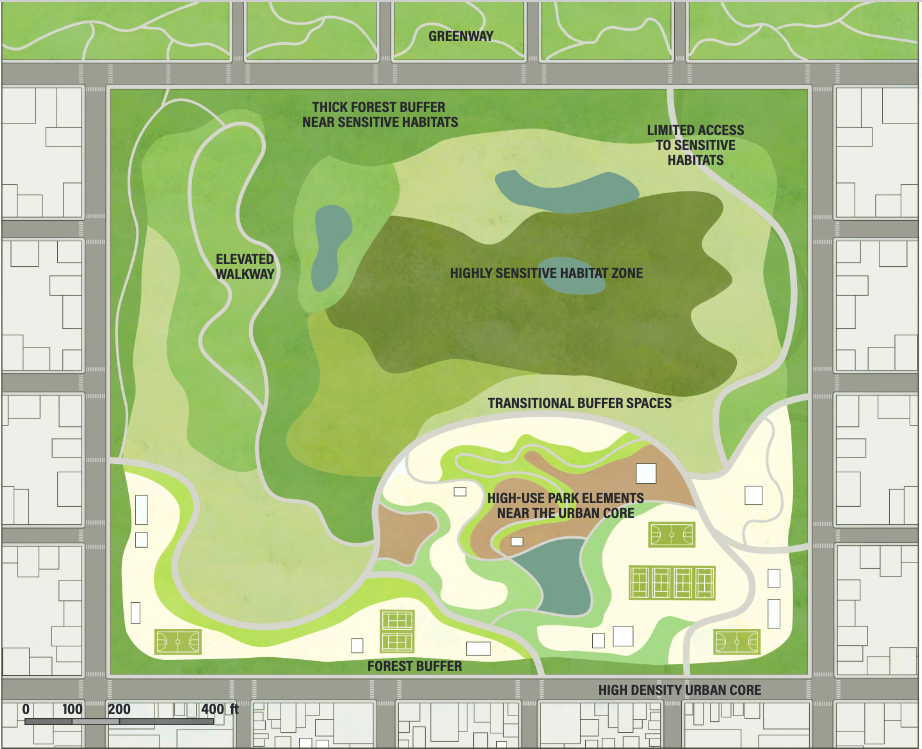
Strategies for regional and city parks at least 5 acres in size. Art: SFEI.
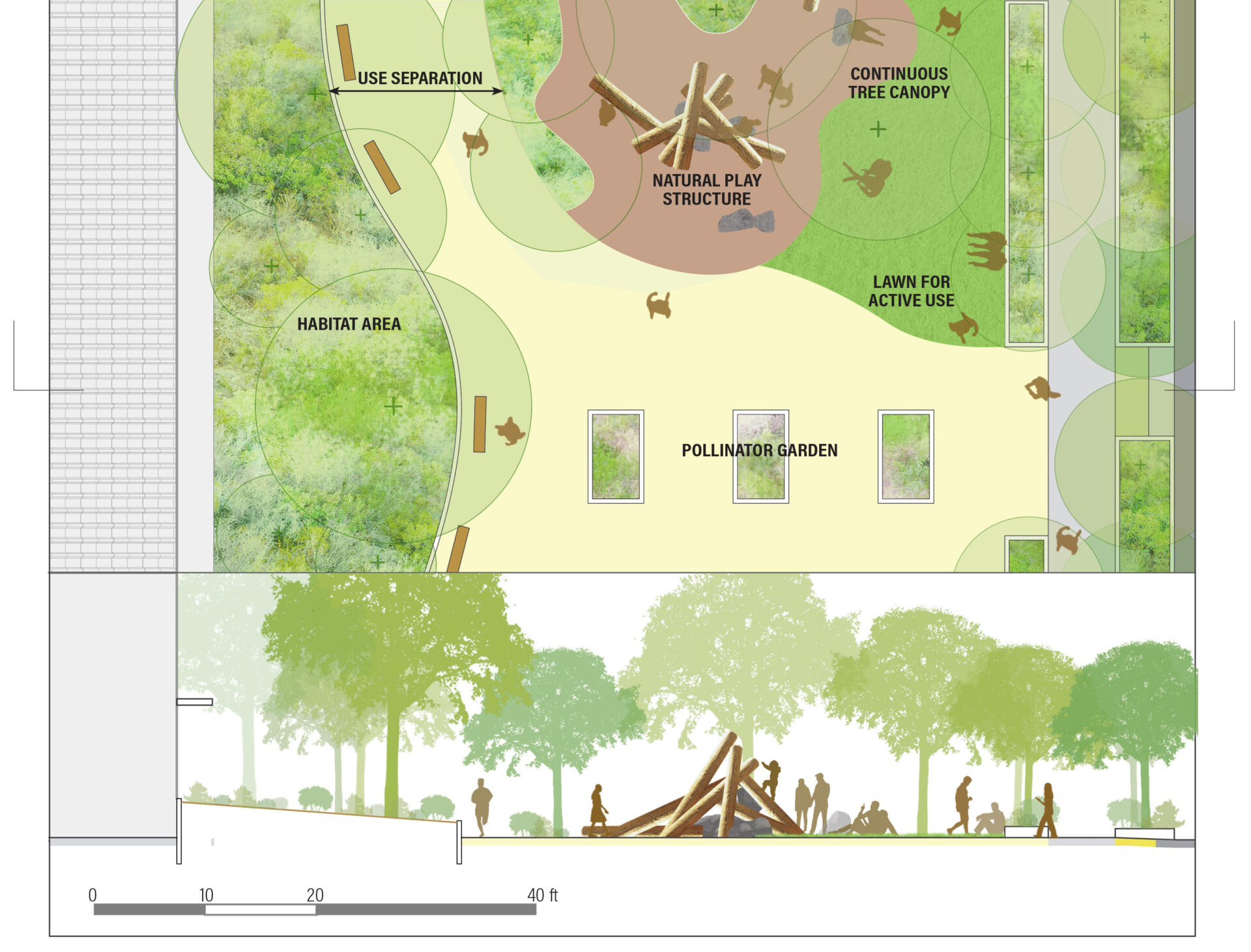
Strategies for neighborhood parks less than 5 acres in size. Art: SFEI.
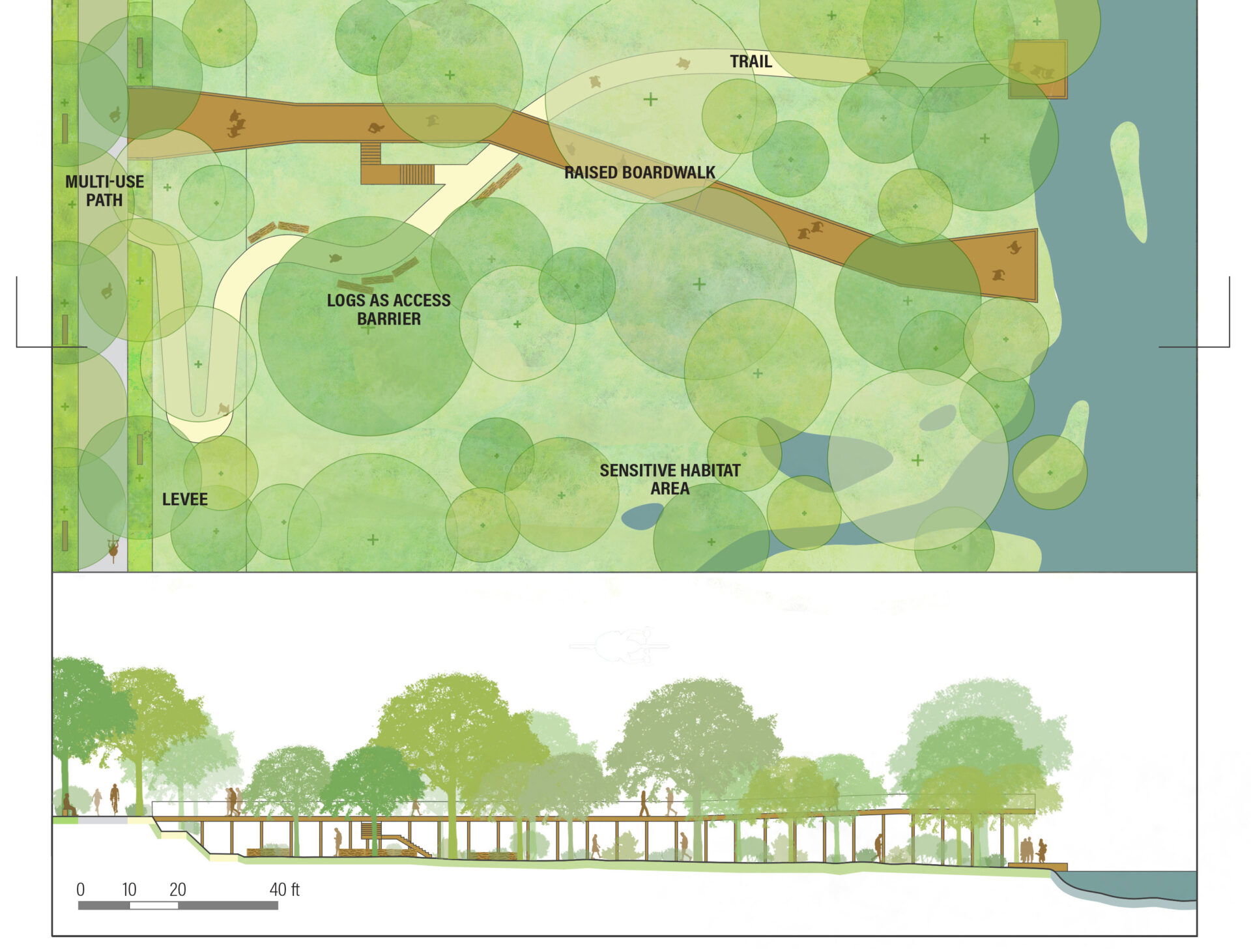
Strategies for urban waterfronts and blue space, including areas of developed high ground, levees, floodplains, riparian forest and wetlands, Art: SFEI.
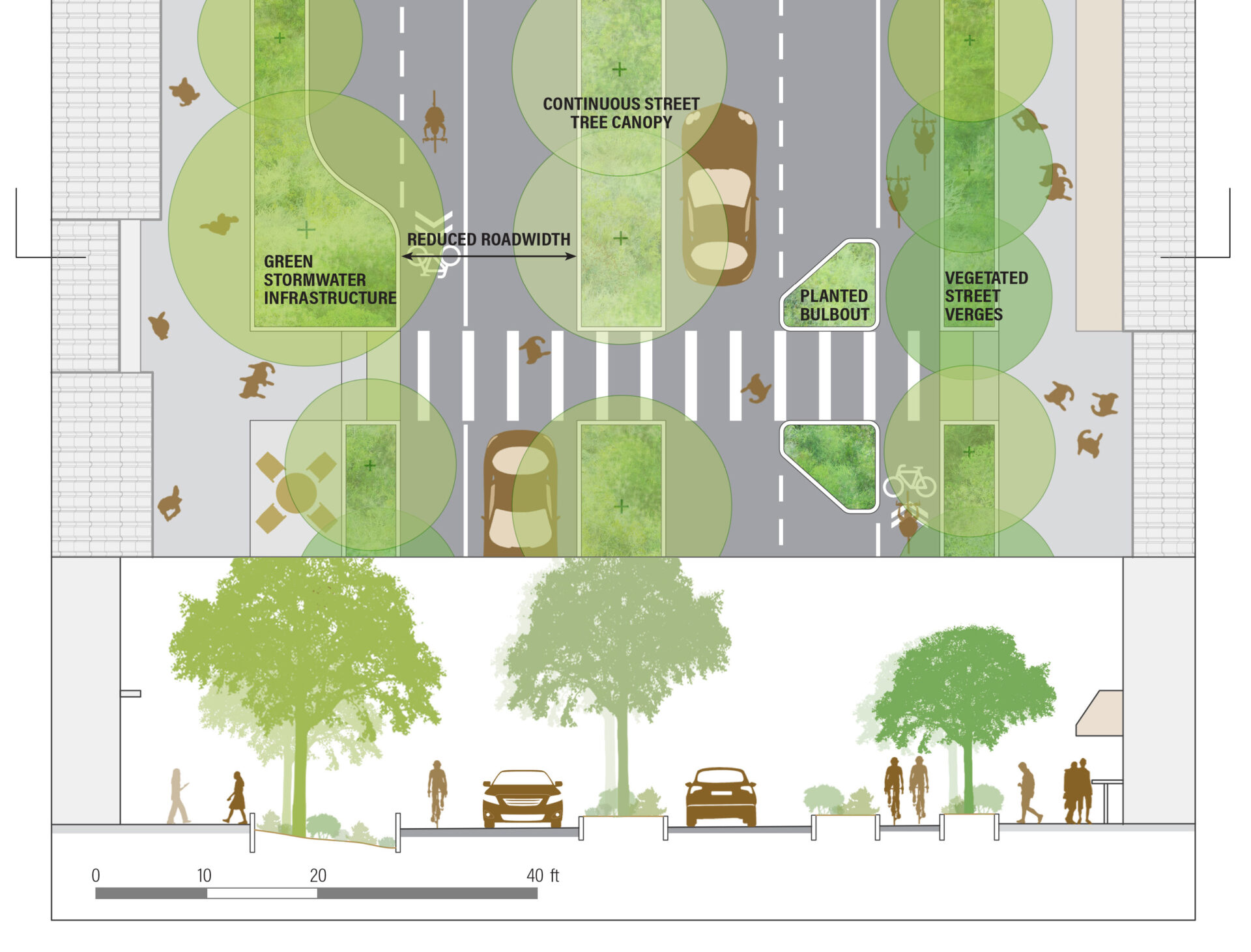
Strategies for streetscapes, which include the roadway, sidewalks, street trees, planters, furnishings (benches, trash cans, street lights, etc.), drainage features and infrastructure for bikes and public transit.
Research has also shown that urban forests can (take a deep breath) improve mood, mental health, immune function, and BMI, and lower the prevalence of lung cancer, asthma, heat-related mortality, and preterm birth. Native flowering plants, meanwhile, may help reduce allergen sensitivity.
All of these can be deliberately designed into city parks and open spaces for maximum benefit, and that’s the main message behind SFEI’s new report.
Some features, however, might have to go. Artificial lighting is known to affect wildlife communication, orientation, reproduction timing, predation, habitat selection, and more. In humans, it’s “linked to increased breast and prostate cancer risk, increased cortisol, increased vector borne disease risk, and disruptions to circadian rhythm and melatonin production,” a chapter in the report on lighting reads. To reduce these impacts, the authors recommend limiting outdoor light intensity and “trespass,” also called light pollution, and avoiding blue-white light.
Other chapters in the report offer practical guidance on water features, grass alternatives, garden spaces, habitat complexity, and public access. And alongside direct impacts on health, the authors also explore co-benefits for things like shade and cooling, climate mitigation and adaptation, and flood and stormwater management — a suite of benefits sometimes referred to as “ecosystem services.”
Of course there are challenges. In some cases, the needs of people and nature conflict. Recreational access can disturb wildlife. Habitat complexity may reduce human access or perceived safety. And green spaces may take land away from other valuable uses like affordable housing.
The guide tackles these, too, with practical insights throughout. “We are excited to present this design guidance showing synergies and also addressing the tradeoffs between biodiversity and human health in urban spaces,” says co-author Karen Verpeet, SFEI’s Resilient Landscapes Program managing director.
SFEI’s goal now is to get eyes on Ecology For Health. In September, the organization gathered more than 50 local planners, designers, landscape architects, and other experts to review and discuss the report. “We’ve already gotten some really good feedback,” Symonds says.
Other Recent Posts
Regional Housing Agency Invests in Affordability
The Bay Area Housing Finance Authority is launching a loan program to support the construction of mixed-income rental properties.
The End is Coming for California’s Untouchable Grass
The law, which applies to grass that isn’t used for recreational purposes, could cut urban water use across California by more than 20% says Oakland thinktank.
Sonoma Vineyard Workers Burn toward a Better Future
A group of immigrant farmworkers are forming a worker-owned cooperative to bring back Indigenous burning practices that used to revitalize the soil.
Los trabajadores de los viñedos de Sonoma queman por un futuro mejor
Un grupo de trabajadores agrícolas inmigrantes está formando una cooperativa de propiedad de los trabajadores para recuperar las prácticas indígenas de quema que solían revitalizar el suelo año tras año.
New Voices Shape Design of Berkeley’s North Basin Strip
Twenty acres of parkland between the highway and the Berkeley shore are slated for a coast-resilient makeover, with input from locals and stakeholders.
It’s Always Sunny In North Fair Oaks
Residents of the unincorporated community launched their second campaign in two years to get the county to care for dying street trees.
Siempre está soleado en North Fair Oaks
Los residentes de la comunidad no incorporada lanzaron su segunda campaña en dos años para lograr que el condado se ocupe de los árboles de la calle que se están muriendo.
Can Nature Help California’s Coast Fight Fire and Floods?
Local and state leaders gather for September summit on how to mainstream nature-based infrastructure.
Guide to Nature-Based Infrastructure Around the Bay Area
Regional leaders are testing eight types of climate adaptation and shoreline flood protection projects that work with nature instead of against it. Here’s an overview.
How Can I Get Clean, Green, Climate-Forward Job Training in the Bay Area?
Looking for a hands-on job working outdoors that actually pays? Here’s a list of training programs.