


Imagining a More Climate-Just World
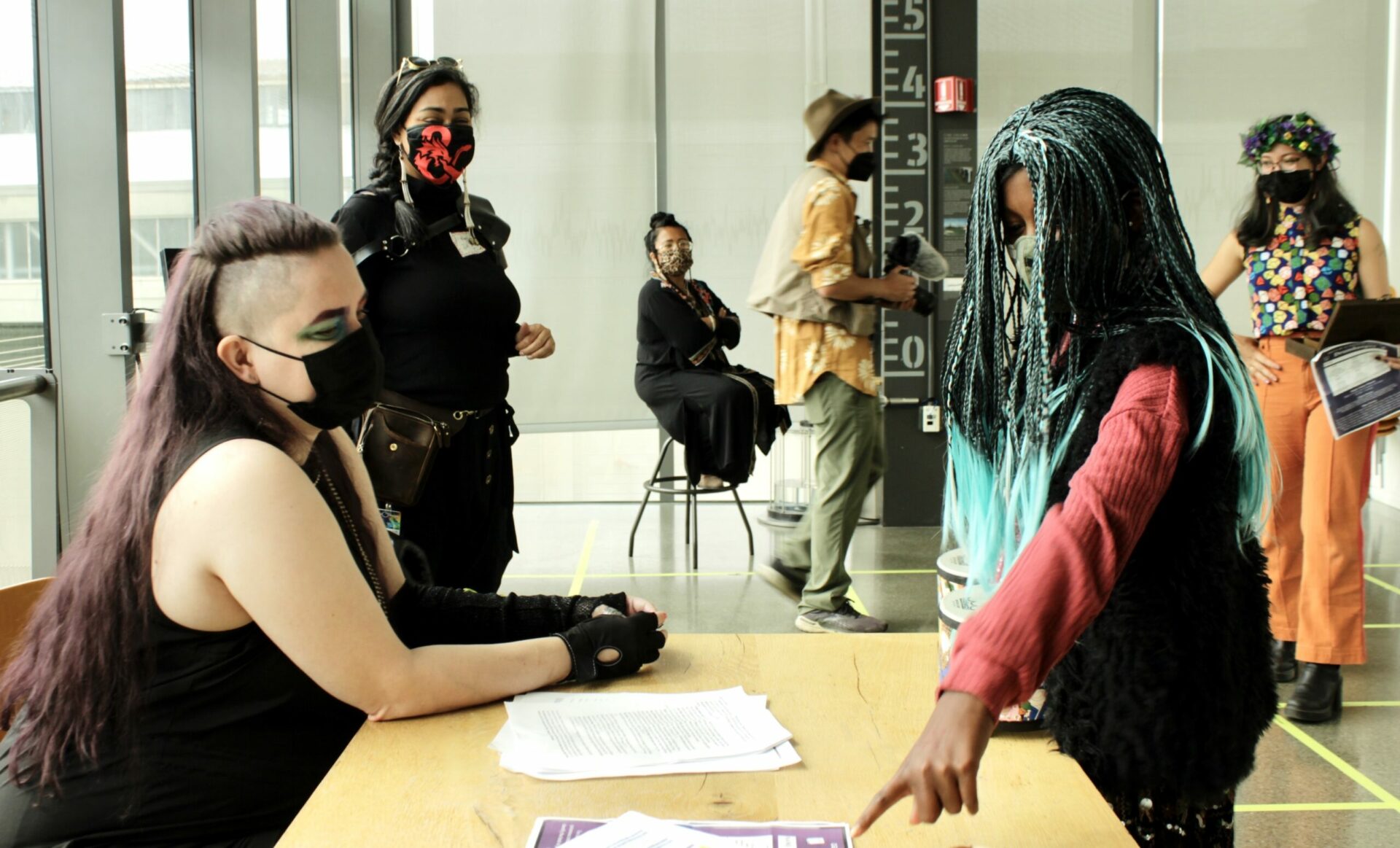
You’re playing a game where mythical creatures have suddenly emerged from the earth, running loose and causing chaos in your local neighborhood. It isn’t possible to put the magical beings back into the ground — so your job is to figure out how to keep everyone safe by transforming the pandemonium into something positive.
Now, consider this: what if these “creatures” were actually fossil fuels that have been extracted? Now that they’ve been released into the atmosphere, is it possible to dream of real, positive solutions to reduce the damage?
This creative query stems from just one of ten environmental justice adventures in the The Mycelium Youth Universe Gaming for Justice Compendium. This collection of Dungeons & Dragons Style games is the latest brainchild to come from Mycelium Youth Network and is meant to encourage young players to approach climate and social change with an uninhibited imagination.
“We’re imagining a future that is more positive where we can build together — create space and time to dream together — the kind of world we want to see and adventure into,” says lead storyteller Marcy Brown.
While the games in the compendium are inspired by the landscape of the San Francisco Bay Area, they actually take place in a magical realist world called the Mycelium Universe, aka the Myc-U—or as Brown says, the “theater of the mind.”
Within this fictional universe, the adventures explore different social justice and environmental movements ranging from the 1800s all the way to the future, ultimately combining real historical issues with a fantastical element.
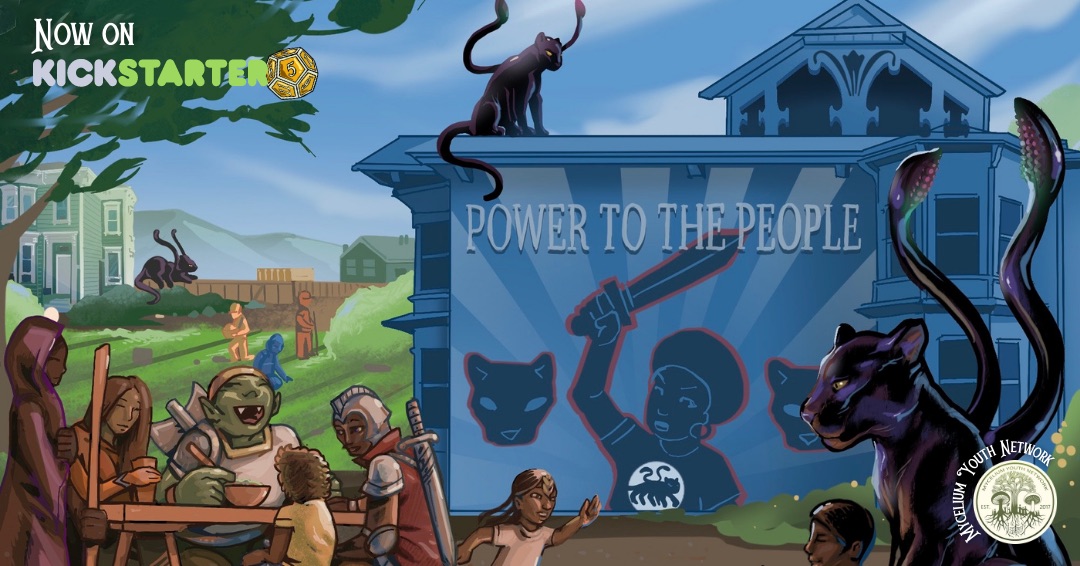
Art depicting a climate-just imaginary world. Art: Mycelium.
Whether it’s air pollution, rising sea levels, or gentrification, problems that exist within Myc-U are also real world problems. (A game played at the Exploratorium in August 2022 focused on clean air in a port city like Oakland.) But unlike the real world, this imagined world knows no bounds, giving players more creative freedom to uncover answers to the most pressing social and climate issues.
Brown says that by allowing players to approach intense climate justice topics through something as fun and light-hearted as a game, not only is creativity awakened, but a sense of hope is injected back into the climate movement.
“It’s an intentional space to create joy where there’s emotional catharsis, where [players] can speak more easily about how they’re feeling,” says Brown.
This imaginative space, says Brown, has allowed young players to flourish. Not only have students shown expressiveness and engagement while playing the games, but she has also witnessed the building of several skills, like collaboration, confidence, and empathy.
These essential skills, combined with historical knowledge and a limitless imagination, are the perfect recipe for players and people to collectively dream up and build a more climate-just world.
For Brown, this is perhaps the most important objective of the games: “We want to create a solution together.”
Other Recent Posts
Regional Housing Agency Invests in Affordability
The Bay Area Housing Finance Authority is launching a loan program to support the construction of mixed-income rental properties.
The End is Coming for California’s Untouchable Grass
The law, which applies to grass that isn’t used for recreational purposes, could cut urban water use across California by more than 20% says Oakland thinktank.
Sonoma Vineyard Workers Burn toward a Better Future
A group of immigrant farmworkers are forming a worker-owned cooperative to bring back Indigenous burning practices that used to revitalize the soil.
Los trabajadores de los viñedos de Sonoma queman por un futuro mejor
Un grupo de trabajadores agrícolas inmigrantes está formando una cooperativa de propiedad de los trabajadores para recuperar las prácticas indígenas de quema que solían revitalizar el suelo año tras año.
New Voices Shape Design of Berkeley’s North Basin Strip
Twenty acres of parkland between the highway and the Berkeley shore are slated for a coast-resilient makeover, with input from locals and stakeholders.
It’s Always Sunny In North Fair Oaks
Residents of the unincorporated community launched their second campaign in two years to get the county to care for dying street trees.
Siempre está soleado en North Fair Oaks
Los residentes de la comunidad no incorporada lanzaron su segunda campaña en dos años para lograr que el condado se ocupe de los árboles de la calle que se están muriendo.
Can Nature Help California’s Coast Fight Fire and Floods?
Local and state leaders gather for September summit on how to mainstream nature-based infrastructure.
Guide to Nature-Based Infrastructure Around the Bay Area
Regional leaders are testing eight types of climate adaptation and shoreline flood protection projects that work with nature instead of against it. Here’s an overview.
How Can I Get Clean, Green, Climate-Forward Job Training in the Bay Area?
Looking for a hands-on job working outdoors that actually pays? Here’s a list of training programs.