


Pricing Climate Risk
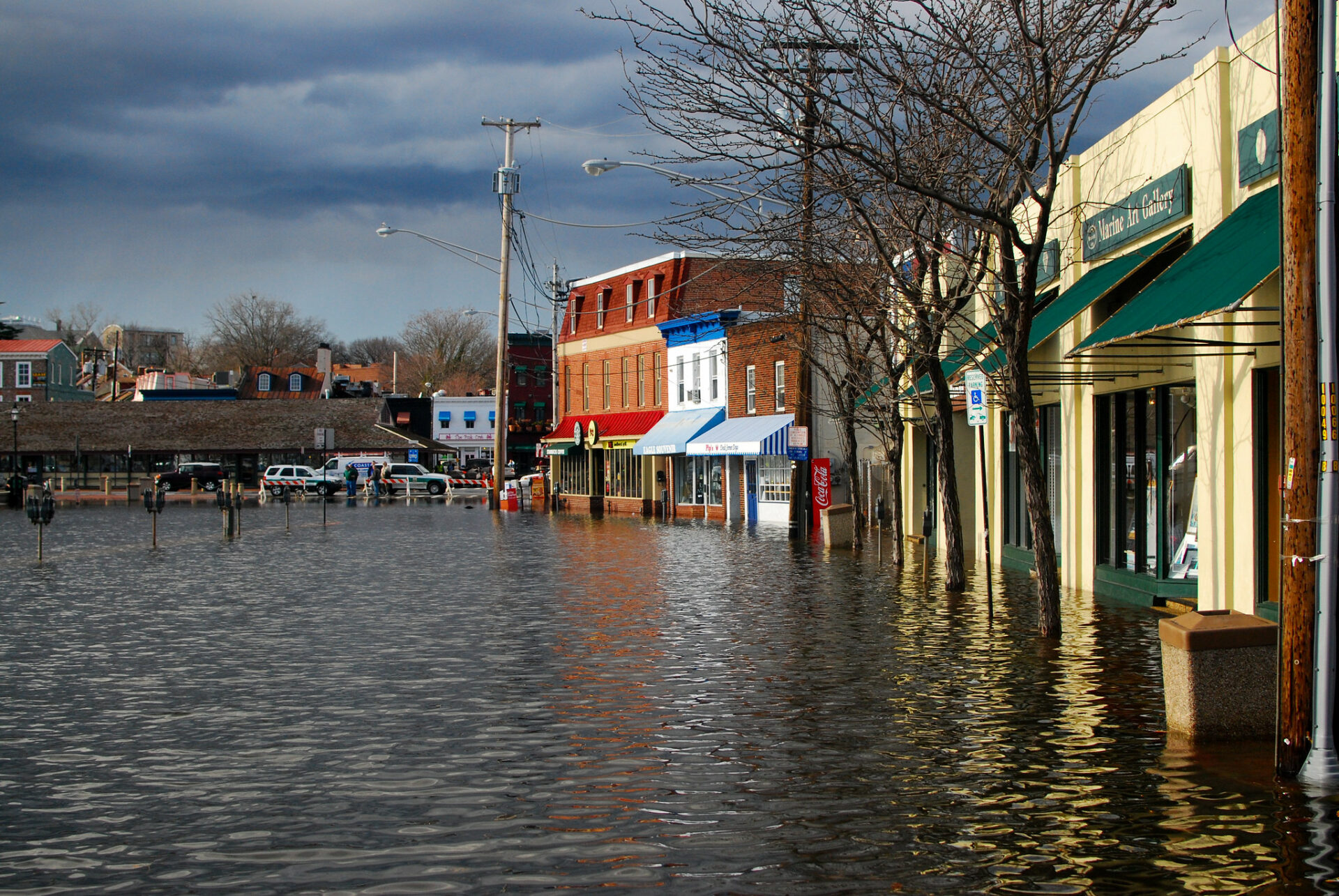
Economics has been called the dismal science. That label might seem to apply in spades to a novel sub-specialty: the art of pricing the risks of climate change, a concern not least to the insurance industry.
To get the basics, you could do worse than to talk to Dag Lohmann. Physics at the U. of Göttingen in Germany. Post-doc in civil engineering at Princeton. Six years with the National Weather Service. Almost eight with a leading risk modeling company, RMS. Ten, and counting, with his own Berkeley firm, KatRisk LLC, focused on various kinds of flooding. Oddly, at the end of that conversation, you might come out feeling just a little less dismal.
Insurance shifts costs from individuals to groups. It also shifts costs from after an untoward event to before. Your auto insurance shares your risk with millions of other drivers, giving each a small load now to protect each against a possibly crushing burden later. Flood and fire insurance, ideally, should work the same way; but the creeping change in climate is changing their arithmetic.
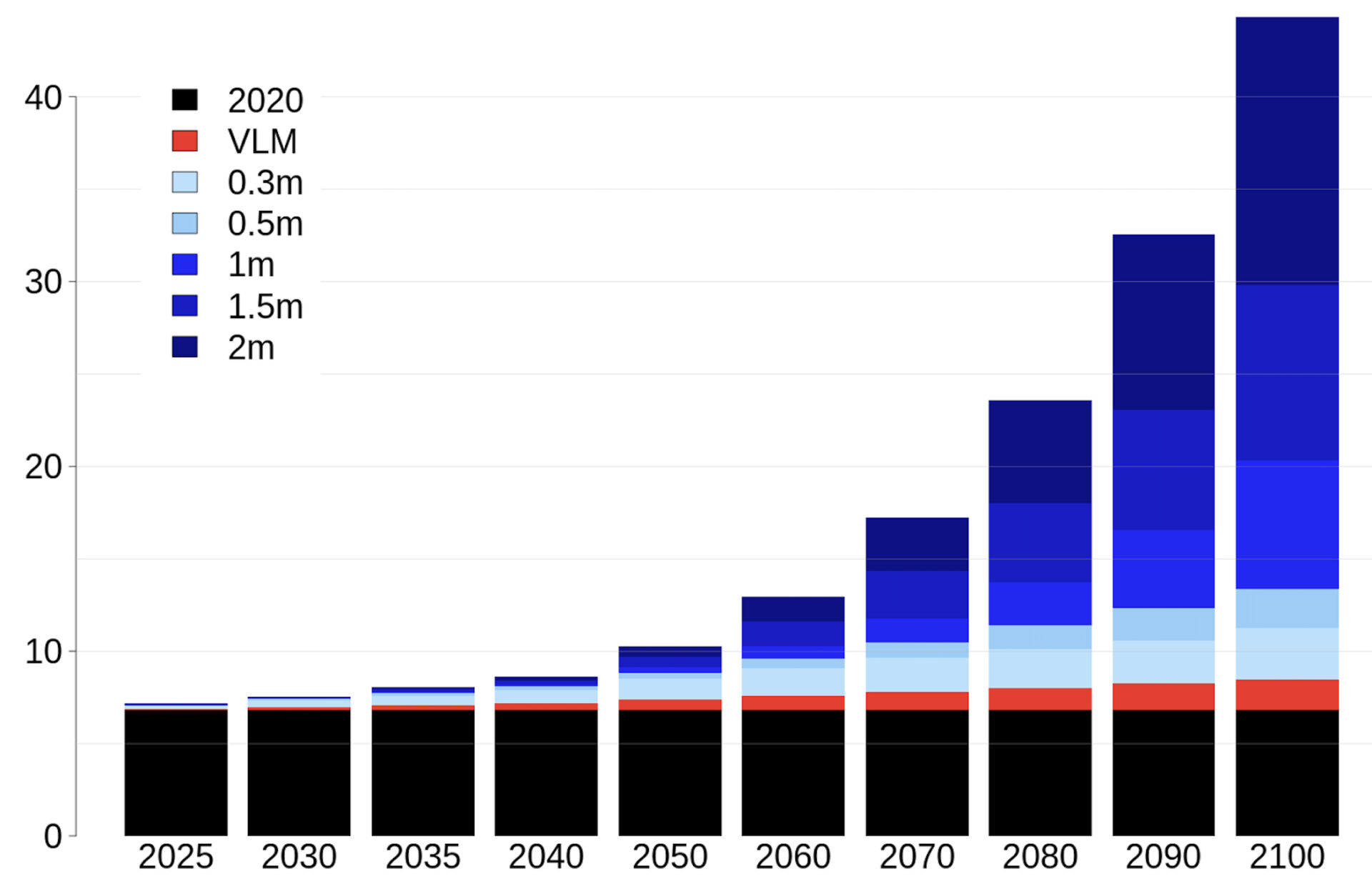
Just how much, and with what financial consequences, is Dag Lohmann’s province. His team knows and applies the latest science. “We’re the middleman between scientists and insurers,” he says. “We rely on research and data from universities and government labs, but do our own simulations.” Lohmann can, for instance, quantify the creep in storm surge losses caused by sea level rise. In the U.S. these are climbing by about half a percent per year, he says, a rate that is sure to increase.
The news is less bad for inland flooding and those seeking insurance against it. Premiums vary wildly nationwide. Some properties should be paying more than they do now for their policies, but many should actually be paying less. Subtle assessments can bring fairer pricing; they can also help in the design of protective measures. Financial players of several kinds may find it prudent to invest in prevention, reducing the cost of cure.
Like big fleas feasting on littler fleas, insurance companies also buy insurance, to cover them against the occasional catastrophic loss; specialized re-insurance companies, with names like Swiss RE and Munich RE, exist to fill this role. A further wrinkle has recently emerged: the packaging of these reinsurance policies as bonds sold to investors—what the trade calls securitization. People with money buy these “catastrophe bonds,” (cat bonds for short), taking the risk of the occasional bath (a risk to be assessed by analysts like Lohmann’s) in return for considerable annual profit.
Other Recent Posts
Regional Housing Agency Invests in Affordability
The Bay Area Housing Finance Authority is launching a loan program to support the construction of mixed-income rental properties.
The End is Coming for California’s Untouchable Grass
The law, which applies to grass that isn’t used for recreational purposes, could cut urban water use across California by more than 20% says Oakland thinktank.
Sonoma Vineyard Workers Burn toward a Better Future
A group of immigrant farmworkers are forming a worker-owned cooperative to bring back Indigenous burning practices that used to revitalize the soil.
Los trabajadores de los viñedos de Sonoma queman por un futuro mejor
Un grupo de trabajadores agrícolas inmigrantes está formando una cooperativa de propiedad de los trabajadores para recuperar las prácticas indígenas de quema que solían revitalizar el suelo año tras año.
New Voices Shape Design of Berkeley’s North Basin Strip
Twenty acres of parkland between the highway and the Berkeley shore are slated for a coast-resilient makeover, with input from locals and stakeholders.
It’s Always Sunny In North Fair Oaks
Residents of the unincorporated community launched their second campaign in two years to get the county to care for dying street trees.
Siempre está soleado en North Fair Oaks
Los residentes de la comunidad no incorporada lanzaron su segunda campaña en dos años para lograr que el condado se ocupe de los árboles de la calle que se están muriendo.
Can Nature Help California’s Coast Fight Fire and Floods?
Local and state leaders gather for September summit on how to mainstream nature-based infrastructure.
Guide to Nature-Based Infrastructure Around the Bay Area
Regional leaders are testing eight types of climate adaptation and shoreline flood protection projects that work with nature instead of against it. Here’s an overview.
How Can I Get Clean, Green, Climate-Forward Job Training in the Bay Area?
Looking for a hands-on job working outdoors that actually pays? Here’s a list of training programs.
When Hurricane Katrina struck the Gulf Coast in 2005, a specialized fund called Kamp Re took a heavy hit and dissolved. Its investors lost about three quarters of their money. But Kamp Re did pay its insurance company clients, and those companies in turn paid the individual policy holders. In a sense, the system can be said to have worked, shifting cost from those least capable to those most capable of paying.
Katrina dramatized the need for better risk assessment, but it did not dampen the rise of “cat bonds.” The National Flood Insurance Program (the nation’s largest single-line insurance program) issues quantities of these, and KatRisk is right there, acting as “calculation agent” for the last five rounds of bonds. The company has thus helped shift more than $1 billion in hurricane risk from NFIP to the capital markets, Lohmann says.
In California, far from hurricane country, the flood risks tend to be more chronic than dire. The typical problem here is different: too few of us can find affordable insurance, making post-disaster recovery hard. The community benefit insurance concept (see “Overhauling Insurance” below) is a possible fix, applicable also to fire. Earthquakes are another matter, where the catastrophe bond concept might apply.
So here is an industry, not known for altruism, doing its part to wrestle with huge societal problems. This is surely encouraging, up to a point. But as climate weirdness mounts, there will be more and more situations where the insurance model is simply obsolete. “Over what time frames,” Lohmann asks, “might insurance not be possible anymore in parts of Louisiana or Florida?”
The story has its dismal side, after all.
Average annual loss to storm surge from Atlantic hurricanes in billions of dollars under different global sea level rise scenarios in meters by the year 2100. The analysis translates government data (the latest NOAA sea level rise projections) into financial losses. (VLM = vertical land movement, largely from Louisiana and Florida sinking.) Source: KatRisk.