


Plants Facilitate Transition to Higher Water
Courtesy Save The Bay
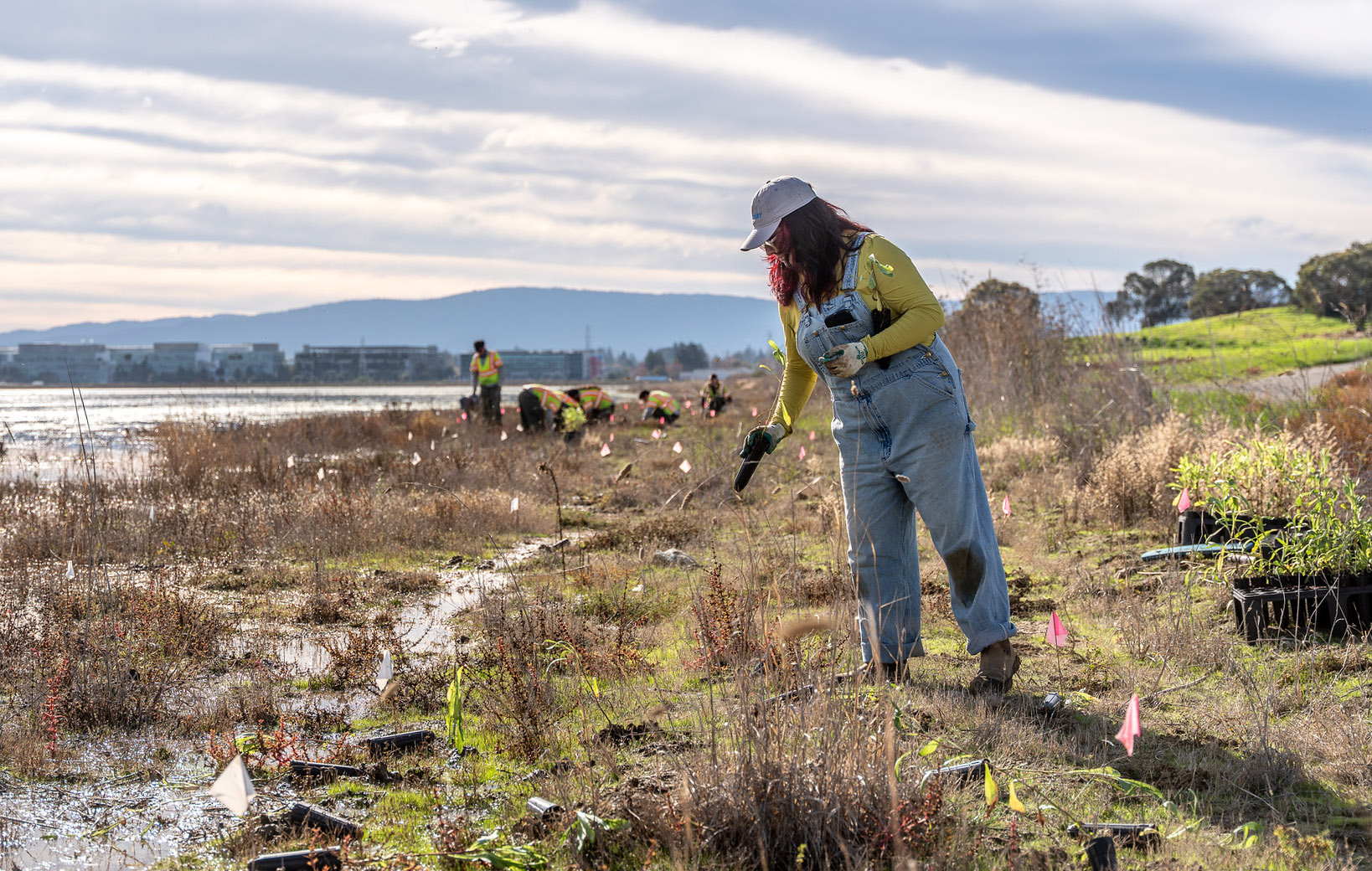
This winter, crews with the nonprofit Save The Bay weeded more than two dozen acres of land near Bedwell Bayfront Park in Menlo Park. The workers were maintaining a “habitat transition zone,” sometimes called an “ecotone” or a “horizontal levee.” It’s an area where ecosystems meet and meld. In Menlo Park, it’s where rehabilitated tidal marshes merge with the land.
These transition zones, built from packed dirt and rocks and vegetated by organizations like Save The Bay, provide a natural buffer against erosion, as well as habitat for local wildlife.
“The ideal situation is that we get the right amount of native plant material out onto the slope during the right time of year, and we only have to do like three to five years of weeding and maintenance,” says Save The Bay’s Habitat Restoration Director Jessie Olson.
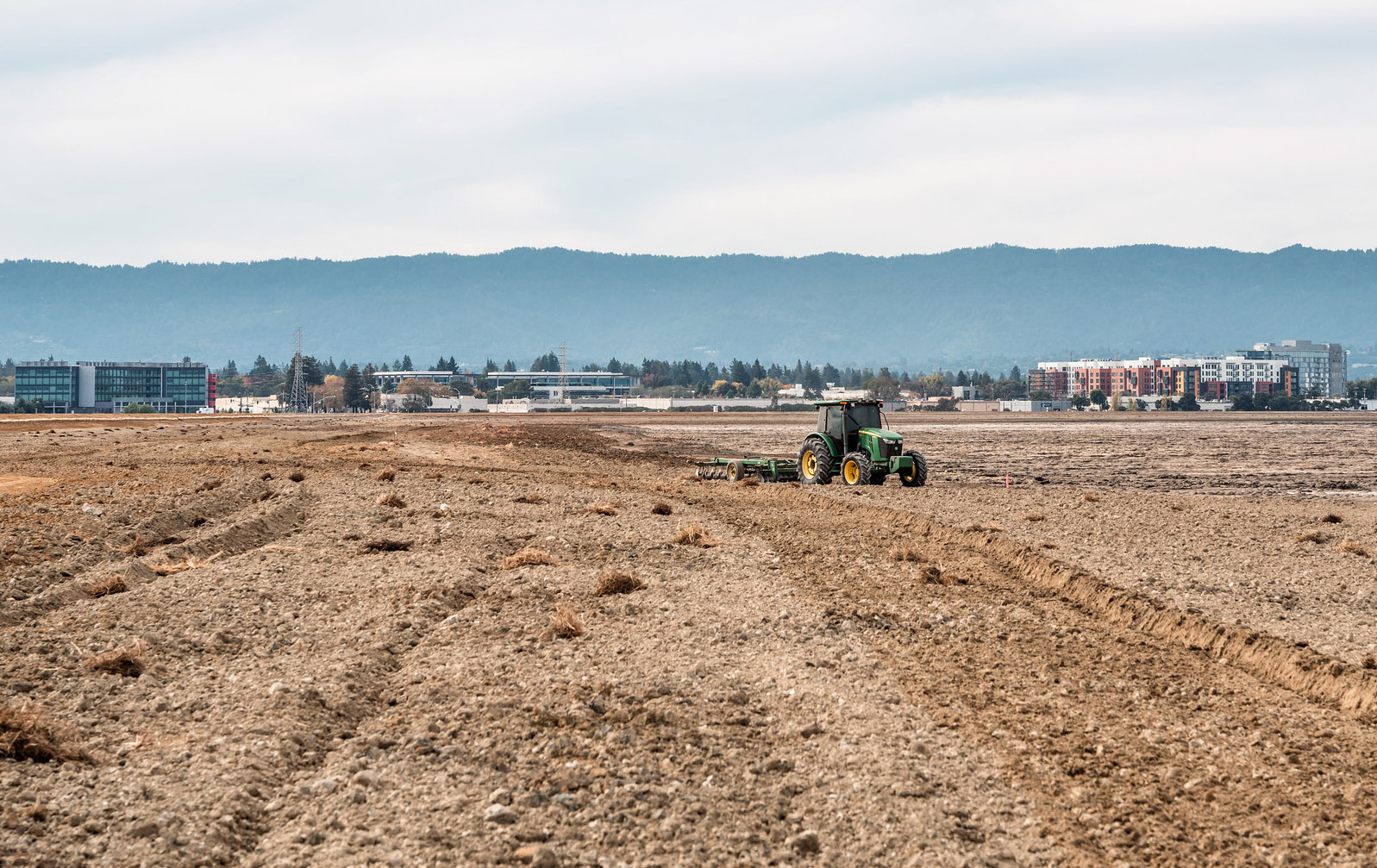
A tractor mixes plant material into a transition zone along the All-American Canal in the Ravenswood pond complex. Courtesy Haymar Lim
Other Recent Posts
Regional Housing Agency Invests in Affordability
The Bay Area Housing Finance Authority is launching a loan program to support the construction of mixed-income rental properties.
The End is Coming for California’s Untouchable Grass
The law, which applies to grass that isn’t used for recreational purposes, could cut urban water use across California by more than 20% says Oakland thinktank.
Sonoma Vineyard Workers Burn toward a Better Future
A group of immigrant farmworkers are forming a worker-owned cooperative to bring back Indigenous burning practices that used to revitalize the soil.
Los trabajadores de los viñedos de Sonoma queman por un futuro mejor
Un grupo de trabajadores agrícolas inmigrantes está formando una cooperativa de propiedad de los trabajadores para recuperar las prácticas indígenas de quema que solían revitalizar el suelo año tras año.
New Voices Shape Design of Berkeley’s North Basin Strip
Twenty acres of parkland between the highway and the Berkeley shore are slated for a coast-resilient makeover, with input from locals and stakeholders.
It’s Always Sunny In North Fair Oaks
Residents of the unincorporated community launched their second campaign in two years to get the county to care for dying street trees.
Siempre está soleado en North Fair Oaks
Los residentes de la comunidad no incorporada lanzaron su segunda campaña en dos años para lograr que el condado se ocupe de los árboles de la calle que se están muriendo.
A vegetating project’s location, size, and function dictates which species are planted at a site and how. For smaller lots, volunteers and staff will handplant specimens grown in nurseries around the Bay, says Olsen. But for the larger transition zones, this approach can be too expensive and time intensive. In Menlo Park, Save The Bay hired a local farmer to mechanically churn plant material into the soil. Native seed mixes, made up of species like tarweeds and fiddlenecks, are also scattered all over the site.
This year, Save The Bay will be vegetating a 16-acre habitat transition zone that separates a tidal marsh and a landfill in Mountain View.
But no matter the technique or the location, the primary goal is the same: to increase the likelihood that perennials — plants whose life cycles last multiple years — settle on the slopes. Even better is when those perennials are rhizomatous, meaning they propagate through their underground stem system. Local examples include some species of pickleweed and western ragweed.
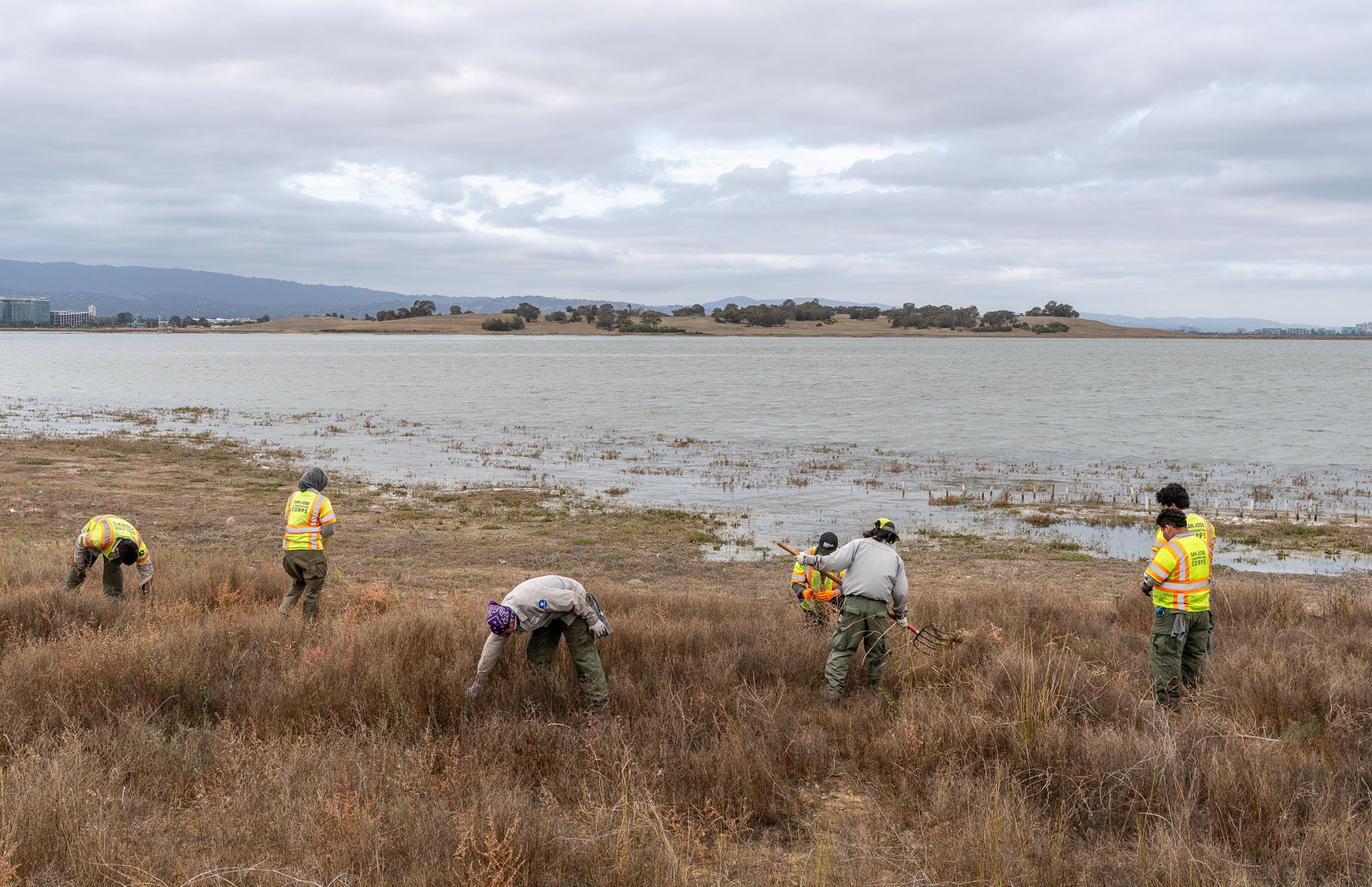
San Jose Conservation Corps members remove invasive species growing in the habitat transition zone in the Ravenswood pond complex. Courtesy Haymar Lim
“They are able to tolerate a lot more drought and tough conditions, possible erosion,” making them particularly useful in protecting infrastructure like trails, says Olson. “They really hold these slopes together and take up space and provide habitat to native annual and insect species year-round.”
Their adaptation ability also means they’re better at withstanding sea level rise, as they can grow up the slope, Olson says.
But perennials can take a few years to establish themselves, so annuals — plants that last a single year — are also added to the slopes to combat the spread of invasives in the short term. Still, the slopes need to be maintained and weeded of persistent non-native species, such as mustard and Russian thistle, for the first few initial years to give the native species a chance to take hold.
And though most of the species planted thrive in the Bay’s brackish water, projects like Palo Alto’s wastewater treatment horizontal levee introduce water that’s significantly less salty to the slope, so freshwater plants are needed. The result is species native to the tidal marsh growing alongside plants from riparian wetlands like sedges and willows, according to Olson.
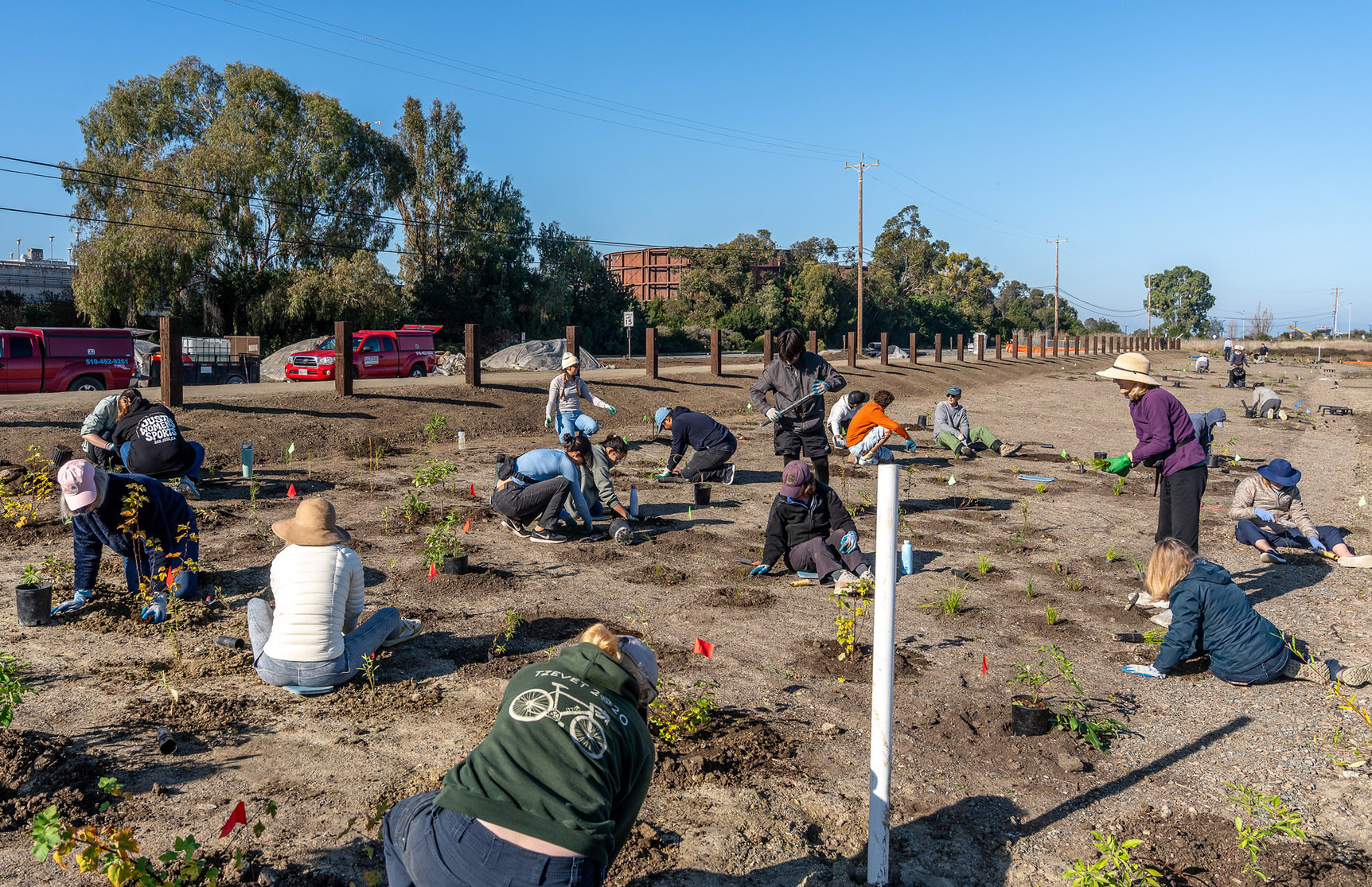
Volunteers working with Save The Bay staff plant native species on the Palo Alto horizontal levee in December 2025. Courtesy Haymar Lim
To give native plants their best shot at flourishing across any project, they’re typically spread on slopes in the fall, when they’re “naturally dormant” and there’s less rain, Olson explains. Then the wet season comes, and they start putting out new shoots.
“Once they get healthy root systems, they’re set,” Olson says. “They can take off.”
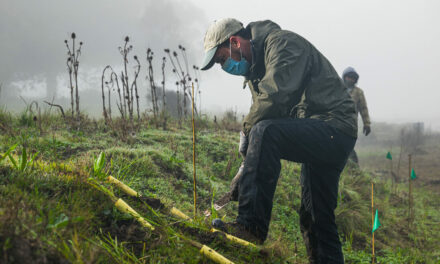
Top Photo: Save The Bay staffer Danielle Perez Garcia lays out containers of native species for planting on a habitat transition zone in the Ravenswood pond complex by Bedwell Bayfront Park in Menlo Park. Courtesy Save The Bay.