


Meet the Oakland Biologist Making Native Plants Go Viral

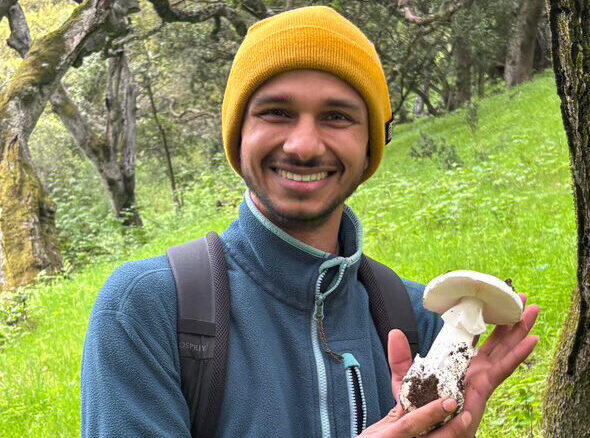
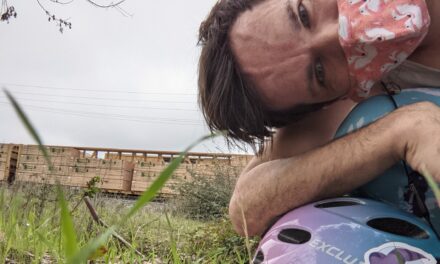
Saumitra Kelkar proudly displays a mushroom. Photo: Courtesy Saumitra Kelkar
From starting an ant colony at home to teaching in Hawaii, Saumitra Kelkar has seen it all.
Kelkar, a UC Berkeley alum and biologist, lives in Oakland and works on native plant landscaping around the city. He’s also a part-time environmental consultant and a former environmental biology teacher at Skyline High School.
As an ecology and biodiversity expert, he also likes sharing his knowledge on the internet. Online, he goes by the username “Oakland.bio,” and he’s cultivated a community of like-minded individuals interested in learning more about biodiversity by posting videos on Instagram.
But Kelkar didn’t take the typical “climate influencer” route to popularity. He started the account during his time as a teacher, which had its ups and downs. Before working at Skyline High, he taught biology in Hawaii, where he noticed a big difference in the environmental science curriculum.
“In traditional Hawaiian culture, people do not see themselves as separate from the land of the living processes that sustain life,” Kelkar says. But teaching in Oakland, “it felt almost impossible to build a relationship between students and the natural world.”
In response to a limited curriculum, a few of his students suggested that he start an Instagram account to share biology-related content. “Taking a video makes things feel more alive to people,” he says. But it wasn’t until he quit his job as a teacher that he regularly started uploading reels. To his pleasant surprise, his first video that blew up was about grass.
Other Recent Posts
Plants Facilitate Transition to Higher Water
Save The Bay is restoring habitat transition zones with native plants to accommodate rising sea levels and support wildlife.
Hundreds Protest Proposed Cuts to San Francisco Environment Department
Mayor Daniel Lurie’s office has introduced sweeping budget cuts for the next fiscal year, including reduced support for climate action.
El Cerrito Bets on Car-Free Living
An East Bay city is building more than 700 housing units on BART parking lots.
The Nuances of Tapping North Bay Sediment Supplies
How Adobe Creek and the Petaluma River can help three parcels, including a popular park, evolve into one resilient shore.
Mountain View’s Shoreline Gets Serious SLR Attention
After four breaches, imports of clean fill, and the addition of rocks, bird islands and bridges the South Bay’s Shoreline Park has more climate resilient environs.
Adaptation Atlas
Thirty places to focus on nature-based adaptation around the Bay’s 400-mile shoreline.
Agroecology Commons Weathers a Weird Winter and Political Storms
A year after our first Agroecology Commons visit, the El Sobrante farm has a new greenhouse foundation, thriving farmer training program, and some unexpected wildlife.
Kelkar grew up in the suburbs of Southern California in Los Angeles County. He describes his surroundings as “baking hot all the time.” The environment seemed to suck the life out of nature.
“The landscape is super manicured,” he says. “They don’t even let the weeds grow on the sidewalks. There’s no nature anywhere.”
But this all changed when he moved to the East Bay to attend UC Berkeley. Suddenly, there was life blossoming all around him. There, he connected with other people passionate about the environment. Studying at the College of Natural Resources, the support he received from the community encouraged him to pursue a hands-on career in the environmental field.
Kelkar’s love for biology has led to a growing passion for photography and linguistics. When he started identifying plant species in his community, he paired the experience with a camera to capture close-up shots of his discoveries.
But visuals can only reveal so much. He believes learning the scientific names of different plant species has “helped me learn a lot more about each species. The species becomes so much more than it is named. [We] develop a more intimate and honest relationship with the creature itself that is less tainted by the words we assigned to that creature.”
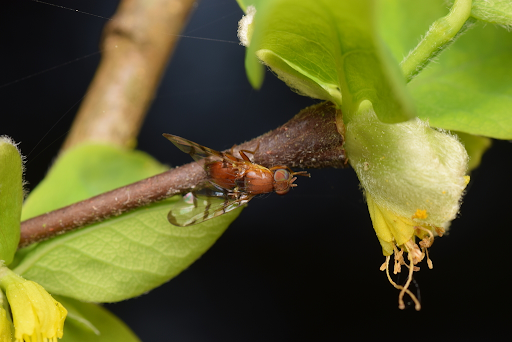
An insect on a branch of Western leatherwood, a rare plant found in only a few Bay Area locations. Photo: Saumitra Kelkar
For many professionals, biology is not just a career, but a way of life. For Kelkar, it’s an “all encompassing experience to be so intimately connected with everything in the living world around you.”
In Oakland, invasive species pose an immediate threat to the city’s biodiversity. “The vast majority of species in any ecosystem are highly dependent on specific host species that they evolved symbiotic relationships with. So when you remove native plants from the landscape, you are also removing the symbiotic relationships and required associations with the plants,” explains Kelkar. But people don’t necessarily have the education necessary to advocate for the preservation of plants and trees native to their local environments.
“Even most of the people who care about the right things don’t know enough about their local environment to care effectively, because every environment is very locally specific,” Kelkar says. It’s not a lack of intent, but rather a lack of local resources that proves challenging, he adds. He plans to tackle such issues with the help of his Instagram platform.
To support native plants, Kelkar encourages people to join existing local organizations. Friends of Sausal Creek, for example, has been active in Oakland for decades now and has successfully restored native plant communities. In Oakland, he recommends planting native trees like the California buckeye, Oregon ash, and white elder. But always research the species native to your community first, he says.