

Gleaning in the Giving Season
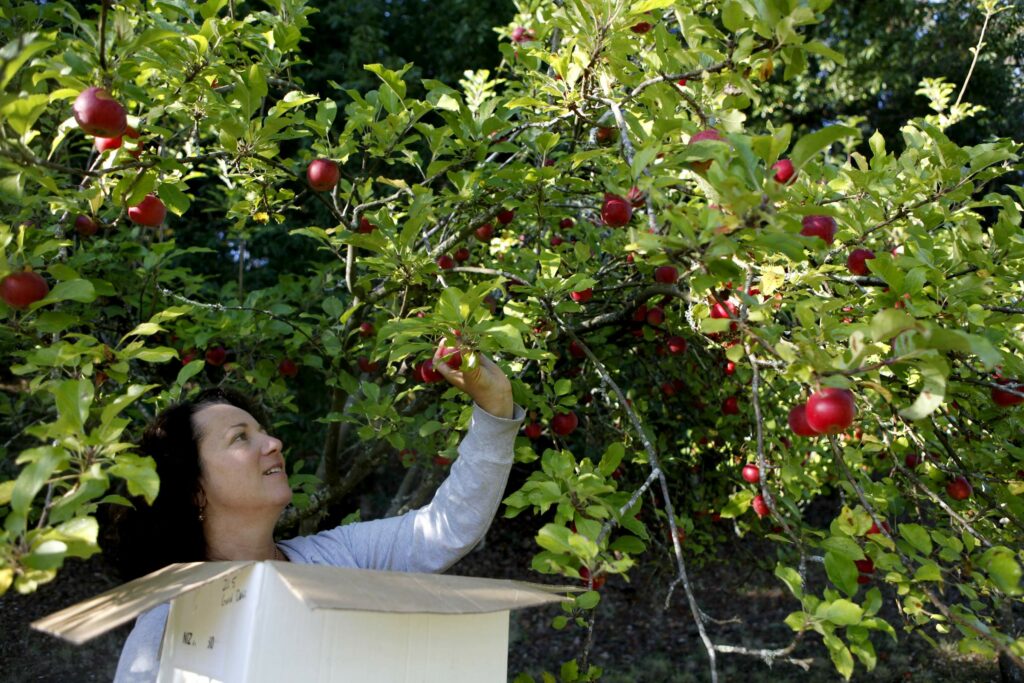
A Farm to Table volunteer gleans apples. Photo: Karen Preuss
Kay Austin grew up on a farm in Wisconsin. Seeing grapes left on the vine and going to waste breaks her heart. “Gleaning is absolutely necessary,” says the North Bay chef, one of hundreds of volunteers who glean unused crops to donate in Sonoma County. “But as far as vegetables, that’s a crime if they’re left in the fields,” she says.
For millennia, people have gleaned food left behind in fields after the harvest. Modern-day gleaners continue the practice, providing fresh produce to people in need while also building climate resilience.
The practice offers volunteers tangible climate action: About one-third of food produced in the United States is wasted, producing an estimated 170 million metric tons of carbon dioxide. In California, research shows that about 33% of crops are left in the field to rot, contributing to more than 50% of methane emissions in landfills, according to the Environmental Protection Agency. Methane traps far more heat than carbon dioxide, making it a more potent contributor to warming temperatures.
Sonoma nonprofit Farm to Pantry gleans unharvested produce from local farms, vineyards, and backyards to distribute to people who need it at low-income apartments, community centers, senior centers, and community health clinics.
Volunteer Kris Richmond of Windsor has always grown food for her family and to share with neighbors. For 20 years, she has worked in food security for local food banks in Mendocino and Sonoma counties. But when she started gleaning with Farm to Pantry, she discovered just how abundant local farms, vineyards, and backyards are. “When we organize ourselves around abundance, there’s enough for everybody,” she says.
Other Recent Posts
Plants Facilitate Transition to Higher Water
Save The Bay is restoring habitat transition zones with native plants to accommodate rising sea levels and support wildlife.
Hundreds Protest Proposed Cuts to San Francisco Environment Department
Mayor Daniel Lurie’s office has introduced sweeping budget cuts for the next fiscal year, including reduced support for climate action.
El Cerrito Bets on Car-Free Living
An East Bay city is building more than 700 housing units on BART parking lots.
The Nuances of Tapping North Bay Sediment Supplies
How Adobe Creek and the Petaluma River can help three parcels, including a popular park, evolve into one resilient shore.
Meet the Oakland Biologist Making Native Plants Go Viral
Saumitra Kelkar shares videos about local biodiversity and native plants through his account, Oakland.bio.
Mountain View’s Shoreline Gets Serious SLR Attention
After four breaches, imports of clean fill, and the addition of rocks, bird islands and bridges the South Bay’s Shoreline Park has more climate resilient environs.
Adaptation Atlas
Thirty places to focus on nature-based adaptation around the Bay’s 400-mile shoreline.
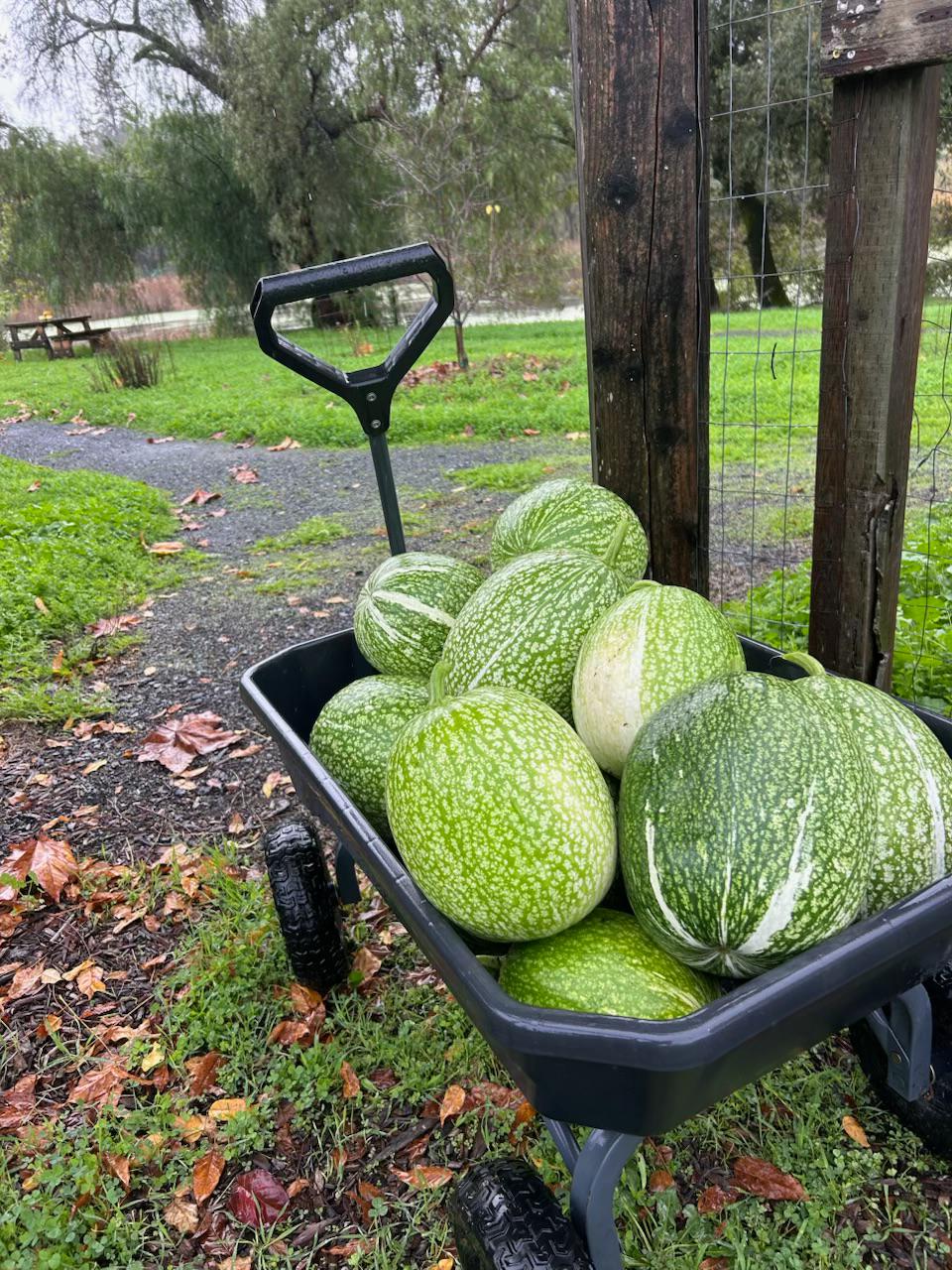
Kris Richmond grew figleaf gourds on her property this year for Farm to Pantry gleaners. Photo: Kris Richmond
Richmond embraced the gleaning model because food “goes directly to people, to nourish people who need it.”
“I like this model. This is even more direct than the model that I was working with at the food bank,” she says. “It’s about mutualism, and it’s about all of us, and so it’s an investment in the community that sustains me, too.”
It’s also about condensing the distribution footprint, conserving resources, and minimizing emissions. “What I grow here goes into my car, and I drive a mile to give it to the pantry that then drives another mile to distribute it, versus getting the squash and the produce from Mexico or soybeans from the Midwest,” she adds.
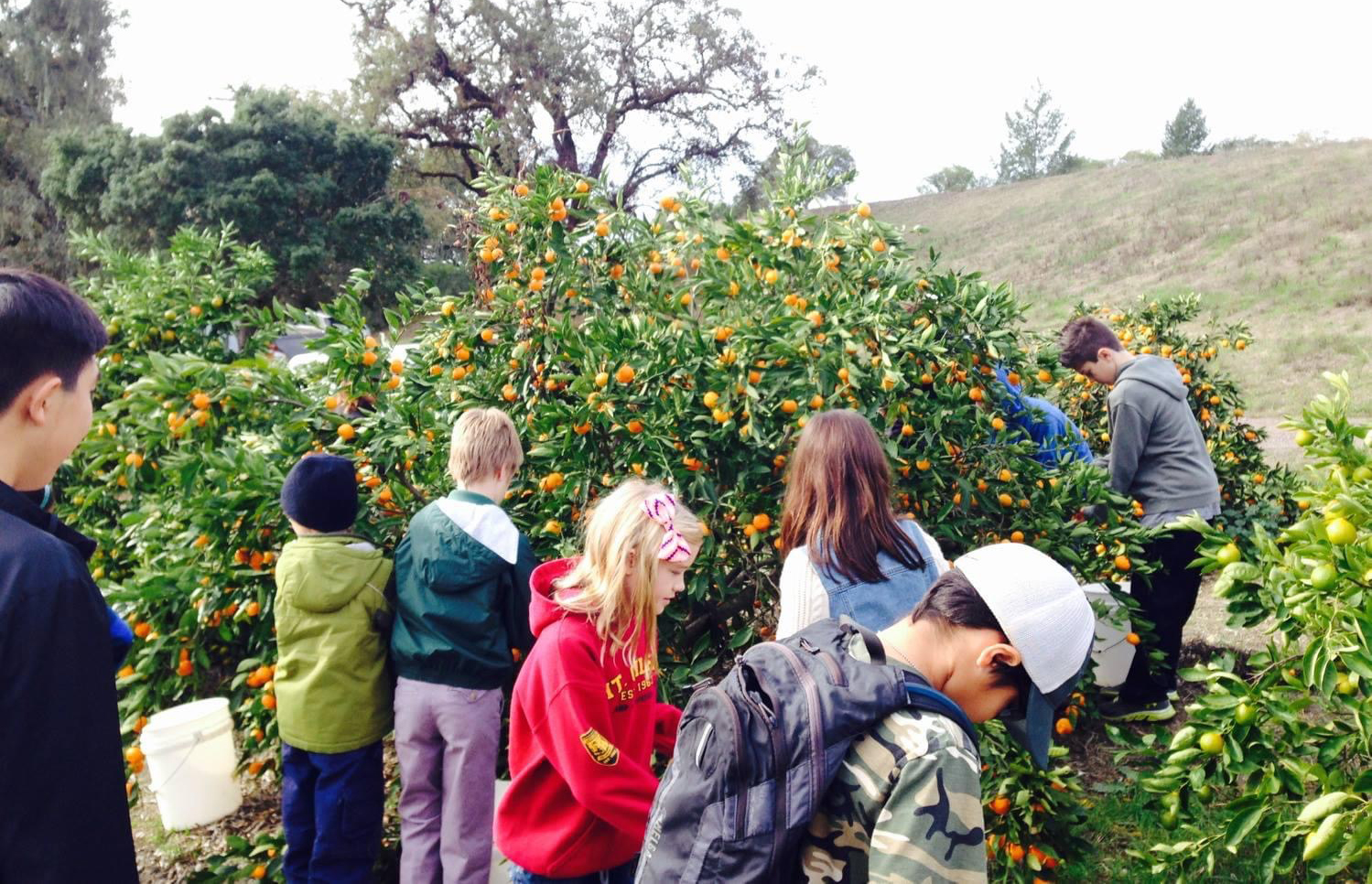
A group of students gleaning citrus. Photo: Kelly Conrad
Sonoma is a farmworker community, says Rosa Gonzales, executive director of Farm to Pantry. But the people who grow, harvest, and package the local produce don’t have access to healthy, nutritious food, she says.
Melita Love founded Farm to Pantry in 2008. “She saw the bounty, the abundance of fruit out in the community, but then she also saw the lack — community members [who don’t] have access to healthy, fresh food,” says Gonzales. “She would go on walks, and she would see just this food on the floor rotting, but then also community members who didn’t have access.”
Researchers can quantify methane emissions from food waste, Gonzales says. But “what’s not always measurable is the farmers’ time, the water that irrigated this food, and all of the effort spent to grow the food. [To] come that far and then have it wasted, that’s the real loss, in my mind — is all of that energy that went into growing the food and the waste of water and resources.”
David Parr, a business consultant in Sonoma, has donated lemons to Farm to Pantry and vegetables from his gardens to the Rotary Club, which forwards the donated produce to people in need.
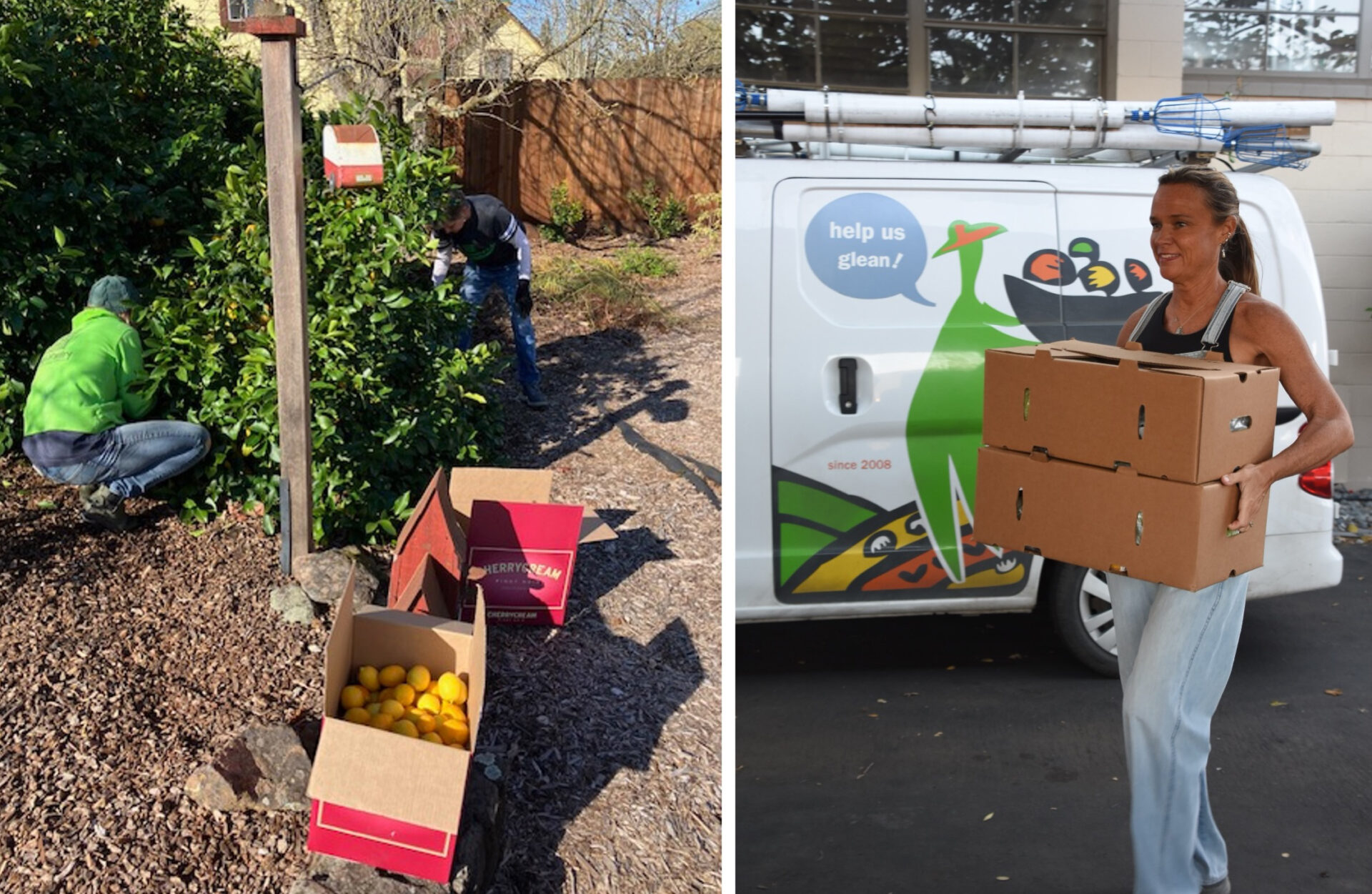
[L] David Parr grows lemons, tomatoes, carrots, onions, green beans, squash, zucchini, strawberries, raspberries, blackberries, plums, nectarines, and peaches on his half-acre property. Photo David Parr. [R] Farm to Pantry Outreach Director Kelly Conrad loads boxes of gleaned produce for distribution. Photo: Karen Preuss
“I’m 84 years old and don’t get up ladders anymore,” he says, but he loves to get his hands in the dirt of his eight raised beds. For Parr, gleaning mitigates the high cost of resource distribution. “So much goes to waste. And so the whole thing about resource distribution, that’s where I see it, and we haven’t understood that yet.”
“I don’t know of anything other than gleaning that gets [food] to where it needs to go before it rots,” adds Kelly Conrad, outreach director for Farm to Pantry.
Gleaning contributes to climate resilience in the form of food security and strengthening the community. Richmond understands this mutualism, or “beneficialism,” as she likes to call it, as a form of food security in a changing climate.
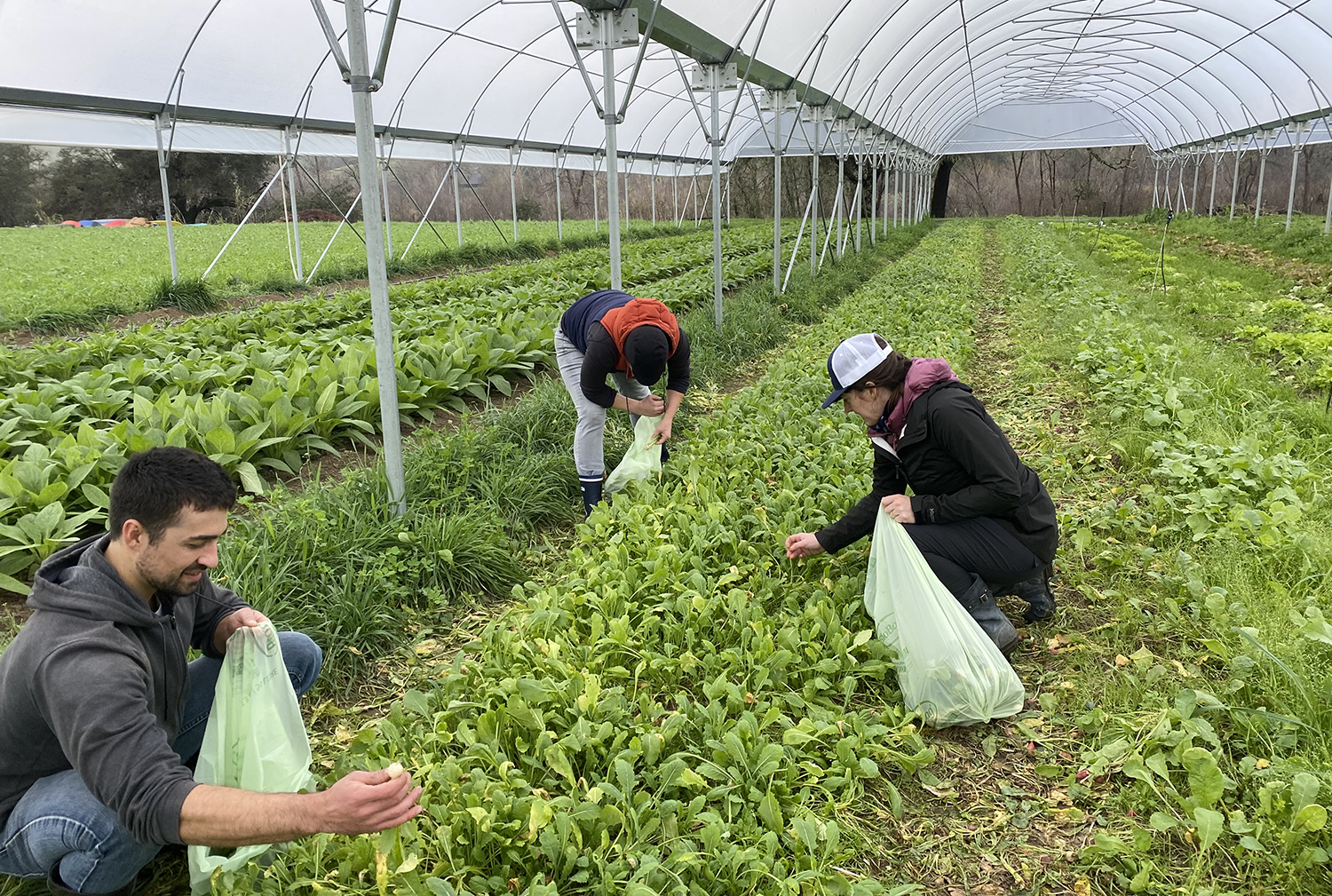
Gleaning a greenhouse. Photo: Karen Preuss
“Mutualism: I get the benefits of the social structure, shared relationships, and my own social and food security for me down the line,” she says. “Or in an event when we have a drought or whatever, we’re all sharing and we’re all connected.”