



Growing Better Tomatoes with Less Water
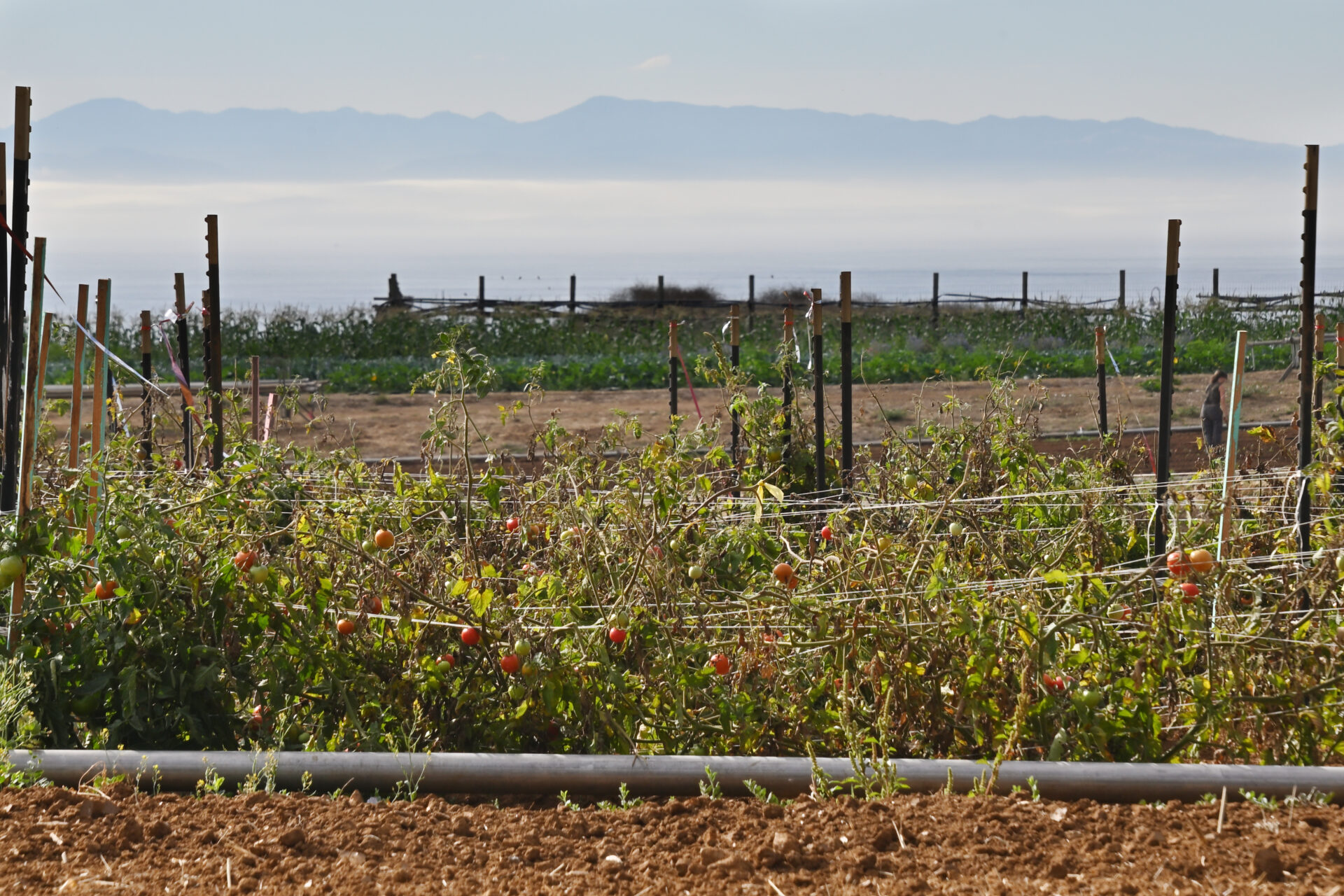
Dry-farmed tomatoes in a UC Santa Cruz trial in 2025. Photo: Mark DeGraff
If you visit any Bay Area farmers’ market during the dog days of summer, odds are you’ll find bins labeled “dry-farmed tomatoes.” The red, golf-ball sized tomatoes grow and ripen during the summer drought without a single drop of water. And scientists still don’t know how they manage to thrive on neglect.
Researchers at the University of California, Santa Cruz are looking for the keys to this local crop’s resilience. This year, they grew 10 tomato varieties side-by-side to see which ones produce best with and without supplemental water. Conventional farmers in California currently use roughly a gallon of water to produce a typical 3-ounce tomato.
Jarmila Pittermann, a UCSC biologist working on the project, says the idea emerged from a chance encounter.
“I was walking through the farm one day with the director of the Center for Agroecology, and he pointed at some neglected plants and said, ‘I don’t know what the hell they’re doing. They just make tomatoes out of thin air,’” Pittermann recalls.
Californians have dry-farmed tomatoes since at least the 1980s, when Central Coast growers realized that the cool ocean breeze sustained tomatoes through the rainless summer. The practice spread from farmer to farmer, and the drought-sweetened tomatoes developed a cult following at farmers’ markets. While beans, squash, and even apples can take well to dry-farming, tomatoes and wine grapes are the most popular choices in California because there’s less water in the fruits to dilute their flavor.
As part of the study, Pittermann and her colleagues last summer grew tomatoes at the edge of mountains overlooking Monterey Bay. To make use of the scarce soil moisture, they set their plants eight inches beneath the soil’s surface in widely-spaced rows. About three months later, red, orange, and even black tomatoes weighed down many of the plants.
Other Recent Posts
Regional Housing Agency Invests in Affordability
The Bay Area Housing Finance Authority is launching a loan program to support the construction of mixed-income rental properties.
The End is Coming for California’s Untouchable Grass
The law, which applies to grass that isn’t used for recreational purposes, could cut urban water use across California by more than 20% says Oakland thinktank.
Sonoma Vineyard Workers Burn toward a Better Future
A group of immigrant farmworkers are forming a worker-owned cooperative to bring back Indigenous burning practices that used to revitalize the soil.
Los trabajadores de los viñedos de Sonoma queman por un futuro mejor
Un grupo de trabajadores agrícolas inmigrantes está formando una cooperativa de propiedad de los trabajadores para recuperar las prácticas indígenas de quema que solían revitalizar el suelo año tras año.
New Voices Shape Design of Berkeley’s North Basin Strip
Twenty acres of parkland between the highway and the Berkeley shore are slated for a coast-resilient makeover, with input from locals and stakeholders.
It’s Always Sunny In North Fair Oaks
Residents of the unincorporated community launched their second campaign in two years to get the county to care for dying street trees.
Siempre está soleado en North Fair Oaks
Los residentes de la comunidad no incorporada lanzaron su segunda campaña en dos años para lograr que el condado se ocupe de los árboles de la calle que se están muriendo.
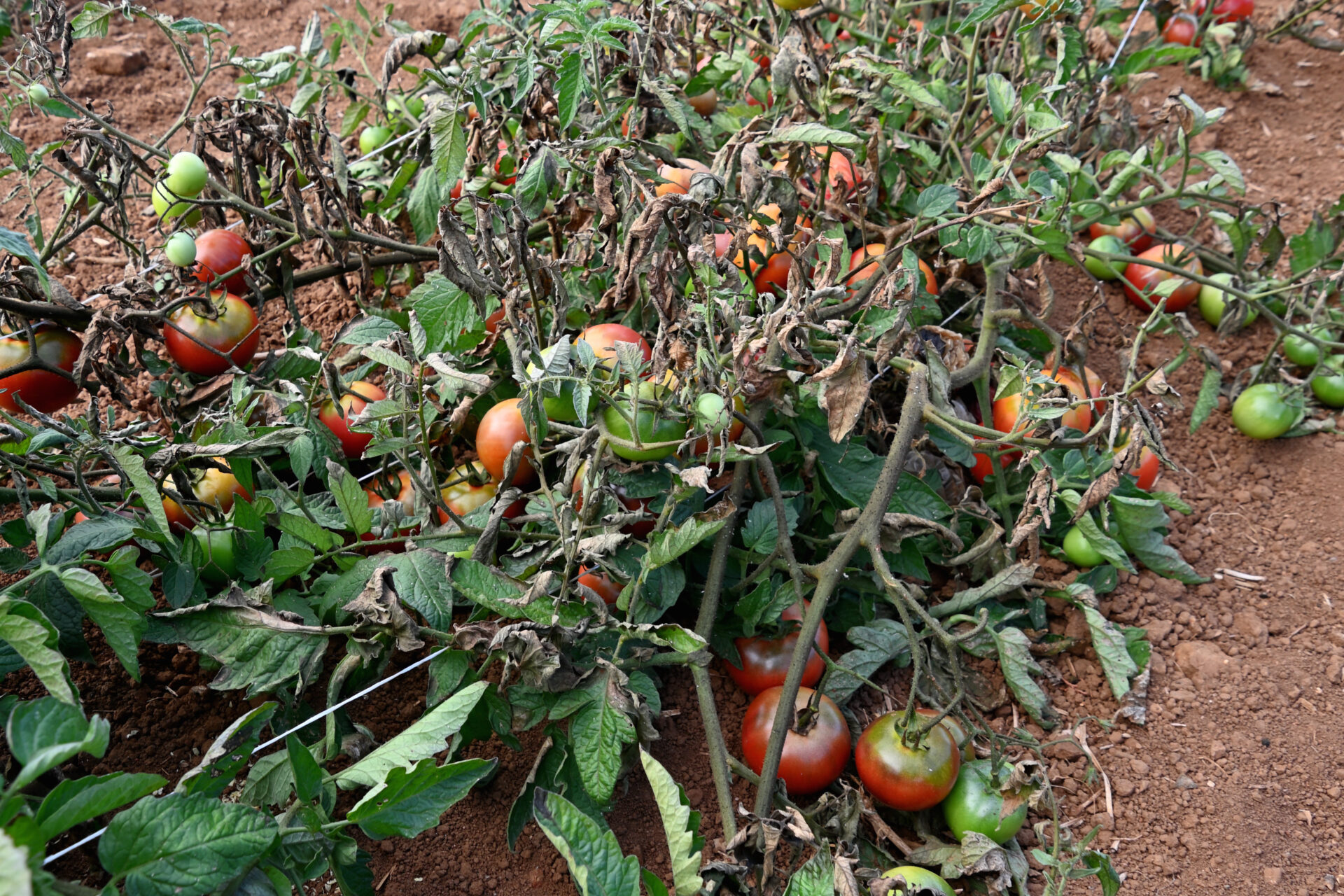
Estivia’ variety tomatoes ripening at the UC farm in September 2025. Photo: Mark DeGraff
The yield per acre of dry-farmed tomatoes is about one-fifth of conventional California tomatoes. Many Bay Area farmers believe dry-farming is still profitable, however, because the flavorful tomatoes fetch higher prices.
But the “dirty girl” tomato, bred from the popular ‘early girl’ variety, bucks the typical relationship between yield and water. It actually makes more tomatoes when dry-farmed, this year’s trial at UCSC revealed. “We speculate that this may be due to deep rooting under dry-farmed conditions,” says Viridiana Castro, a doctoral student in Pittermann’s lab. Their roots can reach eight feet beneath the soil’s surface as they search for moisture.
Most of the dry-farmed tomatoes in California come from “Dirty Girl” or its close relatives. While they thrive on the morning fog common in California, these tomatoes often struggle when farmers try to replicate the practice in Oregon’s Willamette Valley, where summers are hotter and drier.
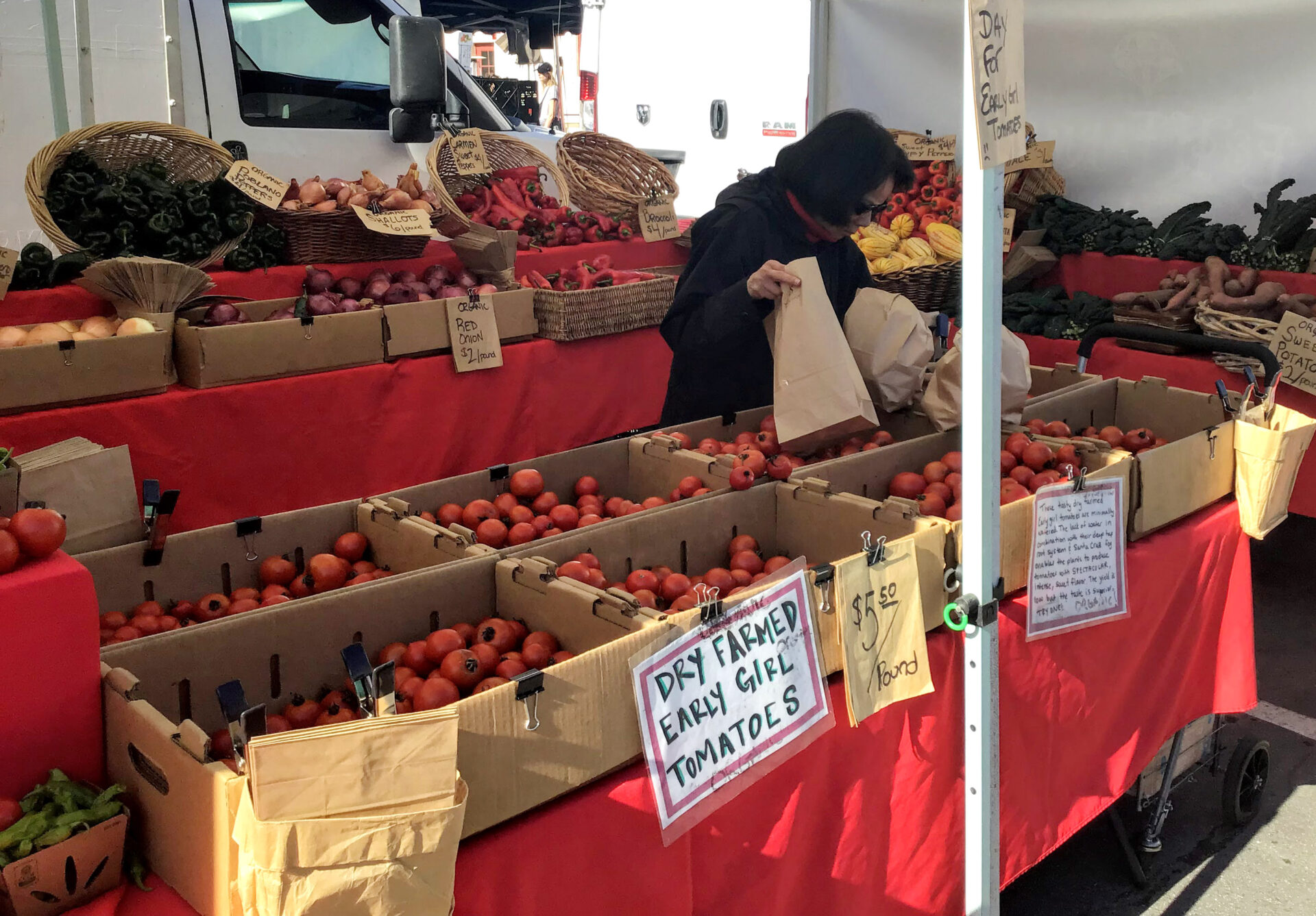
As summer dryness stretches into winter this year, dry-farmed tomatoes still dominate displays at a San Francisco farmers’ market. Photo: Ariel Okamoto
The UCSC researchers teamed up with scientists from Oregon State University, who are conducting similar trials in central Oregon to find the traits that help tomatoes deal with droughts. “Our aim for this data is that breeders will use it to develop new tomato varieties for dry farming,” says Matthew Davis, a plant scientist at the Dry Farming Accelerator Program at Oregon State.
These trials are some of the first technical research into the traits that make “Dirty Girl” tomatoes special. Pittermann says that getting to use scientific skillsets to find out how these plants thrive without water is one of the two most rewarding parts of the research. The other benefit? Getting to taste the experimental crops.