



Split Verdict Over State of the Estuary

Photo: Joey Kotfica
The 2025 State of Our Estuary assessment, released this fall at a regional conference, takes the pulse of the San Francisco Estuary in 17 indicators. It’s a health checkup for over 38 million acres of interconnected rivers, bay, and marsh, revealing which restoration efforts are paying off and where our waterways are still struggling to catch their breath.
The indicators are the visible, measurable bits that scientists can count, test, and track over time: bird counts, acreage of eelgrass, concentration of mercury in an estuary fish. Sometimes, the canary in the coal mine is the marsh-dependent Ridgway’s rail — whose numbers have declined to under 1,200 largely due to urbanization of the shore.
The Bay itself earned fair marks and appears stable. Not stellar, but holding steady. Where things are improving, the credit goes to big moves: large-scale habitat restoration projects and tougher pollution regulations. Wetlands are creeping back along the margins: the Bay now has 57,800 acres, while the Delta has gone from 8,000 to 13,000 acres over five years. In many cases, tidal marsh birds are following.
Cleanup efforts mean the Bay is mostly safe for swimming these days, a victory that would’ve seemed improbable decades ago when industrial waste and toxic slag flowed freely into the water. But legacy pollutants like mercury persist, stubborn reminders of California’s mining past that haven’t declined in 30 years of monitoring.
Other Recent Posts
Regional Housing Agency Invests in Affordability
The Bay Area Housing Finance Authority is launching a loan program to support the construction of mixed-income rental properties.
The End is Coming for California’s Untouchable Grass
The law, which applies to grass that isn’t used for recreational purposes, could cut urban water use across California by more than 20% says Oakland thinktank.
Sonoma Vineyard Workers Burn toward a Better Future
A group of immigrant farmworkers are forming a worker-owned cooperative to bring back Indigenous burning practices that used to revitalize the soil.
Los trabajadores de los viñedos de Sonoma queman por un futuro mejor
Un grupo de trabajadores agrícolas inmigrantes está formando una cooperativa de propiedad de los trabajadores para recuperar las prácticas indígenas de quema que solían revitalizar el suelo año tras año.
New Voices Shape Design of Berkeley’s North Basin Strip
Twenty acres of parkland between the highway and the Berkeley shore are slated for a coast-resilient makeover, with input from locals and stakeholders.
It’s Always Sunny In North Fair Oaks
Residents of the unincorporated community launched their second campaign in two years to get the county to care for dying street trees.
Siempre está soleado en North Fair Oaks
Los residentes de la comunidad no incorporada lanzaron su segunda campaña en dos años para lograr que el condado se ocupe de los árboles de la calle que se están muriendo.
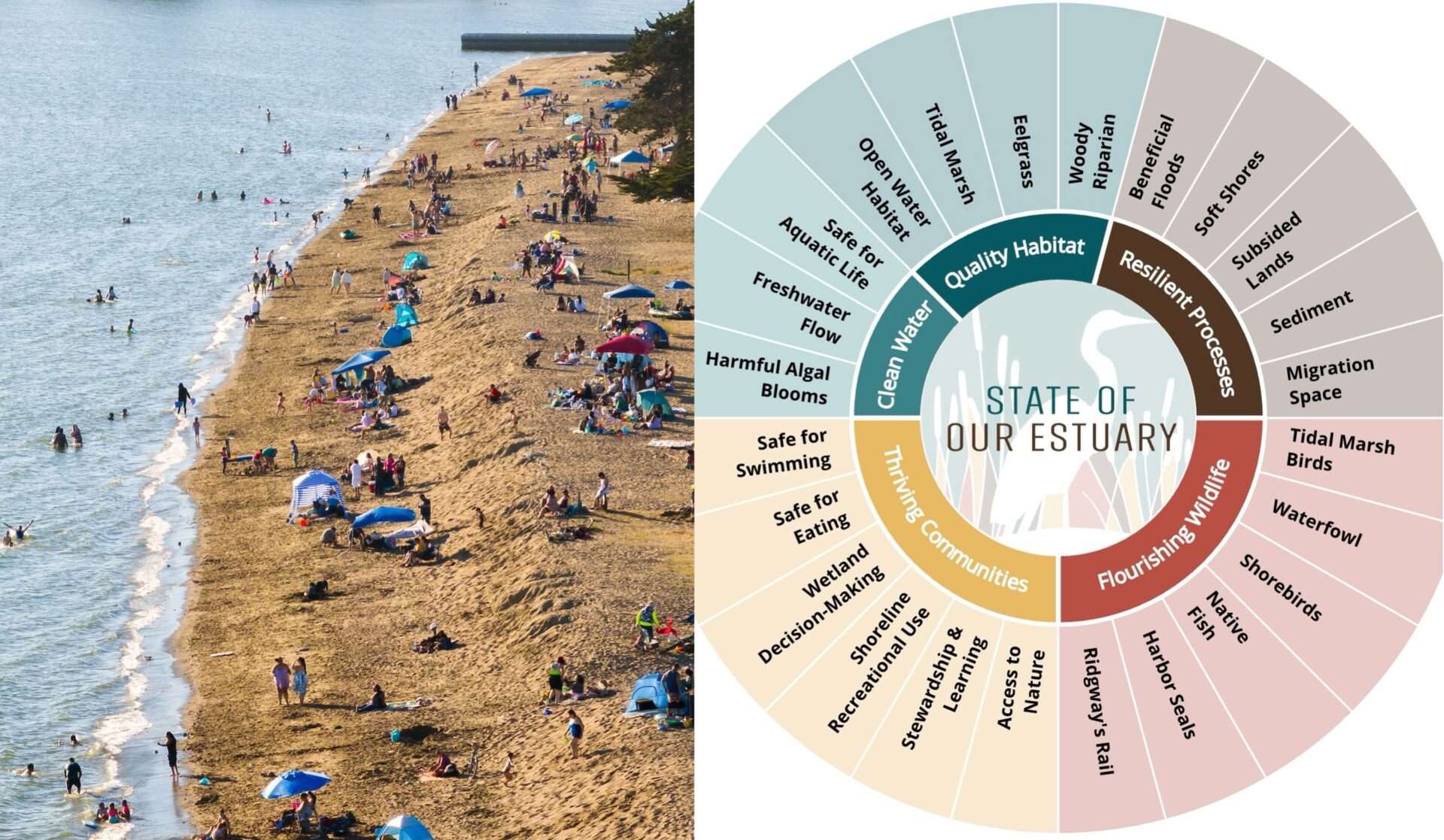
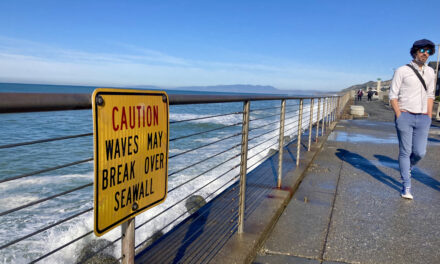
17 indicators tracked by the San Francisco Estuary Partnership to assess the health of the Estuary, including swimmability at places like Crown Beach, Alameda. Photo: Maurice Ramirez
The Delta, meanwhile, is the troubled student in the back: generally poor grades, trending downward. It’s more subsided than the Bay — about 43% of the Delta has sunk below tidal elevation, creating a big engineering challenge for the future. Freshwater diversions to cities and farms have created “chronic artificial drought conditions,” reducing flow to the Estuary by nearly half.
When water is siphoned away year after year, it adds up to an ecological overhaul. With less fresh water coming from the upper watershed, floodplains don’t flood, and wetlands in Suisun and the North Bay don’t get their regular pulse of low-salinity water. As a result, fish and birds lose seasonal habitats and nurseries. Without them, the Delta’s native species are disappearing, replaced by invasives better suited to the new, more stagnant regime.
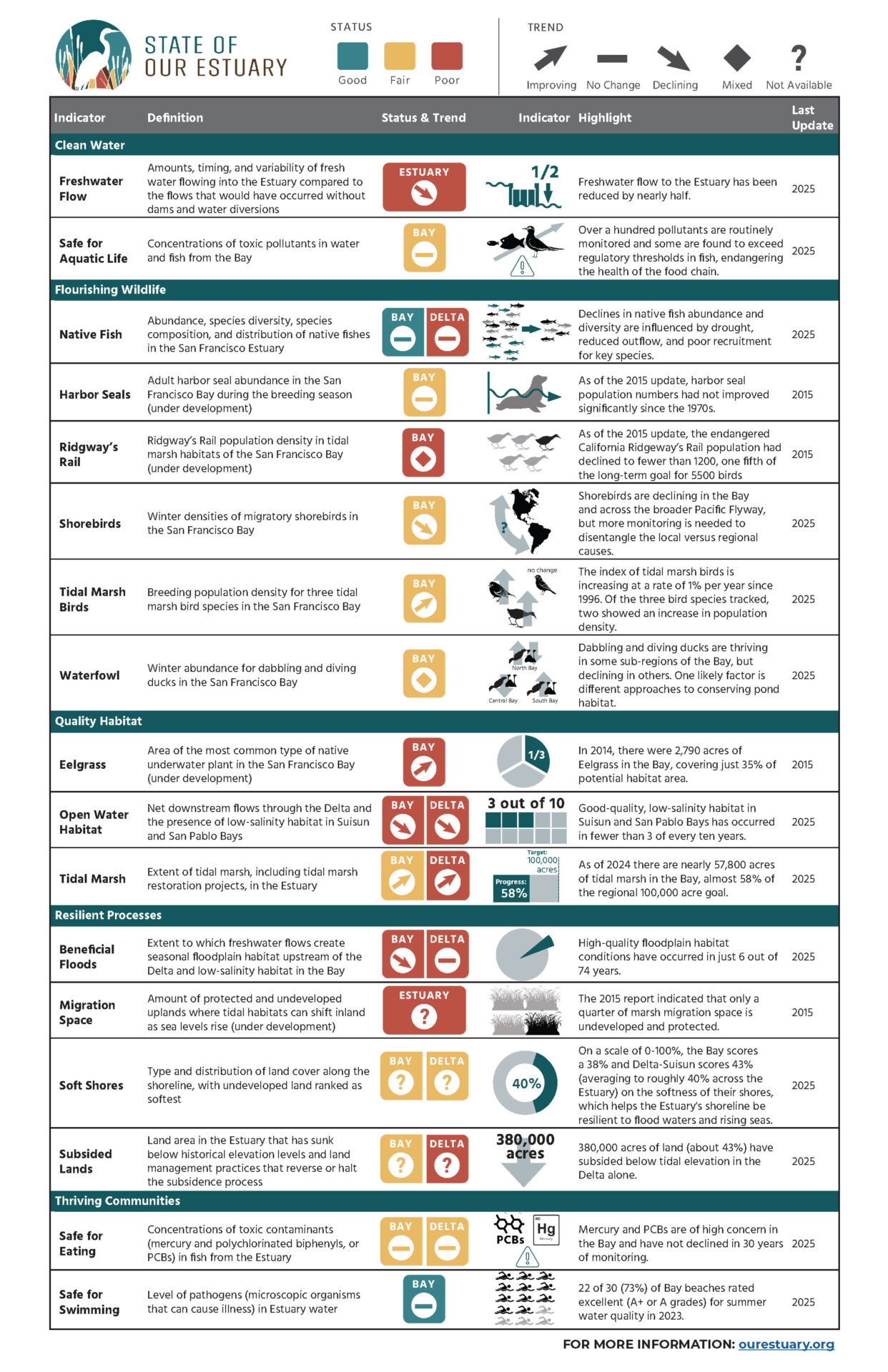
So what does this mixed report card mean for the future? Here’s the good news: where intervention is happening, it’s working. Wetlands restored, pollution regulated, habitat expanded; these efforts show up in the data as tangible improvement. The challenge is that not every part of the system is getting that level of attention. And in California, where water is always the story behind the story, the choices we make about flows and fresh water demand will determine whether the Delta rebounds or slides further into ecological debt.