

Finding Community at the Bay Area Climate Literacy Exchange
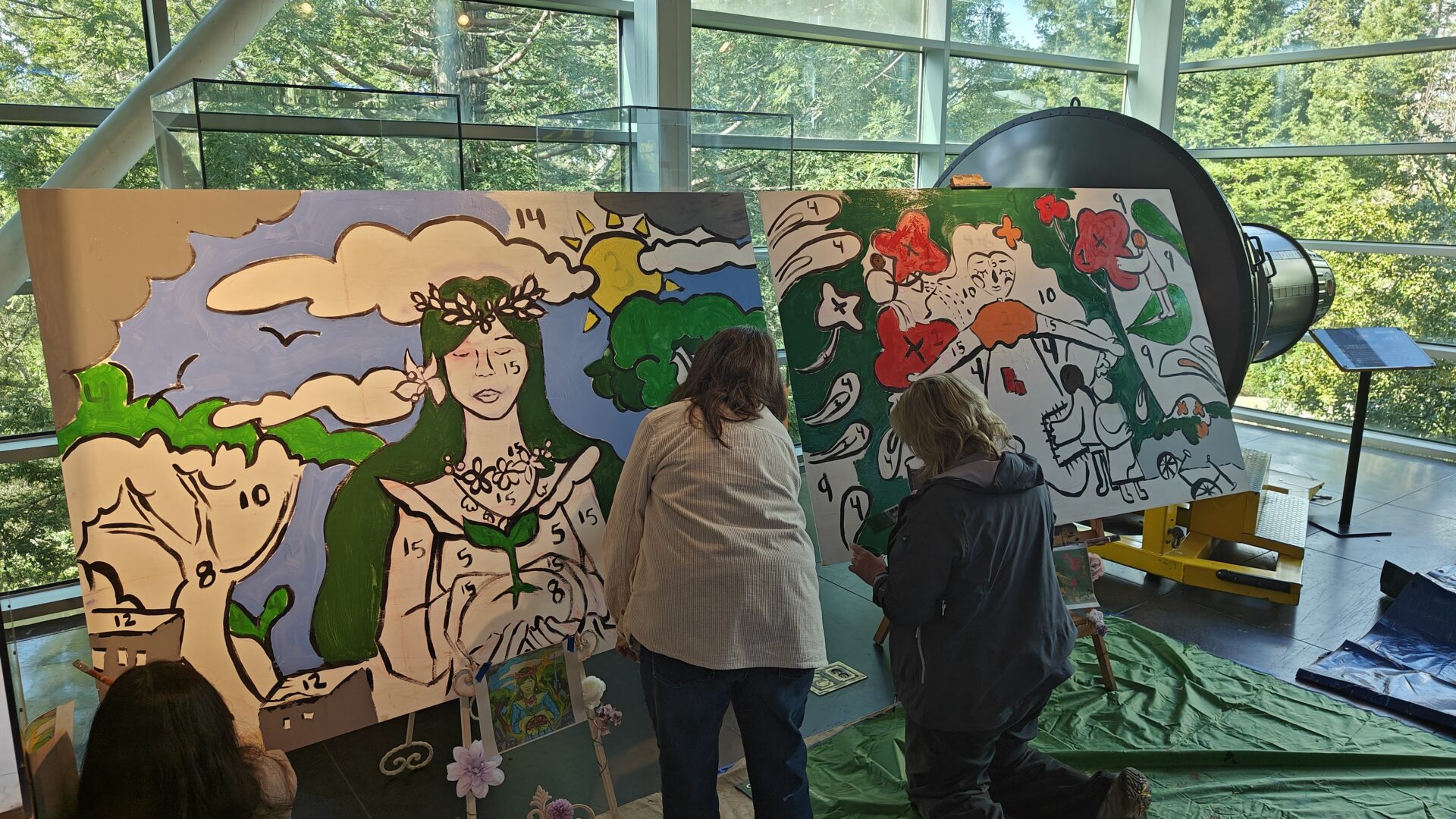
Attendees of the Bay Area Climate Literacy Exchange took turns painting a mural hosted by Brushstrokes for the Bay, a student-led environmental mural project. Photo: Padma Balaji
Last week, I skipped school to go to a climate literacy conference. It was a crisp Monday morning, and I hauled myself out of bed — an hour before I normally would — to get onto an electric school bus headed to Oakland.
The Bay Area Climate Literacy Exchange is technically a professional development day for teachers, featuring keynote speakers, tabling sessions, and workshops to help educators bolster climate literacy in their classrooms — but almost half of my bus was high school students.
The event began in 2024 as a gathering for climate-focused educators to share best practices and develop lesson plans. Two years later, it has morphed into an intergenerational exchange between teachers, students, and environmental organizations to understand how climate change, environmental justice, and education intersect.
As we arrived at the Chabot Space & Science Center, high up in the Oakland hills and tucked away in a lush blanket of redwood forest, I couldn’t help but look around in awe. There was an atmosphere of excitement that we rarely feel when talking about climate change or the education system — and it was contagious.
It’s hard to describe what it feels like to look around at more than 200 people and realize that every single one of them cares deeply about climate change. Harry Samuel Bevan, a student at Bancroft Middle School in San Leandro, told me he felt “a very high sense of epiphany of how I realize that I’m not alone. I’m not the weirdo. There’s other weirdos out there.”
My jaw dropped when I first met Harry and he told me he was only in seventh grade. As a young person in the climate space, adults often tell me how inspirational it is to see youth so interested in addressing climate change. As a high school senior, almost every student at the event was younger than me, and I felt that wave of hope wash over me, too — not only seeing younger students enthusiastic about climate education, but so many teachers engaged.
As a teenager, it’s easy to feel divorced from institutions that are supposed to serve you, especially the education system. Growing up, the only climate literacy education I had was in science class, where I learned how climate change was happening, but not so much why it was happening or how to fix it. Sitting in on professional development workshops for teachers in an education system I’ve attended for the last 12 years, I felt a little bit like a spy. Teachers would throw around acronyms like TOSA (teacher on special assignment) or talk about meeting performance standards while I’d nod my head and pretend to understand.
Other Recent Posts
Agroecology Commons Weathers a Weird Winter and Political Storms
A year after our first Agroecology Commons visit, the El Sobrante farm has a new greenhouse foundation, thriving farmer training program, and some unexpected wildlife.
Easy Spring Vegetables for Small Gardens
Snap peas and Tokyo turnips are hardy, cool-season vegetables well-suited to Bay Area gardens. Here’s how to grow and cook them.
At Canticle Farm, Food and Community Are Prayer for a Better World
On a residential street in East Oakland’s Fruitvale neighborhood, a front yard becomes a food distribution network every Friday.
What Do Teens Think is Healthy Food?
Student reporting fellow Sachi Bansal asks three high school seniors in Fairfield about how they define healthy food, and what they think of the new food pyramid.
En Canticle Farm, la comida y la comunidad son las oraciones para un mundo mejor
Canticle Farm está reinventando el concepto de vecindario a través de la tierra compartida, la comida gratuita y la acogida radical.
En la granja agroecológica Agroecology Commons, las nutrias han vuelto
Un año tras nuestra primera visita a Agroecology Commons, la granja en El Sobrante tiene una nueva base para un invernadero, un próspero programa de entrenamiento para agricultores y una fauna inesperada.
Verduras de primavera fáciles de cultivar en jardines pequeños
Los chícharos dulces y los nabos japoneses son verduras resistentes al frío, ideales para los jardines del Área de la Bahía. Aquí te explicamos cómo cultivarlos y cocinarlos.
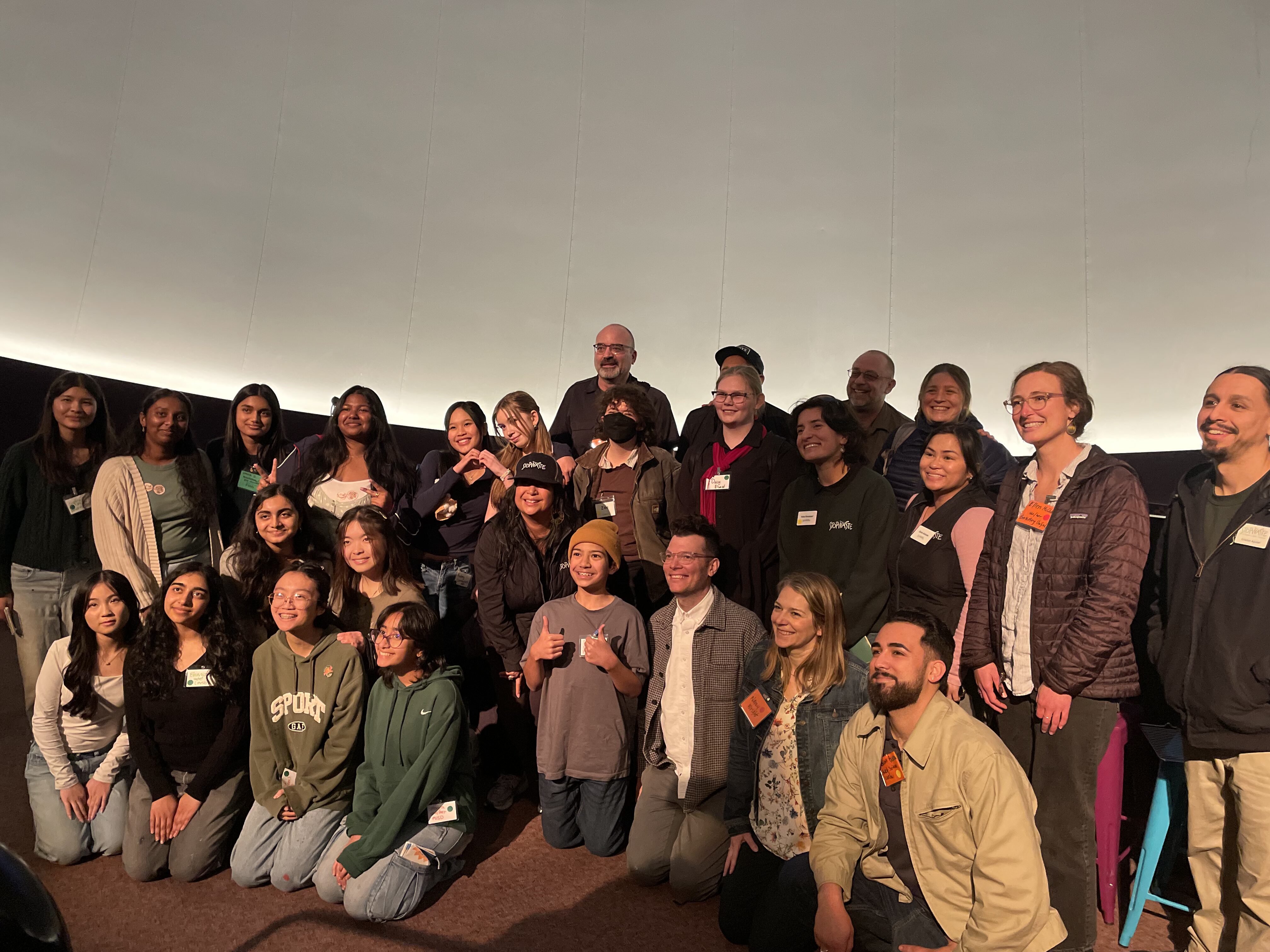
Exchange participants pose for a picture together. Photo: Padma Balaji
Most youth climate events I’ve been to have focused on small, individual actions: environmental clubs, starting school gardens, bringing other students into the climate action movement. As young people, these little things are what we have the power to influence in our communities. But the climate literacy exchange was a crash course on systems change.
In the morning, I sat in on a workshop about food waste, which is the single largest component of daily trash. Food, especially within schools, was designed to be a disposable system. But for the first time, I began asking myself how we could tangibly redesign that system, so that the third of our food supply that is wasted can actually go back to Bay Area communities, where a quarter of households are food insecure.
For Stopwaste, an Alameda County organization and co-sponsor of the event, that process starts in schools. Their Smart Cafeteria Schools initiative helps reduce waste in Alameda County schools — including my own school district, Fremont Unified. For the last few years, Fremont has worked with StopWaste to bring reusable dishware to cafeterias.
But that effort hasn’t hit my high school yet, so I was oblivious to this shift until I attended StopWaste’s workshop. In fact, I ran into lots of Fremont students and teachers at the conference who are working on climate solutions right in my community — and I had no idea they existed.
“It kind of feels like a secret web,” says Sadie Fitzhugh, a sophomore at Berkeley High School. “It’s like, I didn’t know it was here, but now that I’m meeting all these people, I can see all of these efforts that we can combine and really make the amazing stuff happen.”
Sadie is particularly passionate about induction cooking stoves, which are electric instead of gas-powered and can have both environmental and health benefits. At lunch, when community members and climate organizations set up tables to showcase their work, Sadie stood next to an induction stove top and convinced everyone who walked by — including me — that induction cooking was literally the coolest thing ever.
Coincidentally, the event featured an entire workshop on induction cooking and how electrification can connect to K-5 science standards. “It was really, really amazing to see other people working on this,” Sadie says. “And by the end of the workshop, I felt like I have plans, like I have contacts, and I just felt so energized.”
Seeing “such an assembly of people that are really continuing to fight against this huge monster of climate change, of pollution, of capitalism, of all these issues, has given me hope in a really critical time,” she adds.
Almost a third of conference attendees were students from 16 different school districts. We were treated not just as passive observers, but as contributors to conversations shaping the future of Bay Area climate literacy.
“Honestly, I think that students can really be teachers,” Sadie says. “We’re teaching our peers, we’re teaching younger kids, we’re teaching our adults.”
But nothing encapsulated the event’s intergenerational spirit and message of hope quite like the junk-music-sing-along-spoken-word-climate-rap-performance at the closing ceremony. Harry and another Bancroft Middle School student played a makeshift drum kit fashioned from trash and musical wine glasses while performers read out climate-themed spoken word poetry. The audience cheered so loud that it sounded more like a concert than a climate conference.
We ended with a farmers solidarity chant called “Isang Bagsak,” invented by the United Farm Workers in the ‘60s to unify Latino and Filipino workers. We clapped in unison, gradually increasing the tempo until we heard “Isang Bagsak.” The final clap reverberated through the room, captivating us in a brief moment of silence before we erupted into cheers. I later learned that “isang bagsak” means “one down” in Tagalog, a symbol that we all rise and fall as a community — together.