



At Canticle Farm, Food and Community Are Prayer for a Better World
On a recent Friday afternoon on a residential street in East Oakland, an unassuming front yard hosted several boxes of root vegetables, leafy greens, milk, canned tomatoes, and fresh bread. Neighbors trickled in and out, filling their bags with the free groceries.
Cole Rainey and Willow Holiday sat in the shade on a wooden bench, greeting people as they came through.
Hola, buenas.
Buenos días. Bienvenidos.
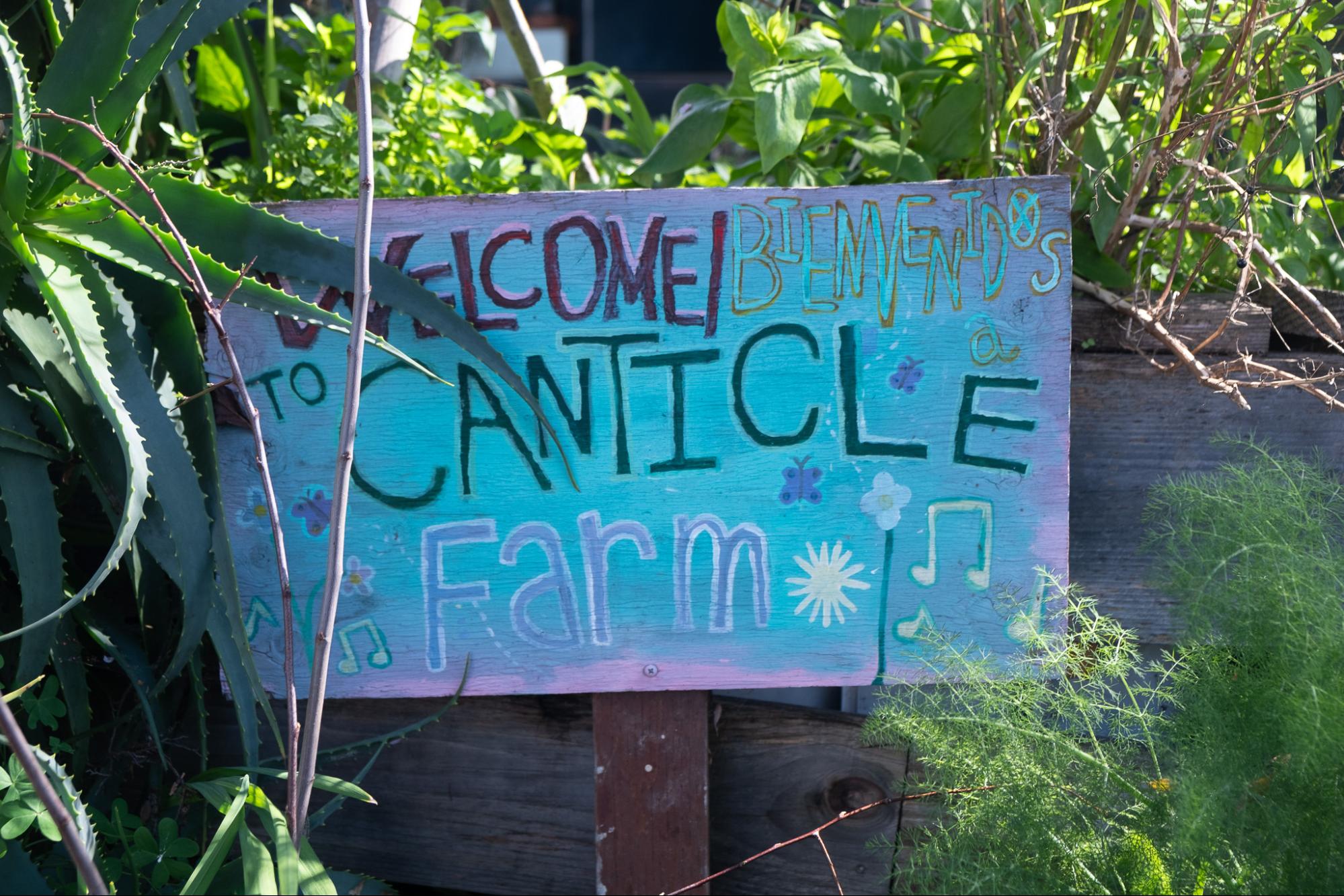
The yard belongs to Canticle Farm, which, according to its website, is “an urban garden, educational center and community of intention.”
Rainey and Holiday recently restarted the weekly food distribution — every Friday at noon — after a long hiatus. The food is sourced from Sage Steward Farm in Pescadero (where Rainey works), the Berkeley Food Network, and Canticle’s own gardens.
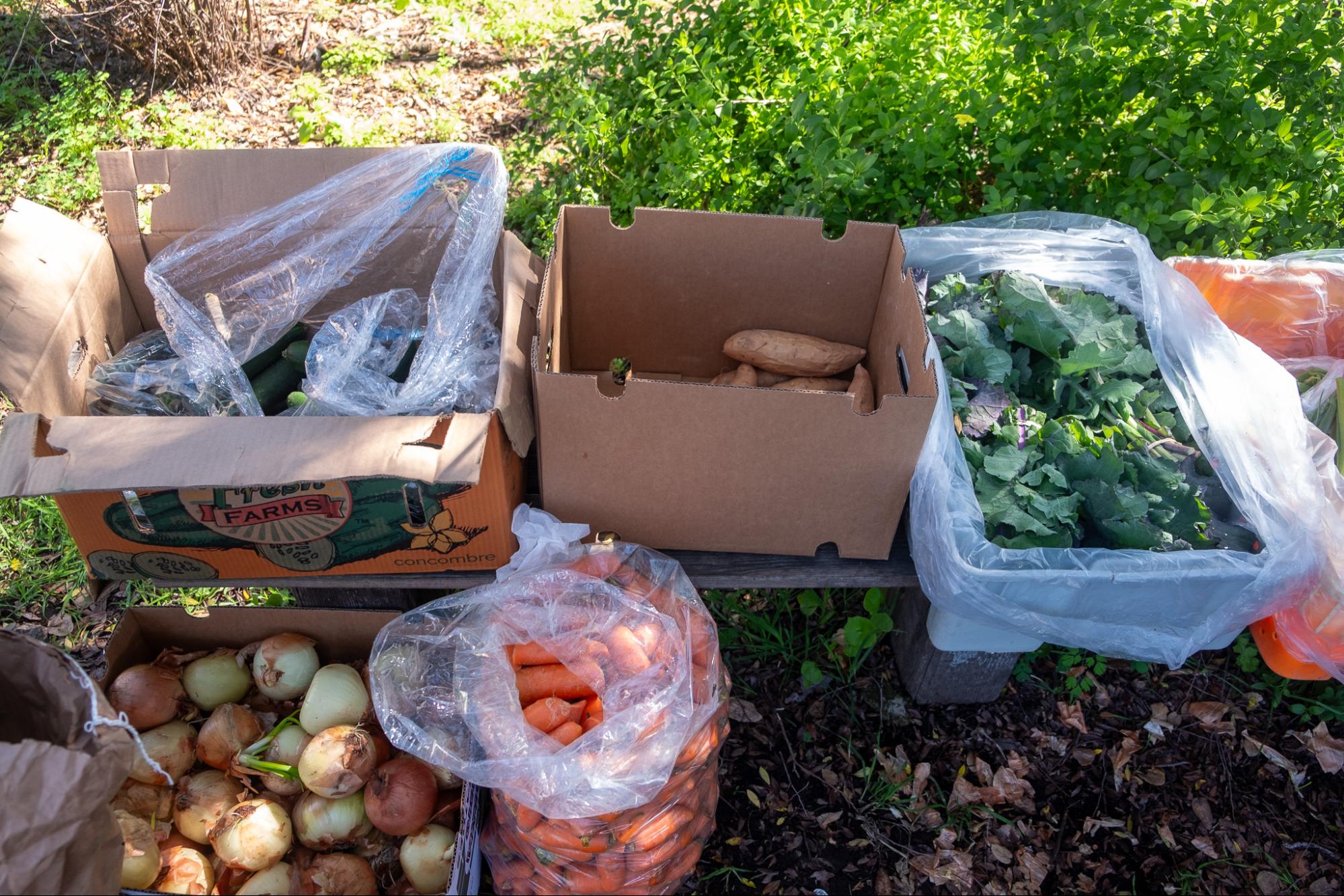
A weekly food distribution sees Fruitvale neighbors stopping by to grab free groceries on Friday afternoons. Photo: Nik Altenberg
From the street, the house at 1972 36th Ave. looks like an average single-family home with a green-thumbed resident. But a small wooden gate next to the front house opens up to something much less commonplace.
Several main houses are joined by tiny homes, a yurt, a cabin used exclusively for restorative justice work, gardens, a fire pit, a communal kitchen, and a creek that was recently restored to its natural flow. Rainey and Holiday described the food distro as one small piece of Canticle Farm.
“A big part of what this community is about is taking down walls, taking down the barriers between our atomized lives,” says Rainey, who has been connected with Canticle Farm for around a decade. “The space is intergenerational, interracial, and interfaith,” and is home to about 50 people, Holiday adds.
One of the homes is for men who were paroled from life sentences. Another is for asylum seekers who may stay for days or years. These residents are not charged rent.
“Everything here operates on the gift economy,” says Rainey. That includes a lot of shared produce, meals, and cooking.
Other Recent Posts
Fire Weather in the Wind
As the hot Nevada air cools every fall, it gets pushed west to lower pressure areas over the Central Valley, where the wind heats up and dries out.
My Morning Cleaning Up the Oakland Estuary
On Oakland’s Creek to Bay Day, I joined 100 volunteers for I Heart Oakland-Alameda Estuary to remove shoreline trash.
RCDs Pay Extra Attention to North Bay High Schoolers
A $15,000 grant will help three North Bay conservation districts evaluate youth education programs and prepare high school students for environmental careers.
Creeks Make Good & Bad Homes
San Jose State researcher Costanza Rampini explores why the houseless favor creek banks, and how they weather the flood risk.
Bay Area Braces for Record-Breaking El Niño
Record high water temperatures in the Pacific are expected to bring dangerous sea level rise, waves, and rain to the region this winter.
Regional Housing Agency Invests in Affordability
The Bay Area Housing Finance Authority is launching a loan program to support the construction of mixed-income rental properties.
The End is Coming for California’s Untouchable Grass
The law, which applies to grass that isn’t used for recreational purposes, could cut urban water use across California by more than 20% says Oakland thinktank.
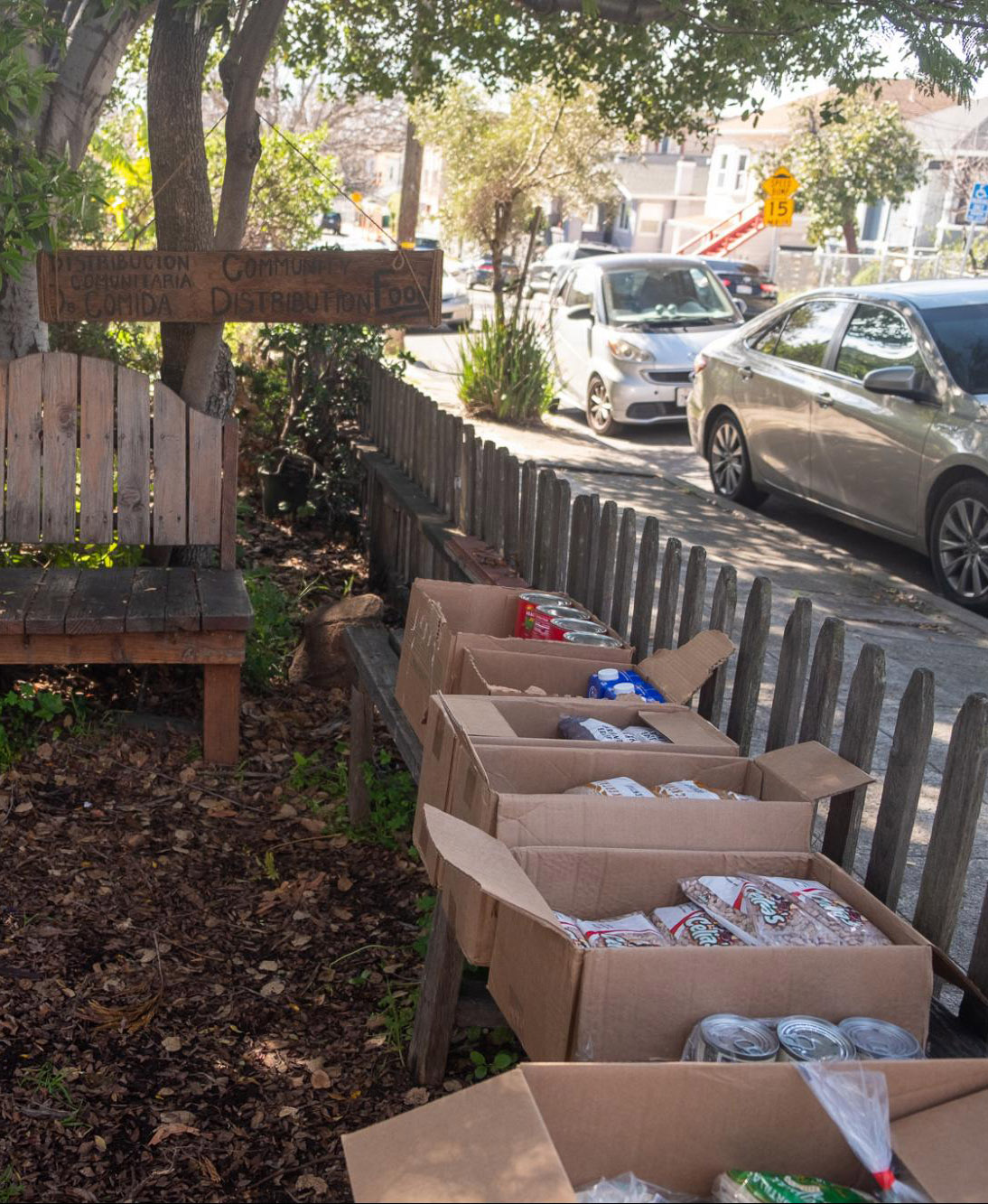
Photo: Nik Altenberg
Ejna Fleury, an enrolled member of Crow Creek Sioux Tribe of the Oceti Sakowin, describes herself as the eldest resident of Canticle Farm — she’ll be 80 this year. She is the founder of Divine Mother’s Love, and serves in the Founding Mothers Movement.
She holds a vision of food sovereignty where every Oakland resident grows food in their backyard, the boulevards all have fruit trees, and the city coordinates with surrounding farms to be resilient in the case of supply chain disruptions.
“How much fun it would be for communities to garden together. Like this block does all the potatoes, and that block does corn, and that block, they have a lot of citrus,” she says, adding that there could be neighborhood parties for planting, tending, and harvesting.
“We better get food sovereignty down pretty good because food shortages are coming,” Fleury says. “We’re in the midst of collapse.”
Fleury says food is a thread that runs through Canticle simply through the act of living together and sharing meals, and that there are several exceptionally talented chefs among the residents.
One of them is Jacob Sandoval, who has lived at Canticle for about two years. “Feeling the energy of the food from the land is such a lovely feeling,” he says, adding that a good meal can be “healing and bring people together.”
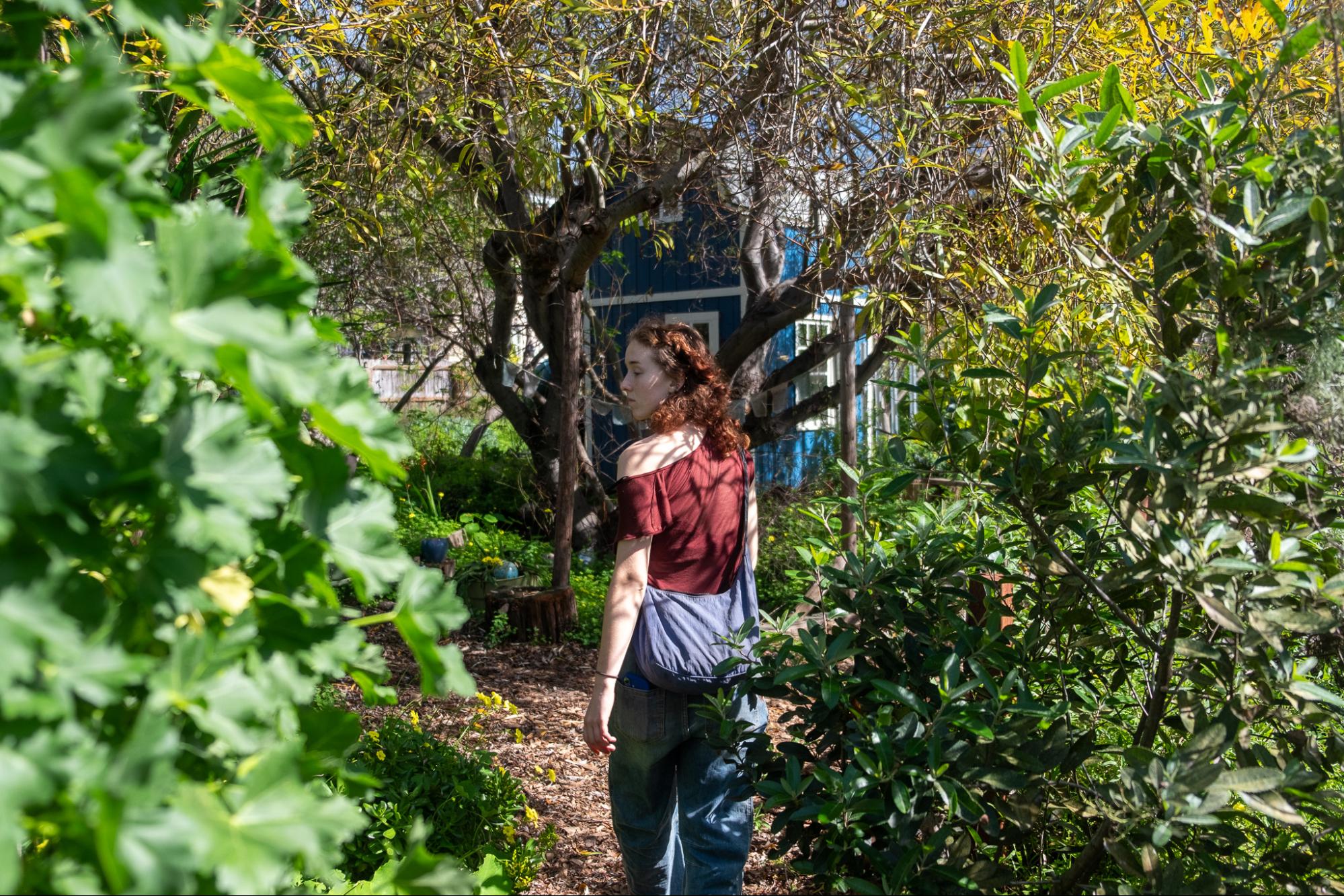
Willow Holiday walks through Canticle Farm’s properties in East Oakland. Photo: Nik Altenberg
“Everyone from a few months old to 80 years old is living here in relationship,” Holiday says. “It really feels like a prayer for villaging and revillaging.” In other words, a return to the way people are meant to live — in connection with each other and in connection with the land.
To get involved with Canticle, everyone is welcome to attend Sunday morning liturgies from 9 to 10 a.m. There are also regular garden work days, which are sent to an email list for Bay Area residents.