



The Climate Questions Facing Bay Area Voters This Spring
Photo: Ariel R. Okamoto
Election Day is fast approaching, and you may have already received a vote-by-mail ballot. This spring’s cycle features several measures related to climate resilience work across Bay Area counties, and KneeDeep has you covered with everything you need to know before you vote.
San Francisco Prop A: Earthquake Bond
The U.S. Geological Survey estimates that there’s a 72% chance of a magnitude 6.7 or higher earthquake occurring in the region within the next 30 years. To respond to that risk, the San Francisco Board of Supervisors authorized Proposition A, which would issue a $535 million general obligation bond to fund seismic retrofits to key public facilities in the city, including the Potrero Bus Yard, the Emergency Firefighting Water System, police stations, and fire stations.
This measure would not increase property taxes beyond the city limit of 3% of property value. SPUR has endorsed it, though the policy analysis organization notes that this move would limit San Francisco’s ability to fund other capital improvement projects.
Prop. A requires a two-thirds majority of the vote to pass.
Marin and Sonoma Measure B: SMART Train Funding
The Sonoma-Marin Area Rail Transit train offers a public transit alternative to Highway 101 that connects the two counties, from Windsor on the north end to Larkspur on the south end. According to SMART, the system averaged more than 4,000 riders per weekday in January.
Voters in both counties will find Measure B on their ballots, which would simply continue an existing quarter-cent sales tax for the next 30 years to fund SMART service. Renewing funding would also allow the agency to continue its plans to expand service hours and locations, and build a new accompanying pathway for walkers and bikers.
Other Recent Posts
Regional Housing Agency Invests in Affordability
The Bay Area Housing Finance Authority is launching a loan program to support the construction of mixed-income rental properties.
The End is Coming for California’s Untouchable Grass
The law, which applies to grass that isn’t used for recreational purposes, could cut urban water use across California by more than 20% says Oakland thinktank.
Sonoma Vineyard Workers Burn toward a Better Future
A group of immigrant farmworkers are forming a worker-owned cooperative to bring back Indigenous burning practices that used to revitalize the soil.
Los trabajadores de los viñedos de Sonoma queman por un futuro mejor
Un grupo de trabajadores agrícolas inmigrantes está formando una cooperativa de propiedad de los trabajadores para recuperar las prácticas indígenas de quema que solían revitalizar el suelo año tras año.
New Voices Shape Design of Berkeley’s North Basin Strip
Twenty acres of parkland between the highway and the Berkeley shore are slated for a coast-resilient makeover, with input from locals and stakeholders.
It’s Always Sunny In North Fair Oaks
Residents of the unincorporated community launched their second campaign in two years to get the county to care for dying street trees.
Siempre está soleado en North Fair Oaks
Los residentes de la comunidad no incorporada lanzaron su segunda campaña en dos años para lograr que el condado se ocupe de los árboles de la calle que se están muriendo.
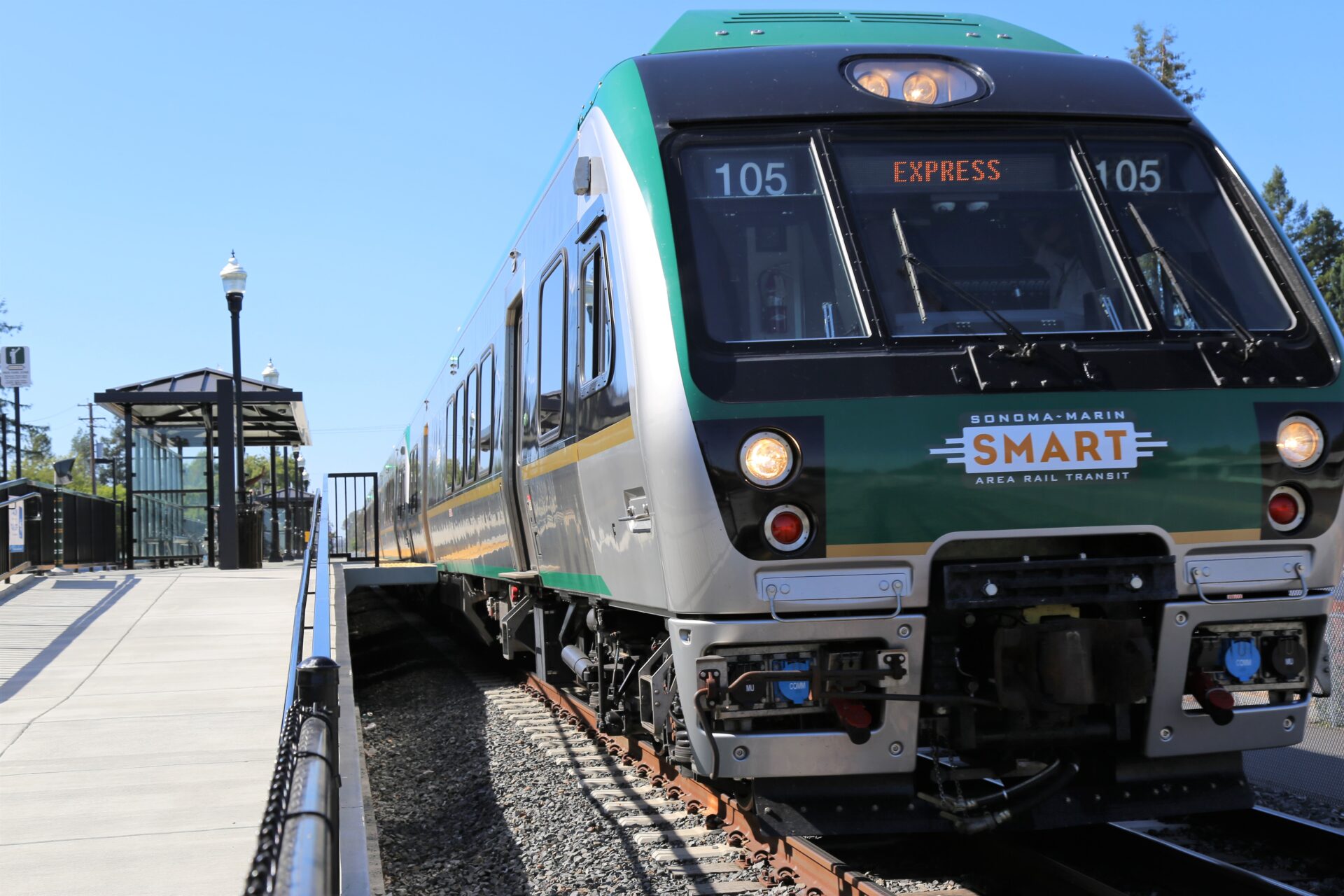
Photo: Sonoma-Marin Area Rail Transit
Measure B needs a simple majority of the vote to pass and is endorsed by the Greenbelt Alliance. Citizen opposition groups, however, argue that SMART does little to reduce greenhouse gas emissions and Highway 101 congestion. Supporters point to a 33% reduction in emissions from taking the train instead of driving a car, free rides for seniors and students, and the fact that the measure would not raise taxes.
Contra Costa Measure A: Renew the Urban Limit Line
Since 1990, the Contra Costa County Land Preservation Ordinance has ensured that urban development is restricted to 35% of the county’s area, with the remaining 65% reserved for agriculture, parks, and other non-urban uses. Voters passed an extension of this law in 2006, which expires at the end of this year. Measure A would keep this so-called “Urban Limit Line” in place through 2051, maintaining open areas like the hills above Walnut Creek, the farms in Tassajara Valley, and Mount Diablo State Park.
In an argument in favor of the measure, all five county supervisors wrote that “protecting Contra Costa County’s open space and agricultural lands, discouraging urban sprawl, and reducing future traffic congestion, are issues that matter to County residents.” They also noted that Measure A’s passage would “continue the existing requirement for voter approval of Urban Limit Line expansions exceeding 30 acres.”
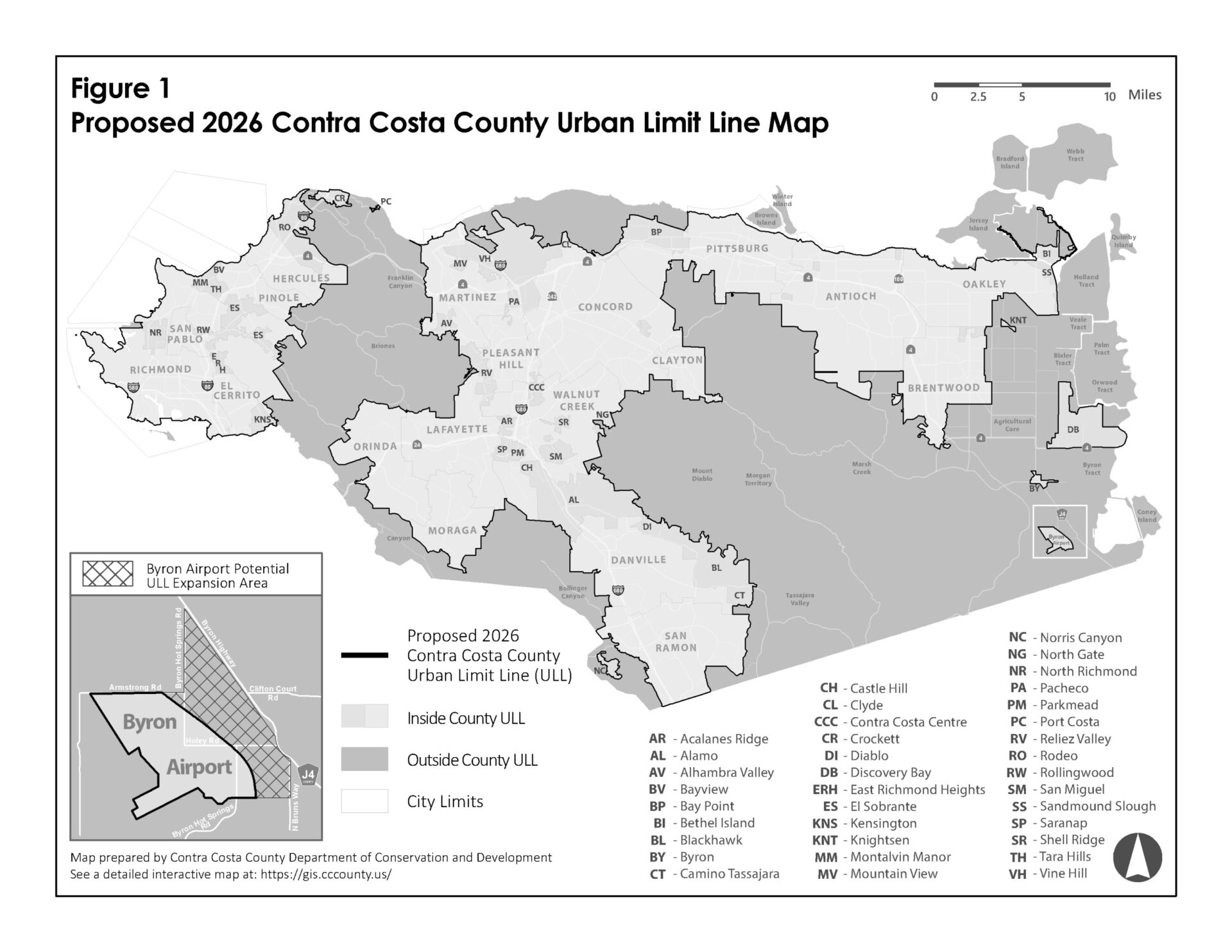
Urban Limit Line as of 2026. Map: Contra Costa County
An opposition view signed by the Contra Costa County Taxpayers Association and Patricia Bristow, the director of the Byron Sanitary District, described Measure A as “a 25-year urban straitjacket” that would prevent the development of new housing needed to alleviate rising rents and home prices.
Responding to that criticism, the Greenbelt Alliance, which endorsed the measure, wrote that “the county’s 2045 General Plan process confirmed that vacant and underutilized land inside the existing ULL can accommodate 23,200 new housing units, 1.2 million square feet of new commercial development, and 5 million square feet of new industrial space. There is no need to expand into open space and farmland to meet the county’s growth needs — and there never has been.”
Measure A needs a simple majority vote to pass.
Santa Clara Measure D: Parcel Tax for Open Space Authority
Finally, Santa Clara County voters will have the chance to pass a new parcel tax that would add $17 million annually to the Santa Clara Valley Open Space Authority’s coffers. If passed, Measure D would implement a tax of two cents per square foot of property per year (capped at $7,500), which amounts to about $30 more paid annually by the average single-family homeowner.
According to SPUR’s analysis, the amount of land managed by the Santa Clara Valley OSA has risen from 12,000 to 30,000 acres over the last decade, while its budget has stayed mostly flat. A letter from Green Foothills, the League of Women Voters, Santa Clara firefighters, and U.S. Rep. Sam Liccardo argued that Measure D will allow the OSA to both continue and expand its work to reduce wildfire risk, protect drinking water, and clean up pollution.
Opponents are against any new taxes and highlighted their mistrust of the government.
Noting the cap on the tax and exemptions carved out for seniors, people with disabilities, and affordable housing units, both SPUR and the Greenbelt Alliance endorsed Measure D.
See also KDT’s South Bay correspondent Stephanie Lam’s story on Measure D.
Early and mail-in voting are already underway, and voters can go to their polling place on Tuesday, June 2. Find early voting and ballot drop-off locations by selecting your county and typing in your zip code here.