



A New Tax to Maintain Green Spaces Around Santa Clara?
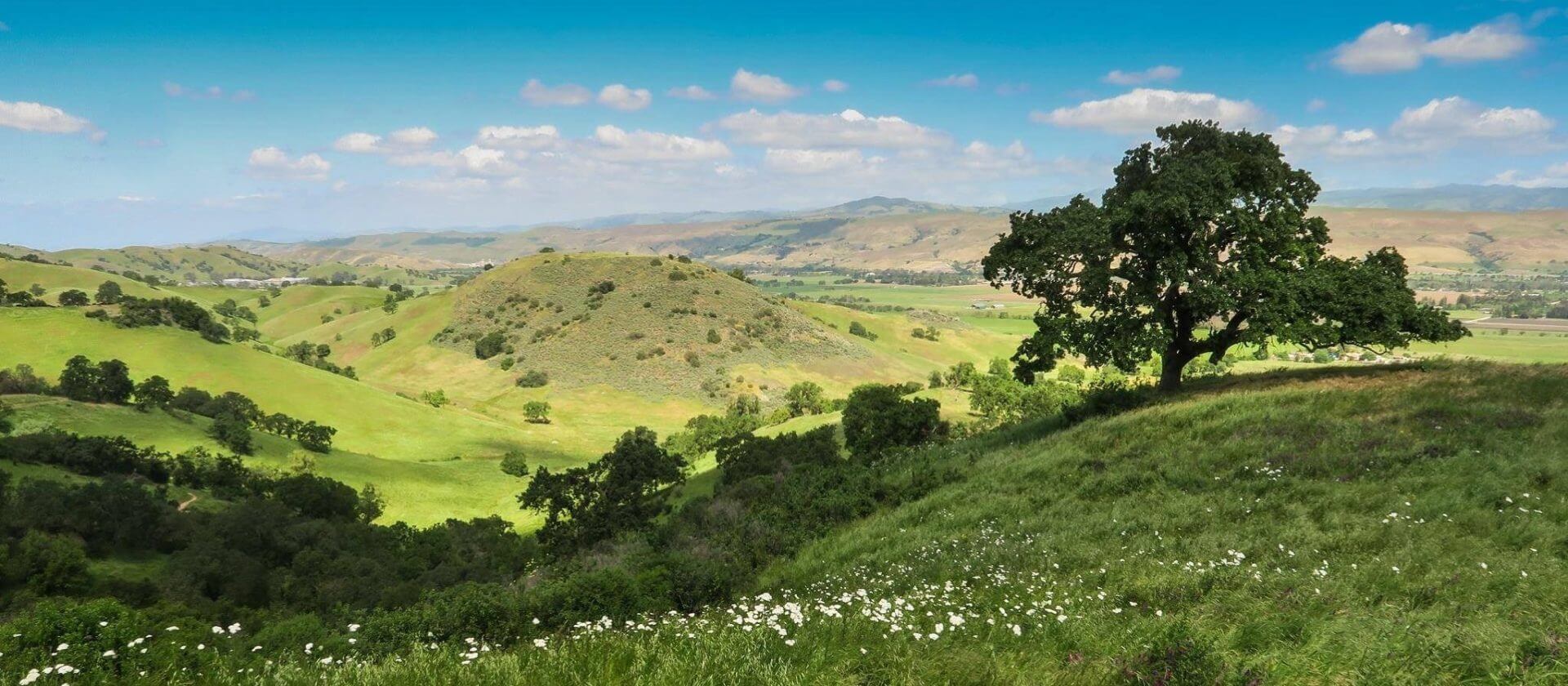
The view across the Coyote-Valle. Photo: Jynelle-Myatt
Santa Clara County voters will decide on a local tax measure next month that would help maintain and improve the county’s green spaces.
Measure D proposes taxing property owners two cents per square foot of buildings in San José, Milpitas, Santa Clara, Morgan Hill, and unincorporated areas in the county. The tax is expected to raise $17 million annually for the Santa Clara Valley Open Space Authority, a San José-based agency that oversees more than 30,000 acres of natural lands and 30 miles of trails.
If the measure passes on Election Day (Tuesday, June 2), the average homeowner would pay approximately $32 per year, while most commercial or industrial property owners would pay around $2,000, with both capped at $7,500.
OSA says the money will be used to maintain open space and agricultural lands for the public; address vandalism and litter in the areas; and maintain wildlife habitats and corridors. The agency manages local nature preserves, including Coyote Valley in Morgan Hill and Rancho Cañada del Oro and Sierra Vista in San José.
The need for more funding has been spurred on by rising costs associated with maintaining OSA’s land. Since 2011, the amount of land OSA manages on behalf of the public in the Santa Clara Valley has increased by 150%. By 2041, the agency predicts it will expand to 45,000 acres of land and see a million visitors annually.
But despite its growth, the OSA has not seen an increase in its $12.2 million operating budget since 2014, according to the agency.
Other Recent Posts
Regional Housing Agency Invests in Affordability
The Bay Area Housing Finance Authority is launching a loan program to support the construction of mixed-income rental properties.
The End is Coming for California’s Untouchable Grass
The law, which applies to grass that isn’t used for recreational purposes, could cut urban water use across California by more than 20% says Oakland thinktank.
Sonoma Vineyard Workers Burn toward a Better Future
A group of immigrant farmworkers are forming a worker-owned cooperative to bring back Indigenous burning practices that used to revitalize the soil.
Los trabajadores de los viñedos de Sonoma queman por un futuro mejor
Un grupo de trabajadores agrícolas inmigrantes está formando una cooperativa de propiedad de los trabajadores para recuperar las prácticas indígenas de quema que solían revitalizar el suelo año tras año.
New Voices Shape Design of Berkeley’s North Basin Strip
Twenty acres of parkland between the highway and the Berkeley shore are slated for a coast-resilient makeover, with input from locals and stakeholders.
It’s Always Sunny In North Fair Oaks
Residents of the unincorporated community launched their second campaign in two years to get the county to care for dying street trees.

Fox crossing through open space made possible by OSA. Photo: OSA
This isn’t the first time OSA has pushed for a tax measure. In 2014, Santa Clara County voters approved Measure Q, a $24 annual parcel tax that provides $8 million a year. The measure was set to expire in 2030, but voters extended it indefinitely in 2020 by a margin of 81% to 19%. OSA is also funded by an assessment measure that was approved by voters in 1996, which provides $12 million annually.
Julie Hutcheson, executive director of the Palo Alto environmental group Green Foothills, says OSA has been doing an “amazing job with the limited amount of money they have.”
“But every year, they’re being asked to do more with less,” Hutcheson wrote in a public statement supporting the measure. “Rising costs, increased visitation, and intensifying climate threats are outpacing existing resources.”
Hutcheson also says the passage of Measure D would ultimately “help the health of the community.”
“We’ve got this great balance here,” she says. “Every dollar stays local. It stays here to benefit the voters.”
The measure was able to appear this year because of a citizens’ initiative, or a signature-gathering process that allows people to advocate for ballot proposals. To qualify for the ballot, the campaign needed 37,206 valid signatures. Volunteers and supporters submitted more than 56,000, according to Hutcheson.
The campaign was primarily led by the Peninsula Open Space Trust, a Palo Alto-based environmental group known for funding from wealthy donors like the Packard and Hewlett families.
Chris Robell, a retired CFO and member of the Silicon Valley Taxpayers’ Association, has doubts about voting yes on the measure. The association says it is dedicated to protecting the rights and interests of taxpayers against “the over-reaching and over-spending” of government.
Measure D doesn’t specifically outline what the money will be used for, and who will manage all the funds, Robell says.
“It’s a broad tax, an endless tax and will increase with rising inflation,” he says.