



Easy Spring Vegetables for Small Gardens
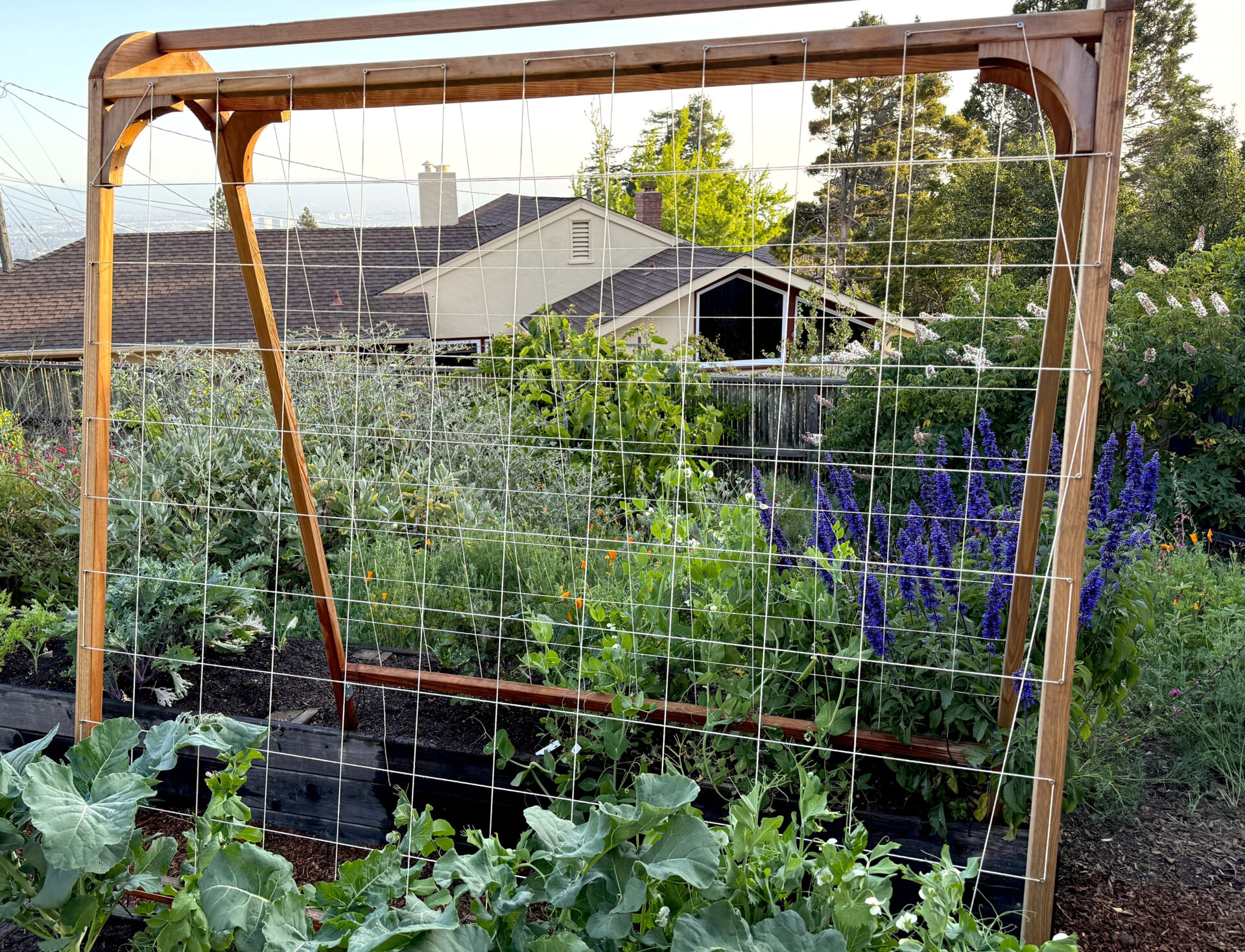
Snap peas growing up trellis, broccoli in foreground. Photo: Allison Kidder
While some people are bummed about rainy days keeping them indoors, I relish the chance to start imagining what this year’s iteration of raised beds will look like. We are lucky to live in an area with mild winters ideal for growing cool-season veggies like kale, peas, broccoli, turnips, and greens of all shapes and sizes. All of these vegetables can have their seeds sown directly into well-draining soil.
No matter how large or small your garden is, springtime gardening in the Bay Area is a perfect excuse to get your hands dirty and enjoy freshly-grown harvests at your table. Two cool-season, early spring favorites are snap peas and turnips. My 5-year-old self would have been amazed that peas and turnips are among my favorite vegetables — or that I even had a favorite vegetable.
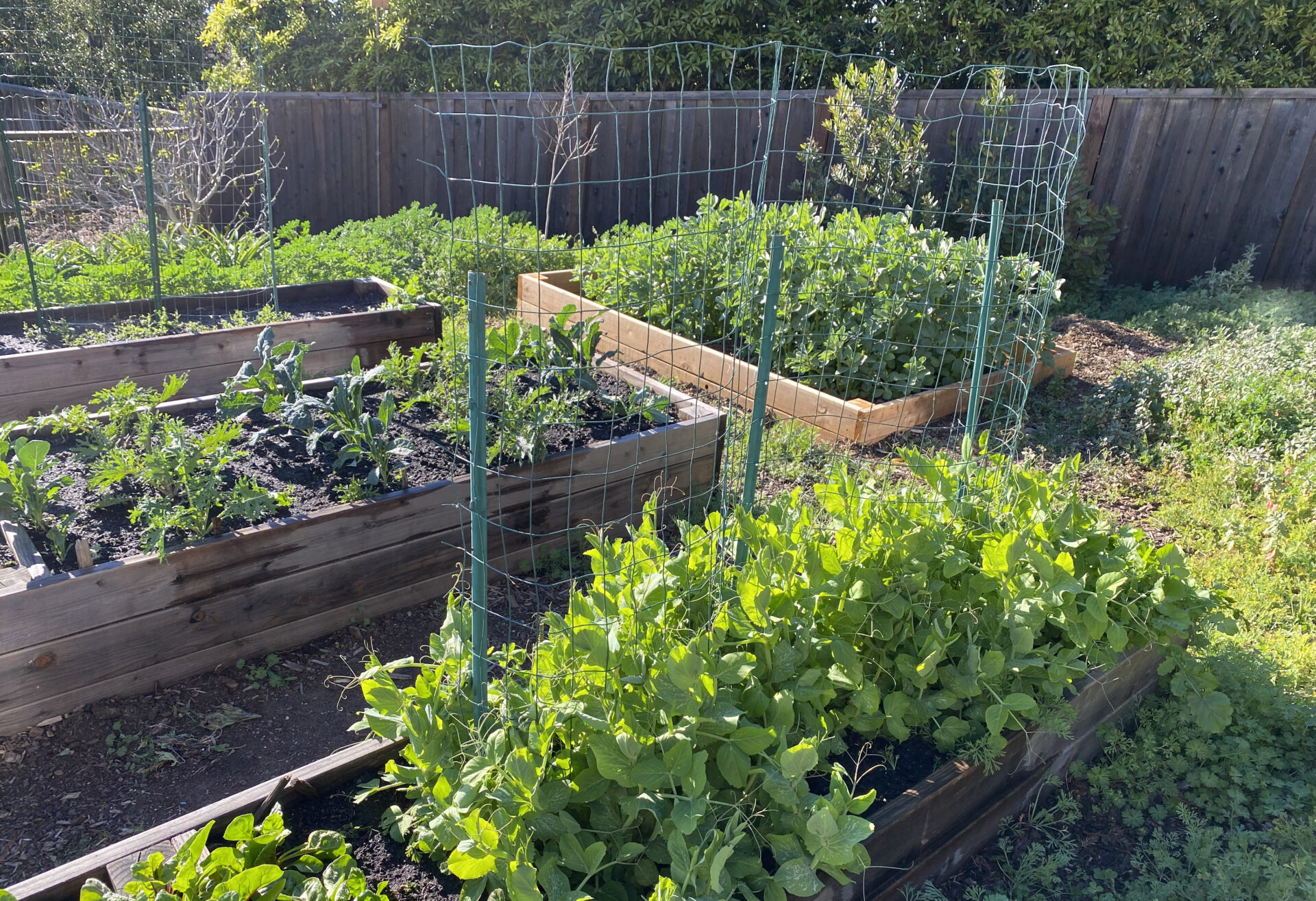
Kidder’s raised beds and East Bay garden. Photo: Allison Kidder
Spring Crunch
Snap peas are a staple for spring gardens. Easy to grow, they are a perfect in-the-garden, sweet and crunchy treat to munch on while you work.
Snap pea plants grow quickly up a vertical trellis with horizontal supports for the tendrils to grasp (see top photo). If you have a container garden, you’re in luck, because there are snap pea varieties that grow in a compact bush form and are self-supporting. Like with all vegetables, choose a spot that receives as much sunshine as possible.
Other Recent Posts
Fire Weather in the Wind
As the hot Nevada air cools every fall, it gets pushed west to lower pressure areas over the Central Valley, where the wind heats up and dries out.
My Morning Cleaning Up the Oakland Estuary
On Oakland’s Creek to Bay Day, I joined 100 volunteers for I Heart Oakland-Alameda Estuary to remove shoreline trash.
RCDs Pay Extra Attention to North Bay High Schoolers
A $13,500 grant will help three North Bay conservation districts evaluate youth education programs and prepare high school students for environmental careers.
Creeks Make Good & Bad Homes
San Jose State researcher Costanza Rampini explores why the houseless favor creek banks, and how they weather the flood risk.
Bay Area Braces for Record-Breaking El Niño
Record high water temperatures in the Pacific are expected to bring dangerous sea level rise, waves, and rain to the region this winter.
Regional Housing Agency Invests in Affordability
The Bay Area Housing Finance Authority is launching a loan program to support the construction of mixed-income rental properties.
The End is Coming for California’s Untouchable Grass
The law, which applies to grass that isn’t used for recreational purposes, could cut urban water use across California by more than 20% says Oakland thinktank.
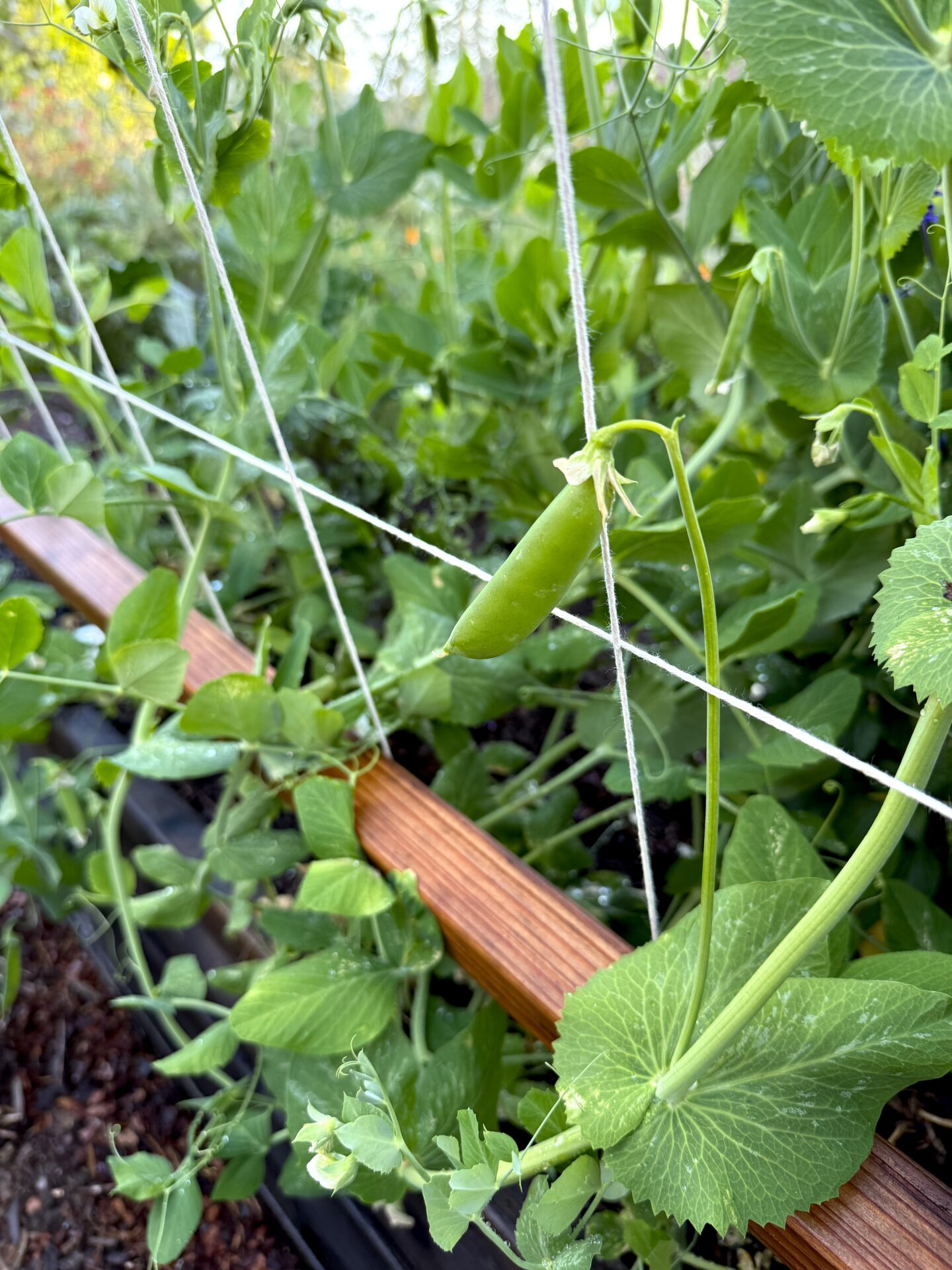
Kidder’s raised beds and East Bay garden. Photo: Allison Kidder
Be careful, because the nutritious pea sprouts are a favorite of birds, especially golden-crowned sparrows, which are busy fueling up for their summer migration to Alaska. I often sow more seeds than recommended on the seed packet: some seeds for the birds, and some seeds for me.
As the plant matures, it will begin producing pairs of self-pollinating flowers, supported by Y-shaped peduncles — the parts of the stalk that attach to the flowers. Those flowers start turning into paired pea pods in the blink of an eye.
Snap peas can be eaten raw or cooked. In our household, we like to steam them whole, slice them on the diagonal, and add them to salads or chop them as garnish for avocado toast, topped with an egg and some cilantro leaves.
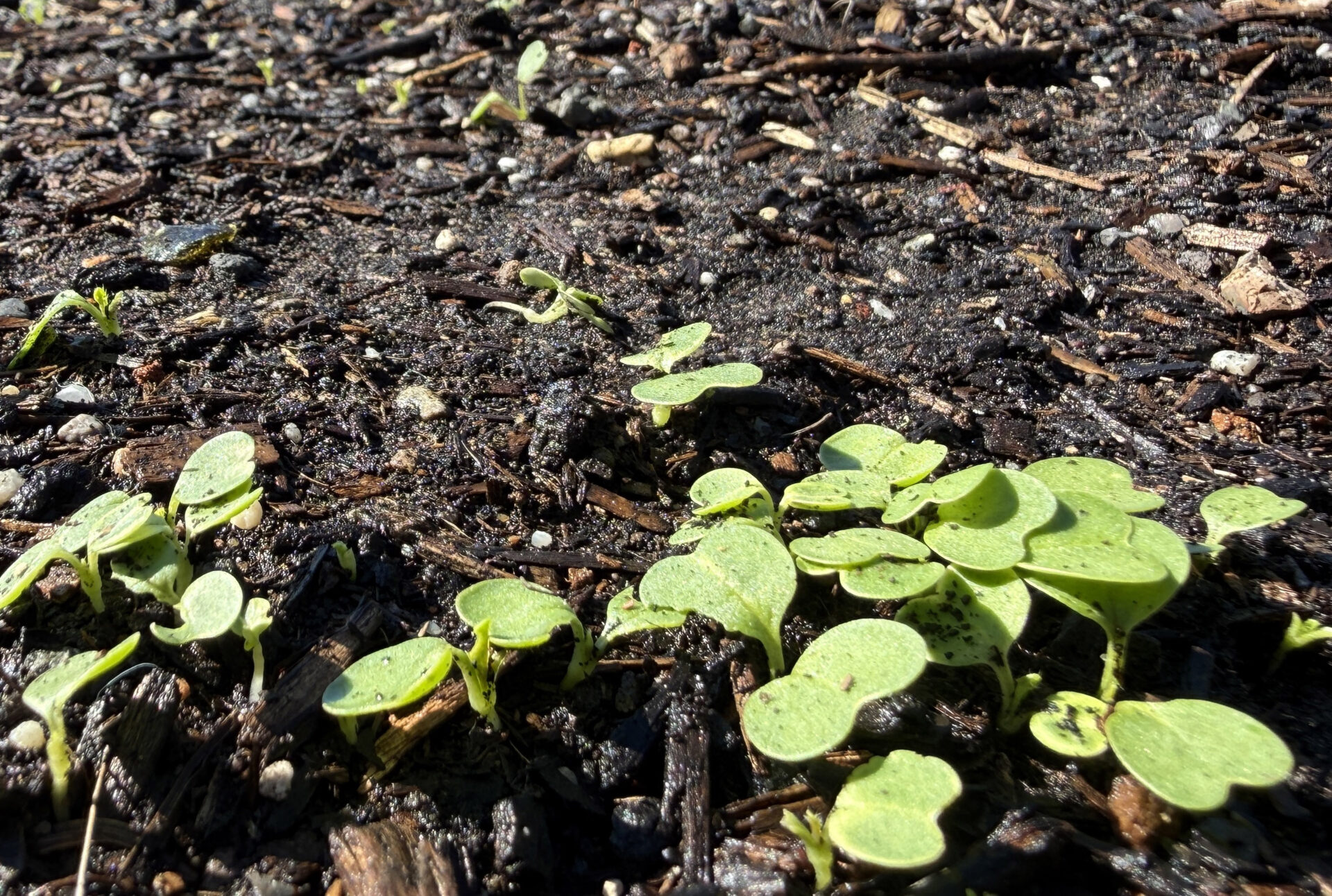
Tokyo turnip seedlings. Photo: Allison Kidder
Team Tokyo
While some people lean on sowing carrots as their fun go-to for getting kids involved in gardening, I am on team Tokyo turnip. Their speedy germination and maturation make them perfect for kids to grow in their own garden plot or container. Seeds are sown directly into the soil, and their first leaves start popping up within a week. After the seedlings are thinned (they should be 3-4 inches apart), Tokyo turnips grow quickly and require no care except even watering.
This easy-to-grow cool season vegetable matures into a beautiful pale sphere, whose shoulders beckon from just above the soil surface. Unlike other root crops that completely hide inside the soil (I’m looking at you, carrots), it is easy to tell when these turnips are full size and ready for harvest.
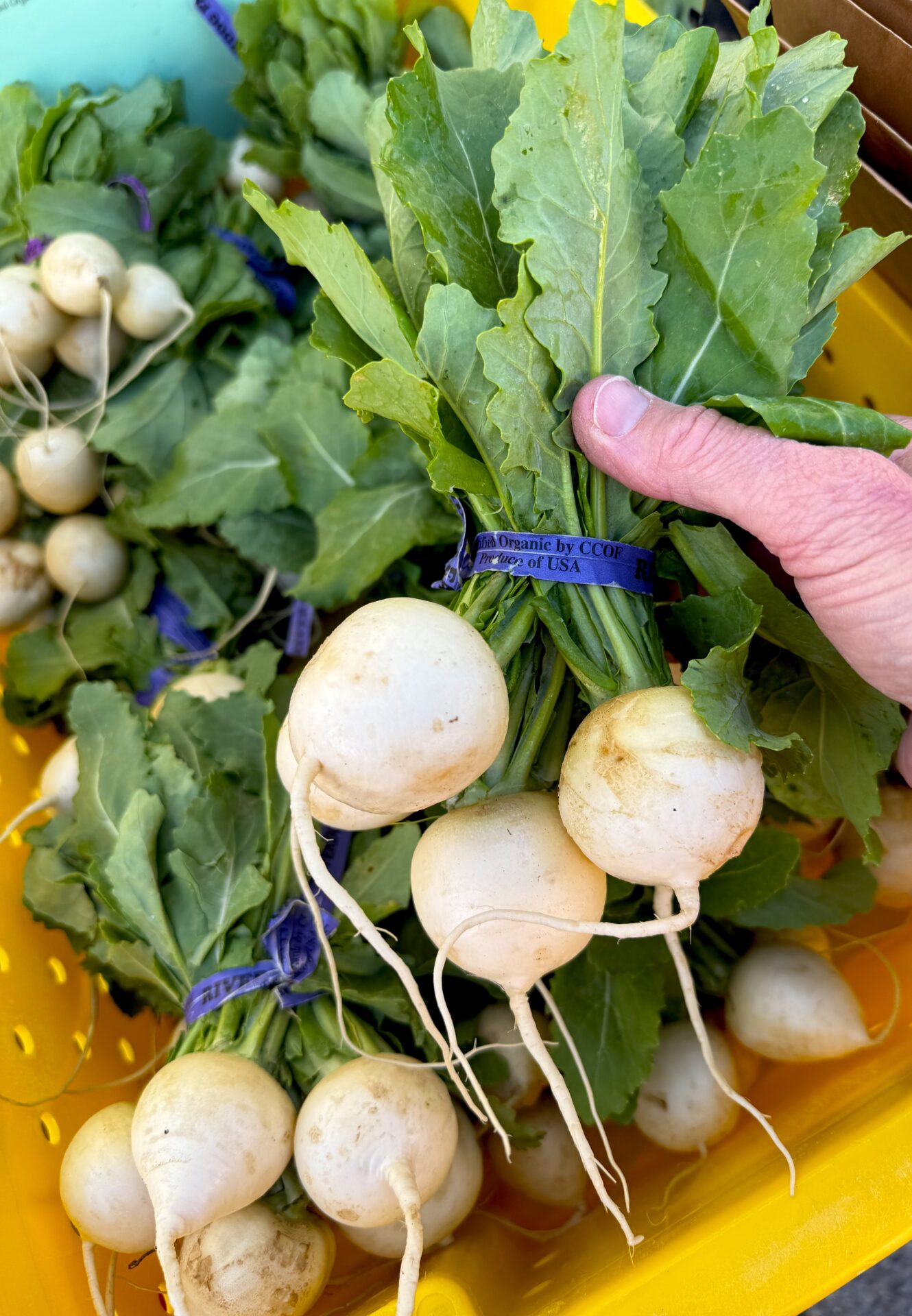
Full-grown Tokyo turnips. Photo: Allison Kidder
Both the root and the shoots of Tokyo turnips are tender and edible. My favorite way to cook the golf-ball-sized roots is to quarter them into bite-size pieces, steam for just a couple of minutes to soften, and then sauté in a bit of butter or oil until they caramelize to a gorgeous golden-brown. Add diced garlic and/or ginger along with coarsely-chopped turnip greens to the pan toward the end for a no-waste, whole-plant dish that is delicious over rice, with a protein of choice or on its own.
As I glance out my window right now, I can see green snap pea and turnip seedlings. In just a few weeks, they’ll be dinner.