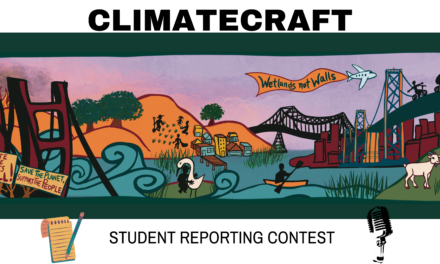



ClimateCraft Student Reporting Contest
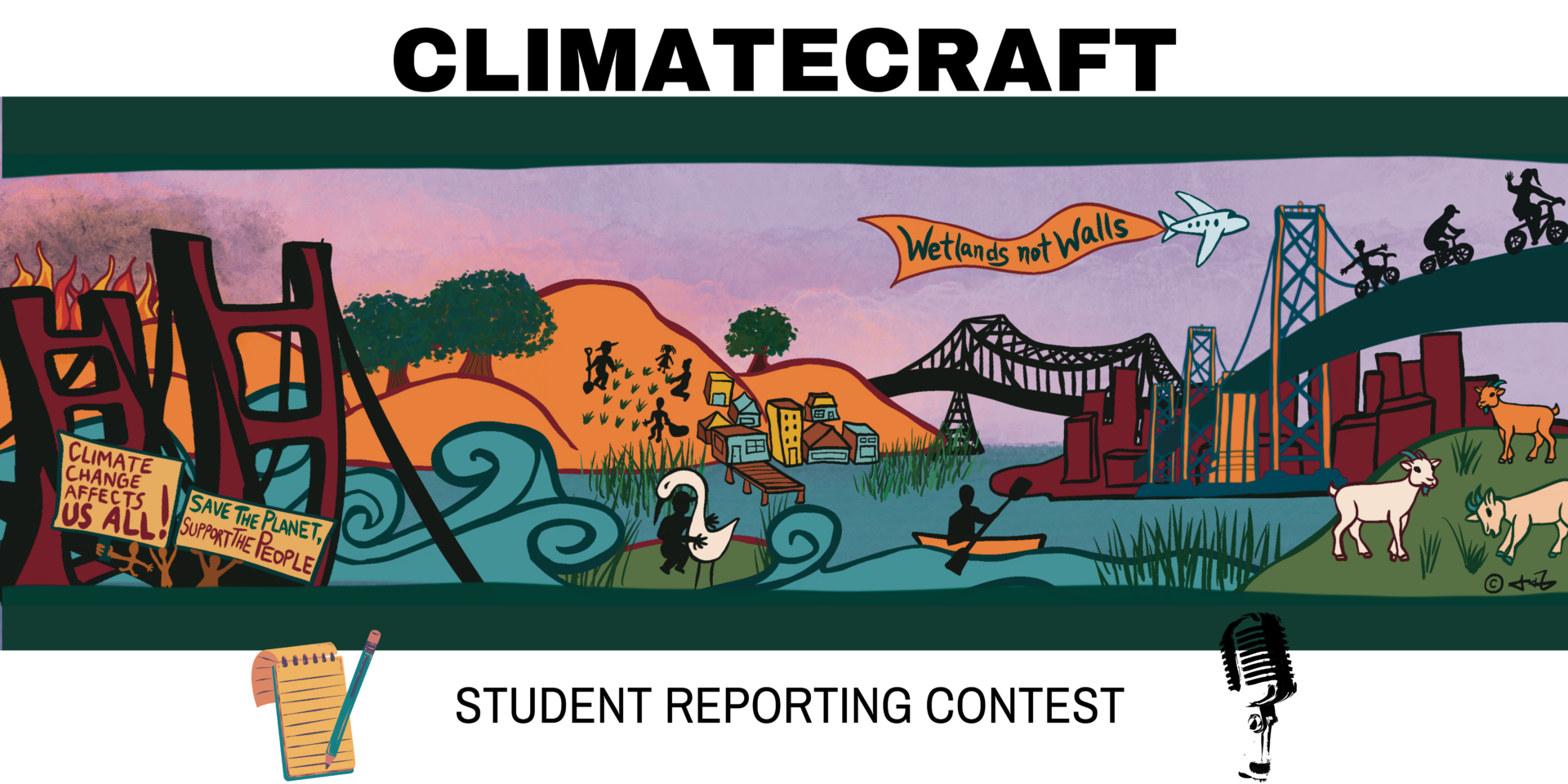
This fall, our editorial team will recognize outstanding reporting from Bay Area college students for stories about climate change, resilience or adaptation, and communities across the greater Bay Area region.
We will select winning submissions for individual entrants in three categories: individual written reporting, individual multimedia reporting, and team reporting. All winning entries will be published on the KneeDeep Times website. In addition, first place winners in each individual category will receive $500, and second place winners will receive $250. The winning team category submission will receive $1,000 to be divided among the team members.
Guidelines for All Entries
- Submissions must highlight climate adaptation, climate resilience, and/or climate justice in the Bay Area region.
- Students are welcome and encouraged to submit stories from reporting originally done for a class assignment or school newspaper, so long as KneeDeep Times retains rights to publish the final submission if selected as a winner.
- Entrants must be college students (undergraduate or master’s) or recent graduates (within six months of receiving a degree) with some connection to the greater San Francisco Bay Area (i.e. have lived, researched, or attended school in the region.)
- The deadline for entry for all categories is 9AM PST on Friday, October 14 (extended from the original deadline of September 16.)
Guidelines for Written Entries
- Articles must contain between 600-1,000 words.
- Articles should be submitted as PDFs or Word docs with your initials in the file name.
- Finalists may be given an option to submit photos or videos to complement their articles if appropriate, but contestants should not submit any content besides their writing at this stage of the contest. If your storytelling is primarily through a non-written medium, please see our multimedia reporting contest guidelines instead.
- Entries should include a headline and the full text of the submission. Please do not include your name within the submission document.
Guidelines for Multimedia Entries
- A multimedia piece may include a small amount of writing, but must have a non-written element (i.e. audio, video, photo, etc.) as the primary medium telling the story. Examples of multimedia reporting we will consider include, but are not limited to, video, audio, and graphic or photo essays.
- Video and audio submissions should be at least 5 minutes long, and no longer than 7 minutes.
- Photo essay submissions should include at least 10 photos with descriptive captions.
- Entries should include a headline and the full text of the submission. Please do not include your name within the submission document.
- If you have a question about whether your multimedia submission would be appropriate for this contest, please ask news-team@kneedeeptimes.org.
Judging Criteria
Your submission will be judged on the following criteria:
- Specificity: How well does it adhere to the themes of climate resilience and adaptation in the Bay Area?
- Execution: How well does it craft a compelling story?
- Originality: How well does it expand upon an unfinished story, or tell one that hasn’t been told before?
- Depth: How well does it integrate multiple perspectives, storylines, and subjects.
Additional consideration will be given to stories that reveal a connection to social equity and environmental justice.
Optional Prompts
You may find the following prompts useful as starting points for crafting a submission:
- What is one neighborhood/town/city doing to better prepare for fires/drought/flooding/heat waves?
- What ongoing local story has an underreported climate angle?
- Who are the organizations and people pushing the envelope with climate adaptation actions?
What is Climate Adaptation and Resilience?
The following written and multimedia articles are examples of reporting on the themes of this contest. Please be original, and feel free to reach out if you’re unsure whether your story fits the scope of this contest.
Future Class Projects
The editors are interested in working with professors and teachers to shape class storytelling projects covering climate resilience, social and biological sciences, and other topics. If you are an interested educator feel free to contact editor@kneedeeptimes.org.
Other Recent Posts
Feds Meddling With Protections For California Coast
NOAA is reviewing California’s Coastal Management Program in a renewed push for offshore oil and gas drilling.
New Study Shows Rain Gardens Filter Chemicals Out of Stormwater
Scientists found rain gardens dramatically reduce toxic chemicals in stormwater while providing biodiversity and cooling.
The Tricky Art of Growing Oysters in the Lab So They Can Survive in the Field
The Nature Conservancy, the Amah Mutsun Tribal Band, and others are growing oysters in the lab and planting them in the wild in estuaries around San Francisco Bay.
Printing Without Plastic: The Vintage Machine Winning Over Eco-Conscious Artists
This comic guide to risograph printing explains how the 1980s Japanese machine cuts energy use and avoids plastic toner.
East Bay Kids Fight Extreme Heat in their Schoolyards
Many California schools are ill-equipped to tackle heat, with many campuses lacking sufficient tree coverage. These students are fighting to change that.
How a North Bay Regional Park Helped Me Reconnect With Nature — and Myself
A young Fairfield resident reflects on how hiking during the pandemic became a refuge from digital overload and the growing realities of climate change.
Wild Pigs Rough Up Bay Area Greens
They tear up landscapes in search of food, prey on native wildlife, and damage streams, and warming could bring them closer to urban areas.
Residents Chose Different Ways to Respond to Contra Costa Flood Challenges
Graduates of a shoreline leadership program in Contra Costa County recently pitched their ideas for sea level rise education and adaptation.
Strong Leader, Light Touch: Caitlin Sweeney
Ahead of her retirement earlier this month, the Estuary Partnership director sat down with KneeDeep to discuss her achievements and the future of the Bay.
Unmasking Regionalism
Regional leaders say the Bay Area has built ambitious climate resilience plans. Now comes the harder task: funding and implementing them.