



Finding the Sweet Spot for Local Economies

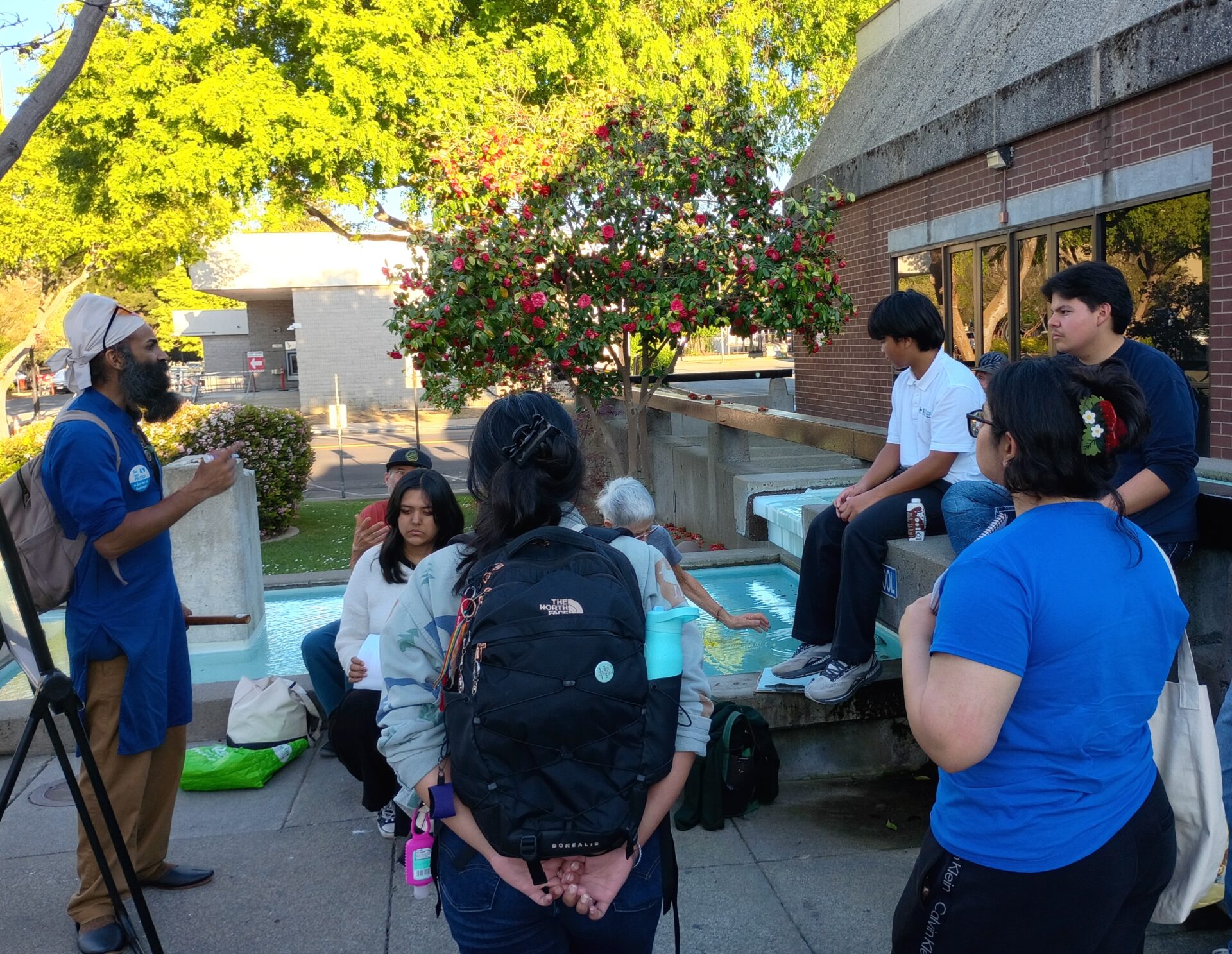
Photo: Allison Nagel
On a Tuesday evening in mid-March, I trekked to the Vallejo Public Library for a lecture organized by Sustainable Solano called It’s All Connected: Regenerating the Environment and the Economy, featuring speaker Indy Rishi Singh.
Singh describes himself as a “neurodivergent polymath and community educator.” He’s the executive director of a nonprofit called Cultivating Self and consults with the California Doughnut Economics Coalition.
For anyone who hasn’t heard of “doughnut economics,” it’s a framework that communities of any scale — neighborhoods, cities, states — can use to assess the health of their economy and environment. The core of this concept focuses on humans and our relationship to each other and our surroundings — how efficiently resources are used without straining the environment around us, for example, and whether all voices are heard.
The concept was first described in 2012 by British economist Kate Raworth. Five years later, she wrote a book of the same name that exploded in popularity and inspired communities around the world to implement her policy ideas.
“We need economies that make us thrive whether or not they grow, a profound shift in mindset,” she said in a 2018 TED talk. The doughnut model seeks to help those trapped in the hole to gain more access to local sustainable resources.
Other Recent Posts
Regional Housing Agency Invests in Affordability
The Bay Area Housing Finance Authority is launching a loan program to support the construction of mixed-income rental properties.
The End is Coming for California’s Untouchable Grass
The law, which applies to grass that isn’t used for recreational purposes, could cut urban water use across California by more than 20% says Oakland thinktank.
Sonoma Vineyard Workers Burn toward a Better Future
A group of immigrant farmworkers are forming a worker-owned cooperative to bring back Indigenous burning practices that used to revitalize the soil.
Los trabajadores de los viñedos de Sonoma queman por un futuro mejor
Un grupo de trabajadores agrícolas inmigrantes está formando una cooperativa de propiedad de los trabajadores para recuperar las prácticas indígenas de quema que solían revitalizar el suelo año tras año.
New Voices Shape Design of Berkeley’s North Basin Strip
Twenty acres of parkland between the highway and the Berkeley shore are slated for a coast-resilient makeover, with input from locals and stakeholders.
It’s Always Sunny In North Fair Oaks
Residents of the unincorporated community launched their second campaign in two years to get the county to care for dying street trees.
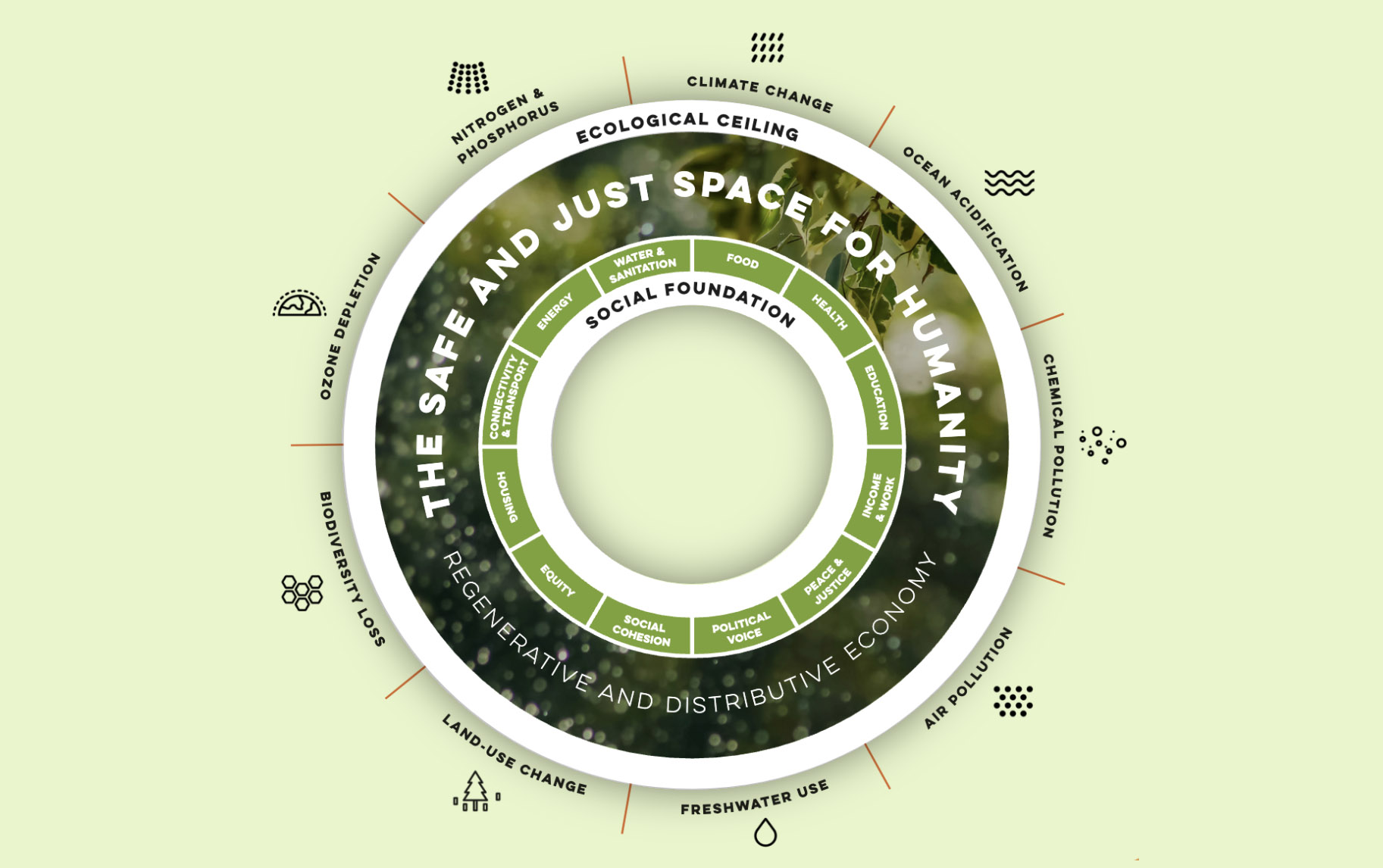
Doughnut framework. Source: California Doughnut Ecoonomics Coalition 2025 Assessment
Ironically, that day at the Vallejo Public Library, ahead of a talk on climate, the city was experiencing a power outage that disrupted the start of the lecture and left the library building too hot to stay inside. While waiting for a fix, myself and other attendees gathered some chairs and sat in the shade outside the library’s front gates.
To distract us from the heat, Singh began by asking us to introduce ourselves and name our favorite part of the economy. He shared that he loves agriculture, while others talked about bartering, small businesses, and land reclamation.
“Why are people scared of economics?” he asked. One person responded that economic jargon can confuse and intimidate people, and they eventually opt out of the conversation entirely. Others brought up economic inequality and the growing share of wealth controlled by the top 1% as a reason for disillusionment.
While still sitting in the heat, Singh explained that in this economic model, the hole in the middle of a doughnut represents social indicators like community, housing, and public transit — and funding allocations for these social services. The outer edge of the doughnut represents ecological elements like air and water quality or biodiversity, he said. Ultimately, the doughnut model is designed to force a community to balance all of its social and environmental needs.
As I listened, my biggest takeaway from this discussion was the idea of “civic imagination.” What is civically possible? What steps can a community take to benefit everyone? We brainstormed some ideas for community improvement, and we came up with better maintained parks, more accessible healthcare, and investment in third spaces.
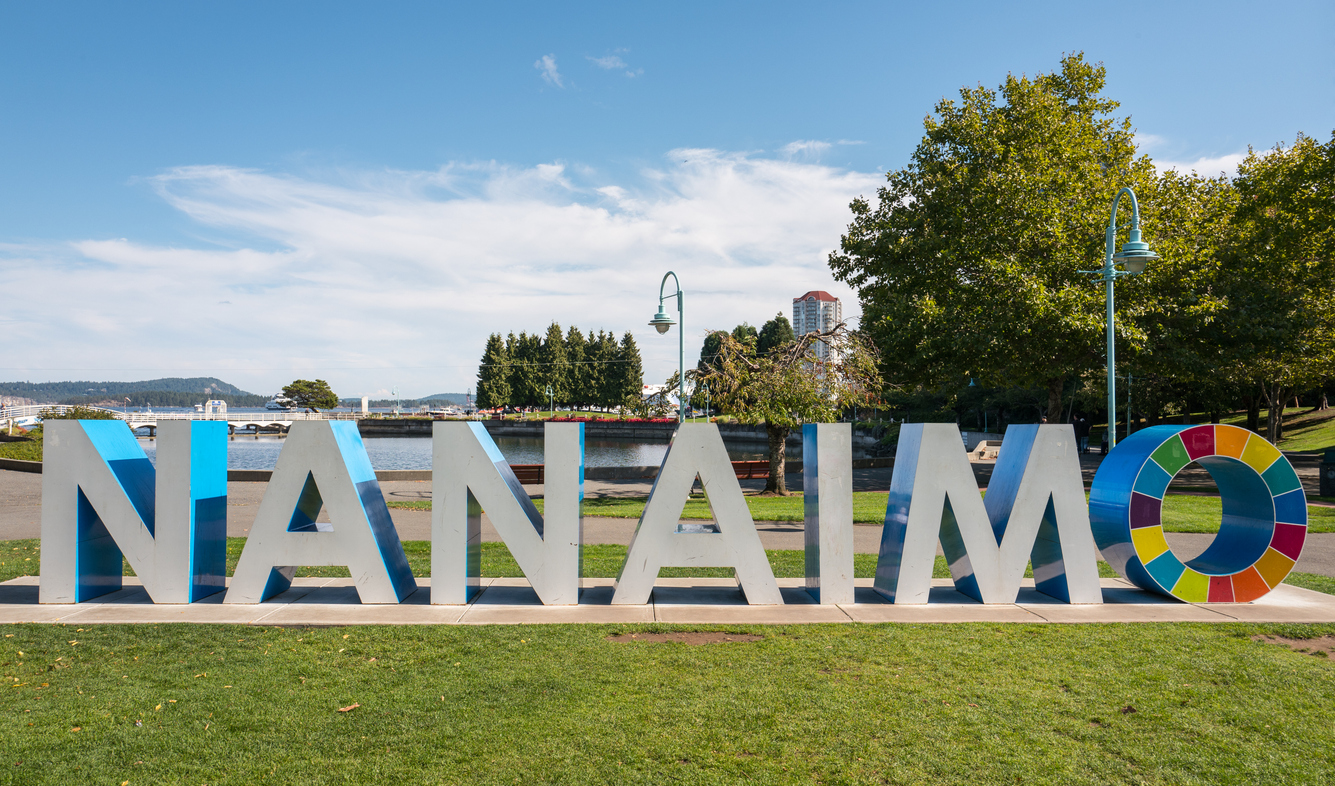
Photo: dbstockphoto
Nanaimo, a Canadian city near Vancouver, is one example of civic imagination. It was one of the first cities in the world to adopt the doughnut model as a strategy for assessing its needs, and today ranks first or second, depending on the ranking source, among the most livable places in Canada. In applying the model, the local government identified 23 factors to evaluate — including greenhouse gas emissions, food and water resources, and protection of natural areas — to ensure that the community and the environment are both thriving.
Toward the end of his talk, Singh emphasized that “you can’t create a regenerative economy if you’re not regenerating yourself,” and that it’s easy to get overwhelmed or burnt out with the state of the world.
Luckily, he concluded, there are many ways that you can fight your existential dread, including “creating doughnut snapshots for bioregions throughout California to improve policy decisions and public communication.”
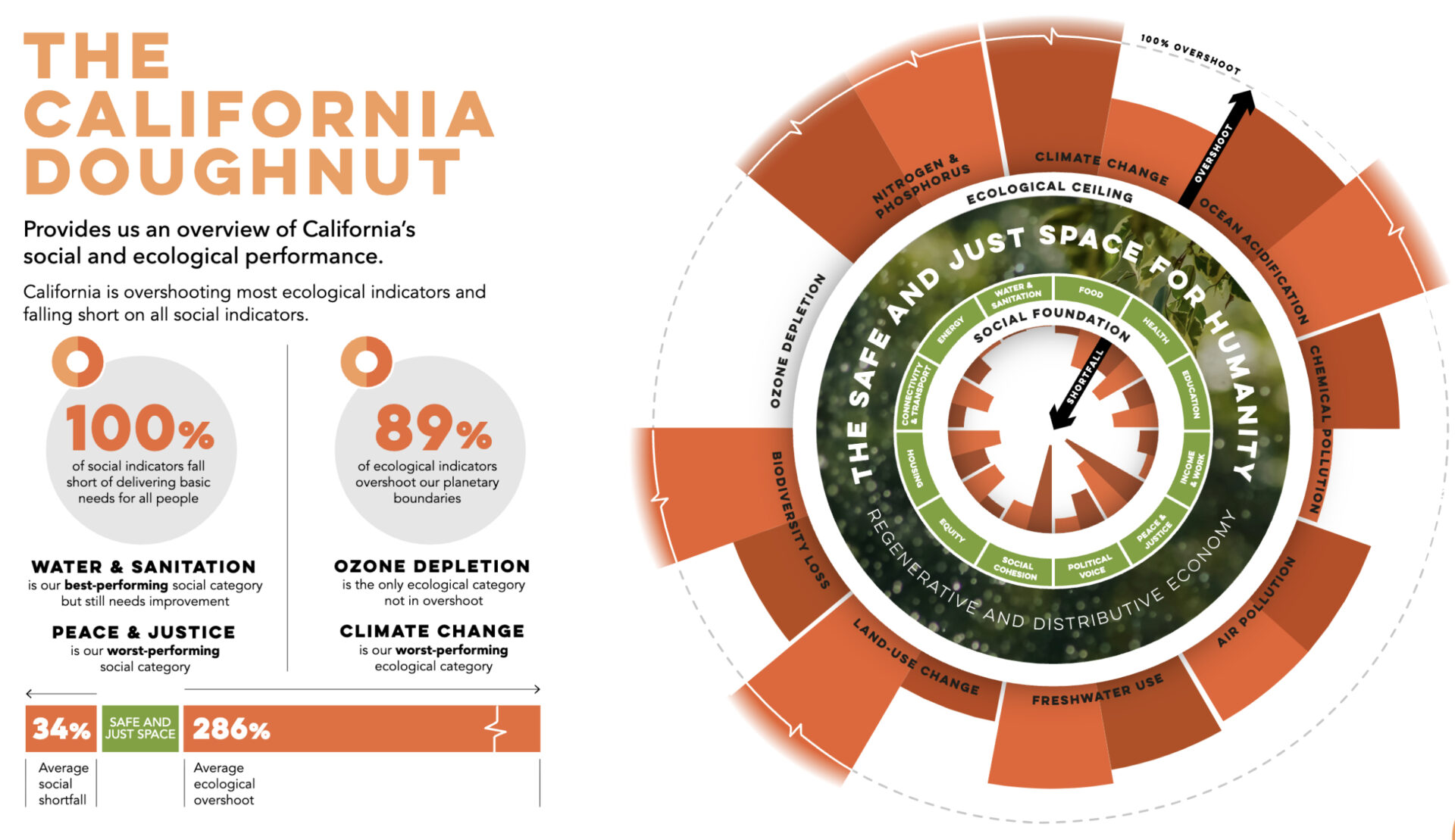
A 2025 report from the California Doughnut Economics Coalition assessed 42 social and ecological indicators of the state’s economic performance. Social indicators (such as education, transportation, food, and health) underperformed, with marginalized communities often having to carry the burden. Environmental indicators (such as climate change and ocean acidification) received a pretty bad grade. Despite California being an extremely prosperous state with an outstanding GDP, it falls short in both ecological and social sustainability.