




Dryer Vents Blow Hot Air & Microplastics

New research confirms that air vents on tumble dryers – rather than washing machines – may be a leading source of microplastic fibers from clothing in the environment. The findings, presented in a new report by the San Francisco Estuary Institute, provide convincing reason to hang-dry clothes and to use energy-intensive dryers sparingly, if ever.
Microplastics have emerged in recent years as one of the most concerning forms of pollution, with the insidious little particles being found, among other places, in ocean-caught fish, beer, and even placentas of unborn babies.
Kelly Moran, an SFEI senior scientist and the lead author of the report, says emerging science on microplastic fiber sources also creates a significant regional divide between the people of the United States and Canada and those of the much of the rest of the world, including Europe and New Zealand.
“Tumble dryers aren’t widely used there,” she says, explaining that people in these regions tend to hang-dry their clothes or use gentler, less abrasive – and more energy-efficient – ventless dryer machines. Rather than spew out hot – and fiber-laden – air, ventless dryers recirculate heated air inside the system while draining out evaporated water.
“These geographic differences may explain why dryer vents are an under-studied source of microplastic pollution,” Moran and her colleagues suggest in their 137-page analysis. The authors also cite research suggesting that some dryers may cause 3.5 times the shedding of microplastic fibers that some washers do.
Microplastic fibers vented from clothes dryers may be especially problematic in the United States. That’s because Americans’ household wastewater is typically processed in treatment plants which remove most plastic particles, whereas dryer-released fibers exiting buildings can be washed into storm drains that flow directly to creeks. Many European communities, Moran says, have a different system entirely by which storm drains empty into wastewater treatment plants.
The SFEI’s report suggests regulatory action that could help mitigate microplastic pollution. Moran and her colleagues propose stricter standards on apparel fabric quality to reduce shedding. Filtration systems on dryer vents could also be improved to reduce microfiber emissions. They also encourage governments to ease restrictions on using outdoor clotheslines to dry clothes.
Other Recent Posts
Fire Weather in the Wind
As the hot Nevada air cools every fall, it gets pushed west to lower pressure areas over the Central Valley, where the wind heats up and dries out.
My Morning Cleaning Up the Oakland Estuary
On Oakland’s Creek to Bay Day, I joined 100 volunteers for I Heart Oakland-Alameda Estuary to remove shoreline trash.
RCDs Pay Extra Attention to North Bay High Schoolers
A $15,000 grant will help three North Bay conservation districts evaluate youth education programs and prepare high school students for environmental careers.
Creeks Make Good & Bad Homes
San Jose State researcher Costanza Rampini explores why the houseless favor creek banks, and how they weather the flood risk.
Bay Area Braces for Record-Breaking El Niño
Record high water temperatures in the Pacific are expected to bring dangerous sea level rise, waves, and rain to the region this winter.
Regional Housing Agency Invests in Affordability
The Bay Area Housing Finance Authority is launching a loan program to support the construction of mixed-income rental properties.
The End is Coming for California’s Untouchable Grass
The law, which applies to grass that isn’t used for recreational purposes, could cut urban water use across California by more than 20% says Oakland thinktank.
Sonoma Vineyard Workers Burn toward a Better Future
A group of immigrant farmworkers are forming a worker-owned cooperative to bring back Indigenous burning practices that used to revitalize the soil.
Los trabajadores de los viñedos de Sonoma queman por un futuro mejor
Un grupo de trabajadores agrícolas inmigrantes está formando una cooperativa de propiedad de los trabajadores para recuperar las prácticas indígenas de quema que solían revitalizar el suelo año tras año.
New Voices Shape Design of Berkeley’s North Basin Strip
Twenty acres of parkland between the highway and the Berkeley shore are slated for a coast-resilient makeover, with input from locals and stakeholders.
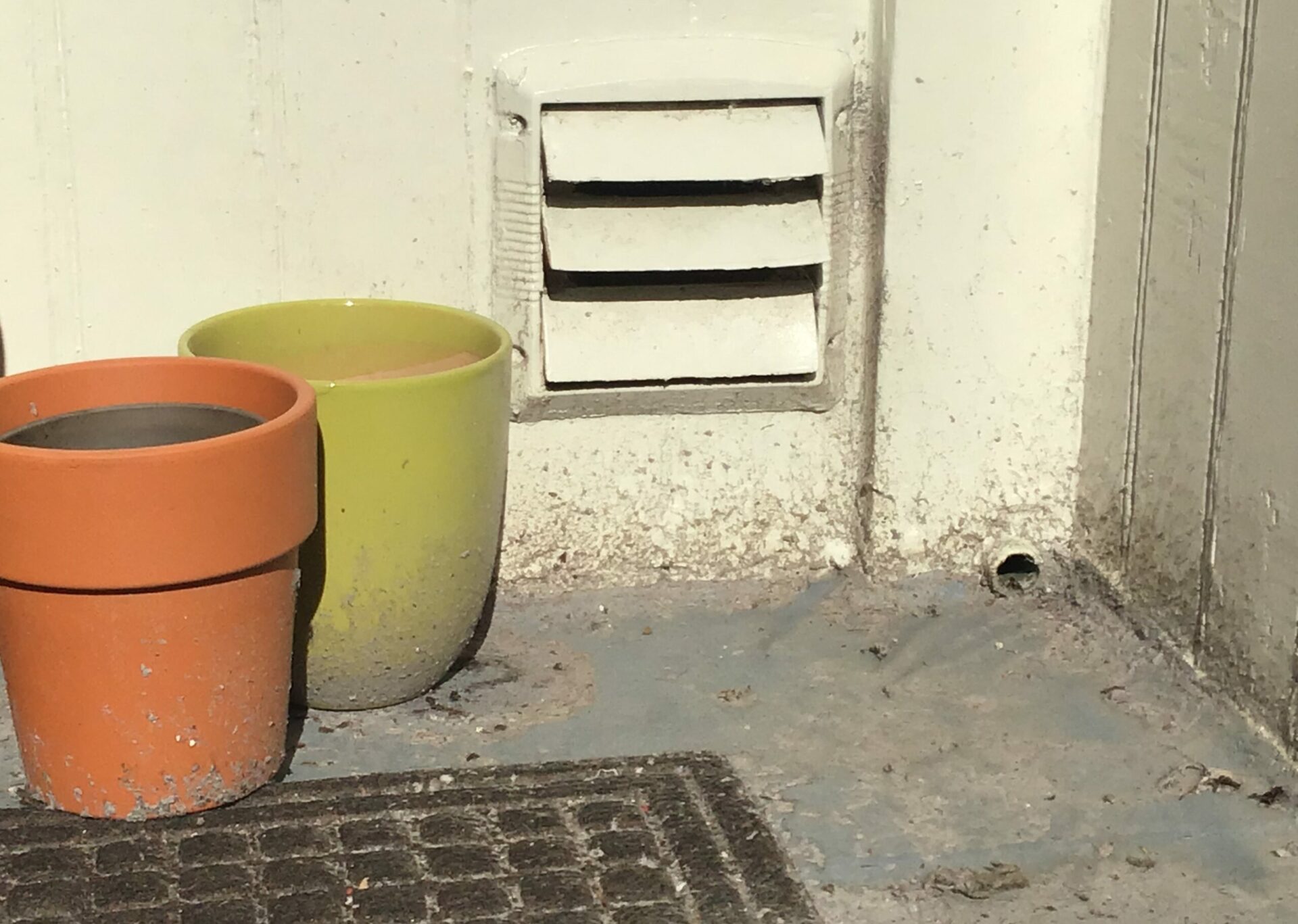
Dryer vent in San Francisco home.
Photo: Ariel Rubissow Okamoto
Moran says voluntary action at the individual level will also be helpful, primarily by avoiding dryer use when possible. “If you don’t have outdoor space, use an indoor folding rack – that’s what I do,” she says.
Though such solutions are seemingly obvious, reducing environmental pollution while improving energy efficiency and climate resilience, significant change will probably not come easily. “It’s difficult to change our lifestyles,” Moran says. “There’s a big gap between knowing what the solution is and doing it.”