


Changemaker Gets to Know Gilroy

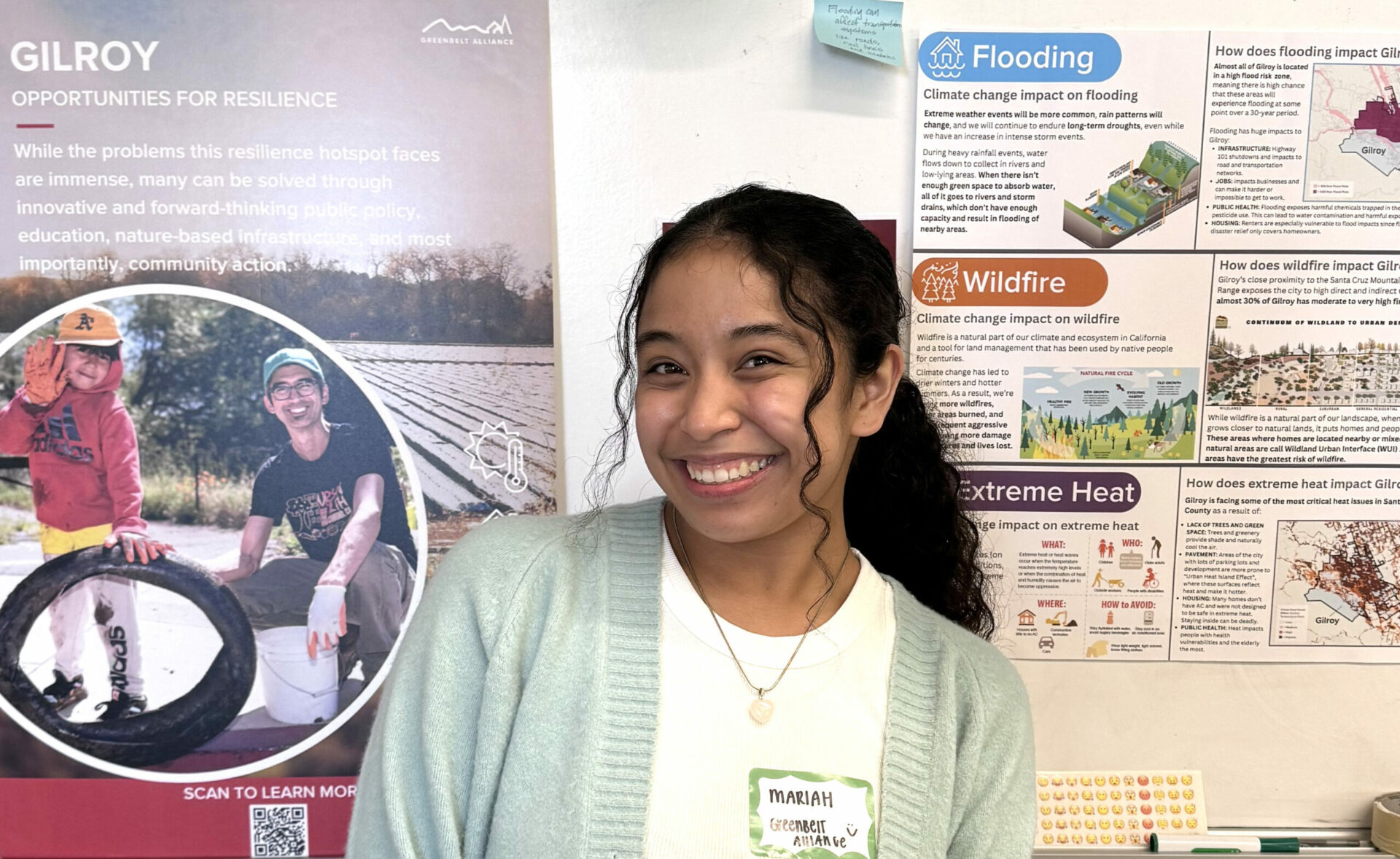
Mariah Padilla at Gilroy Public Library. Photo: Greenbelt Alliance
Mariah Padilla wants to help create positive change in the region she grew up in. As a Resilience Fellow at Greenbelt Alliance, a San Francisco Bay Area nonprofit organization working on regional conservation and climate resilience initiatives, Padilla is working with Gilroy community members facing severe impacts of flooding, wildfire, and extreme heat.
Gilroy and East San Jose are among 18 hotspots where communities are at greatest risk of climate hazards in the Bay Area, according to Greenbelt Alliance. Gilroy, a town about 16 miles south of San Jose known as the “Garlic Capital of the World,” is historically an agricultural community and home to about 60,000 residents. In February 2024, Greenbelt Alliance, along with the Community Agency for Resources, Advocacy and Services, Tenacious Group, and Ashes to Beauty, received a $470,000 grant from the California Strategic Growth Council to improve climate adaptation and emergency resources in East San Jose and Gilroy. CARAS works directly with Latino youth and families on issues such as immigration, voting rights, student advocacy, and workforce development and protections.
“I am excited to learn more about what these communities need,” says Padilla, who is also a current graduate student in the Master of City Planning program at UC Berkeley. Prior to graduate school, Padilla worked on projects related to tribal climate resilience, sea level rise, and coastal resilience planning with the California Governor’s Office of Planning and Research.
As part of her fellowship, Padilla helped Greenbelt and CARAS host a Forum For a Greener Future at the Gilroy Public Library. The January forum, attended by over 40 community members and local organizations, included extreme heat surveys and community visioning activities.
“What we really heard from the community is that they didn’t feel prepared for the climate impacts they have been facing,” she says. “Many [people] didn’t know where emergency evacuation sites were. They wanted an opportunity to learn about climate change and how to best prepare themselves.”
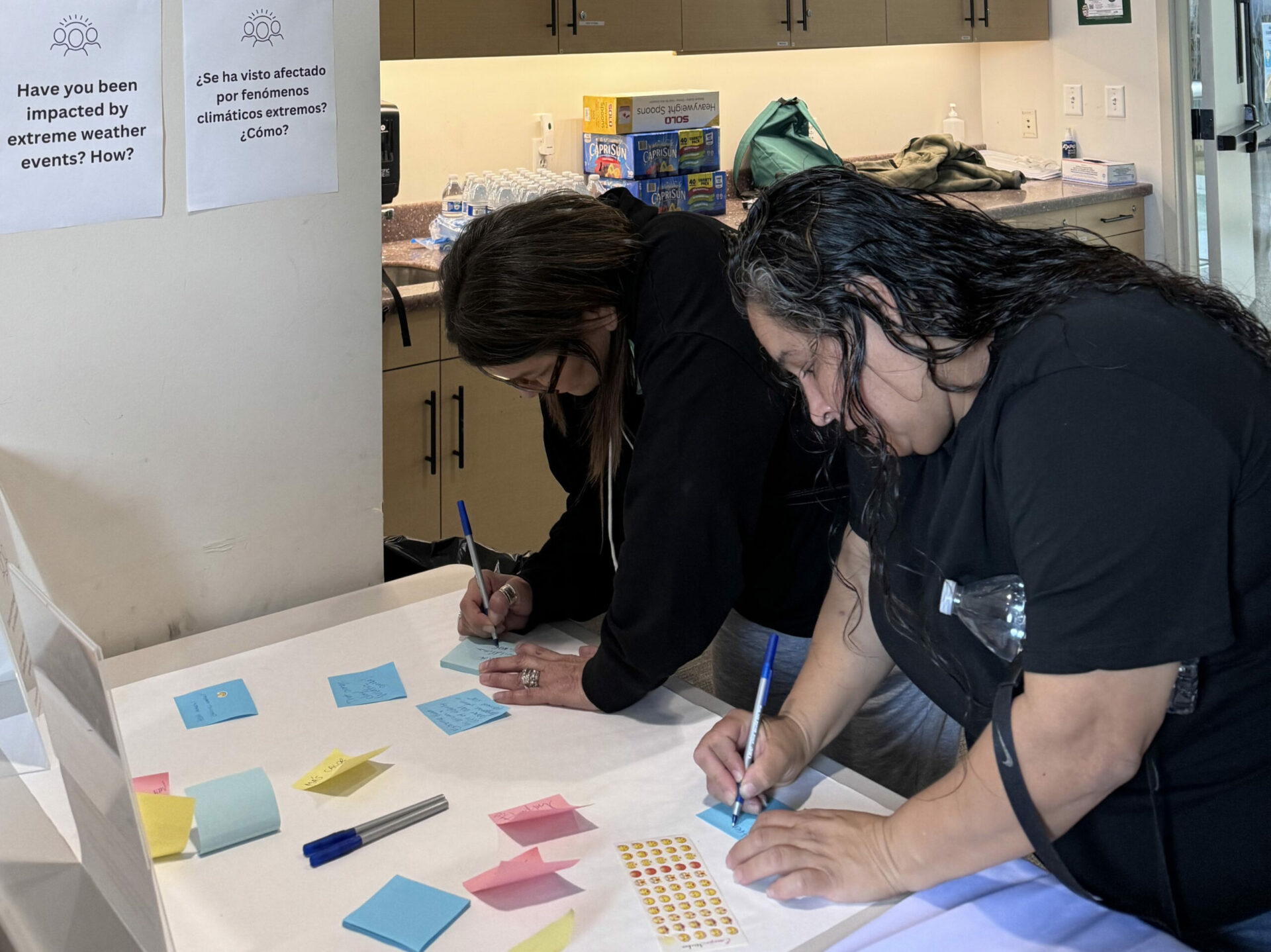
Photo: Greenbelt Alliance
The event organizers, in turn, wanted to ensure that the voices and needs of community members would play a central role in the process of creating a resilience hub in Gilroy. As Padilla explained, the community engagement process will ultimately determine what the resilience hub looks like, and how it can serve both Gilroy and East San Jose. But the idea is to support residents and coordinate resource distribution and services before, during, and after a climate emergency.
In response to the digital divide (unequal access to smartphones, computers, and the internet), and the lack of centralized resources for climate emergencies in Gilroy, Padilla is also developing a multi-hazard disaster preparedness guide. Padilla is developing the guide as a part of her university coursework and fellowship. Her goal is to disseminate it – both in print and on the County of Santa Clara website – as a living toolkit for the community.
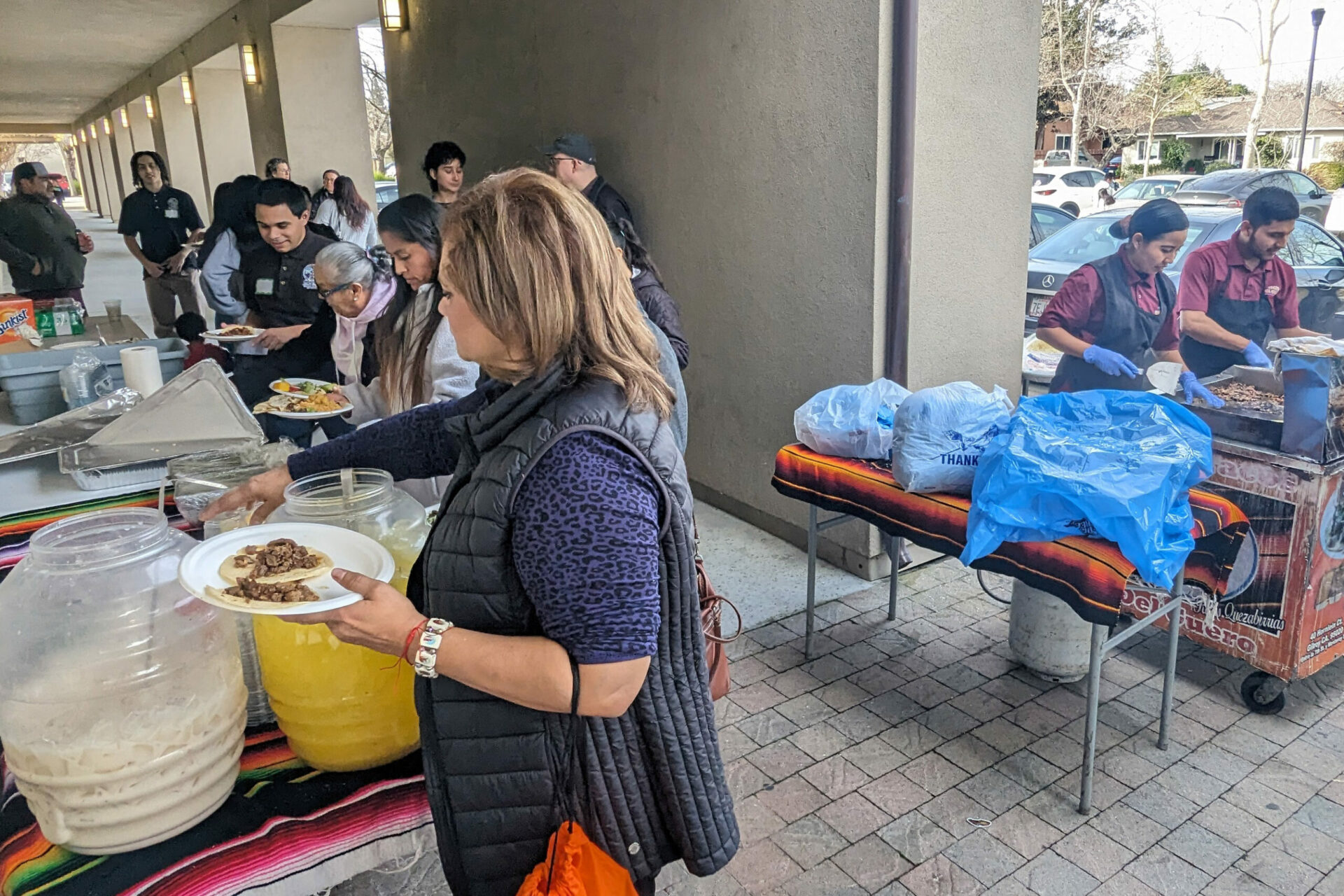
Enjoying the food offerings at Gilroy’s Forum For A Greener Future. Photo: Greenbelt Alliance
Padilla grew up in South San Francisco, and although her community has not experienced extreme heat or flooding, its housing crisis is directly tied to the climate crisis. From extreme weather conditions to wildfire smoke, climate impacts can physically damage housing properties and structures, lead to increased housing costs, and also influence where and how new housing should be built, she says.
As a woman of color in planning, which she says is a historically white, male-dominated field, Padilla strives to advocate for more equitable city planning by centering community voices throughout the planning process.
“We are seeing the resilience hub in Gilroy actually coming to fruition, which will foster community climate resilience and everyday resilience,” says Padilla. “It shouldn’t just be a space for when climate disasters happen. It should be a space where community members can come together.”
Other Recent Posts
How Can I Get Clean, Green, Climate-Forward Job Training in the Bay Area?
Looking for a hands-on job working outdoors that actually pays? Here’s a list of training programs.
Santa Rosa Residents Rethink Trees
The heat-burdened Roseland neighborhood is learning how to monitor temperatures and developing an action plan focused on tree shade.
How to Make Conservation a Career
California nonprofits are developing paid apprenticeships to prepare workers for the growing ecological restoration economy.
Raft of Resilience Initiatives Keeps Tahoe Blue
Beach robots, boat inspections, forest thinning, and wetland restoration are among the projects helping the lake confront environmental threats.
Weathering the Present While Training for the Future
A stewardship immersion experience from the School for Inclement Weather and Weaving Earth combines ecological knowledge and spiritual connection.
Feds Meddling With Protections For California Coast
NOAA is reviewing California’s Coastal Management Program in a renewed push for offshore oil and gas drilling.
New Study Shows Rain Gardens Filter Chemicals Out of Stormwater
Scientists found rain gardens dramatically reduce toxic chemicals in stormwater while providing biodiversity and cooling.
The Tricky Art of Growing Oysters in the Lab So They Can Survive in the Field
The Nature Conservancy, the Amah Mutsun Tribal Band, and others are growing oysters in the lab and planting them in the wild in estuaries around San Francisco Bay.
Printing Without Plastic: The Vintage Machine Winning Over Eco-Conscious Artists
This comic guide to risograph printing explains how the 1980s Japanese machine cuts energy use and avoids plastic toner.
East Bay Kids Fight Extreme Heat in their Schoolyards
Many California schools are ill-equipped to tackle heat, with many campuses lacking sufficient tree coverage. These students are fighting to change that.