


Wildlife Rolls With Wildfire
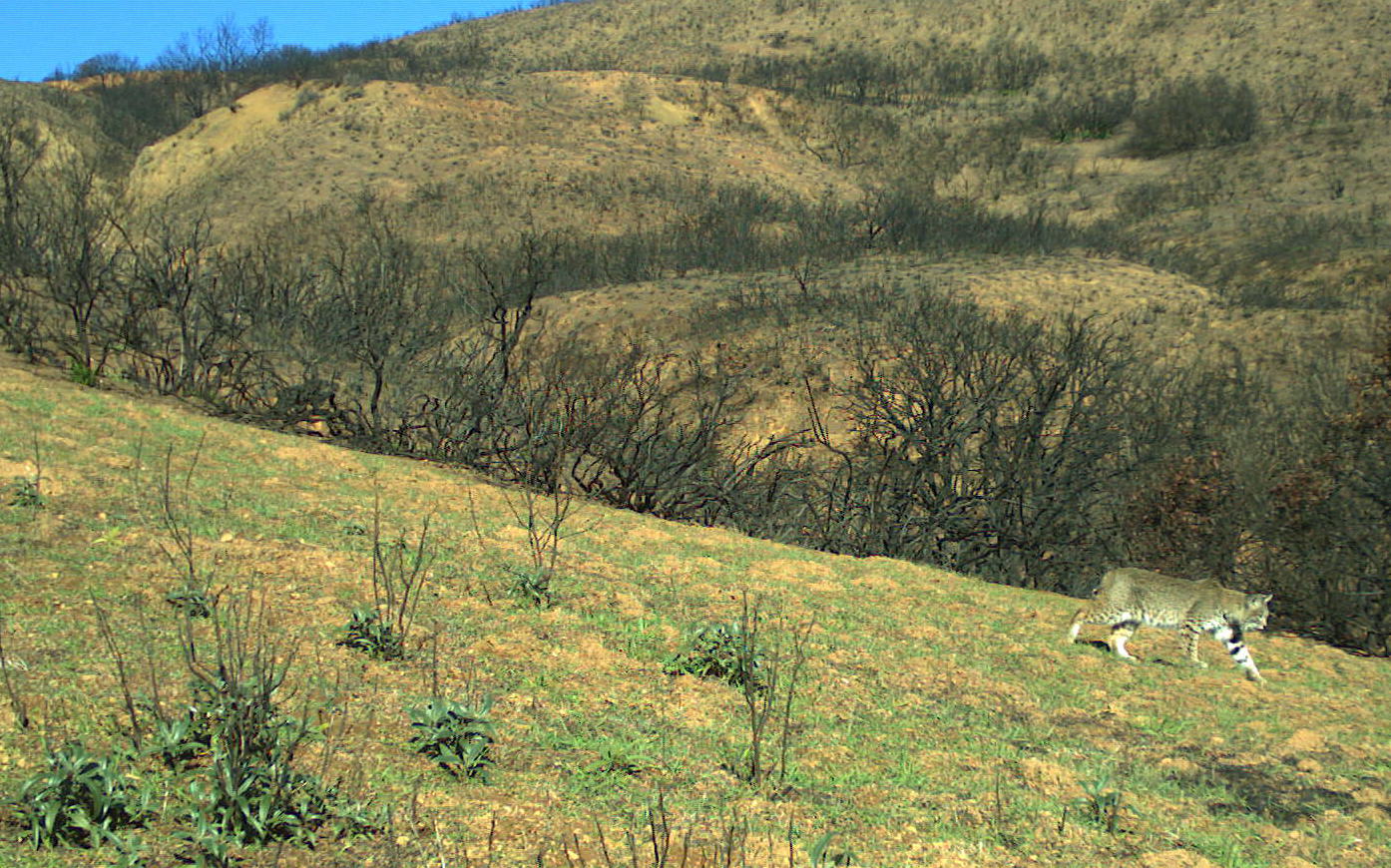
Imagine a Mad Max-style wasteland, ravaged by wildfire — but populated by a scene straight out of Disney’s Snow White: foxes, jackrabbits, and other woodland fauna frolicking around as usual. That’s what Kendall Calhoun, PhD candidate and researcher at UC Berkeley’s Brashares lab, was surprised to see just months after one of California’s biggest megafires. Even when our iconic oak trees and grassland savannas go up in flames, these mammals are tougher than you might think.
The 2018 Mendocino Complex Fire raged across large swaths of Northern California, including the 5,300-acre UC Hopland Research and Extension Center located on the Russian River. “It was really scary,” Calhoun says, “because people live on site. There was a big rush to evacuate. The fire ended up burning more than half of the area.”
His July 2023 study in the journal Ecosphere, one of the first to examine wildlife before and after a megafire, revealed that most species of small- and medium-sized mammal showed “strong resistance” to the effects of the Mendocino fire. Using 36 motion-sensor camera traps, his team captured over half a million snapshots from March 2016, more than two years before the fire, and December 2020, more than two years after. They found that coyotes, black-tailed jackrabbits, gray foxes, racoons, striped skunks, and bobcats returned to the area at the same frequency pre- and post-fire.
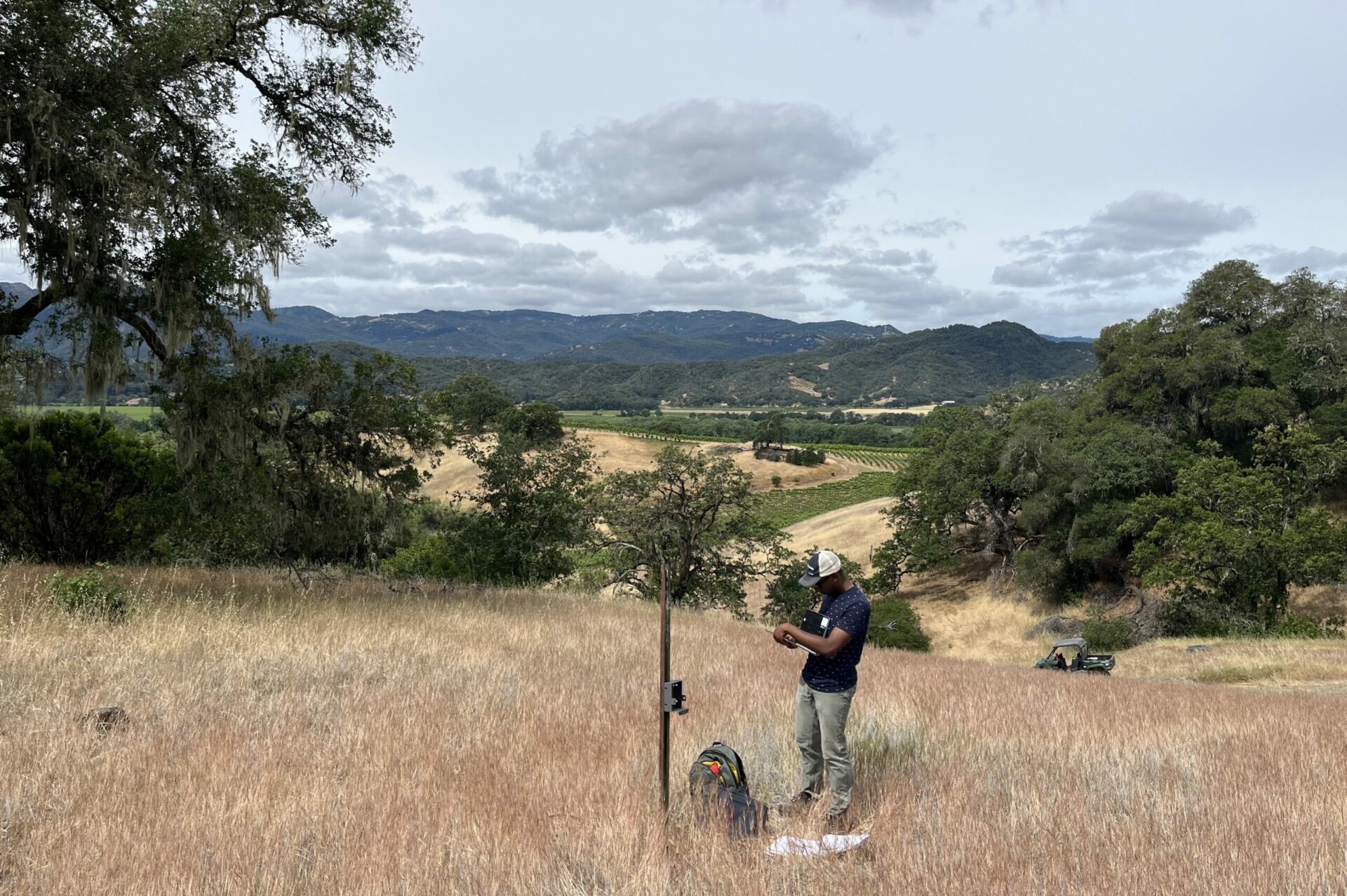
Dr. Kendall Calhoun checking a monitoring camera in Sonoma. Photo: Jackie Mara Beck, Brashares Lab, UC Berkeley.
The team’s theory is that even small remnants of tree cover provide sufficient food and resources for these species to survive an otherwise barren landscape. Professor Justin Brashares, the head of Calhoun’s lab, explains, “Even this incredibly hot and devastating fire still managed to leave behind little unburnt patches. We were surprised at how quickly many species were able to move into those habitat patches and then spread back out into the burned areas as they recovered.”
All of this is a valuable lesson for environmental scientists and policymakers. “Our main policy solution for a while was to suppress all fires, but that has created some paradoxical problems,” says Calhoun. “Now we have many high fuel load areas that are ready to burn, especially since climate change is making weather events more extreme.” His team recommends shifting to preventative techniques like grazing or prescribed burning, which reduce wildfire intensity while retaining these vital oases of tree canopy.
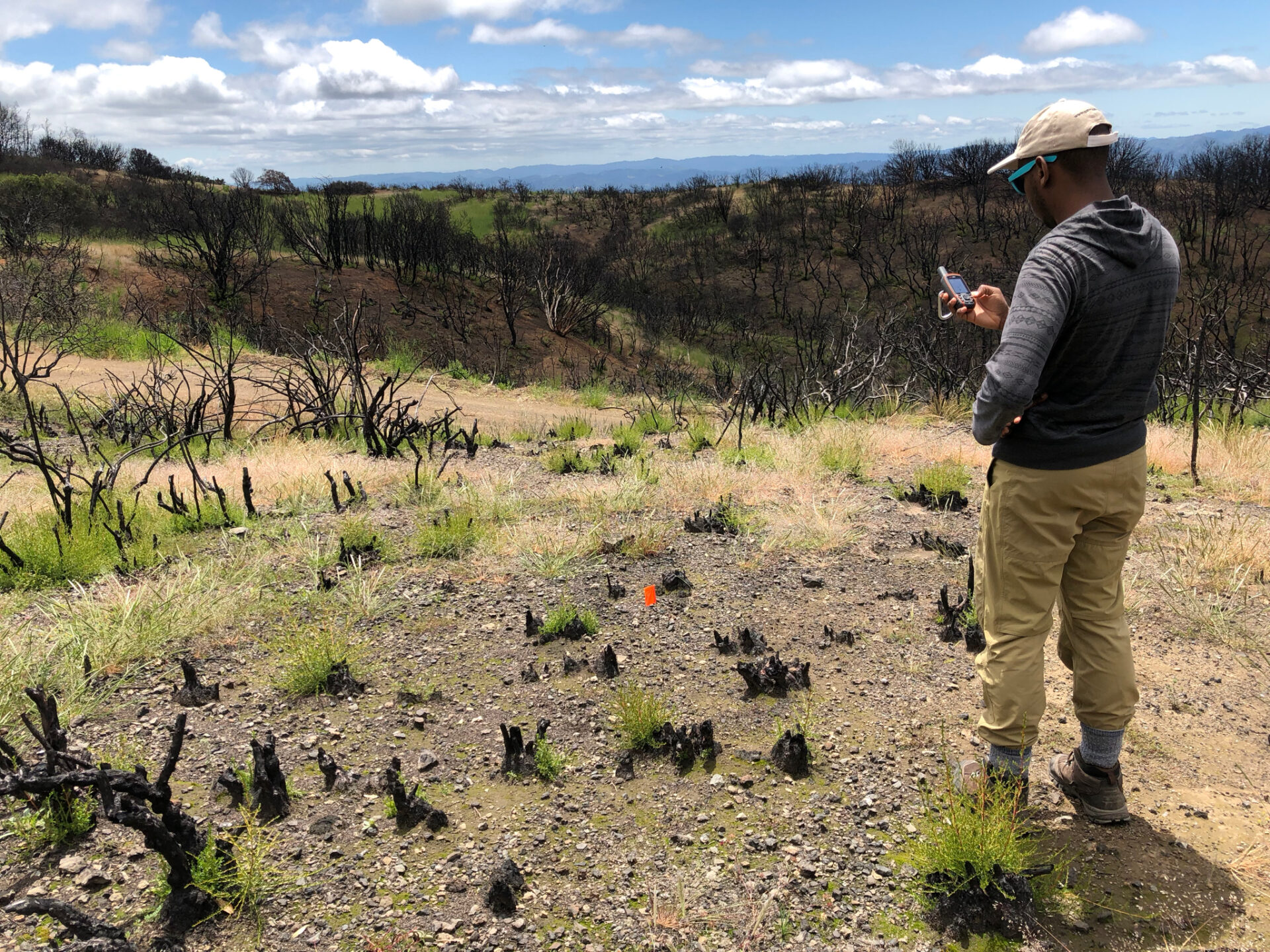
Calhoun uses a GPS unit to take some location fixes at the Hopland field site ten months after the fire. Photo: Adam Langton Burnell, Brashares Lab, UC Berkeley.
Not all species in Calhoun’s study were so quick to adapt to the fires. Western gray squirrels and black-tailed deer proved slower to return to the area, with squirrels struggling especially because they spend the majority of their time in trees. And Calhoun suspects that apex predators like black bears and mountain lions could take even longer to recover. “There’s a lot of research coming out now that suggests that climate change might exacerbate conflicts between wildlife and people, because we’re both increasingly dependent on fewer and fewer resources that are burned or dried out by drought and fire. I’d love to investigate if, for example, the San Jose fires have been pushing animals into urban spaces.”
Calhoun says that continuing to study the after-effects of wildfires can help California improve wildfire policies over time. “Another project I’m trying to kick off is a region-wide monitoring project, so we’ll be able to predict how animals will respond to future fires. California’s ecosystem has already adapted to account for wildfire — we just have to learn to coexist with it.”
Other Recent Posts
How Can I Get Clean, Green, Climate-Forward Job Training in the Bay Area?
Looking for a hands-on job working outdoors that actually pays? Here’s a list of training programs.
Santa Rosa Residents Rethink Trees
The heat-burdened Roseland neighborhood is learning how to monitor temperatures and developing an action plan focused on tree shade.
How to Make Conservation a Career
California nonprofits are developing paid apprenticeships to prepare workers for the growing ecological restoration economy.
Raft of Resilience Initiatives Keeps Tahoe Blue
Beach robots, boat inspections, forest thinning, and wetland restoration are among the projects helping the lake confront environmental threats.
Weathering the Present While Training for the Future
A stewardship immersion experience from the School for Inclement Weather and Weaving Earth combines ecological knowledge and spiritual connection.
Feds Meddling With Protections For California Coast
NOAA is reviewing California’s Coastal Management Program in a renewed push for offshore oil and gas drilling.
New Study Shows Rain Gardens Filter Chemicals Out of Stormwater
Scientists found rain gardens dramatically reduce toxic chemicals in stormwater while providing biodiversity and cooling.
The Tricky Art of Growing Oysters in the Lab So They Can Survive in the Field
The Nature Conservancy, the Amah Mutsun Tribal Band, and others are growing oysters in the lab and planting them in the wild in estuaries around San Francisco Bay.
Printing Without Plastic: The Vintage Machine Winning Over Eco-Conscious Artists
This comic guide to risograph printing explains how the 1980s Japanese machine cuts energy use and avoids plastic toner.
East Bay Kids Fight Extreme Heat in their Schoolyards
Many California schools are ill-equipped to tackle heat, with many campuses lacking sufficient tree coverage. These students are fighting to change that.