



Enough Mud to Fill 670 Skyscrapers?
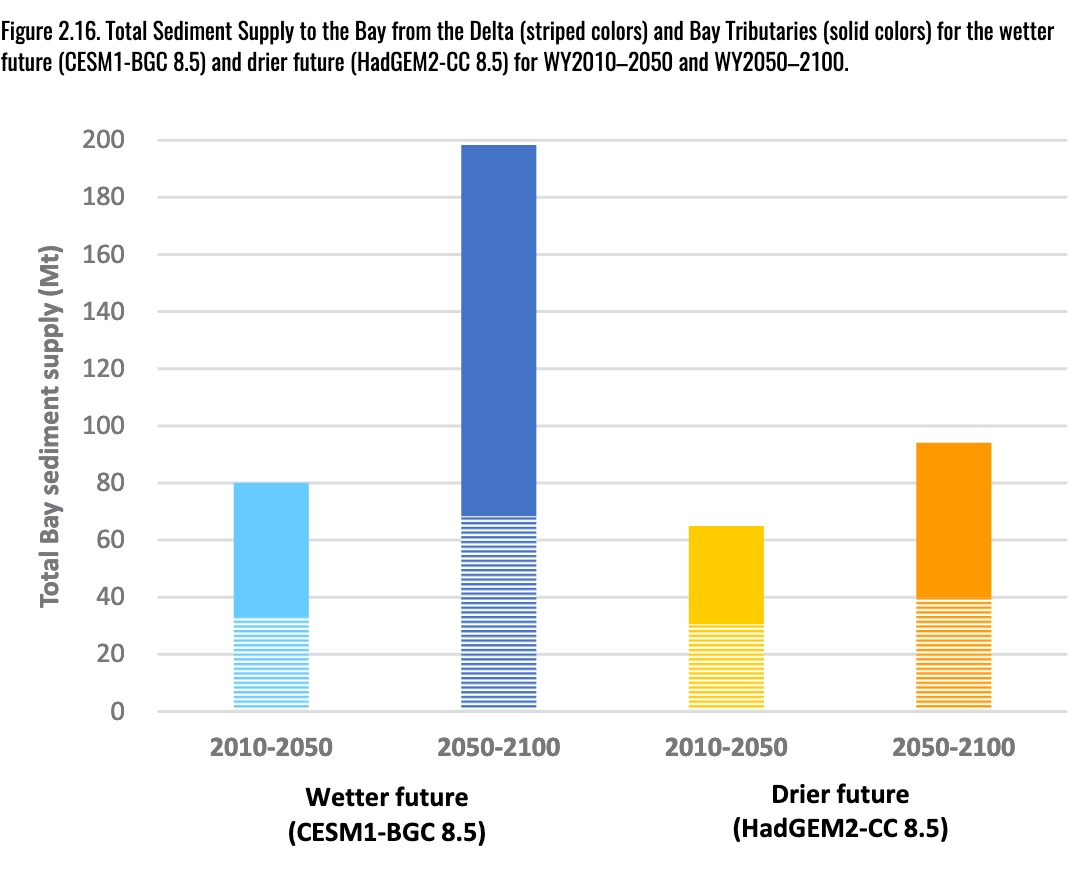
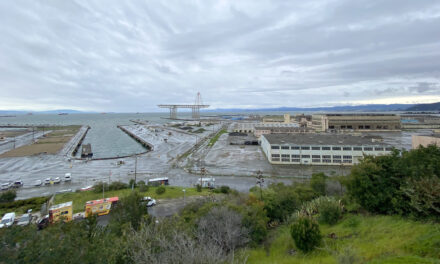
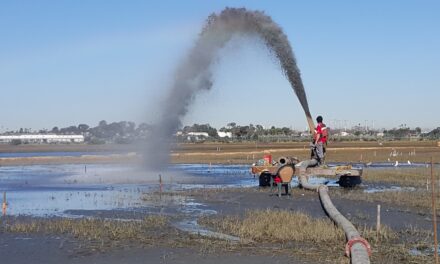
How much mud do we need to save Bay Area marshes from rising seas and how will we move it into position? If the future is drier there’s one answer, and if it’s wetter another (see chart), but the ballpark is 477,000,000 cubic yards. That’s the amount of sediment needed to sustain the ring of wetlands now protecting shoreline communities and infrastructure from a rising Bay, according to a new SF Estuary Institute report. Moving this much sediment into the right places–enough to fill the Sales Force skyscraper 670 times–will require the largest multi-decade public works project in the Bay Area’s history, says the Institute’s Warner Chabot. The report explores various nature-assisted methods of deploying the necessary material, ranging from spraying mud on the marsh surface and seeding it into the water column to placing it in the shallows near needy marshes. It also does a supply and demand breakdown, and reviews various sediment sources. Some, like dredged sediment now dumped at sea, are being wasted at a time when every grain is gold. Hard edges don’t have much flex when it comes to changing conditions, so climate-ready infrastructure needs to be softer and greener. Indeed, the local push to reinvent Bay Area shorelines defines exactly what Biden’s reimagined infrastructure for the 21st century is all about. Science-based solutions with an assist from nature.
Other Recent Posts
Feds Meddling With Protections For California Coast
NOAA is reviewing California’s Coastal Management Program in a renewed push for offshore oil and gas drilling.
New Study Shows Rain Gardens Filter Chemicals Out of Stormwater
Scientists found rain gardens dramatically reduce toxic chemicals in stormwater while providing biodiversity and cooling.
The Tricky Art of Growing Oysters in the Lab So They Can Survive in the Field
The Nature Conservancy, the Amah Mutsun Tribal Band, and others are growing oysters in the lab and planting them in the wild in estuaries around San Francisco Bay.
Printing Without Plastic: The Vintage Machine Winning Over Eco-Conscious Artists
This comic guide to risograph printing explains how the 1980s Japanese machine cuts energy use and avoids plastic toner.
East Bay Kids Fight Extreme Heat in their Schoolyards
Many California schools are ill-equipped to tackle heat, with many campuses lacking sufficient tree coverage. These students are fighting to change that.
How a North Bay Regional Park Helped Me Reconnect With Nature — and Myself
A young Fairfield resident reflects on how hiking during the pandemic became a refuge from digital overload and the growing realities of climate change.
Wild Pigs Rough Up Bay Area Greens
They tear up landscapes in search of food, prey on native wildlife, and damage streams, and warming could bring them closer to urban areas.
Residents Chose Different Ways to Respond to Contra Costa Flood Challenges
Graduates of a shoreline leadership program in Contra Costa County recently pitched their ideas for sea level rise education and adaptation.