

Weaving Fire Protection Out Of What’s Already There
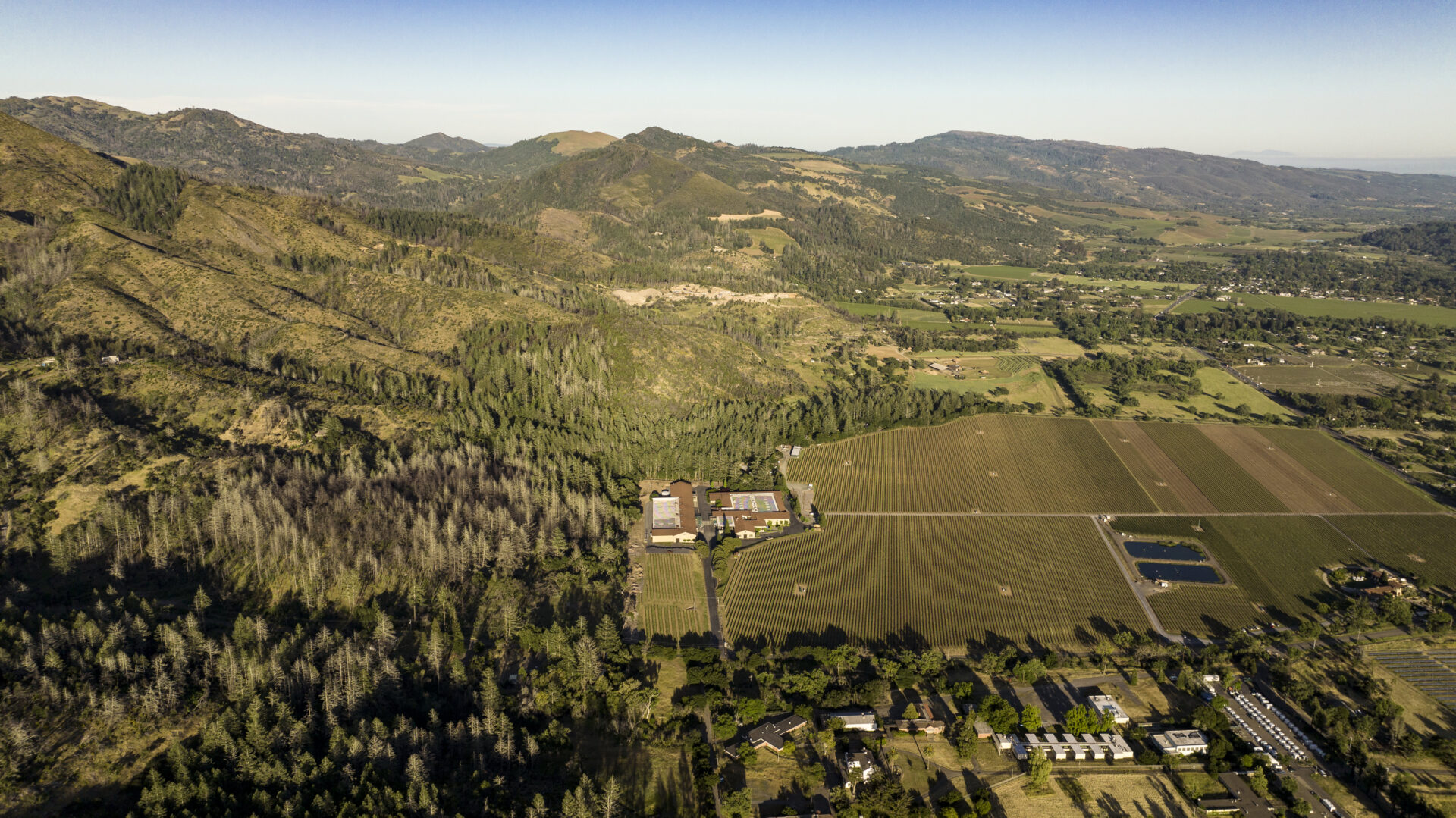
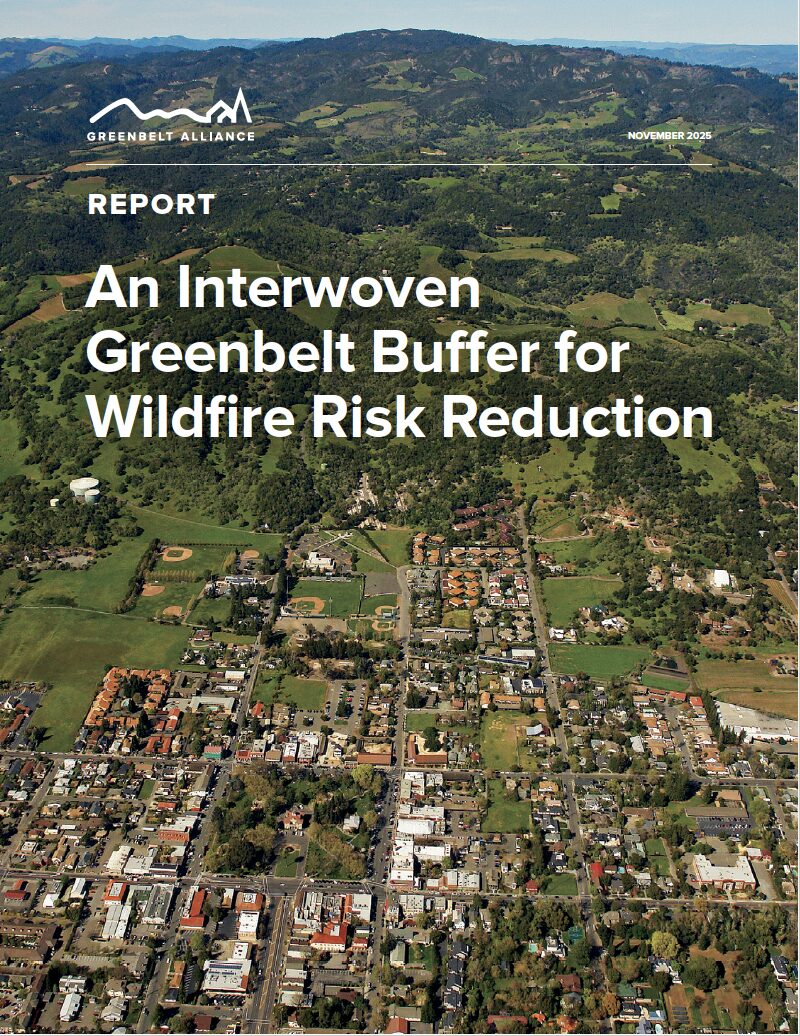
In the hillsides above Sonoma Springs, a patchwork of vineyards and oak woodlands already does something remarkable: it slows wildfire. The challenge is figuring out how to stitch together this natural advantage with the surrounding land into something that can protect an entire community.
That’s the puzzle the Greenbelt Alliance tackles in their latest report, and the solution they’ve landed on is refreshingly pragmatic. Instead of trying to buy up and convert a continuous ring of publicly owned greenbelt — impossibly expensive in places where houses nestle between working vineyards and private woodlands — they propose knitting together what’s already there. They call it the Interwoven Greenbelt Buffer: a mosaic of irrigated farmland, managed grasslands, and strategically thinned forests that collectively mimics the protective effects of a traditional greenbelt.
The pilot site reveals why this matters. Sonoma Springs is typical of vulnerable communities across the West: dense residential development bleeding into hillsides owned by dozens of small private landowners, with narrow evacuation routes and a population that includes many renters and non-English speakers who face extra barriers to preparing for fire. One in eight Californians now lives in the most dangerous fire zones, and insurance companies are bailing.
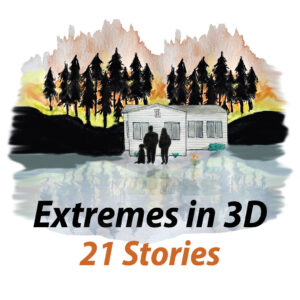
Art: Greenbelt Alliance
Other Recent Posts
How Can I Get Clean, Green, Climate-Forward Job Training in the Bay Area?
Looking for a hands-on job working outdoors that actually pays? Here’s a list of training programs.
Santa Rosa Residents Rethink Trees
The heat-burdened Roseland neighborhood is learning how to monitor temperatures and developing an action plan focused on tree shade.
How to Make Conservation a Career
California nonprofits are developing paid apprenticeships to prepare workers for the growing ecological restoration economy.
Raft of Resilience Initiatives Keeps Tahoe Blue
Beach robots, boat inspections, forest thinning, and wetland restoration are among the projects helping the lake confront environmental threats.
Weathering the Present While Training for the Future
A stewardship immersion experience from the School for Inclement Weather and Weaving Earth combines ecological knowledge and spiritual connection.
Feds Meddling With Protections For California Coast
NOAA is reviewing California’s Coastal Management Program in a renewed push for offshore oil and gas drilling.
New Study Shows Rain Gardens Filter Chemicals Out of Stormwater
Scientists found rain gardens dramatically reduce toxic chemicals in stormwater while providing biodiversity and cooling.
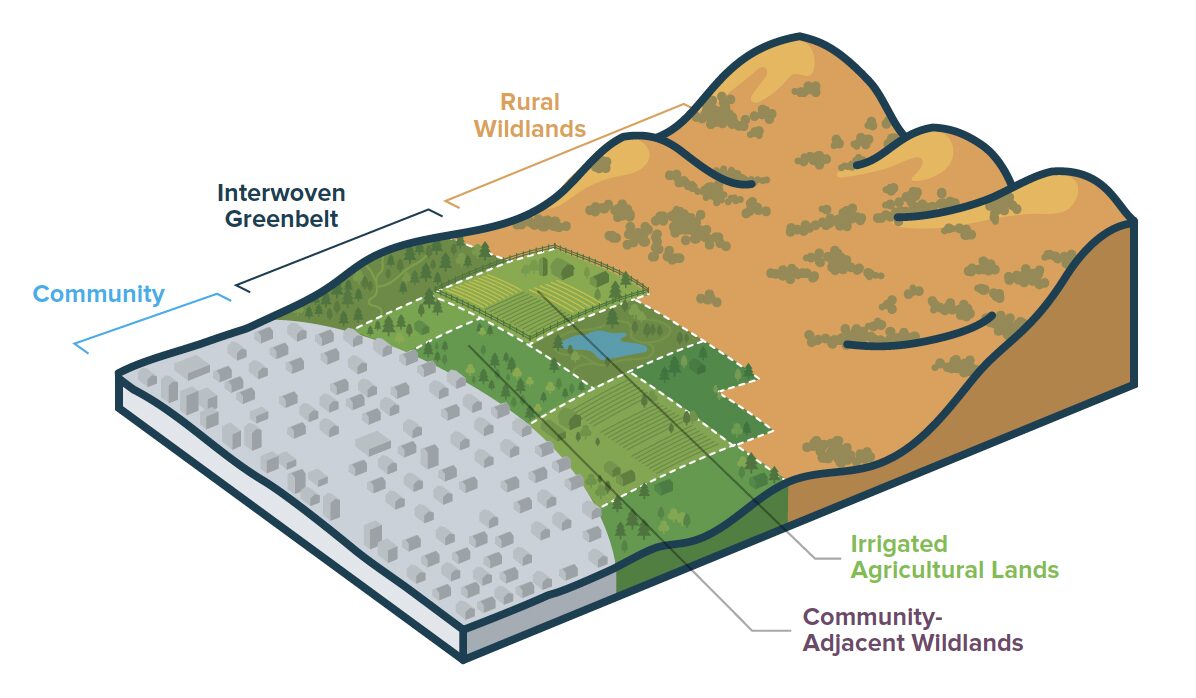
The report breaks the landscape into four zones, each with its own fire personality and management needs. The Community Zone, the residential core, needs widespread home hardening and defensible space. The Community-Adjacent Wildlands Zone faces the biggest challenges for resilience, with steep slopes and many privately-owned parcels. The Agricultural Zone includes the irrigated vineyards that proved their worth during the 2017 Nuns Fire in Sonoma, and can serve as a crucial fire break. And the Rural Wildlands Zone is a critical habitat and migration pathway with fire-adapted species that can benefit from prescribed burns.
Greenbelt Alliance lays out examples of what it will take to make this work: funding mechanisms like assessment districts or insurance partnerships, policy tools like overlay zones, and a coordinating body — perhaps a Fire Safe Council, homeowner’s association, or joint powers agreement — to herd all those private landowners toward collective action. It’s complex, admittedly. But it’s easier than relying only on land acquisition and easements — and it’s a lot easier than living in the path of fire without help.