



Field Photos: How Oysters Make The Move From Lab to Slough
In a collaborative partnership among Elkhorn Slough National Estuarine Research Reserve, The Nature Conservancy, the Amah Mutsun tribe and more, the Native Oyster Restoration Science project aims to restore Olympia oyster population numbers over the next 50 years, bringing one hectare—or 10 million oysters—back to the region.
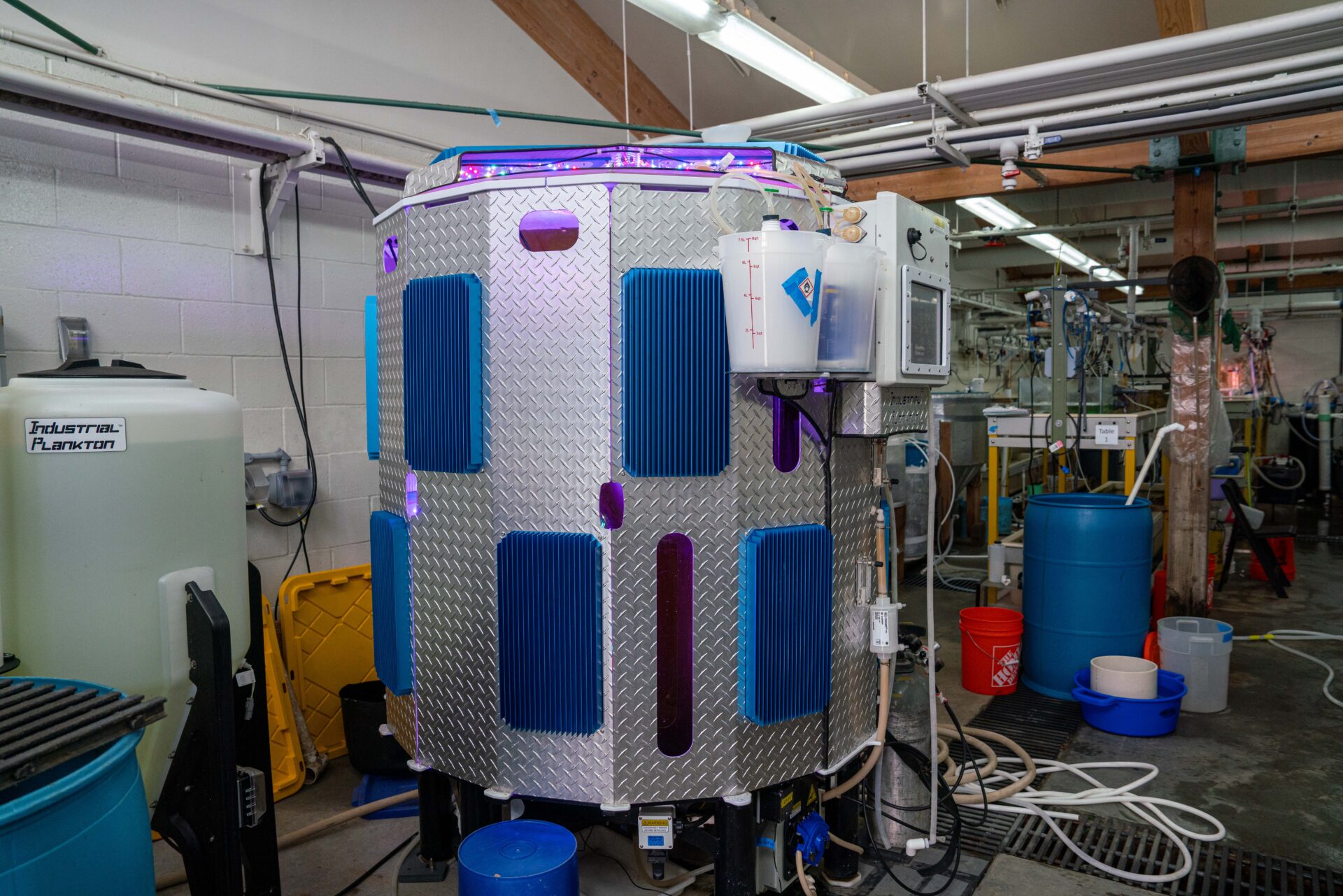
Photo: Katie Rodriguez
Conception begins at the Moss Landing Marine Labs aquaculture facility in Monterey County, where Olympia oysters broodstock are spawned. Eventually, millions of these oysters will be outplanted in the Elkhorn Slough, a winding estuary that extends inland from the Monterey Bay. Pictured above is a controlled system where food for developing oysters is carefully grown.
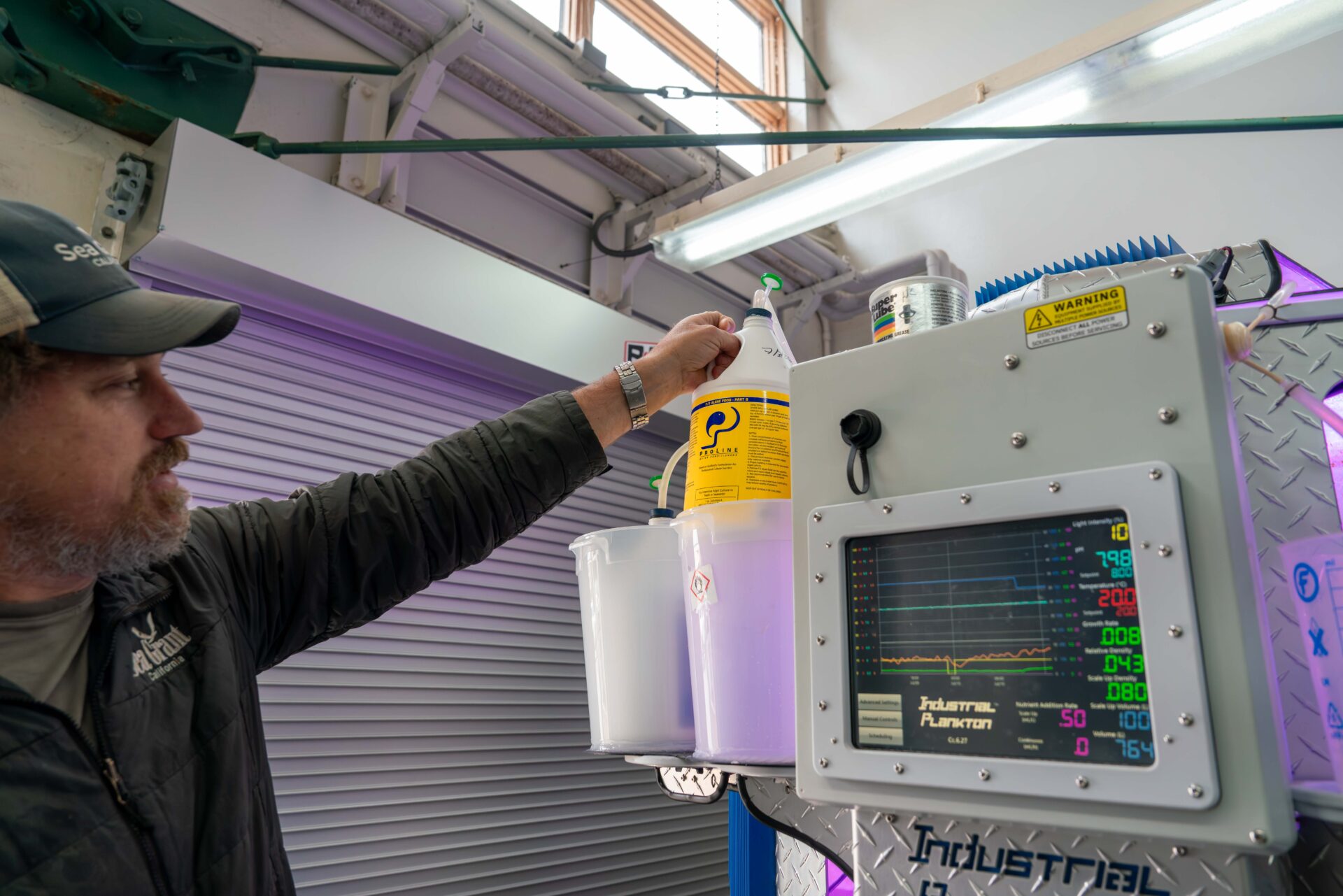
Photo: Katie Rodriguez
Growing oyster food—microalgae—is a delicate science. “The hardest part about growing oysters is growing the food for them,” says Luke Gardner, an aquaculture specialist at Moss Landing Marine Labs. Gardner compares growing microalgae to cultivating a garden, one has to manage a mix of environmental factors well to keep weeds and unwanted organisms from taking over. They closely monitor the type of algae they’re using, the culture, what they’re cleaning the tanks with—all to make sure that it has the right amount of nutrients to thrive, but not so much that the algae grows dense enough to turn the water too alkaline, where the pH is so high that the algae dies.
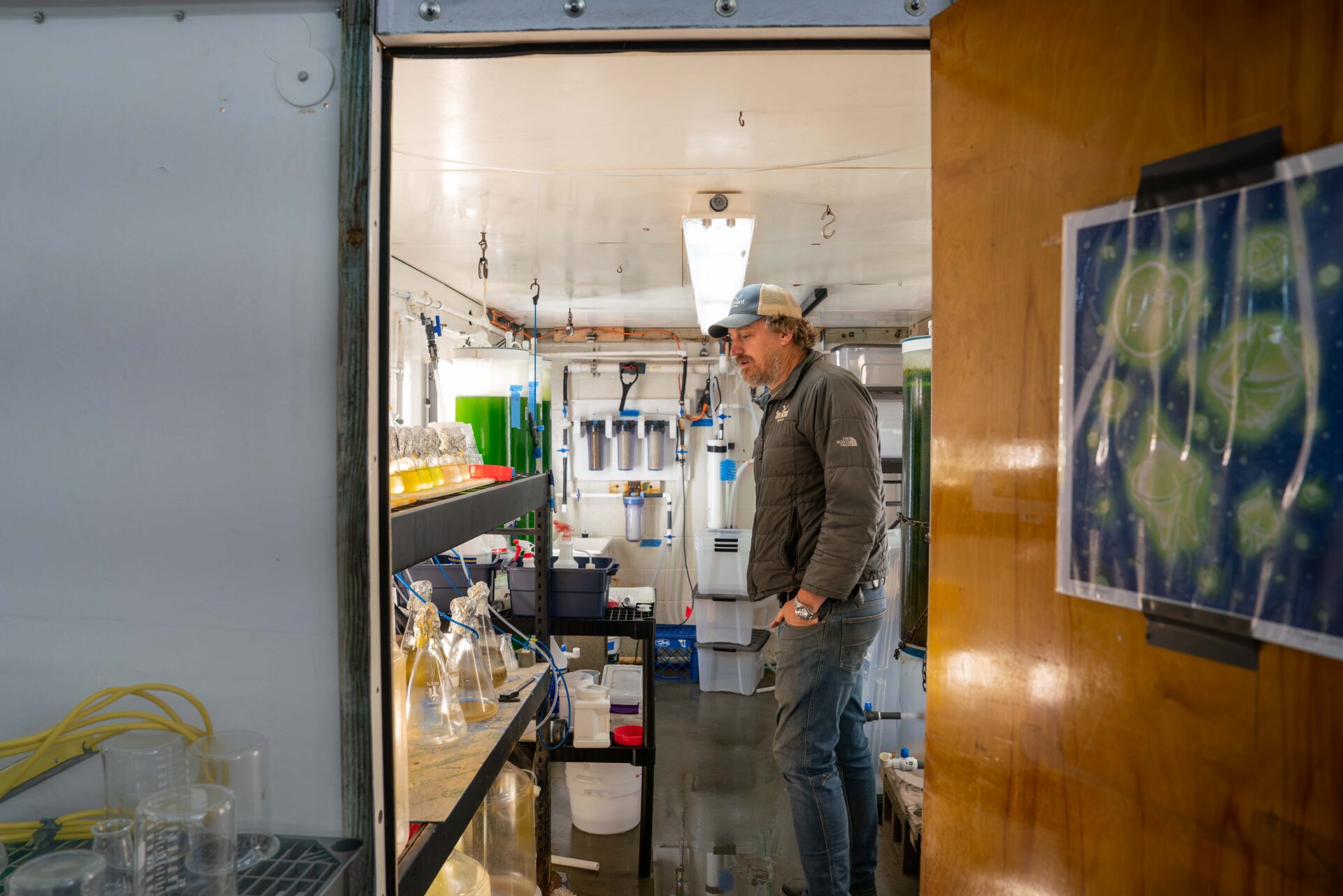
Photo: Katie Rodriguez
Similar to how seaweeds have red, brown and green species, so do microalgae. Here, researchers experiment with a variety of kinds that represent different nutrient portfolios. One might have more protein, another might have a better amino acid—researchers experiment with a range of species to see which food is taken up best by oysters at different parts of their life cycle.
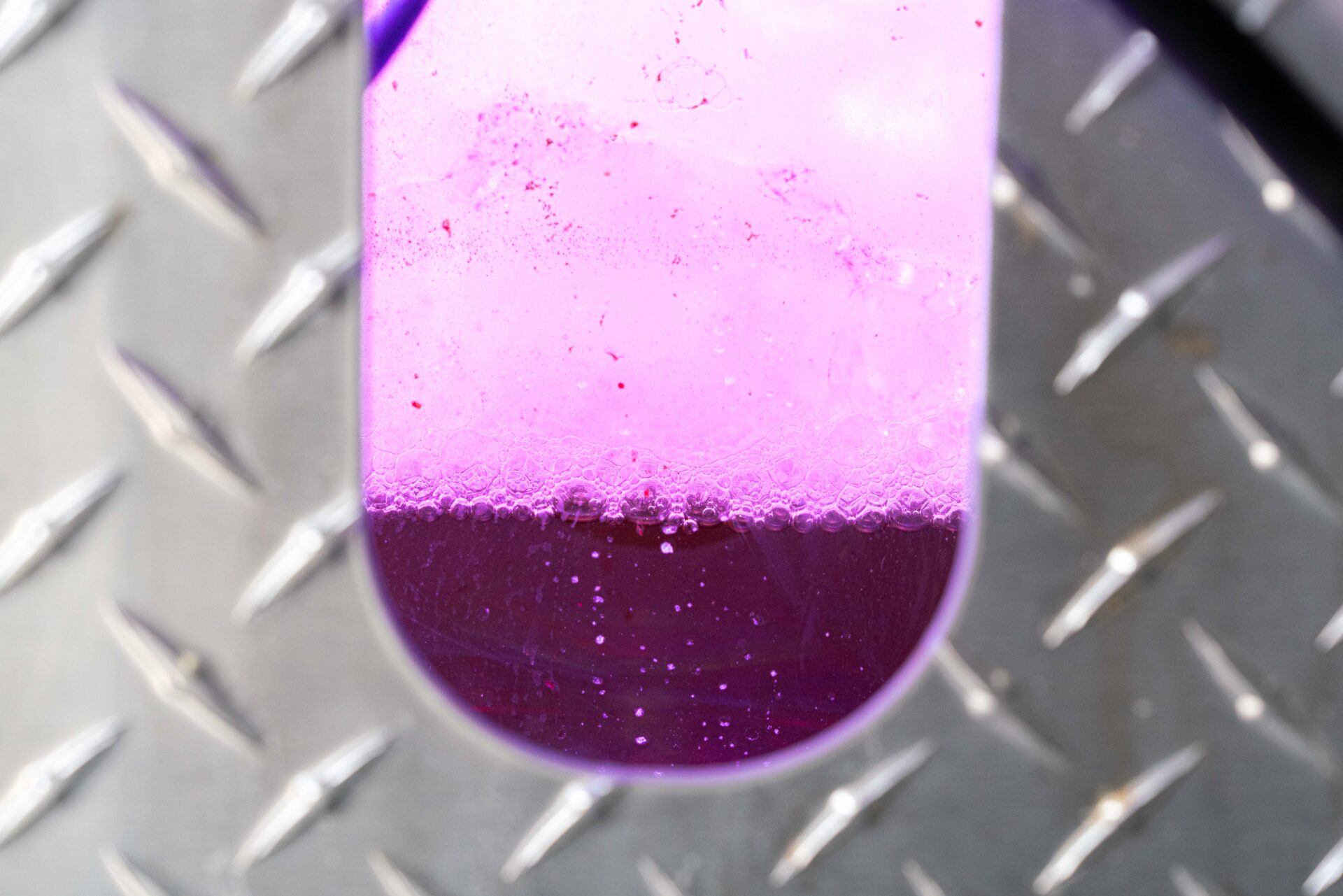
Photo: Katie Rodriguez
Microalgae are the foundation of aquatic food webs. In an aquaculture setting, they need many of the same conditions found in the wild: light, proper nutrients like nitrogen and phosphorus, carbon dioxide, and the right temperature and salinity. But the plants also need a variety of wavelengths, represented by the different colored lights inside the TK machine to create an optimal growing environment and prevent dense algae cultures from shading one another.
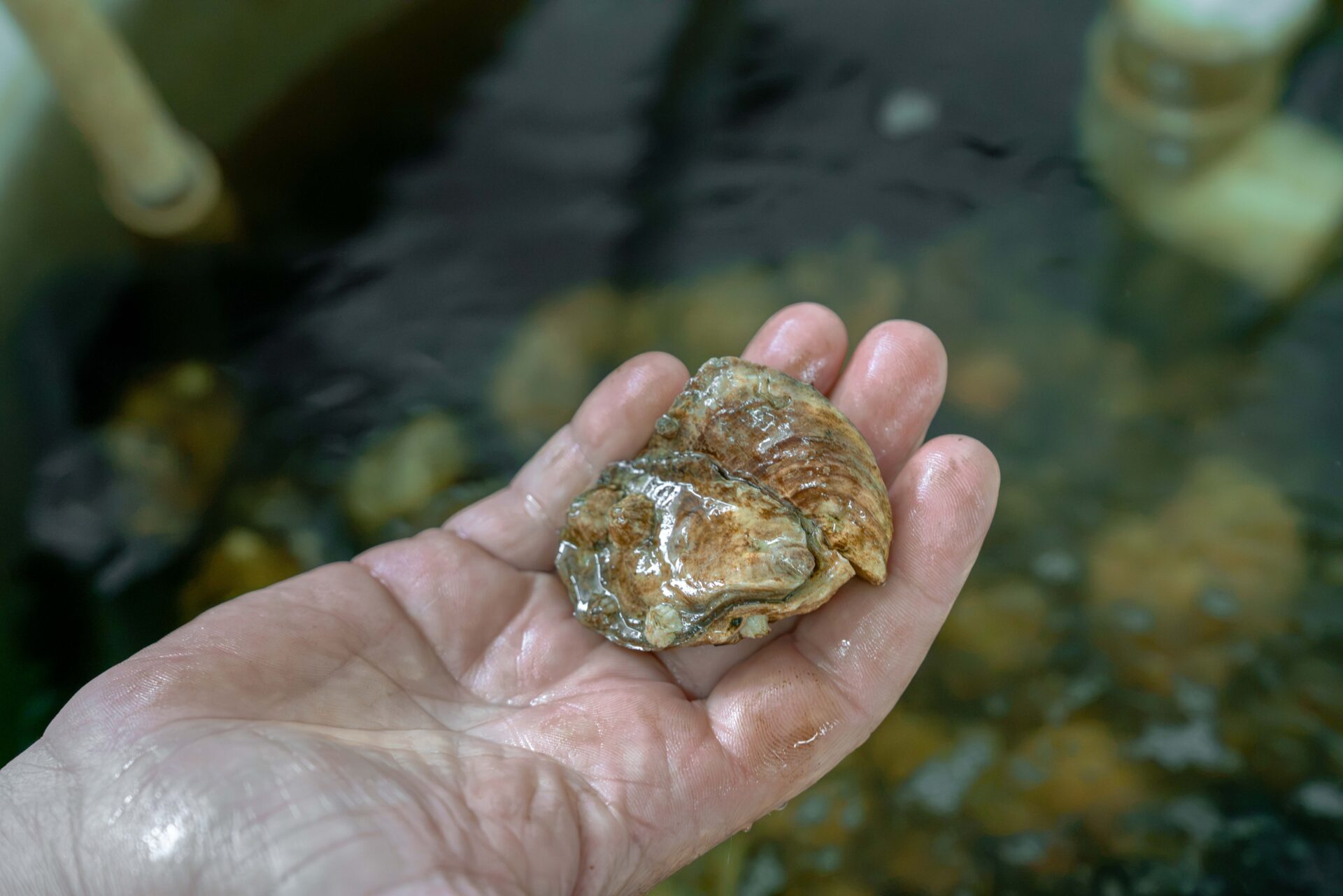
Photo: Katie Rodriguez
Gardner pulls out one of the adult oysters from a group resting on trays in the water. These oysters will eventually be responsible for breeding the next generation of babies to be outplanted at the Elkhorn Slough. The time for the oysters to breed is a bit of an unknown, the bivalve tends to start breeding when they’re “really happy or really unhappy,” Gardner says.
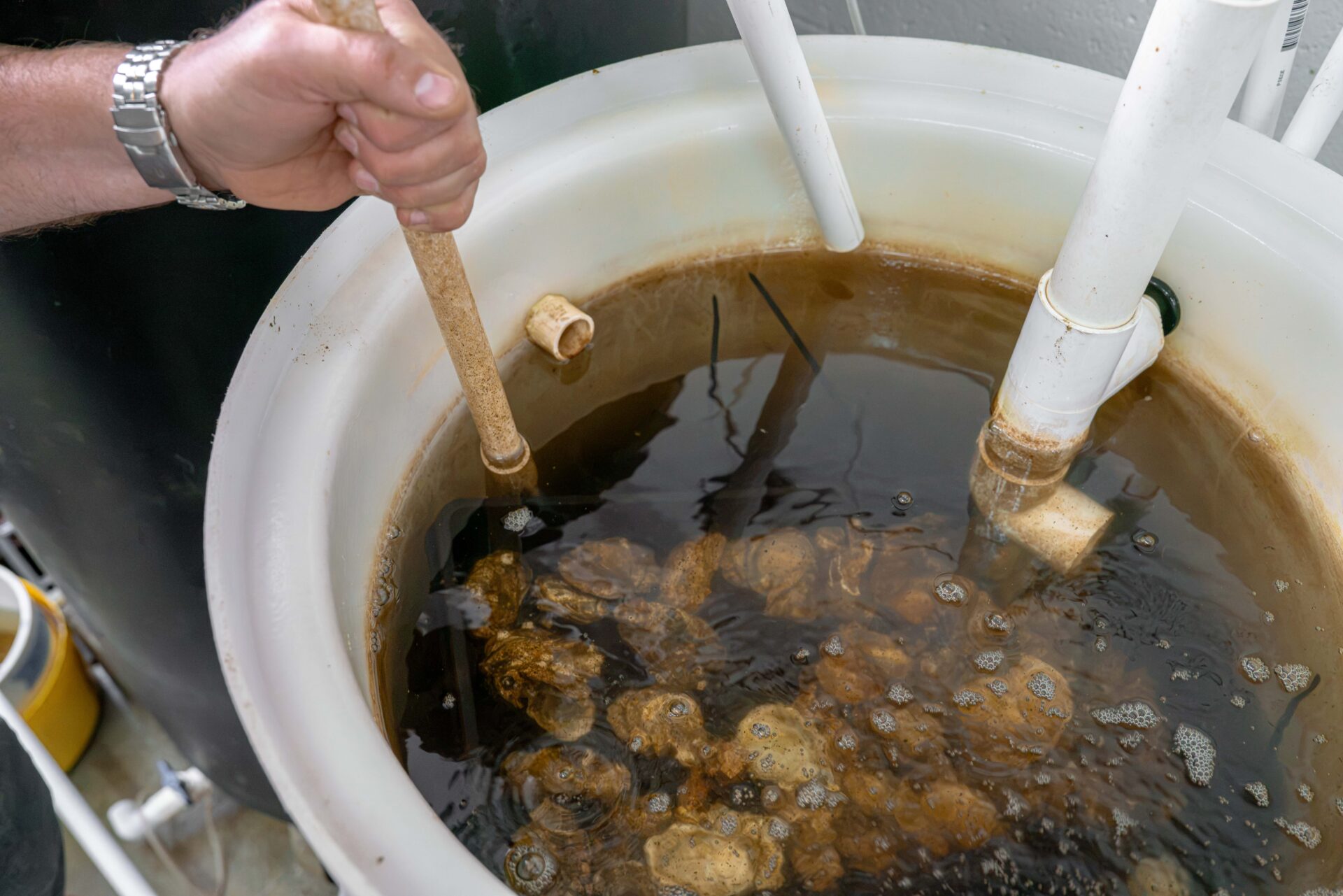
Photo: Katie Rodriguez
Olympia oysters are alternating hermaphrodites, meaning they change sexes throughout their adult lives. When they breed, one of these tubs will have millions of larvae; the successful ones get piped out into another tub and fed various types of microalgae as they grow and settle on a substrate.
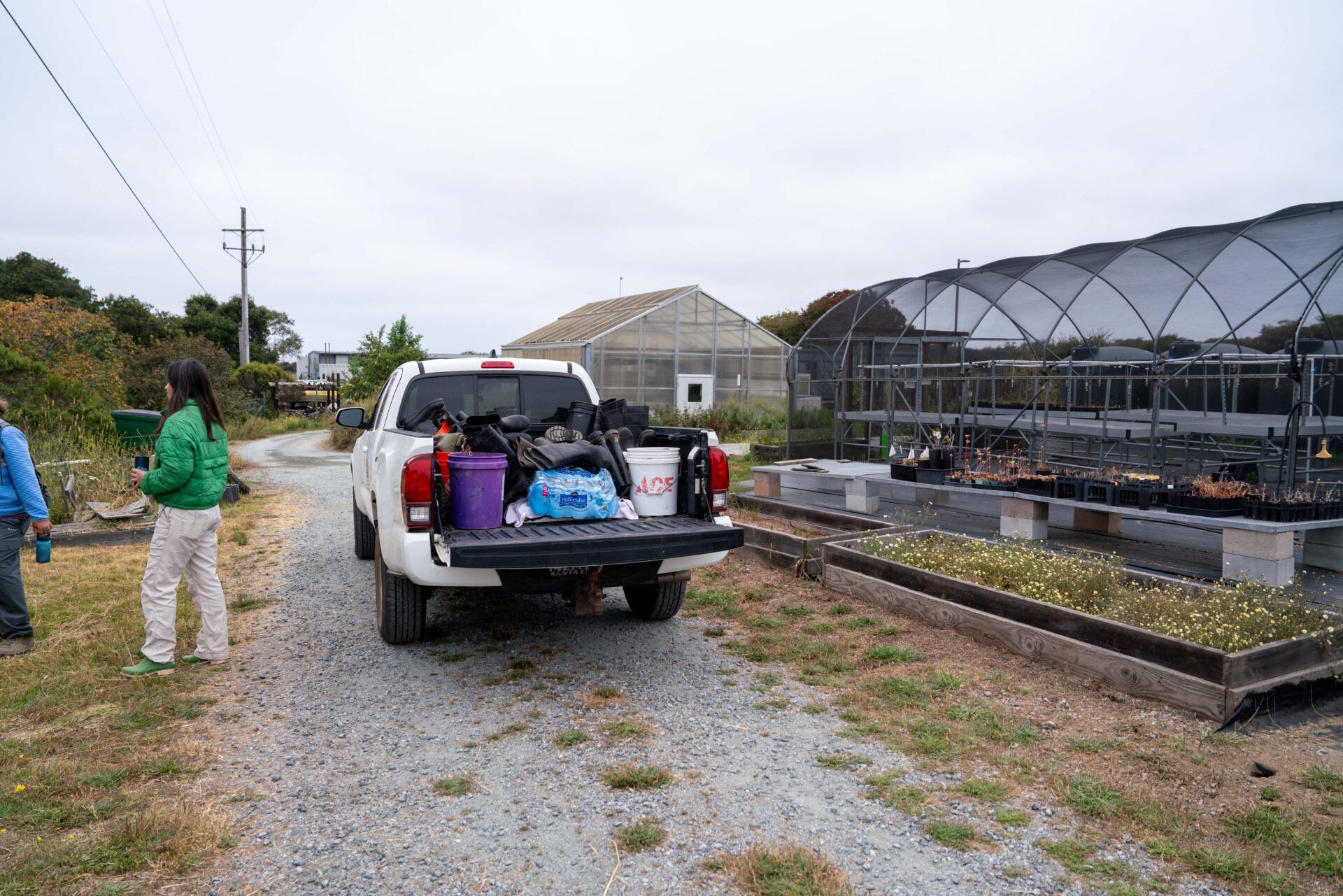
Photo: Katie Rodriguez
On a foggy morning on July 1, Moss Landing Marine Lab researchers along with the Amah Mutsun Tribal Band, Amah Mutsun Land Trust and The Nature Conservancy, prepare to outplant the baby oysters in Elkhorn Slough’s Oak Marsh. This outplanting session is one of many that’s happened over the years as part of a restoration project starting in 2018; the goal is to eventually plant 10 million oysters in the Slough.
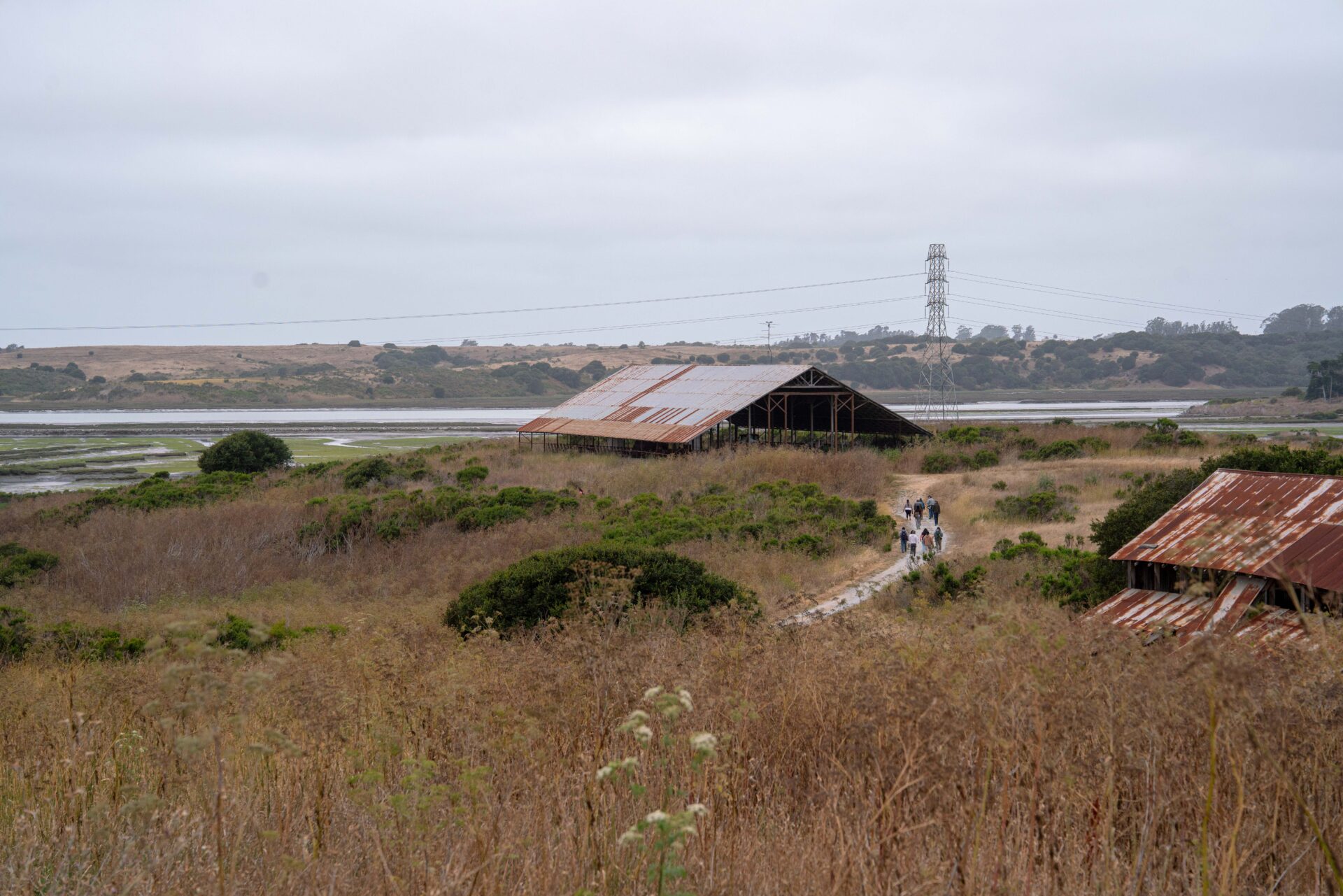
Photo: Katie Rodriguez
The group walks along a path to the Elkhorn Slough, where Native American archeological sites suggest native Olympia oysters once lived in dense aggregations from the mouth of the estuary to its upper reaches for the past 7,000 years. Today, poor water quality from agricultural inputs, stagnant water in diked wetlands and sediment from decades of decaying algal mats all post challenges to oyster survival in the estuary.
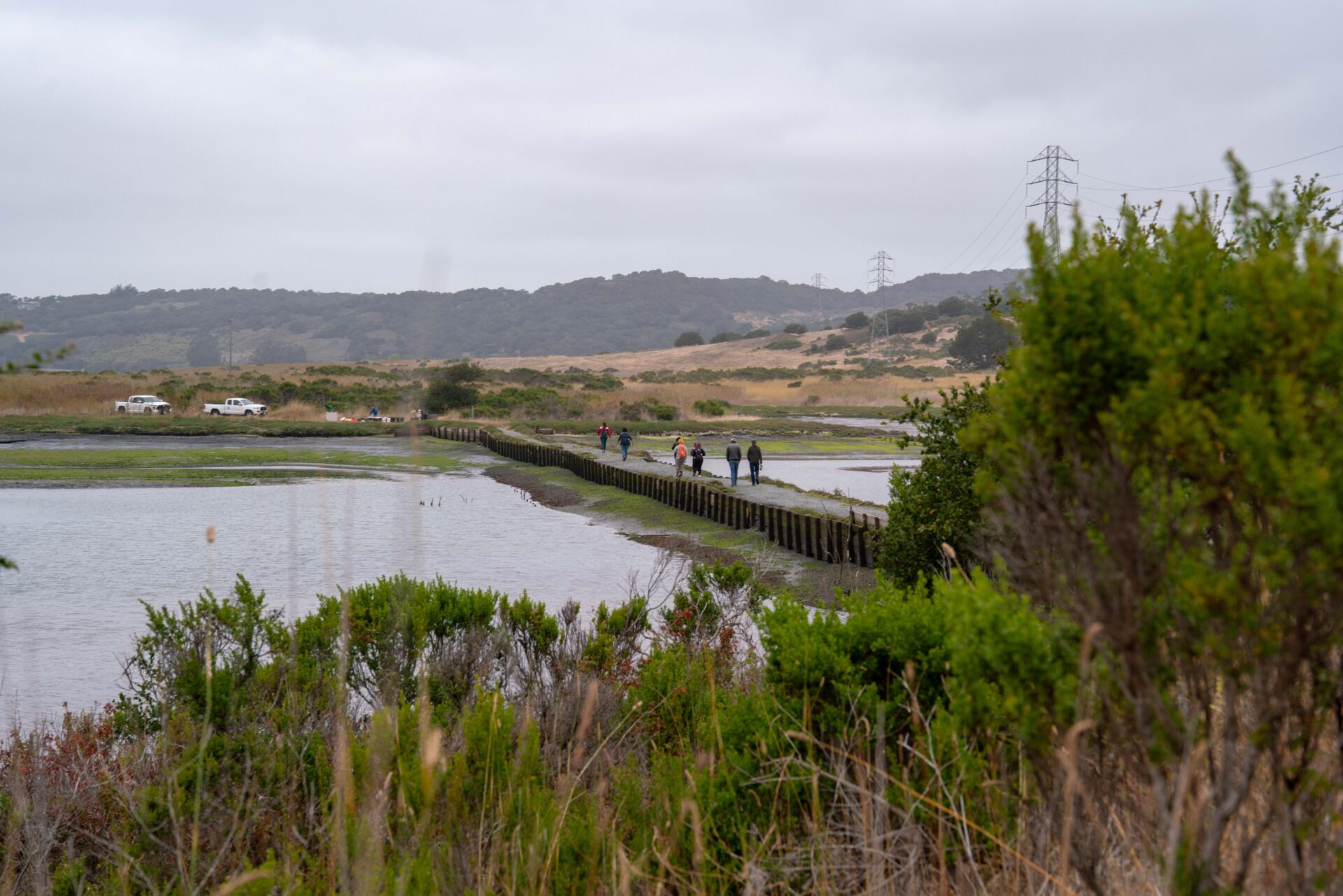
Photo: Katie Rodriguez
The group heads out during an especially low tide, ideal for planting the juvenile oysters in the mud. During king tides, the water will rise high enough to cover the levee. The Elkhorn Slough Reserve is gradually removing the levees throughout the estuary and currently exploring whether some could be deconstructed and repurposed as oyster habitat.
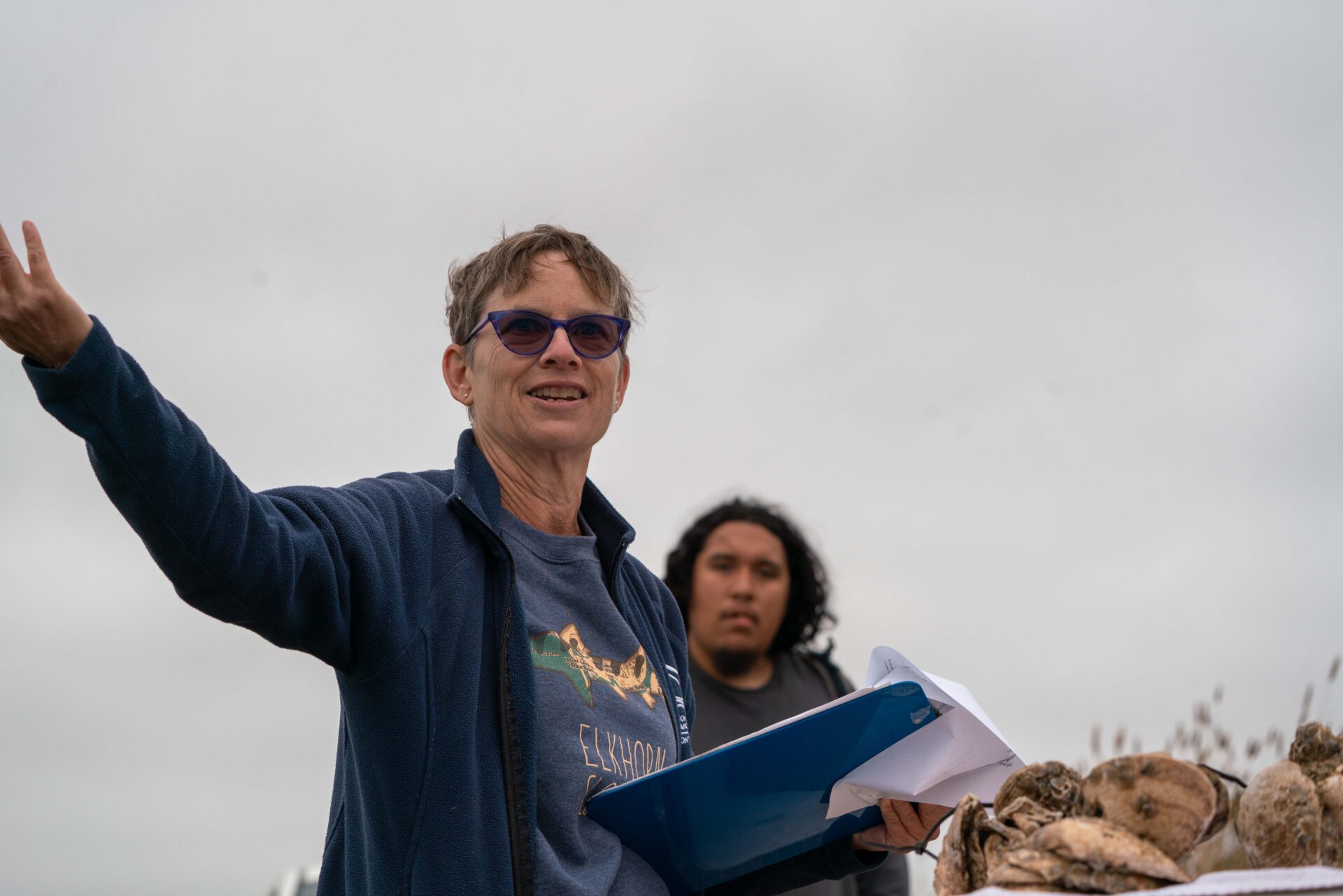
Photo: Katie Rodriguez
Kerstin Wasson, research coordinator at the Elkhorn Slough National Estuarine Research Reserve in Moss Landing, explains how native oyster beds—which once stretched along the California coast—have largely vanished. Large, continuous oyster reefs are now absent from California, a loss researchers with Moss Landing Marine Laboratories and partners hope to reverse. Wasson likens oyster reefs to coral reefs, saying they provide critical habitat for numerous species and play an essential role in maintaining healthy coastal ecosystems.
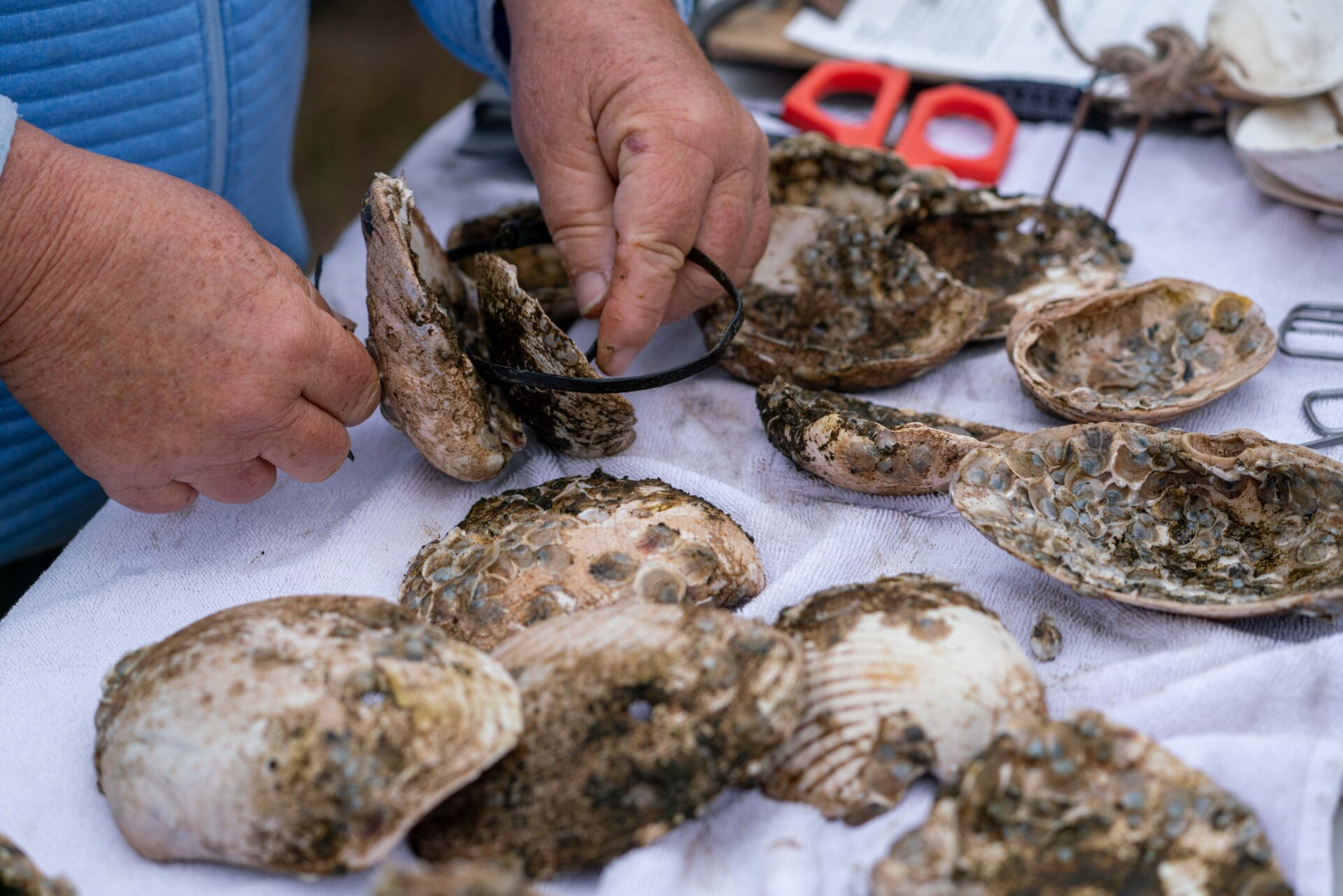
Photo: Katie Rodriguez
Amah Mutsun tribal members and other partners assemble the baby oysters before outplanting. In this case, clam shells were used as the substrate for which the baby oysters cemented themselves in clusters. The babies are gregarious settlers, explains Wasson, in that the oysters prefer to settle close to other existing oysters.
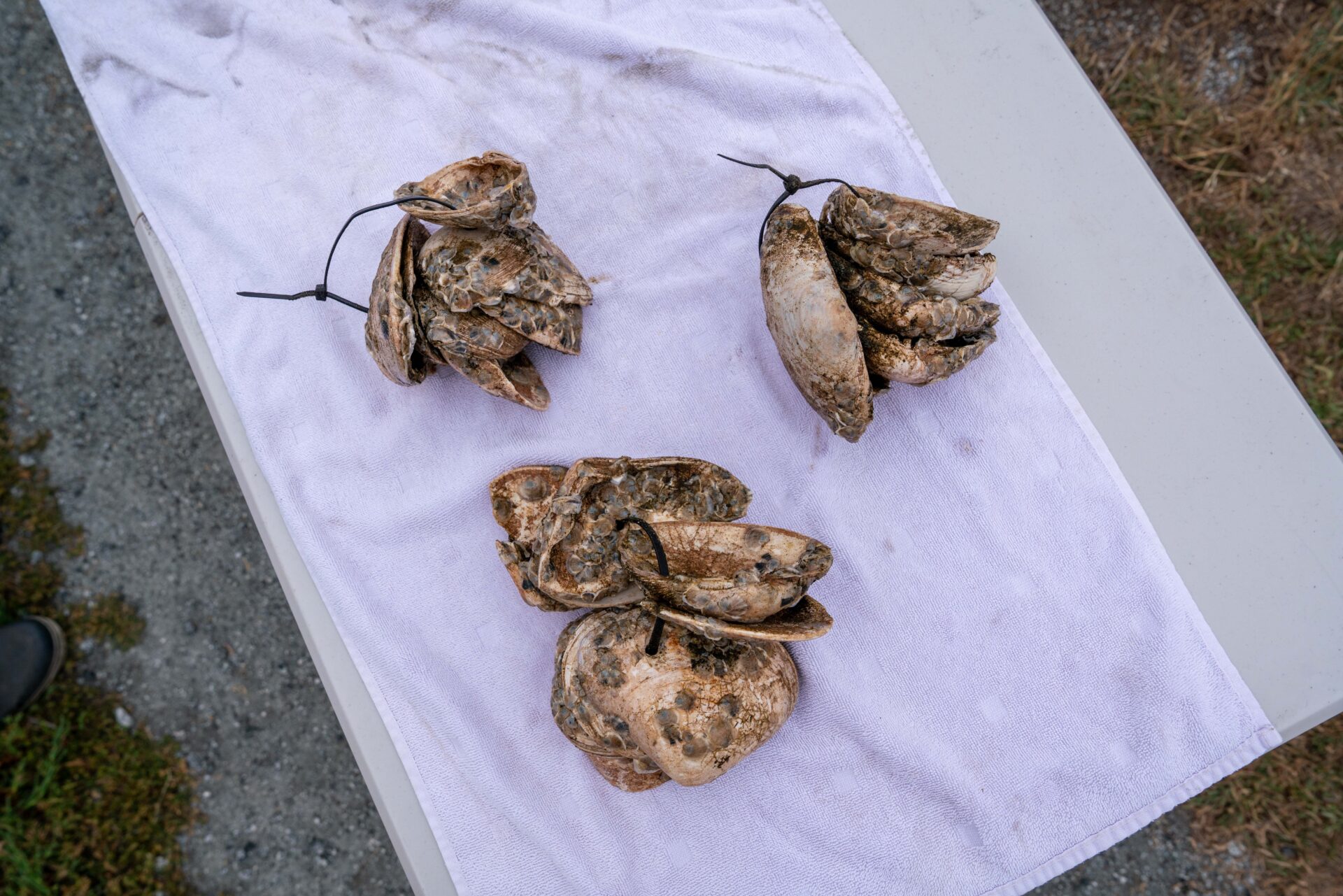
Photo: Katie Rodriguez
With fewer than 1,000 oysters, the native population remaining in the Elkhorn Slough in 2018 was so low that it was nearing extinction, prompting the Native Olympia Oyster Restoration project. Moss Landing Marine Laboratories’ goal is to restore self-sustaining native oyster populations in the estuary. Oysters are ecosystem builders: individuals group together to create structures that help clean the water, stabilize sediments and provide shelter for thousands of fish and crabs and other marine life.
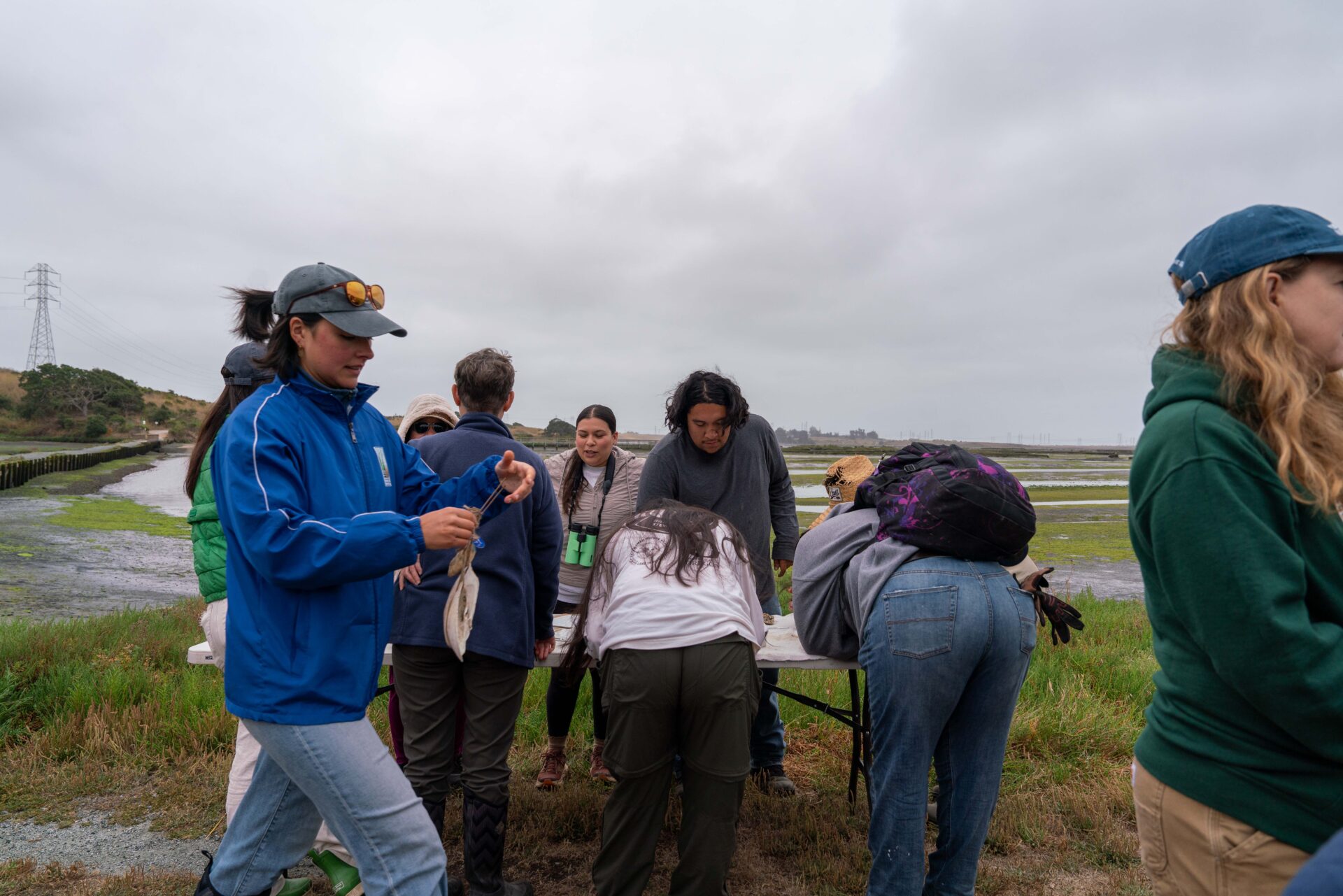
Photo: Katie Rodriguez
A number of partners help this program come to life: the Elkhorn Slough National Estuarine Research Reserve, The Nature Conservancy, the Amah Mutsun Tribal Band and the Amah Mutsun Land Trust. Through their partnership they’ve developed guidance for achieving Olympia oyster restoration goals over the next 50 years in one of the state’s largest and most ecologically diverse salt marshes.
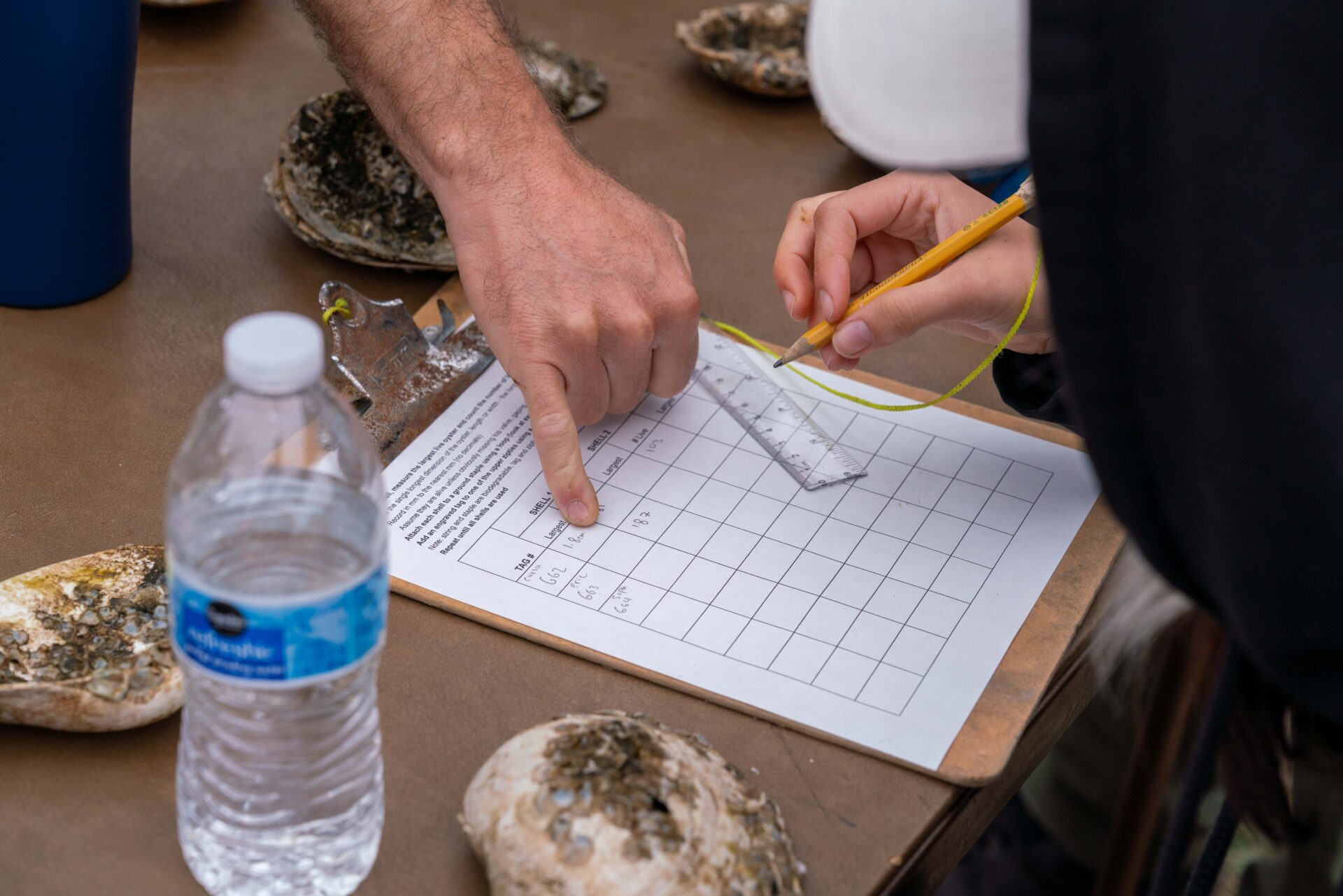
Photo: Katie Rodriguez
Before the oysters are outplanted, researchers collect baseline data from each “unit”—a tagged set of oyster shells attached to a line. They count the live oysters on each shell, measure the largest oyster and tag three shells covered with juvenile oysters. The information provides a baseline for comparing oyster survival and growth after outplanting.
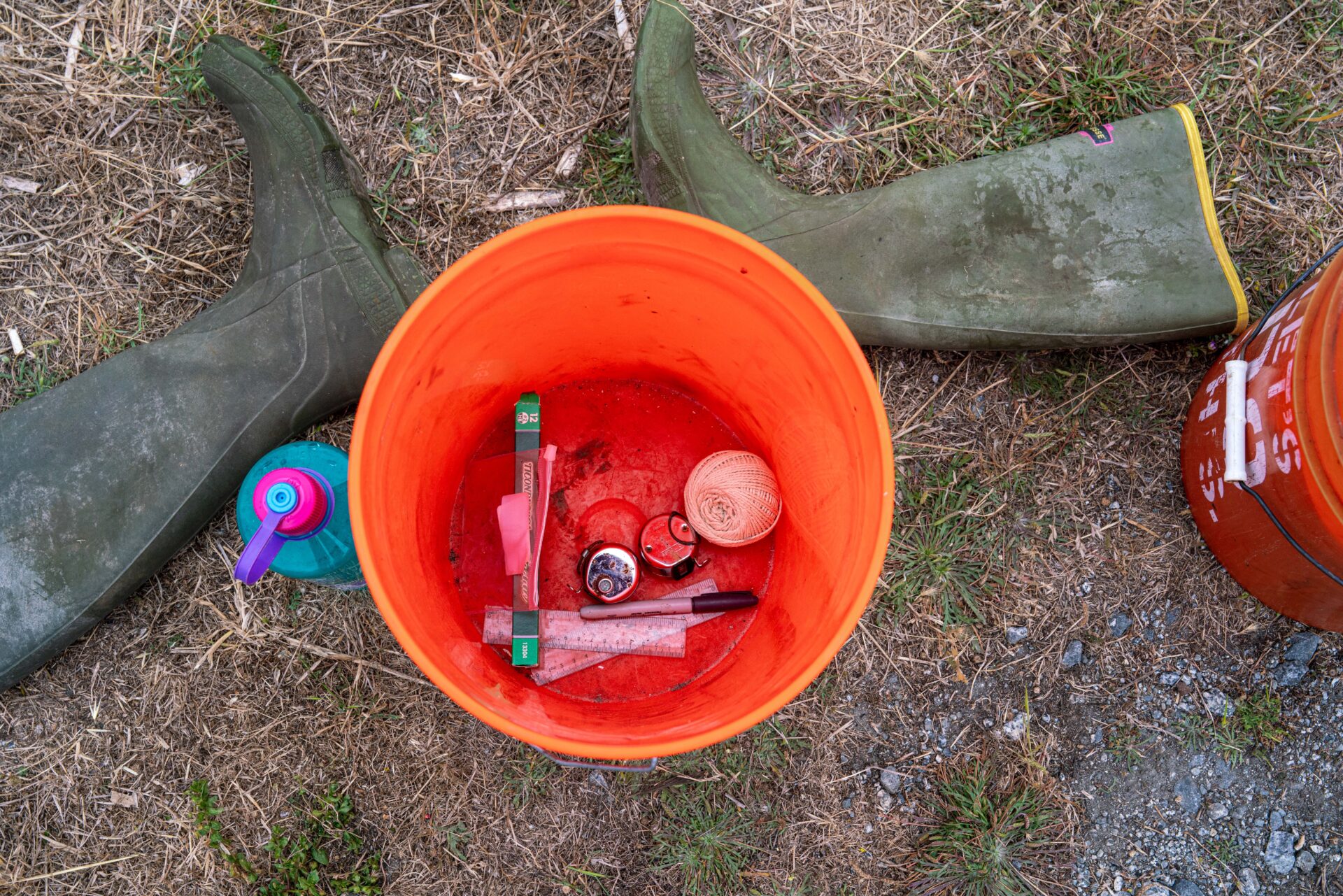
Photo: Katie Rodriguez
Measuring tools and outplanting materials sit off to the side while the group gets ready to outplant. The morning began at 7am to coincide with peak low tide, and tribal members started the morning with a short ceremony. The partnership is collaborative by design, leveraging science-based experimentation and community engagement to drive restoration.
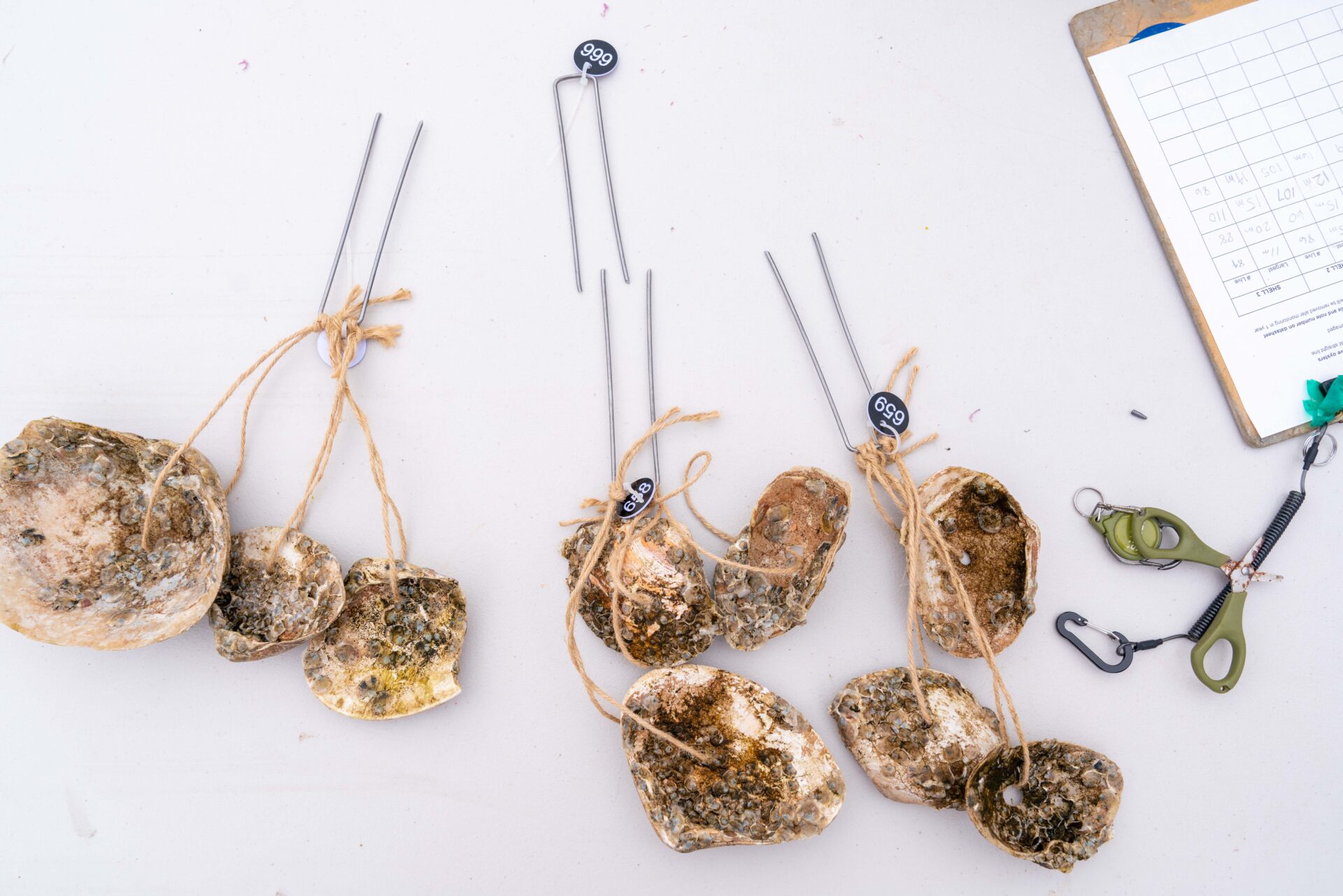
Photo: Katie Rodriguez
Each “unit” clusters three clam shells covered in baby oysters and tagged for identification. The tiny specks of blue and green on the clam shells are the baby oysters that have taken root. A fun fact Wasson shares with the group is that oysters spend the first two weeks or so of life “swimming”, propelling themselves in the water with tiny hairs known as cilia, before choosing a place to cement themselves.
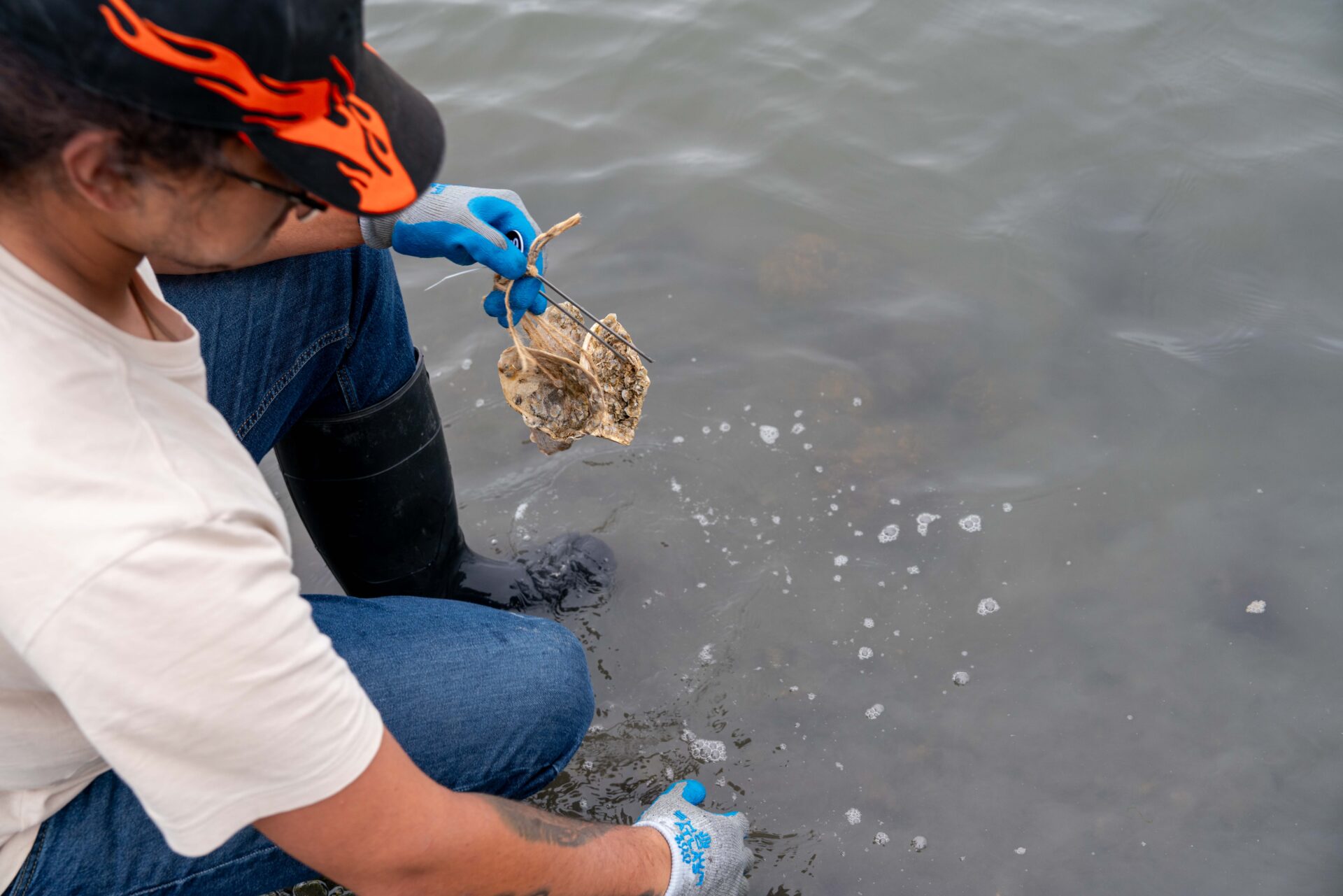
Photo: Katie Rodriguez
At the water’s edge at Oak Marsh, group members firmly press the stake attached to the clam shells into the sand. As the water rises, they will remain fully submerged except for during peak low tide.
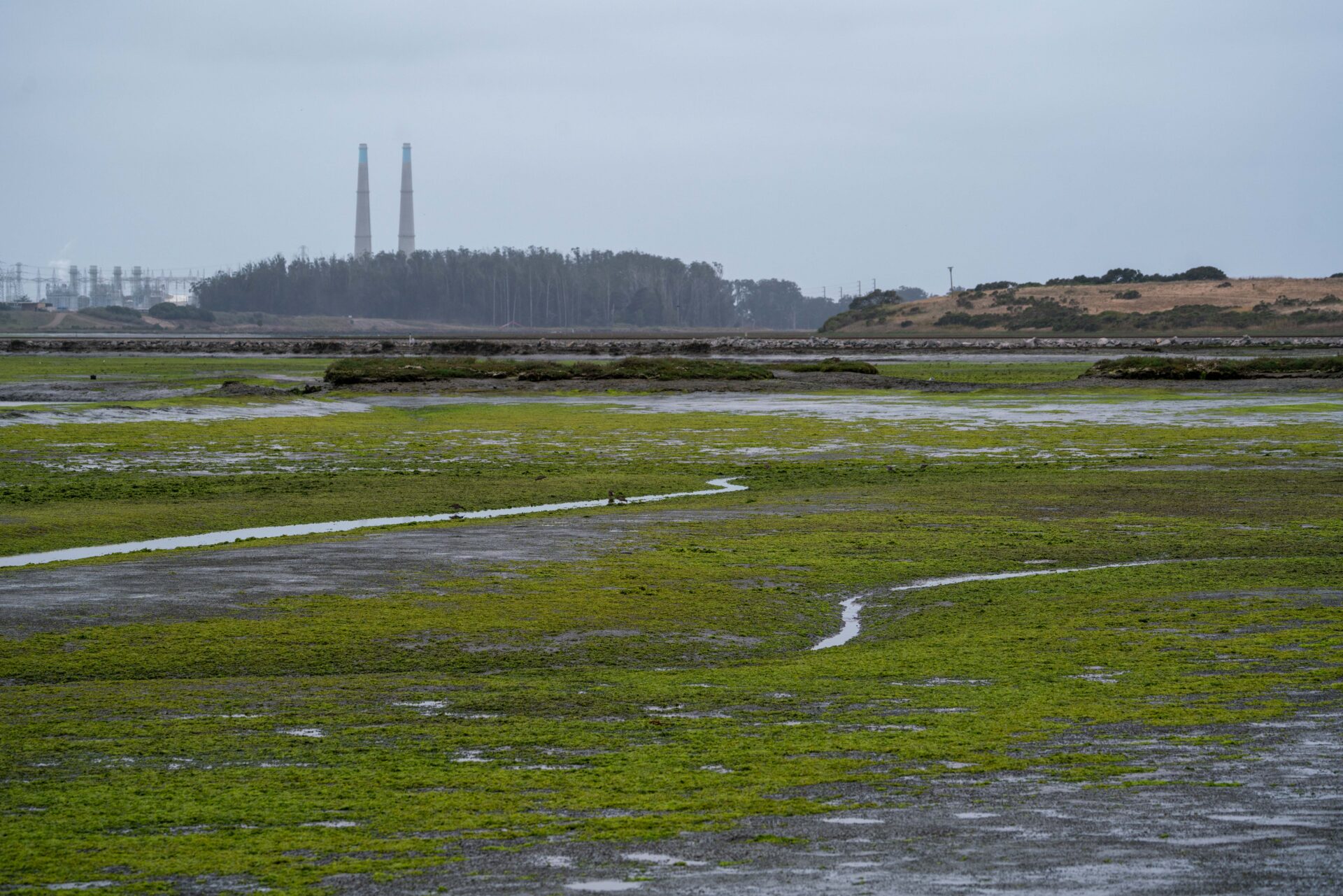
Photo: Katie Rodriguez
Olympia oysters are the only native oyster on the West Coast of the United States. In response to the loss of this species, The Nature Conservancy formed “The Alluring World of Olympia Oysters,” a working group that includes the San Francisco Estuary Partnership, Hog Island Oyster Company, and other partners, to increase awareness of important species and scale restoration efforts in estuaries across the San Francisco Bay Area.
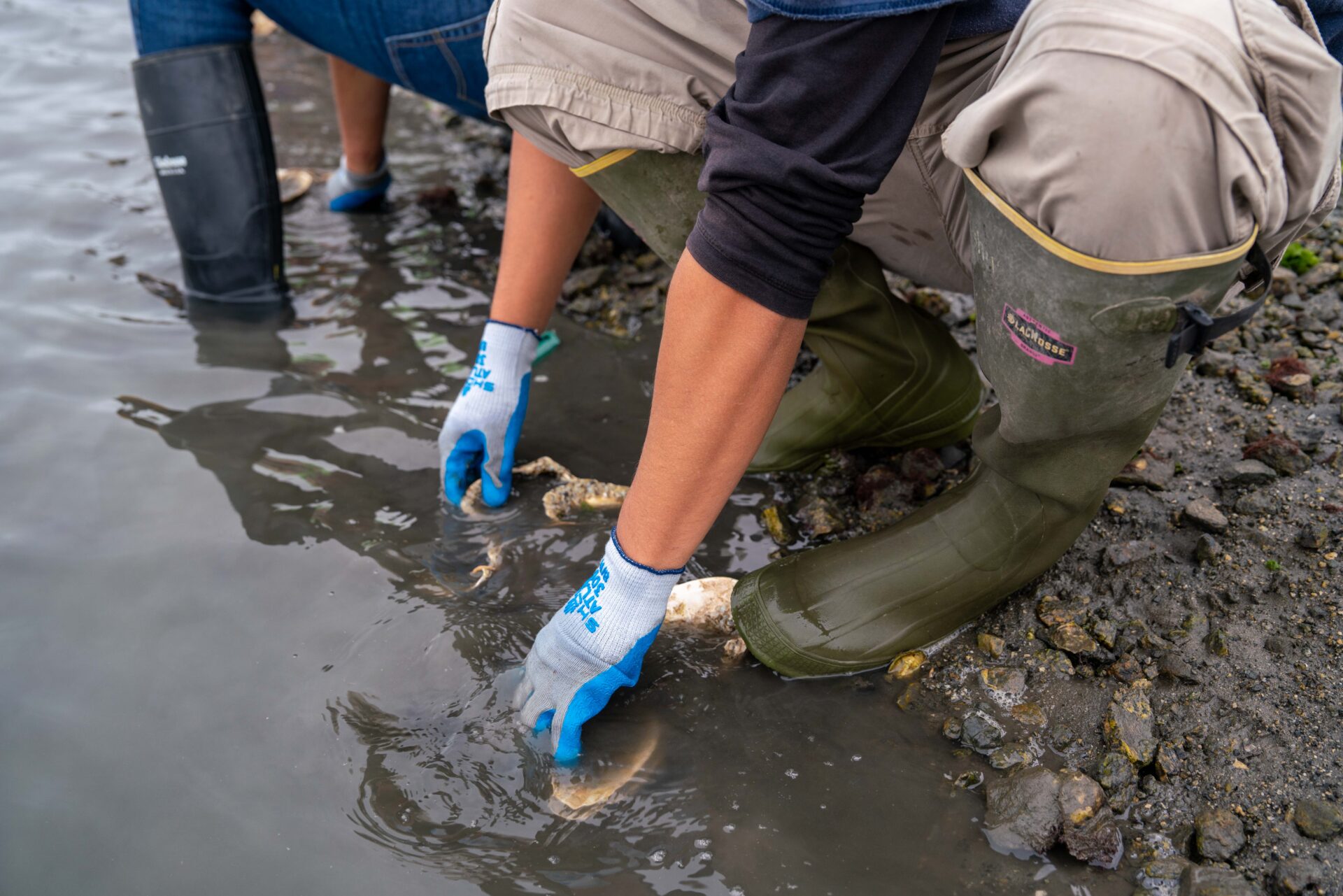
Photo: Katie Rodriguez
The Amah Mutsun Tribal Band, whose lands known as Popeloutchom included the Elkhorn Slough area (along with other Tribes that call this area home), is a leader among California Tribes in reconnecting to estuarine habitats and engaging in shellfish restoration. Recently, they reinstated a robust tribal stewardship program through the Amah Mutsun Land Trust to restore oyster populations using cultural knowledge and community engagement.
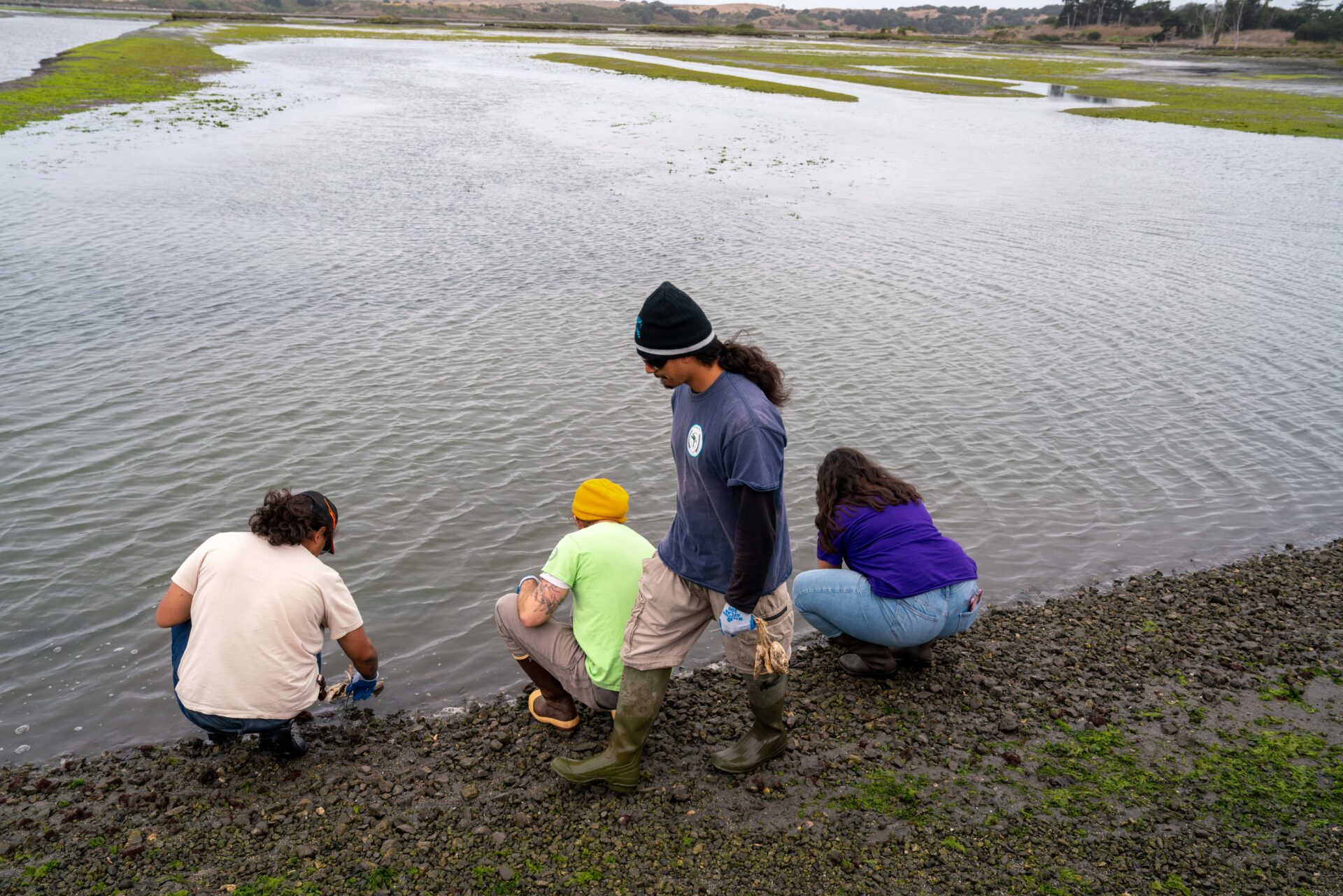
Photo: Katie Rodriguez
On the July day of the oyster planting, half a dozen members of the tribe joined others in shepherding the tiny oysters from the lab into the field.
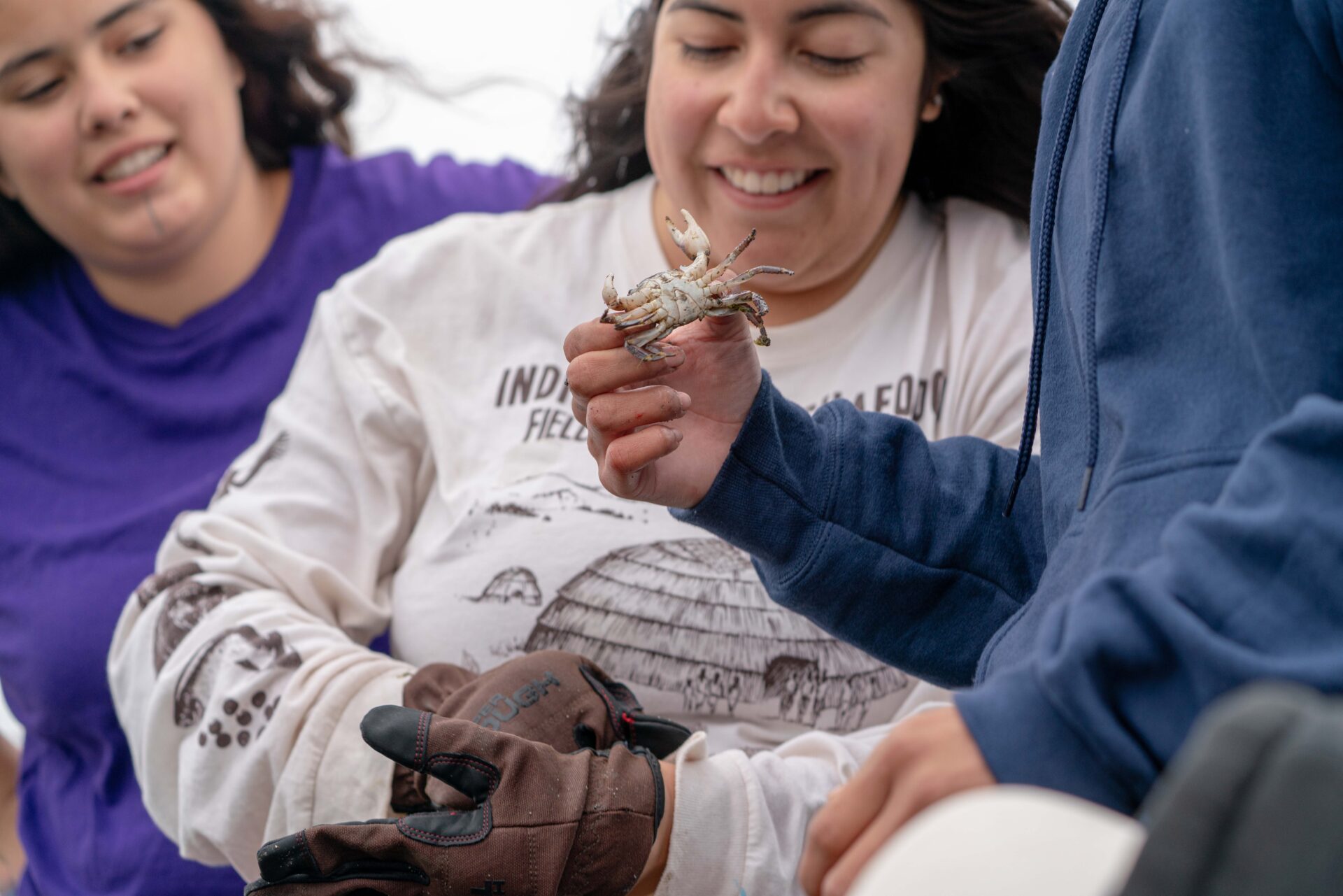
Photo: Katie Rodriguez
The group picks up a striped shore crab, plucked out of the levee. A variety of crab species have set up shop here, taking a liking to the gaps and spaces in the levee, partially caused by erosion and naturally occurring from old oyster shells and crab casings that litter the marsh. The initiative has increased the number of oysters from 1,000 in 2018 to more than 50,000 today, a boon for local estuary habitat.